
עכשיו עכשיו! דווקא עכשיו! במיוחד עכשיו! – רשמים של ג’ני בירגר בעקבות צפייה ב”אהבה מוסיקה (עכשיו!)” מאת להקת יסמין גודר ודקלה
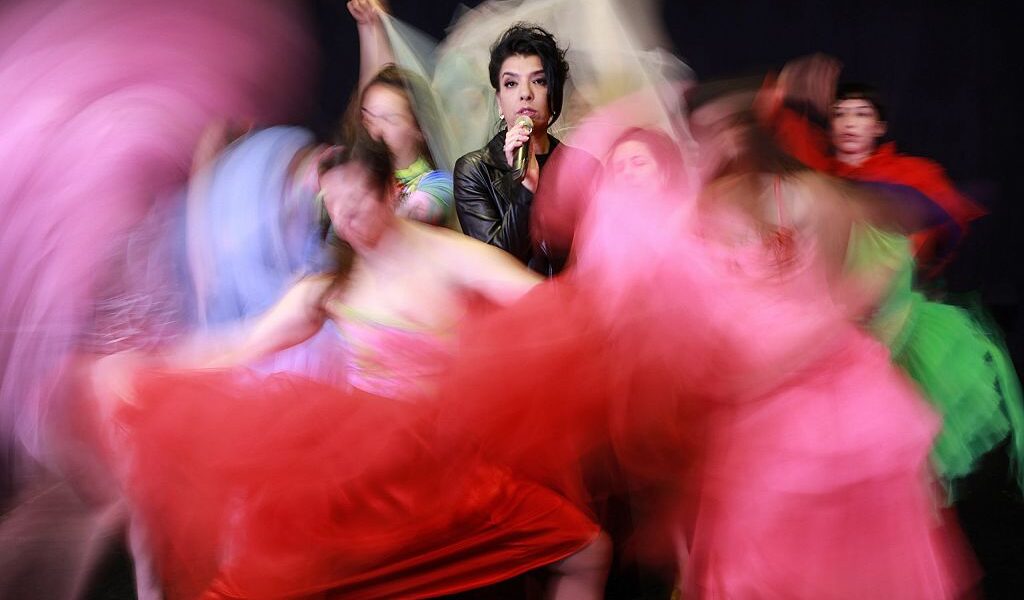
*צילום תמר לם
*English follows
1
נתחיל מהסוף: ביציאה מאולם דלל לאחר המופע, שלוש הבנות הצעירות שירדו לצידי את גרם המדרגות (עם טרן-אאוט מרשים, יש לומר) התקשו להכיל את מה שראו. “זה טריפ, ממש טריפ”, אמרה אחת מהן. “חגיגה של יצירה” הוסיפה חברתה. “הכי מגניב שאפשר”, סיכמה השלישית. “נכון?” אני אומרת להן בליבי, ומוסיפה ש”אהבה מוסיקה (עכשיו!)” היא יצירת מופת עוצמתית וכל כך נחוצה – במיוחד עכשיו.
*
נחזור להתחלה. אבל לא להתחלה של אותו יום שישי “חם מהרגיל” באמצע יולי, בו טיפות הזיעה התחילו לטפטף עוד לפני שיצאתי לדרכי, אלא להתחלה בה’ הידיעה, זו שאיננו יודעים בדיוק מתי היא הייתה וכמה חם היה, רק שהיה רגע כזה בו התחלנו לרקוד, לשיר ולנגן. רגע בזמן בו בני האדם ראו כי טוב, החלו להתקבץ ולחיות כקהילה שחגגה יחדיו את אירועי החיים, אירועים משמחים כמו חתונות ולידות, ואירועים אבלים, כמו מלחמות ומיתות. הריטואל היה שזור עמוק בתוך חיי הכפר, מעין מטרונום של החיים. וגם המוסיקה והריקוד היו שזורים יחדיו, שני צדדים של אותו המטבע, תמיד נוכחים בצמד; הגשמיות של המחול לצד ההפשטה השמיימית של המוסיקה אפשרו לחברי הקהילה להתאחד, להשתחרר ולהירפא.
Fast forward כמה אלפי שנים, והבלט הקלאסי הגיע לבמות הגדולות באירופה. הריקוד היה עדיין מלווה במוסיקה חיה, אך נוצרה הפרדה ברורה בין המופיעים והצופים, כשלא מצופה מהצופים לרקוד (או לנגן/לשיר). כמובן שהצופים הם חלק מהטקס, אם תרצו, אבל תפקידם שונה בתכלית מזה של הפרפורמרים. כמה מאות שנים קדימה, והמחול העכשווי פרץ את המוסכמות והעיז להתנתק לא רק מהחיוּת שבמוסיקה, אלא ממוסיקה בכלל, נשען על פעימה פנימית, הנגינה השקטה של הכוריאוגרפיה.
והנה, חזרנו להווה. חם ולח, מחניק מכל הבחינות, ולמרות זאת ודווקא עכשיו – היצירה הבועטת של יסמין גודר ודקלה חוזרת לחיבור הקמאי של ריקוד-שירה-נגינה ואף מזמינה את הקהל להיות חלק (עוד על כך בהמשך).
*
המופע החל בטרם הקהל סיים להתיישב. חלק מהרקדניות כבר על הבמה, וחלק ביציע, ספק מתכוננות ספק מתבוננות בנו נכנסים בצד הלא-נכון של הכיסאות ומבקשים מכולם לקום תוך כדי גמגום “סליחה, סליחה”. הבמה מוכנה עם כלי נגינה רבים, מדרגות אל הלא-נודע, ומפל-טול עצום בגודלו. חלק מהרקדניות לבושות בבגדי גוף, וחלק בחצאיות טוטו צבעוניות, קורצות לרגע לעולמות ההתעמלות והבלט, אך מייצרות עולם ייחודי ושונה.
כשהאורות כבים הרקדניות מתקבצות במעגל נשי תוסס, ומשמיעות את קולן או יותר נכון את זעקתן. אני מרגישה שהזעקה בעצם מגיעה מתוכי, ויוצאת החוצה בדמותן. הן מאפשרות לעצמן להתמוגג, להישען זו על זו, למצוא קצב משותף של העברות משקל, מחווה פשוטה ומורכבת בו-זמנית. הן מביעות קינה כנה ועמוקה, מהדהדות את ההבנה שאבל ושמחה תלויים זה בזה, ומנכיחים זה את זה. תנועתן במעגל מזכירה לי את המונח tour de force (יצירת מופת), ואני מדמיינת שבמקור המונח נוצר משתי מילים: tour (מעגל) ו-force (עוצמה). מעגל העוצמה, כמה מדויק לרגע הזה. כשאגיע הבייתה ואבדוק את האטימולוגיה, אגלה שזה לא בהכרח המקור, אבל הסיפור יפה ומתאים, ואם אין לנו סיפורים יפים להיאחז בהם, אז מה עוד נשאר?
דקלה נכנסת לבמה והכל מתעצם. היא תשיר את שירי האלבום הראשון שלה “אהבה מוסיקה”, לצד ויחד עם הרקדניות והנגנים. החיוּת של המוסיקה, הפעימה שחודרת אל הגוף ומתמזגת עם מחיאות הכפיים הסוערות ופעימות הלב מרקידה את הקהל מבפנים. כל אות ואות בשפה התנועתית של יסמין גודר מלאת הבעה, ויחד הן מייצרות משפטים ופסקאות מלאות רגש וסיפוריוּת. גם אם הכרתי חלק מהתנועות מיצירותיה הקודמות, עם מוסיקה אחרת או ללא מוסיקה כלל, השיבוץ לתוך המקצבים והעומקים של דקלה מאפשר לחגוג כל תנועה. אני מרגישה שהרקדניות הן בו-זמנית הן עצמן וגם קצת יסמין גודר. במילותיה של דקלה, הן “בוחרות להיות את כל האמת שבהן”, וזה כיף לראות איך אותה תנועה נראית שונה על כל אחת מהן. יחד עם זאת, בכל רגע נתון אני רואה את יסמין רוקדת על הבמה, מביעה את עצמה דרך גופן. קצת כמו אשלייה אופטית, הן מנכיחות את מי שהפעם לא נוכחת על הבמה איתן.

Photo Brigit Hupfeld
2
אני רוצה לספר לכם סוד, אבל אל תגלו לאף אחד: לא היכרתי את דקלה לפני כן. מעט נבוכה, ומאד סקרנית, כשבוע לפני המופע מצאתי את האלבום “אהבה מוסיקה” בספוטיפיי ושמתי פליי. מהשיר הראשון נשאבתי לתוך הסאונד החם והמיוחד מאד של קולה המכשף. המילים שלה נוגעות בלב העניין, והן מעטות. קצת כמו הייקו, הן משאירות הרבה לדמיון. המוסיקה שלה מרגשת אותי, ואני לא מאמינה לרגע שזה אלבום מלפני 25 שנים, הוא כל כך עכשווי.
גם הקהל מרגיש את זה. אני מביטה מסביב ורואה את האנשים יושבים בקצה הכיסא, מרעידים רגל, מנענעים את הראש, מתופפים על החזה, כה קרובים לקום ולרקוד יחד. ענת ועדיה, מרקדניות הלהקה, מזמינה באופן גלוי את הקהל להצטרף לרקוד בצד ולהיות חלק מהטקס. אבל משהו עדיין עצור. אולי זו הארכיטקטורה של אולם דלל, המייצרת הפרדה ברורה בין הפרפורמריות הרוקדות לבין הצופים היושבים, ואי הנוחות המדומיינת עם הצורך להקים שוב שורה שלמה של אנשים תוך כדי גמגום “סליחה, סליחה”. למעט קומץ צופים אמיץ וייחודי, שלא יכלו להכיל עוד את התנועה הנובעת מתוכם, רוב הקהל נשאר במקומותיהם (מסתמן שביציע זה היה קצת אחרת). ואולי זה גם אנחנו, שצריכים עוד קצת זמן להפשיר, להעיז, להיזכר שאנחנו חלק מהשבט. אני מדמיינת את המופע על במת מחול גדולה עם מעט מקומות ישיבה והרבה מקום לתנועה. חלל שיאפשר לחזון של המופע להתגשם במלואו: מחול, נגינה ושירה, וקהילה שנעה יחדיו.
ועוד קצת על מערכת היחסים בין המחול והמוסיקה: במופע “אהבה מוסיקה (עכשיו!)” ניכר כמה המוסיקה השפיעה על המחול, וכמה אנרגיה ועוצמה היא העניקה לכל רגע בכוריאוגרפיה. תהיתי אם גם המחול העניק דבר-מה למוסיקה בחזרה, או שהיא נשארה יציבה ואיתנה, בראש מגדל המוזות? משיחה עם יסמין גודר למדתי שבעקבות המפגש (המחודש) ביניהן, דקלה הקליטה עיבודים חדשים לשירי האלבום, ובדרכה שלה נתנה לזיכרון התנועה לפרוט על מיתרי קולה. במהלך המופע התרגשתי באופן מיוחד מרגעי המעבר בין השירים השונים, בהם המוסיקה לוקחת הפוגה קלה, והריקוד המשיך, רוכב על הגלים של מה שהיה ותיכף יהיה, ומאפשר מעבר רך וטבעי אל השיר הבא. זה קצת כמו המעבר משאיפה לנשיפה, ומנשיפה לשאיפה הבאה, שלרוב מתחבא מתחת לפני השטח, עד שמפנים אליו את מלוא תשומת הלב. התרגשתי לגלות שהמעברים בין השירים קיבלו יותר זמן ומקום בגרסה העכשווית של האלבום. גם אם המחול לא משאיר אחריו עקבות גשמיים, במילותיו של מרס קנינגהאם, זיכרון החוויה נחרט עמוק בתוכינו.
*
נסיים באהבה. קז’יסטוף קישלובסקי, אחד מבימאי קולנוע האהובים עליי, חיבר בסרט “כחול” את הרעיונות של “חופש” ו”אהבה”, קצת כמו שיר הנושא של אלבום הבכורה של דקלה. גיבורת הסרט ז’ולי אמונה על להלחין המנון לאיחודה של אירופה (Song for the Unification of Europe), במקום בעלה שנפטר באופן טראגי יחד עם בתה. תוך כדי שהיא בונה את חייה מחדש, לבנה אחר לבנה, היא מגלה בתוכה חופש אישי ואמנותי ליצור יצירת אמנות שהיא שלה. הטקסט ביוונית לקוח מתוך הברית החדשה, והוא מתאר מהי אהבה:
אילו ידעתי את כל השפות, אפילו את שפת מלאכי השמים, אך לא הייתה בי אהבה, הייתי מרעיש כמצלתיים. אילו ניתנה לי מתנת הנבואה ויכולתי לדעת את כל הסודות, אך לא הייתה בי אהבה, לא הועלתי מאומה. גם אם יעניק לי אלוהים אמונה רבה עד שאוכל לצוות על ההרים לזוז ממקומם, אולם אין בי אהבה, אין לי ערך רב ומוטב שאשתוק. אם אתן את כל רכושי לעניים, ואף אקריב את חיי למען המשיח והבשורה, אבל אין בי אהבה, אין כל ערך למעשי.
האהבה טובת-לב וסבלנית מאוד, אינה קנאית ואינה גאוותנית. האהבה אינה גסה ואינה אנוכית, אינה נוחה לכעוס ואינה נוחה להיעלב. האהבה מוותרת. היא אינה שומרת טינה ולא חושבת רעה על אחרים. האהבה אינה שמחה באי-צדק, אלא שמחה בצאת האמת לאור. (…)
לסיכום, שלושה דברים יישארו לעולם: אמונה, תקווה ואהבה, והחשובה מכל היא האהבה.
(מתוך האיגרת לקורינתיים 1)
להקת יסמין גודר הציגה את אהבה מוסיקה (עכשיו!) ב18.7.2025 במרכז סוזן דלל.
NOW, NOW! ESPECIALLY NOW!- JENNY BIRGER’S RESPONSE TO SHOUT ALOUD BY YASMEEN GODDER COMPANY AND DIKLA
Let’s start from the end: As we exited Dallal Hall after the performance, three young women descended the stairs alongside me (with impressive turnout, I must say), struggling to digest what they had just seen.
“That was a trip, a total trip,” one of them said.
“A celebration of creativity,” added her friend.
“The coolest thing ever,” summed up the third.
“Right?” I say to them in my heart, adding that Shout Aloud is a powerful and much needed masterpiece especially now.
*
Let’s go back to the beginning. But not the beginning of that particular “hotter than usual” July Friday, when sweat beads began to form even before I set foot outside but to the beginning, the one we don’t quite know to place in space and time, just that there was a moment when humans began to dance, to sing, and to play music. A moment in which we saw that it was good, we began gathering together, living in communities that celebrated life’s events together, joyous ones like weddings and births, and sorrowful ones, like wars and deaths. Ritual was deeply woven into village life, a sort of metronome of existence. And music and dance were intertwined as well, two sides of the same coin, always appearing in pairs. The physicality of dance alongside the celestial abstraction of music allowed community members to unite, to let go, and to heal.
Fast forward several thousands of years and classical ballet reached the grand stages of Europe. Dance was still accompanied by live music, but now there was a clear separation between performers and audience. Spectators were no longer expected to dance (or sing or play). Of course, the audience remained part of the ritual, if you will, but their role was fundamentally different from that of the performers. A few hundred years later, contemporary dance broke with conventions, daring to separate dance not only from the vitality of live music but from music entirely, relying instead on an internal rhythm, the quiet score of choreography itself.
And here we are, back in the present. It’s hot and humid, stifling in every sense, and it feels that especially now Yasmeen Godder and Dikla’s audacious creation brings us back to that primal connection of dance, singing and playing music, even inviting the audience to join in (more on that soon).
*
The show began before the audience had fully settled in. Some of the dancers were already on stage, others in the aisles, half preparing, half observing us as we entered from the wrong side of the rows, mumbling “sorry, sorry” while asking people to stand up so we could shimmy to our seats. The stage was set with a large array of instruments, a staircase leading to the unknown, and a massive tulle waterfall. Some dancers wore bodysuits, others colorful tutus, a nod to gymnastics and ballet, yet crafting a world entirely of their own.
When the lights dimmed, the dancers gathered into a vibrant feminine circle and raised their voices, or more accurately, their cries. I felt as if the cry was emerging from within me, channeled through them. They allowed themselves to rejoice, to lean on one another, to find a shared rhythm of weight transfers, a gesture that was both simple and deeply complex. They expressed a genuine and profound mourning, echoing the understanding that grief and joy are interdependent, each giving presence to the other.
Their circular movement reminded me of the term tour de force (masterpiece), and I imagined that originally the term came from two words: tour (circle) and force (power). A circle of power, how fitting for this moment. Later at home, I’d check the etymology and find that it’s not necessarily the case, but the story is beautiful and fitting. And if we don’t have beautiful stories to hold onto, what is left?
With Dikla’s entrance onto the stage everything intensified. Throughout the show, she sang songs from her debut album Love Music, together with the dancers and musicians. The vitality of the music, the pulse that pierced the body and merged with the clapping hands and pounding hearts, this rhythm moved the audience from within.
Every movement in Yasmeen Godder’s physical language is full of expression. Together they formed sentences and paragraphs rich with emotion and storytelling. Even when I recognized some of the movements from her previous works with different or no music, the pairing with Dikla’s rhythms and depth allowed every motion to shine.
I felt that the dancers were simultaneously themselves and a little bit Yasmeen Godder. In Dikla’s words, they “choose to be all the truth within them.” It was a joy to see how the same movement looked different on each of them. And yet, in every moment I saw Yasmeen dancing on stage, expressing herself through their bodies. Like an optical illusion, they made her presence felt, even though she wasn’t physically there with them.
Photo Birgit Hupfeld
2
I want to tell you a secret, but don’t tell anyone: I hadn’t heard Dikla’s music before this.
A little embarrassed and very curious, about a week before the show I found the album Love Music on Spotify and hit play. From the very first song, I was pulled into the warm, uniquely magical sound of her spellbinding voice. Her lyrics get to the heart of things, and they’re sparse. Like haikus, they leave a lot to the imagination. Her music moved me, and I couldn’t believe this album was from 25 years ago, it felt so current.
The audience felt it too. I looked around and saw people sitting at the edge of their seats, tapping their feet, nodding their heads, drumming on their chests, so close to getting up and dancing. Anat Vaadia, one of the company’s dancers, openly invited the audience to join in next to the stage and be part of the ritual. But something was still holding us back.
Maybe it was the architecture of Dallal Hall, which creates a clear division between the dancing performers and the seated audience, and the imagined discomfort of having to stand up again and whisper “sorry, sorry” while squeezing past a full row.
Aside from a few brave audience members who couldn’t contain their inner movement, most stayed seated (it seemed a little different in the balcony though). Or maybe it’s us, we need a little more time to thaw, to dare, to remember we’re part of the tribe.
I imagined the performance on a large stage with few seats and lots of space for movement. A space that would allow the vision of the piece to fully come alive: dance, music, singing, and a community moving together.
A bit more about the relationship between dance and music: In Shout Aloud it’s clear how much music influenced the dance, how much energy and power it gave each moment of the choreography. I wondered whether the dance also gave something back to the music or whether the music remained firm and unyielding, high up in the tower of the muses. In conversation with Yasmeen Godder, I learned that following their (renewed) collaboration, Dikla recorded new arrangements of the album’s songs. In her own way, she allowed the memory of movement to linger.
During the performance, I was especially moved by the transitions between songs, when the music took a brief pause, and the dance continued, riding the waves of what was and what was about to be, allowing for a soft and natural shift into the next song.
It was a bit like the transition from inhale to exhale, and from exhale to the next inhale, usually hidden beneath the surface until you give it your full attention.
I was touched to learn that these transitions were given more time and space in the new version of the album.
Even if dance leaves no physical trace, in the words of Merce Cunningham, “the memory of the experience is deeply etched within us.”
*
Let’s end with love.
Krzysztof Kieślowski, one of my favorite filmmakers, connected the ideas of freedom and love in his film Blue, similar to the title track of Dikla’s debut album. The film’s heroine, Julie, is tasked with composing a hymn for the unification of Europe (Song for the Unification of Europe) in place of her husband, who tragically died alongside their daughter. As she rebuilds her life, brick by brick, she discovers within herself the personal and artistic freedom to create a work of art that is truly her own.
The text, taken from the New Testament and sung in Greek, describes what love is:
If I speak in the tongues of men or of angels, but do not have love, I am only a resounding gong or a clanging cymbal. If I have the gift of prophecy and can fathom all mysteries and all knowledge, and if I have a faith that can move mountains, but do not have love, I am nothing. If I give all I possess to the poor and give over my body to hardship that I may boast, but do not have love, I gain nothing.
Love is patient, love is kind. It does not envy, it does not boast, it is not proud. It does not dishonor others, it is not self-seeking, it is not easily angered, it keeps no record of wrongs. Love does not delight in evil but rejoices with the truth. It always protects, always trusts, always hopes, always perseveres. (…)
And now these three remain: faith, hope and love. But the greatest of these is love.
(1 Corinthians 13, New International Version)
Yasmeen Godder Company presented Shout Aloud on July 18, 2025 at the Suzanne Dellal Centre.

ג׳ני בירגר היא רקדנית, יוצרת וחוקרת גוף רב-תחומית. יצירות הוידיאו-דאנס שלה הוקרנו במבחר פסטיבלים בארץ ובעולם (ביניהם Cinedans, Cyprus Film Festival, Burgundy Video Dance Festival, בית הנסן ועוד). היצירה lurking (2014) חקרה את התנועה במרחב הציבורי ויצרה פראזות כוריאוגרפיות תלויות-מקום בתל אביב; היצירה the rope (2016) חקרה את תנועת אמנית הקרקס על מה שנראה כחבל אינסופי; בלב ים (2022) חקרה את חוויית ריבוי-הקולות שבתוכינו בחיפוש אחר האיחוד והשלמות. יצירת המחול-תיאטרון פעם (2024) השתמשה בהשראה של משל אפריקאי ליצירה עבור “קהילה בתנועה”, רקדנים לא-מקצועיים החיים עם מחלת הפרקינסון.
בעלת קשת רחבה של הכשרה פיזית, בין היתר העמיקה במחול מערב-אפריקאי (עם מורים מגינאה, מאלי, סנגל), אלתור עם מוסיקה חיה ויצירת כוריאוגרפיה בזמן-אמת (ג’וליאן המילטון ומאיה מ. קארול), קרקס מודרני ומחול עכשווי. למדה תיאטרון פיזי ב”קליפה” וב”פרסונה”, למדה לאבאן-ברטנייף ב”סמינר הקיבוצים” עם מילכה לאון. כיום מעמיקה בלימודי פאשייה (ליאן האן) ומחול מערב-אפריקאי (עדי זלינגר).
כפרפורמרית, הופיעה ביצירות של תמר בנימיני, רוני הלר, אריאל כהן, נועה פריאל ובמבחר יצירות של מחול אפריקאי בארץ ובחו”ל.
למדה בתוכנית לכוריאוגרפיה ב”כלים” (2018), ובסיומה הציגה את הסולו נקודת היעלמות אשר חוקרת האם וכיצד אפשר להיעלם על הבמה.
בעלת תואר דוקטור בבלשנות מאוניברסיטת תל-אביב, בו היא חקרה את האופן בו ילדים מבינים דימויים ומטאפורות. אוהבת לחבר בין מילים ותנועות, ומפתחת סדנאות של אלתור בגוף, קול, ומילה כתובה בשם תנועהמילה (מ-2024). מלמדת אלתור והבעה בתנועה ב”קהילה בתנועה”, סדנאות של מחול אפריקאי, מפתחת רצועת “ג’אמים” – מרחב לאלתור חופשי-מונחה עם מוסיקה אפריקאית חיה – יחד עם סער קמפלרר. בעלת תעודות הוראה של איינגאר יוגה ופילאטיס מזרן, ומלמדת באופן פרטי ובשיעורי סטודיו בתל-אביב.
Jenny Birger
born in 1984 in Kiev, lives and works in Tel Aviv. Multi-media artist, dancer, teacher. Holds a PhD in Linguistics, passionate about language and movement, the language of movement, the movement of language.