
נופלות, מתעלות, שורדות: ב-“חשוף על חלודה” יסמין גודר ולהקתה רוקדות במצולות מאת ג’וי ברנרד
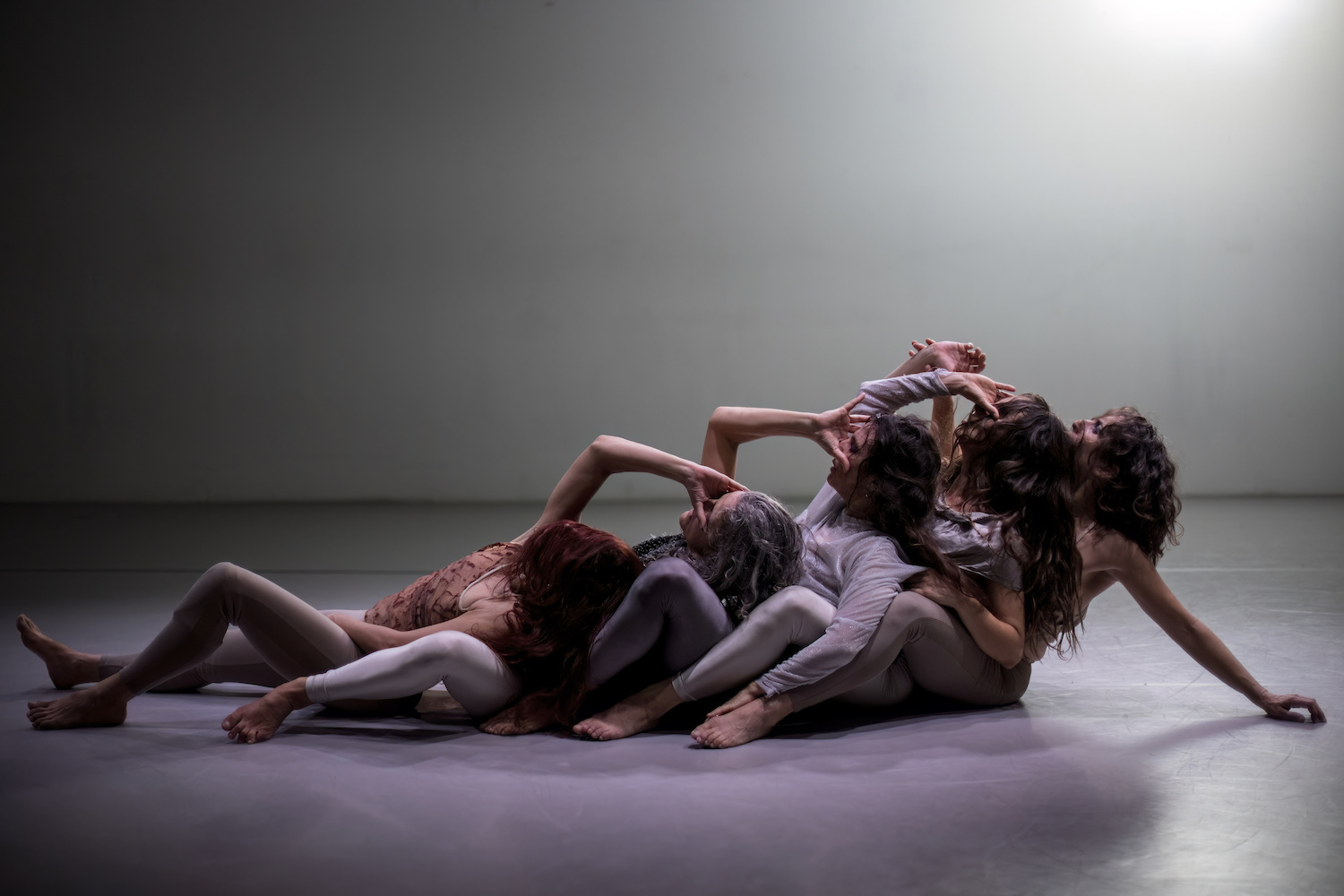
Photo by Vojtěch Brtnický
*English follows
אפתח בוידוי אישי: כמעט לכל שוחר ושוחרת מחול יש את הזיכרון האישי שלו.ה מהפעם ההיא שבה ראה.תה יצירת מחול שעיצבה מחדש את תפיסתו.ה בנוגע לפוטנציאל הגלום בגוף הנע על גבי במה, או לכל הפחות המשיכה להדהד בו.ה שעות וימים אחרי שאחרונת התנועות נעצרה וגם ההדף הבלתי נראה שלה התמוסס באוויר. עבורי, זו הייתה “מתרגלים אמפתיה 3”, היצירה השלישית בסדרת “מתרגלים אמפתיה” של להקת המחול יסמין גודר, העבודה שבה גודר עלתה לבמה בגפה אחרי שיצרה יצירות קבוצתיות בלבד עבור להקתה במשך למעלה מעשרים שנה.
ארבע שנים חלפו מאז שראיתי את הסולו המהפנט שחתם טרילוגיה של עבודות שבה חקרה גודר את מושג האמפתיה באמצעות גישות קונספטואליות ומבנים כוריאוגרפיים שונים. למרות שמדובר בפרק זמן משמעותי, גם בעת כתיבת השורות הללו כשאני עוצמת את העיניים אני עדיין יכולה לראות את רעמת השיער הכסופה של גודר מיטלטלת מאחוריה כמו צליפת שוט כשהיא מבצעת פירואט en-dehors, כמעט מושלם, אבל אז פורעת בבת אחת את המחווה התנועתית הקלאסית, משבשת אותה לטובת אמירה משלה. גודר הסיטה את מרכז הכובד שלה, מוציאה את עצמה משיווי משקל במכוון, השליכה את הזרוע הארוכה שלה הצידה, מניחה לה להיטלטל בחופשיות, איגרפה אותה, הצליפה לעצמה בישבן, הישירה מבט לקהל, חייכה חיוך מתגרה שלא הגיע עד לעיניה מלאות התוגה ופתחה בריצה במעגלים כסוסה דוהרת במירוץ ללא מתחרים. אני חושבת שברגע ההוא הצלחתי להבין לעומק על מה מדברים כשאומרים שלאמנים גדולים יש טביעת אצבע משלהם, סגנון מובחן שמייחד אותם מאחרים, תנועות שאמנם שייכות ללקסיקון שכל הרקדנים.ות בקיאים.ות בו אך כשהם מבצעים אותן המחוות הללו הופכות לשלהם. מעבר לכך, אני זוכרת את ההתרשמות שפשתה בגוף שלי כשנוכחתי שהאישה שמתנועעת לפני היא התגלמות מזוקקת של אומץ. “כן, אפשר לרקוד ככה”, חשבתי – מותר להראות את המאמץ, להציב זה לצד זו את היופי ואת הקושי, את התשוקה שעולה על גדותיה ואת העובדה שלפעמים הנפש לא יכולה להכיל אותה. מותר, אפשר, כדאי להניח על הבמה בדידות ופגיעות, מיניות נשית שמדברת את הפגמים והאנושיות שלה – שהרי הם אלו שהופכים אותה לכה זוהרת ועוצמתית.
קאט להווה. שבוע המחול הבינלאומי בירושלים; גודר ולהקתה – הפעם לצד גודר הרכב הרקדניות הפנטסטיות כלל את ענת ועדיה, אילנה שרה קלייר בלסן, אופיר ינאי וענבל אלוני – מעלות בבכורה במרכז מחול שלם את העבודה החדשה “חשוף על חלודה”. העיניים שלי סורקות את הבמה בזריזות, מחפשות את דמותה של גודר ומאתרות אותה. גם כשהיא כורעת, ראשה שמוט בין ברכיה, קשה לפספס את אותה. אני תוהה איזה סיפור היא תספר לי הפעם.
בין בכי עמוק לשאגת קרב
המופע מתחיל כאשר חמש הרקדניות פזורות בחלל. עטויות במכנסיים הדוקים זוהרים בגוונים כסופים ובחולצות צמודות ומנצנצות, הן נראות קצת כמו חייזריות מלאות חן ומזכירות לרגע את דמותו של הזמר דיוויד בואי בקליפים מהאלבום האלמותי שלו משנת 1972, The Rise and Fall of Ziggy Stardust. אך בניגוד לבואי, שחגג נוכחות בימתית אנדרוגינית, החמש מקרינות בעוצמתיות מובהקת את היותן נשים. כעת הנשים הללו ניצבות במנחים שפופים ומתחילות לבקוע מבין הצללים שיוצרת התאורה המעומעמת, נגלות ומתקדמות בצעדים מקוטעים, כמעט רובוטיים, בתגובה לצלילי הפסקול הצורמניים, החוצניים משהו. כבר מתמונת הפתיחה הזו ברור לי שהפעם גודר לא מזמינה אותנו למסיבה כמו ב”אהבה מוסיקה (עכשיו!)”, המופע הקודם של להקתה שנוצר בשיתוף פעולה עם הזמרת דקלה והיה מפגן ראווה של אנרגיה נשית מתפרצת וחושנית. היא גם לא מתכנסת פנימה באותה שבריריות שאפיינה את “מתרגלים אמפתיה 3”. לא, הפעם גודר מכניסה אותנו בשערי השאול, עמוק לתוך עולם תעתועים של קינה נשית. במשך השעה הקרובה היא וארבעת הרקדניות שלה ינווטו בעולם הצללים הזה, מעבירות את עצמן ואותנו מסע מפרך, שמכאיב אך מחיה לצפות בו. מכאיב מפני שהכאב שהן אוצרות בתווי פניהן ובתנועותיהן הנחושות הוא אמנם לא מילולי או נרטיבי, אך הוא לא באמת שייך לחלל החיצון, לסיפור מיתי או כזה שנעוץ בבדיון. מכאיב מפני שגודר למעשה מציבה לנו מראה לכאב שלנו, למאבק שלנו לשרוד, להתקדם, לעבד, להתמודד עם שברי המציאות הגיהינומית של השנים האחרונות. מחיה משום שאם יש להן סיכוי לנוע, אז אולי גם לנו יש סיכוי לחלום שיום אחד נחלים.
הניסיון לאתר את התנועות ה”גודריות”, את המחוות הפתאומיות, שמשלבות פיסוליות ותנופה גם יחד, לא מכזיב. לאורך כל העבודה, הד.נ.א של היוצרת מקודד היטב בכל התרחשות, ולו המינורית ביותר: הרקדנית ענבל אלוני מתחילה משפט תנועתי בארשת פנים מכורכמת שכמו משפיעה על כל הגוף, שנראה כאילו הוא קרוע בין הרצון להיכנע לבכי עמוק לבין צורך קמאי לפרוץ בשאגת קרב – ברכיים מתנדנדות, רכות, פלג גוף תחתון שכמו מייחל להישמט, כמעט פסיבי, לעומת זרועות שנשלחות בפראות לטבול באוויר ואז קופאות בנוקשות, עד שהאצבעות רוטטות, מתפתלות ממאמץ, שולחות פרץ חד של אנרגיה שמניע את כל הגוף הלאה. לפרקים, היא ושלוש הרקדניות האחרות נראות ממש כמו וריאציות של גודר עצמה כשהן מטלטלות את גפיהן באוויר ואז בבת אחת קורסות לקרקע, מניחות לכפות הידיים המאוגרפות שלהן לפגוש אותה ומתקדמות על מפרקי האצבעות כחיות טרף המשחרות לקרב.
הדימיון שלהן לגודר, או זו לזו, מתחזק בשל העובדה שהיצירה בנויה מרצפים רפטטיביים שמבוצעים ביוניסון (גם כשלפתע אחת הרקדניות מחליפה חזית, או מנתקת קשר עין ומגע עם חברותיה). לצד זאת, גודר משכילה לאפשר לפרפורמריות שלה לשמור על הייחוד האינדיבידואלי שלהן, ולפרש את השפה התנועתית שלה באמצעותו. כך, למשל, גם כשהיא פוערת את פיה וחושפת שיניים משל הייתה לביאה המתכוננת לזנק על הטרף שלה ואז בבת אחת תוחבת אגרוף בין הלסתות ונוזלת לרצפה כאילו רגליה קיבלו פקודה פתאומית לקרוס תחתיה, הרקדנית אופיר ינאי עדיין שומרת על הקווים האלגנטיים והארוכים שלה, על העדינות האינהרנטית לתנועותיה. כאשר ענת ועדיה מרימה זרוע ומשוטטת איתה אל מצחה, מפשקת עליו את אצבעותיה במחווה עדינה ובתיאום מושלם עם האחרות – כאילו היו כולן ניצולות של ספינה טרופה המסמנות בקוד סמוי, הידוע רק להן, שהן מחכות להושעה – היא עדיין רוטטת מרוב האנרגיה הפראית הייחודית לה. כל הרקדניות מתהדרות ברעמת שיער פזור, פרוע, שנגרר בכבדות על פניהן או מתנופף סביבן כשהן מסתחררות ומשווה להן מראה של בתולות ים שנישאות על גבי נחשולי התנועה האימתניים החולפים בגופן, אך קל לזהות את הרעמה הספציפית של אילנה בלסן, שיש בתנועות הראש ובהנפות הרגליים האינסופיות שלה מן הקסם ההדור של אמזונה גאה.
שירת הסירנות
כנראה לא סתם עלה בדעתי הדימוי של בנות ים. הכוריאוגרפיה של “חשוף על חלודה” נשענת על מבנים מעגליים של נפילה והתרוממות, כמו לא מאפשרת לרקדניות להיוותר יציבות על רגליהן במשך זמן רב, כאילו הן מנסות לנווט את דרכן בלב ים סוער. רגע אחד הן נשענות על קרסוליהן כעל יתדות ומנפנפות בזרועותיהן כבתנועת סבסבת, וברגע הבא הגו שלהן כבר מוביל אותן להשתרעות על הרצפה, שם הן לופתות ידיים, כמו אחיות לקרב השואבות עוצמה זו מזו. רגע אחד ידיהן מטאטאות את הרצפה, כמריונטות שנותקו מהכבלים האוחזים בהן, וברגע הבא רגל שמזדקרת אל התקרה שולחת גל אל עמוד השדרה שמזדקף לעמידה על רגל אחת. שוב ושוב הן קמות, נופלות, מתעלות ובכל זאת שורדות. כשאני צופה בהן נאבקות כך אני חושבת על המאבק המיטונימי לקיום שלנו, הנשים, ובכלל על כל הנשים שזוועות המלחמה טלטלו אותן בשנתיים האחרונות בישראל ובעזה, לא מותירות לנו קרקע יציבה להיאחז בה.
רק בתום היצירה (זהירות, ספוילר), מגיעה סוף סוף הפוגה מנחמת. לאורו של פנס המשרטט כדור ירחי יפהפה על הקיר האחורי באולם של מחול שלם, הרקדניות מתאספות אחרי שסופת התנועה שלחה אותן לכל עבר. גפיהן נכרכים והן נעשות דבוקה אנושית-נשית אחת, שמתנדנדת מצד לצד כאונייה בלב הים. הן מתחילות לשיר מעין כוראל נטול מילים, במשך רגע ארוך שנעשה מצמרר כשקולותיהן מתעקשים להמשיך ולהתנגן גם כשהאורות כבים. כשאני מאזינה להן אני נזכרת בסירנות מהמיתולוגיה היוונית, אותן יצורים מיתיים ששכנו על איים סלעיים בים אשר כוחן היה נעוץ בקולן. שירתן הייתה כה מפתה, עד שכל מלח ששמע אותה איבד את דעתו, ניווט ישר אל עבר הסלעים ומצא את מותו בטביעה. שירת הסירנות הייתה למעשה מוות מתוק ובלתי נמנע.
כששירתן של הרקדניות דוממת וצלילי מחיאות הכפיים ממלאים את האולם, עולה בדעתי שירה של המשוררת אדריאן ריץ’, “צלילה אל שברי האונייה” (1973):
“יֵשׁ סֻלָּם… אֲנִי יוֹרֶדֶת… וְאֵין אִישׁ שֶׁיַּגִּיד לִי מָתַי הָאוֹקְיָנוֹס יַתְחִיל.
תְּחִלָּה הָאֲוִיר כָּחֹל וְאַחַר כָּךְ הוּא כָּחֹל יוֹתֵר וְאַחַר כָּךְ יָרֹק וְאַחַר כָּךְ שָׁחֹר. אֲנִי מִתְעַלֶּפֶת וְעִם זֹאת הַמַּסֵּכָה שֶׁלִּי עַזָּה, הִיא מְמַלֵּאת אֶת דָּמִי בְּכֹחַ. הַיָּם הוּא סִפּוּר אַחֵר. הַיָּם אֵינוֹ עִנְיָן שֶׁל כֹּחַ. עָלַי לִלְמֹד לְבַד לְהָנִיעַ אֶת גּוּפִי בְּלִי לְהַפְעִיל כֹּחַ בְּתוֹךְ הַיְּסוֹד הֶעָמֹק.
בָּאתִי לַחְקֹר אֶת שִׁבְרֵי הָאוֹנִיָּה. הַמִּלִּים הֵן מַטָּרוֹת. הַמִּלִּים הֵן מַפּוֹת. בָּאתִי לִרְאוֹת אֶת הַנֵּזֶק שֶׁנַּעֲשָׂה וְאֶת הָאוֹצָרוֹת שֶׁשָּׂרְדוּ. הַדָּבָר שֶׁלְּשֵׁמו בָּאתִי: שִׁבְרֵי הָאוֹנִיָּה וְלֹא סִפּוּר שִׁבְרֵי הָאוֹנִיָּה. הַדָּבָר עַצְמוֹ וְלֹא הַמִּיתוֹס. הַפָּנִים הַטְּבוּעוֹת שֶׁתָּמִיד מַבִּיטוֹת אֶל הַשֶּׁמֶשׁ.
זֶה הַמָּקוֹם”. (תרגום שלי לעברית מן המקור באנגלית)
אני מבינה שאצל גודר, הסירנות-רקדניות הן לא יצורים ממיתים; ההפך הוא הנכון. אמנם קולן ותנועתן מטלטלים, אך רק מפני שהם מוסרים לנו עדות על עוצמת הכאב והתעוזה הנדרשים מאיתנו לאורך החיים. אולי זהו סוד העוצמה הלופתת של הפרקטיקה של גודר. בדומה לריץ’, היא מתעקשת לראות הן את הנזק ואת האוצרות, להנכיח את השבר בגוף שוב ושוב, את “שברי האונייה ולא סיפור שברי האונייה. הדבר עצמו ולא המיתוס”.
להקת יסמין גודר הציגה את ׳חשוף על חלודה׳ ב9.12.2025 במסגרת פסטיבלשבוע מחול הבינלאומי של מרכז מחול שלם.
Falling, transcending, surviving: In “Bare on Rust,” Yasmeen Godder and her company take a deep dive down under
By Joy Bernard
I’ll begin with a personal confession: Almost every dance enthusiast has their own personal memory of
that one time they saw a dance work that reshaped their perception regarding the potential inherent in the moving body on stage, or at the very least continued to echo within them for hours and days after the last movement stopped and even its invisible aftermath had dissolved in the air. For me, it was “Practicing Empathy 3,” the third work in the “Practicing Empathy” series by the Yasmeen Godder Dance Company, the work in which Godder took to the stage alone after having created only group works for her company for over twenty years.
Four years have passed since I saw the mesmerizing solo that concluded a trilogy of works in which Godder explored the concept of empathy through conceptual approaches and various choreographic structures. Despite this being a significant period of time, even as I write these lines, when I close my eyes, I can still see Godder’s silver mane whipping behind her as she executes a near-perfect pirouette en-dehors, only to instantly disrupt the classical movement, distorting it in favor of her own statement.
Godder shifted her center of gravity, deliberately throwing herself off balance, flung her long arm out to
the side, letting it sway freely, clenched it into a fist, slapped herself on the buttock, looked directly at the audience, smiled a teasing smile that didn’t reach her sad eyes, and began to run in circles like a mare galloping in a race without competitors. I think in that moment I was able to deeply understand what people mean when they say great artists have their own fingerprint, a distinctive style that sets them apart from others, movements that belong to a lexicon all dancers are familiar with, but when they execute them, these gestures become uniquely theirs. Beyond that, I recall the realization that spread through my body when I saw that the woman moving before me was a distilled embodiment of courage. “Yes, you can dance like that,” I thought – it’s permissible to show the effort, to place beauty and difficulty side by side, the overflowing passion and the fact that sometimes the soul cannot contain it. It’s permissible, possible, even advisable to place loneliness and vulnerability on stage, a feminine sexuality that speaks its flaws and humanity – for these are what make it so luminous and powerful.
Cut to the present. The International Dance Week in Jerusalem; Godder and her company – this time, alongside Godder, the fantastic cast of dancers included Anat Vaadia, Ilana Sara Claire Bellashen, Ofir Yannai, and Inbal Aloni – are premiering the new work, “Bare on Rust,” at Machol Shalem Dance House. My eyes scan the stage quickly, searching for Godder’s figure and finding her. Even when she kneels, her head drooping between her knees, it is hard to miss her. I wonder what story she will tell me this time.
Between deep weeping and a battle cry
The performance begins with the five dancers scattered throughout the stage. Clad in tight, shimmering silver-toned pants and snug, sparkling shirts, they look a bit like graceful aliens, momentarily recalling the figure of singer David Bowie in music videos from his iconic 1972 album, The Rise and Fall of Ziggy Stardust. But unlike Bowie, who celebrated an androgynous stage presence, the five women powerfully radiate their distinct femininity. Now, these women stand in crouched poses and begin to emerge from the shadows created by the dim lighting, revealing themselves and advancing in fragmented, almost robotic steps, in response to the jarring, somewhat alien beats of the soundtrack.
It is clear to me even from this opening image that this time Godder is not inviting us to a party, as in “Shout Aloud,” her company’s previous show created in collaboration with the singer Dikla, which was a showcase of explosive and sensual feminine energy. Nor is she withdrawing inward with the same fragility that characterized “Practicing Empathy 3.” No, this time Godder is leading us through the gates of the underworld, deep into a universe of feminine lamentation and illusion. For the next hour, she and her four dancers will navigate this world of shadows, subjecting themselves and us to a jarring journey, one that is painful yet revitalizing to watch. Painful because the pain they harbor in their facial expressions and resolute movements, though non-verbal or narrative, does not truly belong to outer space, to a mythical tale, or to fiction. Painful because Godder is essentially holding a mirror up to our own pain, our struggle to survive, to move forward, to process, to cope with the fragments of the hellish reality of the past two years. Revitalizing because if they have a chance to move, then maybe we too have a chance to dream that one day we will heal.
The effort to locate the “Godderesque” movements, the sudden gestures that combine sculptural quality and momentum simultaneously, does not disappoint. Throughout the work, the creator’s DNA is well-encoded in every sequence, even the most minor: The dancer Inbal Aloni begins a movement phrase with a sorrowful expression that seems to affect her whole body, which appears torn between the desire to surrender to deep weeping and a primal urge to break out in a battle cry – knees swinging, soft, a lower body that seems to yearn to collapse, almost passive, contrasted with arms savagely thrown out to immerse themselves in the air and then freezing rigidly, until the fingers tremble, writhing with effort, sending a sharp burst of energy that propels the entire body forward. At times, she and the three other dancers look exactly like variations of Godder herself as they swing their limbs in the air and then suddenly collapse to the floor, letting their clenched fists meet it and advancing on their knuckles like beasts of prey hunting for battle.
Their resemblance to Godder, or to one another, is strengthened by the fact that the work is made up of repetitive sequences performed in unison (even when one of the dancers suddenly changes direction, or breaks eye contact with her companions). Nevertheless, Godder manages to allow her performers to maintain their individual uniqueness, interpreting her movement language through it. Thus, for example, even when she opens her mouth wide, baring her teeth as if she were a lioness preparing to leap onto her prey, and then suddenly shoves a fist between her jaws and melts to the floor as if her legs received a quick command to collapse beneath her, the dancer Ofir Yannai still maintains her long, elegant lines and the inherent delicacy of her gestures. When Anat Vaadia raises an arm and sends it toward her forehead, spreading her fingers on it in a gentle gesture and in perfect coordination with the others – as if they were all survivors of a shipwreck signaling with a subtle code, known only to them, that they await rescue – she still trembles from her unique, wild energy. All the dancers boast a loose, untamed mane of hair that drags heavily across their faces or whips around them as they whirl, giving them the appearance of mermaids carried by the terrifying movement surges passing through their bodies, but it is easy to identify the specific mane of Ilana Bellashen, whose head movements and lifts of her endless legs possess the stately magic of a proud Amazon.
The sirens’ song
It is probably not by chance that the image of mermaids occurred to me. The choreography of “Bare on Rust” relies on cyclical structures of falling and rising, seemingly not allowing the dancers to remain stable on their feet for long, as if they were trying to navigate their way through a stormy sea. One moment they lean on their ankles as on stakes and flutter their arms like spinning tops, and the next moment their torso leads them to sprawl on the floor, where they clasp hands, like sisters in battle drawing strength from one another. One moment their hands sweep the floor, like marionettes disconnected from their holding wires, and the next moment a leg jutting toward the ceiling sends a wave up the spine, leading them to stand on one leg. Again and again they rise, fall, transcend, and somehow survive. As I watch them struggle like this, I think of their struggle as metonymous to the struggle of all women, and specifically of all the women whose lives have been shaken by the horrors of war over the past two years in Israel and Gaza, leaving us with no stable ground to stand on.
Only at the end of the work (caution, spoiler) does a comforting reprieve finally arrive. As a backlight traces a beautiful lunar sphere on the back wall of the hall, the dancers gather after the storm of movement has sent them away from each other and in all directions. Their limbs intertwine, and they form a single human-female cluster, swaying from side to side like a ship in the middle of the sea. They begin to sing a kind of wordless chorale, for a long moment that becomes chilling as their voices insist on continuing to resound even after the lights go out. As I listen to them, I remember the Sirens from Greek mythology, those mythical creatures dwelling on rocky islands in the sea whose power lay in their voice. Their singing was so tempting that every sailor who heard it lost his mind, navigated straight toward the rocks, and met his death by drowning. The Sirens’ song was essentially a sweet and inevitable death.
As the dancers’ song fades and the sound of applause fills the hall, I recall the poem “Diving into the Wreck” (1973) by the late poet Adrienne Rich: “There is a ladder… I go down… and there is no one to tell me when the ocean will begin. First the air is blue and then it is bluer and then green and then black. I am blacking out and yet my mask is powerful, it pumps my blood with power. The sea is another story. The sea is not a question of power. I have to learn alone to turn my body without force in the deep element. I came to explore the wreck. The words are purposes. The words are maps. I came to see the damage that was done and the treasures that prevail. The thing I came for: the wreck and not the story of the wreck. The thing itself and not the myth. The drowned face always staring toward the sun. This is the place.”
I realize that for Godder, the Siren-dancers are not deadly creatures; the opposite is true. Though their voice and movement are unsettling, it is only because they testify to the intensity of pain and the courage required of us throughout life. Perhaps this is the secret of the gripping power of Godder’s practice. Similarly to Rich, she insists on seeing both the damage and the treasures, on manifesting the brokenness in the body again and again, “the wreck and not the story of the wreck. The thing itself and not the myth.”
Yasmeen Godder Company presented ‘Bare on Rust’ on December 9, 2025 as part of Machol Shalem Dance House’s Jerusalem International Dance Week.
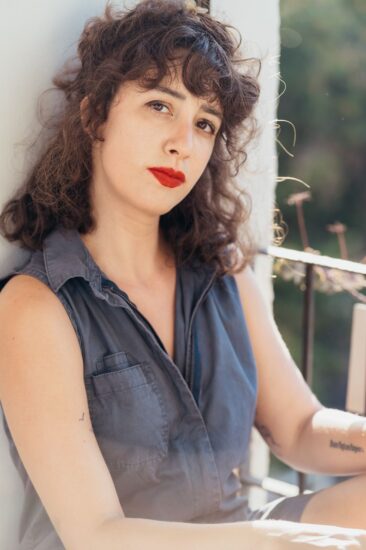 Joy Bernard is a choreographer, dancer, actress, multidisciplinary artist and writer. She creates in dance, physical and visual theater, writing, video and sound. She has been commissioned to create and perform her works in various museums, galleries, dance and film festivals across Israel, Europe and Asia.
For the past decade, in addition to her artistic practice Joy has been working as a journalist and critic, specializing in visual arts and dance. Her writing has been published in numerous newspapers and journals, such as: Haaretz, The Jerusalem Post, Flash Art, Collectors Agenda, The Art Newspaper, Portfolio Magazine, Erev Rav, literary magazine Granta and others. She has been a member of the Creative Writing team since 2024.
Joy holds a B.Dance from the Jerusalem Academy of Music and Dance, where she is currently attaining her M. Dance. She is presently training to become a Feldenkrais teacher and therapist.