
הכתבה המנצחת: רשמים של ג׳ני בירגר בעקבות צפייה ב׳פודיום׳ מאת יעל פולקה
*צילום יאיר מיוחס
*English follows
באחת השיחות עם קבוצת חברים שמכירים אותי שנים רבות, אחד מהם אמר עליי שאני “מאוד תחרותית”. הופתעתי ומיד התנגדתי. “אני? מה פתאום?” לא התחברתי למילה הזו. כולם הסתכלו עליי במבט ציני, ואז נאמר המשפט המופלא: “את לא תחרותית בכלל, כל עוד את הכי טובה!”
ובכן, גם ככותבת ב- Creative Writing איני רואה את עצמי כמתחרה באף אחת מהכותבות המצוינות והמיוחדות של הבלוג. אולי אפשר לומר שכולנו חולקות מקום ראשון? כחלק ממה שאני מזהה כדרישות מינימום לכתיבה על מחול זה להגיע לפחות (לפחות!) רבע שעה לפני הזמן, להתארגן בנחת, להגיד שלום, ולהיכנס מהצד הנכון של השורה. ואכן, ערב יום ראשון בסוף דצמבר, אני יוצאת לדרכי לראות את פודיום של יעל פולקה, יצירה שעליה שמעתי דברים נפלאים ורציתי לראות זמן רב. אני יורדת בקלילות במדרגות הנעות של הרכבת הקלה ומחכה. היא אמורה להגיע תוך כמה מספר דקות ולהביא אותי ליעדי בזמן המדויק, כלומר לפני הזמן. לפתע המסך הכחול והמשעמם מוחלף במסך אדום, ומופיעה הודעה לפיה “בגלל שביתה” הרכבות מתעכבות, והבאה בתור תגיע רק בעוד עשרים וחמש דקות.
בתוך מוחי מתחילה תנועה ערה שלא מביישת מתעמלות קרקע מהטובות בעולם. לקחת מונית? לנסוע באוטובוס? לחבור לאחד האנשים שמתרוצצים לידי ולשתף פעולה, אף שאנחנו זרים מוחלטים? אפליקציית הזמנת המוניות תקועה. אולי דווקא נחמד, אני חושבת, אגיע באיחור אופנתי, אך מיד מחשבה אחרת בועטת בה וצועקת: איך תכתבי על שלושת רבעי מופע? אני מעיפה מבט מתחנן למסך, אך הוא נותר אדום. האסימון נופל לאט, ואני מבינה שלהצגה הזו לא אגיע היום. זיעה קרה מבצבצת על המצח. אני מרגישה שנכשלתי כישלון חרוץ, מדליית “הכתבת החרוצה ביותר” התרחקה ממני שנות אור והפודיום כבר לא בשבילי. למזלי, כבר נקבע תאריך חדש בפברואר. אני נושמת לרווחה.
*
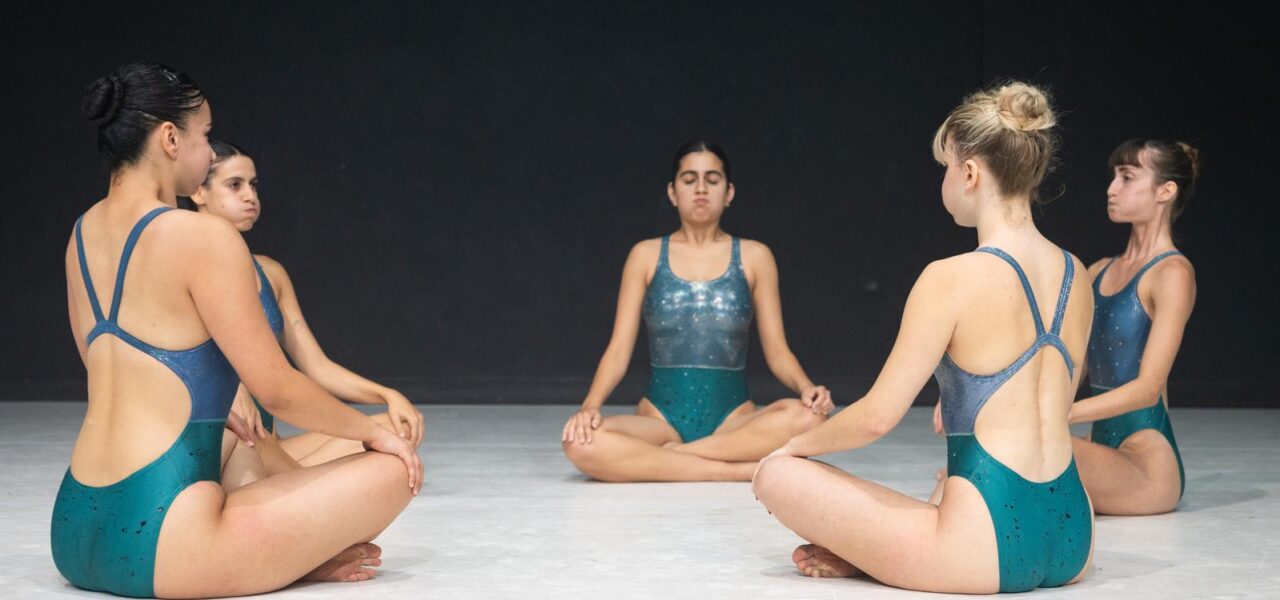
ערב חם מהרגיל, ראשון בפברואר 2026. ליתר ביטחון אני מגיעה לתיאטרון הבית ברגל. לאחר המתנה קצרה אנחנו נכנסים לבלאק בוקס של התיאטרון ומגלים שהמופע כבר בעיצומו. על הבמה חמש נשים צעירות, לבושות בגדי ים בצבע טורקיז זוהר. לצידן דמות שנראית כמאמנת, לבושה בגדי ספורט ונעלי ספורט, מצוידת במשרוקית. על הקיר תלויות מדליות רבות, ובפינה הימנית מוצבים דגלי ישראל.
אני מודה שיש לי חולשה למופעים שמתחילים לפני שאני נכנסת. אני אוהבת את התחושה שנפתחת דלת הצצה לעולם סודי שהתקיים לפניי וימשיך גם אחריי, ושהמופע הוא רק רגע אחד בתוכו. אני מתיישבת במקום שמרגיש לי שממנו רואים הכי טוב (רגע, אולי בעצם…) ומקיפה במבטי את הבמה. הרקדניות חוזרות על הפעולות שלהן, ואני מבינה שהחלק הזה יסתיים רק כשכל הקהל ישב בנחת. אני חושבת על תהליך הכתיבה שלי, שגם הוא חוזר על עצמו במבנה דומה מפעם לפעם. תחילה אני ממלאת את הדף במלל רב ורווי שגיאות כתיב, כדי לא לפספס אף מילה או לשכוח אף מחשבה; לאחר מכן, אני בוררת, מתקנת, מהדקת; לבסוף, אני מלטשת, שלב שיכול היה להימשך לנצח אלמלא הדד-ליין.
המאמנת, שהיא למעשה היוצרת יעל פולקה, פותחת את המופע בסיפור על הספורט שממנו היא מגיעה ושממנו היצירה שואבת את דימוייה – שחייה אמנותית. אני מודה לה על ההקדמה, כי על אף אהבתי לצפייה בענפי ספורט שונים, דווקא התחום הזה חמק ממני. היא מציגה שלושה חוקים בסיסיים של הענף (אני לא אגלה לכם את כולם), ושואלת את הרקדניות אם הן יכולות להציג את הנאמבר הראשון. “כן”, הן מהנהנות עם חיוך.
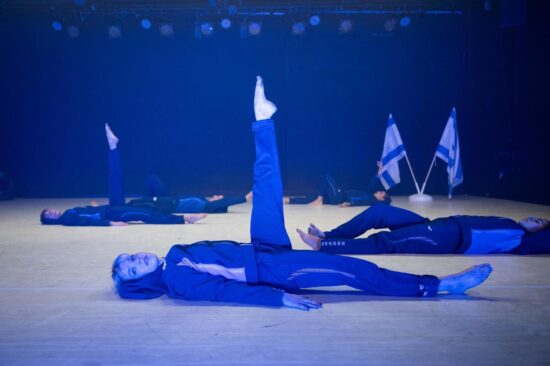 אנחנו מגלים שאחד מחוקי הברזל של הענף הוא חיוך תמידי. מאולץ, מתוח, נוכח למשך כל התרגיל, כאן על במת התיאטרון הוא חושף את כל מה שהוא מנסה להסתיר. הן מתחילות לבצע תנועות לעיבוד קצבי של השיר “רק בישראל”, אצבעותיהן ובהונותיהן מתוחות כמו הפנים. מאד אמיץ בעיני לקחת חומר תנועתי מהקשר אחד ולהציב אותו פשוטו כמשמעו בהקשר אחר לחלוטין. כאן, פראזות תנועתיות מענף הספורט מוצגות כפי-שהן על במת תיאטרון (ללא מים). שפת התנועה של שחייה אמנותית נשענת על יסודות הבאלט הקלאסי, אך חסרים בה הרגישות והניואנסים המוזיקליים שהופכים את הבאלט למרתק לצפייה גם היום. הביצוע שלהן שואף למצוינות טכנית ויכולת לצייר צורות וקווים מעל ומתחת למים הדמיוניים, כשמחצית מהזמן הן נעות ללא נשימה. אני מתפעלת מהיכולות הפיזיות של הפרפורמריות ותוהה אם מדובר ברקדניות שלמדו סגנון, או ספורטאיות שלמדו להיות על הבמה. לאחר המופע אני מגלה שכל חמש הפרפורמריות הן רקדניות מקצועיות שלמדו לחקות במדויק את תרגילי השחייה האמנותית (ואני נפלתי בפח, כי חשבתי שזה בדיוק הפוך). מכאן ואילך אתייחס אליהן כרקדניות.
הנאמבר הראשון חושף לא רק את הארכאיות של הבחירות האמנותיות בתוך ענף הספורט, אלא גם קאנון יופי שמרגיש מיושן. בכל מחווה מופיעה דמות הנסיכה הקלילה, חסרת המשקל והקול, הנעה ברכות ובחיוך תמידי. בסוף הקטע הן מאפשרות לגופן לנשום ולשחרר את המתח, ואז יעל מבקשת שוב, קליל יותר, עם יותר חיוך. המשרוקית נשמעת, והן חוזרות. שוב ושוב. בעיניי, המשרוקית היא אביזר בימתי גאוני, בדיוק בזכות חוסר ההתאמה שלה לבלאק בוקס הקטן. אם בענפי הספורט השונים היא נועדה להישמע למרחוק, כאן, היא ננשפת לתוך אוזניהן, ונטענת במשמעות של שליטה ומפגן כוח. מחשבה חולפת מחברת בין הצליל הצורם הזה לבין אמצעים אחרים של פיקוח וכפייה במרחב הציבורי, והקישור מרגיש בלתי נמנע.
בהמשך המופע יעל משתפת בעוד פרטים על חייה כילדה ספורטאית ועל כובד הייצוג הלאומי שהופך את הגוף שלה ל”גוף לאומי” במידה רבה. הרקדניות מבצעות נאברים לצלילי שירים המהללים את ישראל, לפעמים חמשתן יחד ולפעמים כדואט או טריו. בהדרגה, חיוכן מתחיל להיסדק. השלמות מתפרקת, מים אדומים זולגים אל תוך התאורה הכחולה, והקווים האסתטיים נשברים. הן משמיעות את קולן. על אף הרגשתי שהחלק הזה יכול היה להתפתח עוד מבחינה תנועתית, ולקבל עוד גוונים של אדום, המסר ברור והוא עובר: הן מאפשרות לעצמן להביע משהו מהפנים, ולהפר את השלמות החיצונית הנראית לעין.
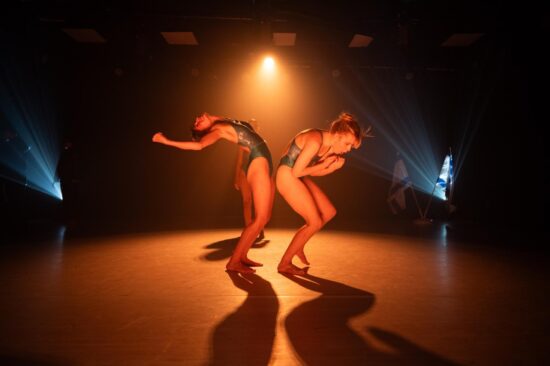 מעצם הבחירה להשמיע קול, הרקדניות שוברות את ההיררכיה הבסיסית בין המתעמלת והמאמנת, או במילים אחרות, בין מי שרגילה לציית ולבצע ומי שרגילה להורות ולדבר. מנאמבר לנאמבר, הן מספרות פרטים יותר ויותר חושפניים מחייהן כספורטאיות ילדות, על המחיר הנפשי והאישי ועל הבחירות הבלתי אפשריות שהוצבו מולן (“זה או המחזור או האולימפיאדה” נחקק לי בזיכרון). יעל פולקה סיפרה לי שהחומר הטקסטואלי לקוח משני מקורות: תחקיר של זמן אמת שיצא לפני כשנתיים, וחשף וידויים של פגיעה מינית בילדות ספורטאיות ממגוון תחומי הספורט בישראל, ומהסרט הדוקומנטרי Athlete A שחשף את הפגיעה השיטתית של הרופא לארי נאסר במאות מתעמלות צעירות בארה”ב. המילים שיוצאות מפי הרקדניות מרטיטות, מרעידות אך ברקע המים זורמים, הבריכה אינסופית ואף אחת לא טובעת.
סיפוריהן מעלים אצלי שאלות רבות. בהקשר של עולם המחול והאמנות באופן ספציפ אני תוההי: מי רשאית לדבר? איזה קול נשמע, ואיזה ידע מועבר הלאה? מי מקבלת את ההחלטות וגופן של מי מוקרב על הדרך? ובהקשר הרחב אף יותר, והנוכח עד דמעות, מי מוקרב בשנתיים האחרונות ומה המחיר שכולנו משלמים? שאלות טבעיות, שתשובותיהן רחוקות מלהיות ברורות גם ב2026.
בחירה אמנותית שהפתיעה אותי הייתה נוכחותה התמידית של יעל פולקה על הבמה. ברגעים שבהם היא לא במרכז הבמה, היא עומדת לצד הקיר ומתבוננת בהן. תחילה הרגשתי מעט חנוקה, ותהיתי מתי היא תרפה מהחבל הדמיוני הכורך אותן יחדיו. אך ככל שהמופע התקדם, יכלתי להעריך את הנוכחות שלה כזו של תמיכה ואמונה, במיוחד ברגעים החשופים והאישיים ביותר. בניגוד לתחרויות הספורט, בהן הספורטאיות עולות לבדן על הבמה, כאן היא איתן – באש ובמים. בטקס הענקת המדליות לקראת סוף היצירה היא מעניקה להן את המדליות על עצם האומץ להשמיע את קולן ולשתף בסיפוריהן, ולא על סמך איכות הביצועים ורוחב החיוך.
גדולתה של יצירה אישית בעיניי היא היכולת שלה לגעת גם במי שרחוק.ה מהקשריה הישירים. פודיום עושה זאת בחוכמה, והזמינה אותי לבחון את יחסיי עם חוקים, חיפוש מתמיד אחרי היד הקשה והמצוינות שמצוותות יחדיו בדמיוני. “אתגר שכמעט שובר אותך בדרך להתחזק” הוא תמה שחוזרת על עצמה בגרסאות שונות במהלך המופע, והמילים מהדהדות בי בעוצמה. למרות שלא הייתי ילדה ספורטאית ואף לא רקדנית, הדחיפה העצמית “כמעט להישבר” כדרך להתחזק טבועה בי, ורק לאחרונה אני מתחילה לחשוד שאולי זו לא הדרך היחידה לפעול בעולם, וודאי שלא המוצלחת ביותר. באמצעים בימתיים פשוטים של עיצוב במה, תאורה וסאונד, היצירה מצליחה לגעת בדברים המורכבים באמת: הכאב, ההקרבה וההסכמה לתבניות שממשיכות להתקיים בהיעדר התנגדות. יעל פולקה מספרת שהיא ממשיכה לאמן, ואולי כאן טמונה התקווה (הלאומית) האמיתית: האפשרות לעתיד שמופקד בידי נשים שצמחו מתוך המשבר ואינן מוכנות לחזור שוב ושוב על המוכר. אני מחכה בקוצר רוח ליצירות הבאות שלה, במים ומחוצה להם.
יעל פולקה הציגה את ׳פודיום׳ ב1.2.2026 בתאטרון הבית.
The Winning Article
Impressions following a viewing of Podium by Yael Polka
In a conversations with a group of friends who have known me for many years, one of them said that I was “very competitive.” I was surprised and immediately objected. “Me? No way.” I did not connect to that word at all. Everyone looked at me with a cynical expression, and then this wonderful sentence was uttered: “You’re not competitive at all, as long as you’re the best.”
Well then, even as a writer for Creative Writing I do not see myself as competing with any of the excellent and unique writers of the blog. Maybe one could say that we all share first place? As part of what I identify as the minimum requirements for writing about dance is arriving at least fifteen minutes early, getting settled calmly, saying hello, and entering from the correct side of the row. And indeed, on a Sunday evening at the end of December, I set out to see Podium by Yael Polka, a work I had heard wonderful things about and had wanted to see for a long time. I glided lightly down the escalators of the light rail and waited. It was supposed to arrive in a few minutes and bring me to my destination at the exact right time, meaning early. Suddenly the boring blue screen switched to red, and a message appeared saying that “due to a strike” the trains were delayed, and the next one would arrive only in twenty five minutes.
Inside my brain an intense choreography began, one that would not shame the world’s best floor gymnasts. Take a taxi? Get on a bus? Team up with one of the people running around next to me and cooperate, even though we are complete strangers? The taxi app was stuck. Maybe it is actually nice, I thought, I will arrive fashionably late, but immediately another thought kicked in and shouted: how will you write about three quarters of a performance? I threw a pleading glance at the screen, but it remained red. The realization sunk in slowly, and I understood that I would not make it to the show . Cold sweat beaded on my forehead. I felt that I had failed a resounding failure, the medal for “most diligent writer” had drifted away from me, and the podium was no longer for me. Luckily, a new date had already been set for February. I breathed a sigh of relief.
*
An unusually warm evening, the first of February 2026. Just to be safe, I arrive at Habait Theatre on foot. After a short wait we enter the black box and discover that the performance is already underway. On stage are five young women, dressed in bright turquoise swimsuits. Beside them stands a figure who looks like a coach, wearing sports clothes and sneakers, equipped with a whistle. On the wall hang many medals, and in the right corner stand Israeli flags.
I admit that I have a weakness for performances that begin before I enter. I love the feeling that a door opens onto a secret world that existed before me and will continue after me, and that the performance is just one moment within it. I sit in a seat that feels to me like the best place to see from (wait, maybe it’s actually…) and scan the stage. The dancers repeat their actions, and I understand that this part will only end once the entire audience is seated comfortably. I think about my own writing process, which also repeats itself in a similar structure from piece to piece. First I fill the page with lots of text riddled with spelling mistakes, so as not to miss a single word or forget a single thought. Afterwards, I select, correct and tighten. Finally, I polish, a stage that could go on forever if not for the deadline.
The coach, who is in fact the creator Yael Polka, opens the performance with a story about the sport she comes from and from which the work draws its imagery: synchronized swimming. I am grateful for the introduction, because despite my love of watching various sports, this particular field had slipped past me. She presents three basic rules of the sport (I will not reveal them all here) and asks the dancers if they can present the first number. “Yes,” they nod with a smile.
We discover that one of the iron rules of the sport is a constant smile. Forced, tense, present throughout the entire routine, here on the theatre stage it reveals everything it tries to hide. They begin performing movements to a rhythmic arrangement of the song “Rak BeYisrael” (literally: only in Israel), their fingers and toes stretched like their faces. It feels very brave to me to take movement material from one context and place it, quite literally, in a completely different one. Here, movement phrases from the sport are presented as they are on a theatre stage, minus the water. The movement language of synchronized swimming relies on elements of classical ballet, but it lacks the sensitivity and musical nuances that make ballet fascinating to watch even today. Their performance strives for technical excellence and the ability to draw shapes and lines above and below the imaginary water, while for half the time they move without breathing. I am impressed by the physical abilities of the performers and wonder whether these are dancers who learned the style, or athletes who learned to be on stage. After the performance I discover that all five performers are professional dancers who learned to precisely imitate synchronized swimming routines, and I fell into the trap, because I thought it was exactly the opposite. From here on I will refer to them as dancers.
The first number reveals not only the archaic nature of the artistic choices within the sport, but also a beauty canon that feels outdated. In every gesture appears the figure of the light, weightless, voiceless princess, moving softly with a constant smile. At the end of the segment they allow their bodies to breathe and release the tension, and then Yael asks them to do it again, this time even lighter and with more smiles. The whistle sounds, and they repeat. Again and again. To me, the whistle is a brilliant theatrical prop, precisely because of its mismatch with the small black box. If in sports it is meant to be heard from afar, here it is blown straight into their ears, charged with meanings of control and a display of power. A passing thought connects this grating sound to other means of surveillance and coercion in the public space, and the association feels unavoidable.
As the performance continues, Yael shares more details about her life as a child athlete and about the weight of national representation that turns her body into a “national body”, therefore separate from her. The dancers perform numbers to the sounds of songs that praise Israel, sometimes all five together and sometimes as a duet or trio. Gradually, their smiles begin to crack. Perfection falls apart, red water seeps into the blue lighting, and the aesthetic lines break. They make their voices heard. Even though I felt that this section could have developed further in movement terms and received more shades of red, the message is clear and it comes through: they allow themselves to express something from the inside, and to violate the outward perfection that is visible to the eye.
By the very choice to speak, the dancers break the basic hierarchy between gymnast and coach, or in other words, between the one accustomed to obey and perform and the one accustomed to command and speak. From number to number, they tell increasingly exposing details from their lives as child athletes, about the emotional and personal cost and about the impossible choices placed before them (“either it’s your period or the Olympics, you choose” is etched in my memory). Yael Polka told me that the textual material is drawn from two sources: an investigation by Zman Emet from about two years ago, which exposed testimonies of sexual abuse of child athletes from various sports in Israel, and from the documentary film Athlete A, which revealed the systematic abuse by doctor Larry Nassar of hundreds of young gymnasts in the United States. The words that come out of the dancers’ mouths are trembling and shaking, but in the background the water keeps flowing, the pool is endless, and no one drowns.
Their stories raise many questions in my mind. In the context of the dance and art world specifically, I wonder: who is allowed to speak? Which voice is heard, and what knowledge is passed on? Who makes the decisions and whose body is sacrificed along the way? And in an even broader context, present to the point of tears, who has been sacrificed in the past two years, and what price are we all paying? Natural questions, whose answers are far from clear even in 2026.
An artistic choice that surprised me was Yael Polka’s constant presence on stage. In moments when she is not at the center, she stands by the wall and watches them. At first it felt slightly suffocating, and I wonder when she will loosen the imaginary rope binding them together. But as the performance progresses, I come to appreciate her presence as one of support and belief, especially in the most exposed and personal moments. Unlike sports competitions, where the athletes go on stage alone, here she is with them, through fire and water. In the medal ceremony towards the end of the piece, she awards them medals for the courage to raise their voices and share their stories, rather than based on performance quality or the width of their smile.
The greatness of a personal work, in my eyes, lies in its ability to touch even those who are far from its direct contexts. Podium does this wisely, and invited me to examine my relationship with rules, with the constant search for the firm hand and for excellence that are paired together in my imagination. “A challenge that almost breaks you on the way to becoming stronger” is a theme that recurs in different versions throughout the performance, and the words echo within me with force. Although I was not a child athlete and not a dancer either, the self-driven push to “almost break” as a way to grow stronger is embedded in me, and only recently have I begun to suspect that perhaps this is not the only way to act in the world, and certainly not the most successful one. Through simple theatrical means of set design, lighting, and sound, the work manages to touch the truly complex things: pain, sacrifice, and consent to patterns that continue to exist in the absence of resistance. Yael Polka says that she continues to coach, and perhaps here lies the true, national hope: the possibility of a future entrusted to women who grew out of crisis and are unwilling to return again and again to the familiar. I am eagerly awaiting her next works, in the water and beyond it.
Yael Polka presented ‘Podium’ on February 1, 2026 at Habait Theatre.
 ג’ני בירגר
נולדה ב-1984 בקייב, אוקראינה, כיום חיה ופועלת בתל אביב.
יוצרת וחוקרת גוף רב-תחומית, פרפורמרית ומורה. יצירות הוידיאו-דאנס שלה הוקרנו במבחר פסטיבלים בארץ ובעולם (ביניהם Cinedans, Cyprus Film Festival, Burgundy Video Dance Festival, בית הנסן). בעלת קשת רחבה של הכשרה פיזית ואקדמית, ומחפשת ליצור חיבורים וקשרים חדשים בין גופי ידע שמדברים מטבעם בשפות שונות. בשנים האחרונות חוקרת את הממשק בין תנועה ומילים; דרכים ליצור חומר כוריאוגרפי בזמן אמת; תנועה בתוך מים ומחולות ממערב אפריקה. מלמדת שנים רבות בפרויקט “קהילה בתנועה” המקיימת שיעורי מחול עבור א.נשים החיים עם מחלת הפרקינסון (סטודיו יסמין גודר), כמו גם יוגה ופילאטיס באופן פרטי.
Jenny Birger
Born in 1984 in Kyiv, Ukraine, currently lives and works in Tel Aviv.
A multidisciplinary artist and researcher, performer, and teacher. Her video-dance works have been screened at selected festivals in Israel and abroad (including Cinedans, Cyprus Film Festival, Burgundy Video Dance Festival, Hansen House). She holds a wide range of physical and academic training and seeks to create new connections and links between bodies of knowledge that naturally speak different languages.
In recent years, she has been researching the interface between movement and words; ways of creating choreographic material in real time; movement in water; and dances from West Africa. She has been teaching for many years in the project Movement Communities, which holds dance classes for people living with Parkinson’s disease (Yasmeen Godder Studio), as well as teaching yoga and Pilates privately.