
נונה: רקדן, להקה, רקדן-להקה מאת עדן קרמר
Photos by Efrat Mazor
*English follows
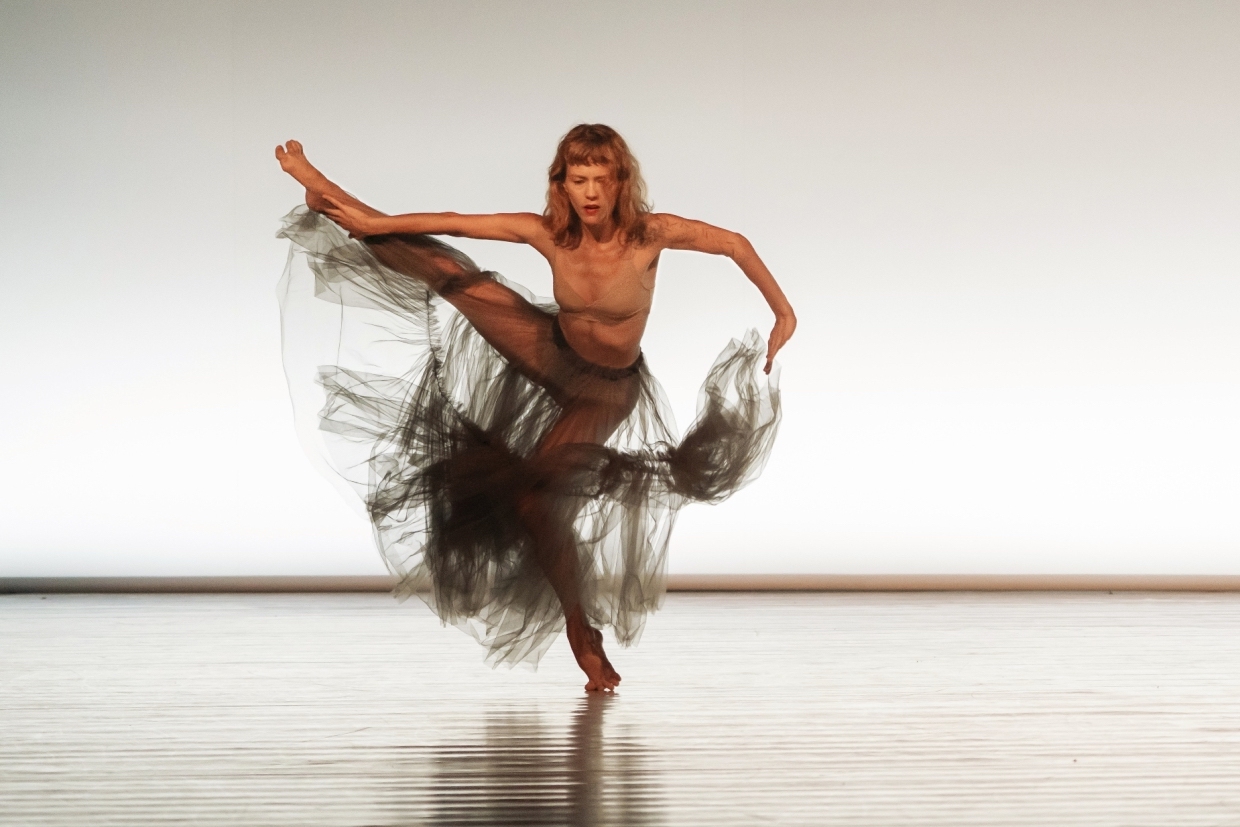
אולם דלל היה מלא עד אפס מקום בבכורה של NONA, יצירתן החדשה של האחיות נעה ורטהיים ורנה ורטהיים קורן ללהקת ורטיגו. המופע נפתח כשאור חם ועדין שוטף את הבמה, מאיר רקדנית אחת, קורינה פריימן, בעומק הבמה. היא לבושה בחצאית טול נשפכת, חצי שקופה, יפהפייה. הבמה מעוצבת במינימליזם מדויק – חיפוי קירות וגב במה אפורים, נקיים. הרקדנית מתחילה לנוע. היא מהפנטת, כריזמה נשפכת ממנה, התנועה שלה ממלאת את כל החלל. במובן מסוים, תמונת הפתיחה הזאת מקפלת בתוכה את היצירה כולה, על יתרונותיה וחסרונותיה: NONA מקיימת עולם בימתי מדויק ואסתטי במיוחד שבתוכו מתרחשת עבודת להקה שלמה שנשענת, בחלקים רבים מדי, על סולנית אחת.
התוכנייה מספרת לנו שהיצירה היא מסע אל מושג הזמן. זהו אתגר כוריאוגרפי ענק שהרי מדובר באחד המושגים העמוקים, החידתיים והמורכבים בקיום. במובן מסוים, כל יצירה לבמה משתמשת בזמן כחומר גלם, בוודאי כל יצירת מחול. ריקוד הוא תנועה במרחב ובזמן – קצב ושהייה הם הלחם והחמאה של תנועה. אחת מהחוזקות של NONA היא משך הזמן שלה – עבודה קצרה בת שעה בדיוק, משך מתאים ומדויק לה. ההתייחסות לזמן בתוך הכוריאוגרפיה עצמה לא ליטרלית, וטוב שכך. אחד המוטיבים המרכזיים הוא לפיתת הצוואר עם כף היד, כמו בחניקה שמרמזת על פרשנות מסוימת למושג: הזמן כתליין, כגזירה שאין לחמוק ממנה. חוץ מזה, העבודה כולה מופשטת ומדברת בשפה המוכרת של יצירות להקה מודרניות ועכשוויות: עבודה סביב חומר תנועתי שנשען על קומבינציות פיסיות מבוססות טכניקה מודרנית, בקומפוזיציות משתנות במרחב – שורות, מעגל, זוגות. הרקדנים נכנסים ויוצאים מהבמה דרך קוליסות צדדיות סטנדרטיות וכך נוצרות סצנות קצרות שונות. NONA מאופיינת בתפיסה אסתטית גבוהה, כל תמונה מחושבת ונעימה לצפייה. כאמור, גם בקטעי הסולו ובמיוחד בקטעי הלהקה בלטה רקדנית אחת באישיות בימתית ובחיבור שנראה עמוק וכן לחומר התנועתי.
 זה לא שיתר הלהקה, שכוללת בסך הכל חמישה רקדנים וחמש רקדניות, הם לא מוכשרים או מיומנים. להיפך, ברור שמדובר ברקדנים ורקדניות בעלי יכולות (טכניות וגם הבעתיות) גבוהות, שמסורים לעבודת הביצוע ומקדישים לה את עצמם במלואם. בכל זאת, בלט הפער בין קטעי הלהקה לבין קטעי הסולו או הדואטים. בכל פעם שהבמה התרוקנה זכינו לקטעי מחול מצוינים ומרגשים, אפילו פואטיים. בלטו במיוחד הסולו של קורינה פריימן שכבר ציינתי, ועוד שני קטעי דואט של שני רקדנים גברים שהדגימו איך רצף של הרמות, נשיאות והישענויות יכול להיות לא רק מפגן וירטואוזי של כוחו של הגוף הגברי, אלא ממש לספר סיפור שנוגע עמוק בלב.
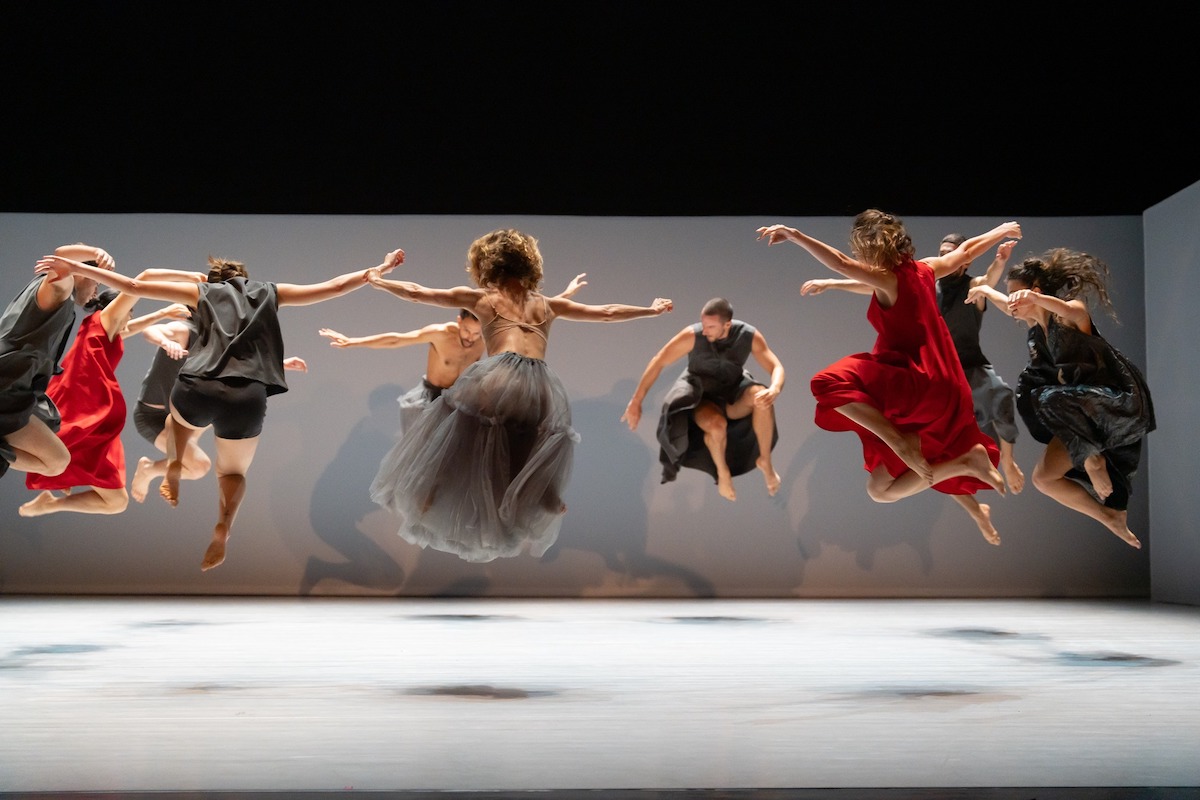
לעומתם, כאמור, קטעי הלהקה פחות הקליקו. אם בקטעי הסולו והדואט היופי טמון באנושיות, בייחודיות של כל רקדן ורקדנית כאינדיבידואל, בקטעי להקה (בין אם יוניסון או פשוט סצנה מרובת רקדנים) הכוח נובע מעוצמת הקבוצה, הביחד. כדי שהקסם ה”להקתי” יתרחש צריך דיוק מוחלט, סנכרון מושלם ואיכות ביצוע ללא רבב. ב-NONA, קטעי הלהקה מעט החווירו. העֲדִינוּת לא היתה עדינה מספיק והעוצמה לא היתה מתפרצת מספיק. זה חבל, כי יש ביצירה קטעים עם פוטנציאל “וואו”, למשל כשכל הלהקה נעה במעגל במהירות, תוך החזקת ידיים, קפיצות אדירות ורקיעות רמות. זה רגע פולחני כמעט, שיכול היה להיות חגיגה של חַיּוּת מתפרצת ולסחוף אחריו את כל מי שיושב בנוחות בכסאו.
למה, למרות כוריאוגרפיה חכמה, עיצוב במה ותלבושות מושלם (עבודה מרשימה ביותר של זהר שואף וששון קדם) ורקדנים מצוינים, משהו עדיין חסר בעבודת הלהקה? יכול להיות שפשוט מדובר בבכורה. עבודות נוטות להשתפר עם הזמן, כשבכל הרצה התנועות נטמעות אל תוך גופם של הרקדנים עד שהופכות לטבע שני עבורם. אחרי ששינון החומר הושלם, הם מתפנים לעבודת מילוי הטקסט התנועתי בעצמם, באישיות שלהם, בחדוות התנועה. ייתכן גם שNONA, כמו יצירות רבות במחול הישראלי ובכלל, פשוט סובלת מרְצִינוּת-יתר. ההבלחות בהן הרקדניות והרקדנים הרשו לעצמם ליהנות, להרגיש עד הסוף, להביא תנועה עסיסית, ניצוץ בעיניים, לפעמים אפילו סקסיות – היו הדבר עצמו. הרי בשביל רגעים כאלו יוצאים מהבית.
יצאתי עם מחשבות על המתח בין ביטוי אישי לבין עבודת להקה. אני תוהה, האם המגמה שהולכת ומתחזקת במחול ובפרפורמנס העכשווי, של גיוון וייחודיות, של העמקת הקול האישי, מעמידה דור רקדנים שקשה יותר לשבץ בלהקות? האם כדי שקטע יוניסון יעבוד יש צורך למחוק, או לבטל במידת מה את גוון ההבעה הפרסונלי? הכיוון שאליו הולך המחול העכשווי בארץ ובעולם כולו הוא של רקדנים-יוצרים, שיוצרים על עצמם ועבור עצמם, פעמים רבות מתוך הסיפור האישי שלהם. מה מקומן של להקות רפרטואריות בסצנה שהולכת ונמשכת אל האישי? אולי דווקא להקות יוכלו להביא את השורה: בדמיוני קבוצה של גופים שונים, מגוונים, אינדיבידואליים, שמצליחים למצוא סנכרון ברמה גבוהה יכולים ליצור רגעים חזקים אפילו יותר מאשר קור-דה-בלט של בלרינות משוכפלות. אבל כדי שזה יקרה במלואו זאת אמנות בפני עצמה. NONA יכולה להגיע לשם, אם נעה ורנה יבחרו להצמיח אותה לכיוון הזה: מילוי העולם האסתטי והכוריאוגרפי בברק, בנשמה.
להקת ורטיגו הציגה את הבכורה של NONA ב21.12.2025 באולם דלל, מרכז סוזן דלל.
NONA: Company, Dancer, Company-Dancer by Eden Kramer
The Dallal Hall was filled to capacity at the premiere of NONA, the new creation by sisters Noa Wertheim and Rina Wertheim-Koren for Vertigo Dance Company. The performance opens as a warm, gentle light washes over the stage, illuminating a single dancer, Korina Fraiman, standing upstage. She is dressed in a flowing, semi-transparent tulle skirt—beautiful and delicate. The stage design is marked by precise minimalism: clean gray wall coverings and an uncluttered backdrop. The dancer begins to move. She is mesmerizing; charisma pours from her, and her movement fills the entire space. In a sense, this opening image encapsulates the work as a whole, with both its strengths and its shortcomings: NONA creates a highly precise and aesthetically refined world, within which an entire ensemble operates, yet in too many moments leans on a single standout soloist.
The program notes tell us that the piece is a journey into the concept of time. This is a tremendous choreographic challenge, as time is one of the deepest, most enigmatic, and most complex concepts of existence. In a way, every stage work uses time as raw material—certainly every dance work does. Dance is movement in space and time; rhythm and duration are the bread and butter of movement. One of NONA’s strengths is its length: a compact work of exactly one hour, a duration that suits it precisely. The engagement with time within the choreography itself is not literal, and rightly so.
One of the central motifs is the hand clasping the neck, as if in strangulation, hinting at a particular interpretation of the concept: time as executioner, as an inescapable decree. Beyond this, the work is entirely abstract and speaks the familiar language of modern and contemporary ensemble dance: movement material built on physical combinations grounded in modern technique, arranged in shifting spatial compositions—lines, circles, duets. The dancers enter and exit through standard side wings, creating a series of short, distinct scenes. NONA is characterized by a high aesthetic sensibility; every image is calculated and pleasing to watch. As noted, in the solo sections and especially within the ensemble passages, one dancer stood out for her stage presence and for what appeared to be a deep, sincere connection to the movement material.
It is not that the rest of the company—comprised of five male dancers and five female dancers—are untalented or unskilled. On the contrary, it is clear that these are dancers with high technical and expressive abilities, deeply committed to the performance and fully devoted to its execution. Still, a gap emerged between the ensemble sections and the solos or duets. Each time the stage emptied, we were treated to excellent, moving, even poetic dance segments. Particularly striking were Korina Fraiman’s solo, already mentioned, and two duets performed by male dancers, which demonstrated how a sequence of lifts and weight-sharing can be not merely a virtuosic display of male physical strength, but truly tell a story that touches the heart.
By contrast, as noted, the ensemble sections clicked less successfully. If in the solos and duets beauty lies in humanity, in the uniqueness of each dancer as an individual, then in ensemble sections (whether unison or simply multi-dancer scenes), the power should emerge from the collective—the togetherness. For ensemble magic to occur, absolute precision, perfect synchronization, and flawless execution are required. In NONA, the ensemble sections felt somewhat pale. The delicacy was not delicate enough, and the power was not explosive enough. This is unfortunate, because the work contains moments with real “wow” potential—for example, when the entire company moves rapidly in a circle, holding hands, with enormous jumps and resounding stomps. It is an almost ritualistic moment that could have become a celebration of bursting vitality, sweeping along everyone seated comfortably in their chairs.
Why, despite intelligent choreography, perfect stage and costume design (an impressive collaboration by Zohar Shoef and Sasson Kedem), and excellent dancers, does something still feel lacking in the ensemble work? It may simply be a matter of this being a premiere. Works tend to improve over time, as with each run the movements sink into the dancers’ bodies until they become second nature. Once memorization is complete, the dancers are free to invest in filling the movement text themselves—with their personalities, with joy of dancing. It is also possible that NONA, like many works in Israeli dance and beyond, simply suffers from an excess of seriousness. The moments in which the dancers allowed themselves to enjoy and feel fully, a spark in the eyes, sometimes even sensuality—those moments were the real thing. After all, those are the moments we leave the house for.
I left with thoughts about the tension between personal expression and ensemble work. I wonder whether the growing trend in contemporary dance and performance—toward diversity and individuality, toward deepening the personal voice—produces a generation of dancers who are harder to integrate into ensembles. Does making a unison section successful require erasing, or at least partially canceling, personal expressive color? The direction contemporary dance is taking in Israel and worldwide is toward dancer-creators, who create on themselves and for themselves, often drawing on personal narratives. What, then, is the place of repertory companies in a scene increasingly drawn to the personal? Perhaps ensembles can offer the answer: in my imagination, a group of different, diverse, individual bodies that succeeds in achieving high-level synchronization could create moments even more powerful than a corps de ballet. But to make that truly happen is an art in itself. NONA can get there, if Noa and Rina choose to grow it in that direction—infusing its aesthetic and choreographic world with sparkle and with soul.
Vertigo Dance Company presented the premiere of NONA on December 21, 2025 at Dallal Hall, the Suzanne Dellal Centre.
עדן קרמר
עדן קרמר היא יוצרת תיאטרון-מחול עצמאית, פרפורמרית ורקדנית, בוגרת תכניות רזידנסי בסדנא לאמנות רמת אליהו, במועצה אזורית חוף הכרמל ובסדנאות הבמה והמסך ביפו. עבודותיה האחרונות (“הטפט הצהוב” ו-“קתדרלה”) הוצגו בתיאטרון יפו ובמרכז נא לגעת לתיאטרון נגיש. עדן רקדה ביצירות של כוריאוגרפים שונים, ביניהם דניאל גליה-קינד, עירד אבני וגיא דולב. עבודתה האמנותית נתמכת על ידי מענקים מטעם מפעל הפיס, קרן רבינוביץ’ לאמנויות, עיריית תל אביב ומרכז “נא לגעת”. היא הופיעה בפסטיבלים ובמות בישראל ובחו”ל. עדן עוסקת הן ביצירתה והן במחקר תיאורטי בתחומים הקשורים בתנועה, נרטיב, סיפור, גוף והיחסים ביניהם. במקביל לעיסוקיה במחול, היא עורכת לשונית ועורכת תוכן עצמאית בעלת ניסיון בעריכת טקסטים אקדמיים וטקסטים בתחומי האמנות כגון תסריטים, מחזות ותערוכות. כתבות כמו גם מאמרים אקדמיים שלה התפרסמו במגזין “מחול עכשיו” בעריכת רות אשל. עדן היא לקטורית במאגר הלקטורים של קרן גשר לקולנוע וספקית תוכן (עריכה, ליווי ותרגום) של עמותת הכוריאוגרפים. שימשה כאסיסטנטית ומנהלת תוכן של הסופרת מיכל גוברין והקימה את אתר האינטרנט שלה. בעבר, עבדה כלקטורית בהוצאת הספרים “עם עובד”. עדן היא בוגרת תואר ראשון בהצטיינות במדעי הרוח, ספרות וחינוך ממכללת “אורנים” וסטודנטית לתואר שני בתכנית הבינתחומית באמנויות באוניברסיטת תל אביב. בנוסף, היא בוגרת קורס מורים דו-שנתי לויניאסה יוגה, מסלול “שלומבל” – לימודי המשך לרקדנים בהנחיית שלומית פונדמינסקי, וקורסים רבים במחול בטכניקות מגוונות בארץ ובעולם. היא חברה מובילה בקהילת אנ”ת, העוסקת באמנות, חינוך וחברה, וחברה ושגרירה של “קרן העתיד” גרמניה-ישראל.