*צילום אייל הירש
*English follows
“כל פירוש מיותר. מפני שפירוש גורר פירוש לפירוש, ופירוש, פירוש לפירוש. לסוף הפירושים עצמם עושים עצמם עניין להתפרש, בתוך כך שנותיו של אדם יוצאות ולא נתפרשו הפירושים“, ש״י עגנון, ספר המעשים.
זה מה שהיה כתוב בתחילת דף הערב המושקע.
ניסיתי באמת לא לפרש ורק להתמסר לתנועה, אבל היה קשה שלא לחבר את החוץ אל הפנים, את המציאות לדמיון, את האמנות לחיים. קשה לי גם כיוצרת עצמאית במדינה שתקציב האמנות בה מקוצץ עוד ועוד לטובת מלחמות, שלא לחשוב על התקציבים שהושקעו בערב הזה. כמובן קינאתי. אולי אף פעם לא העזתי לחלום על העלאת מופע במשכן? תהיתי. התרווחתי בכיסא וחשבתי כמה נעים לשבת ולצפות במחול, בגופים היפים המתנועעים בחופשיות, בגמישות, בכח ורכות, יוצרים תנועה ודימויים בחלל. לשבת ולצלול לתנועה וליצירה ולעוף איתם בדמיוני. להתנתק לשעה מהמציאות האיומה שבחוץ, ורק לעוף איתם. ואכן הצלחתי, לרגעים ספורים.
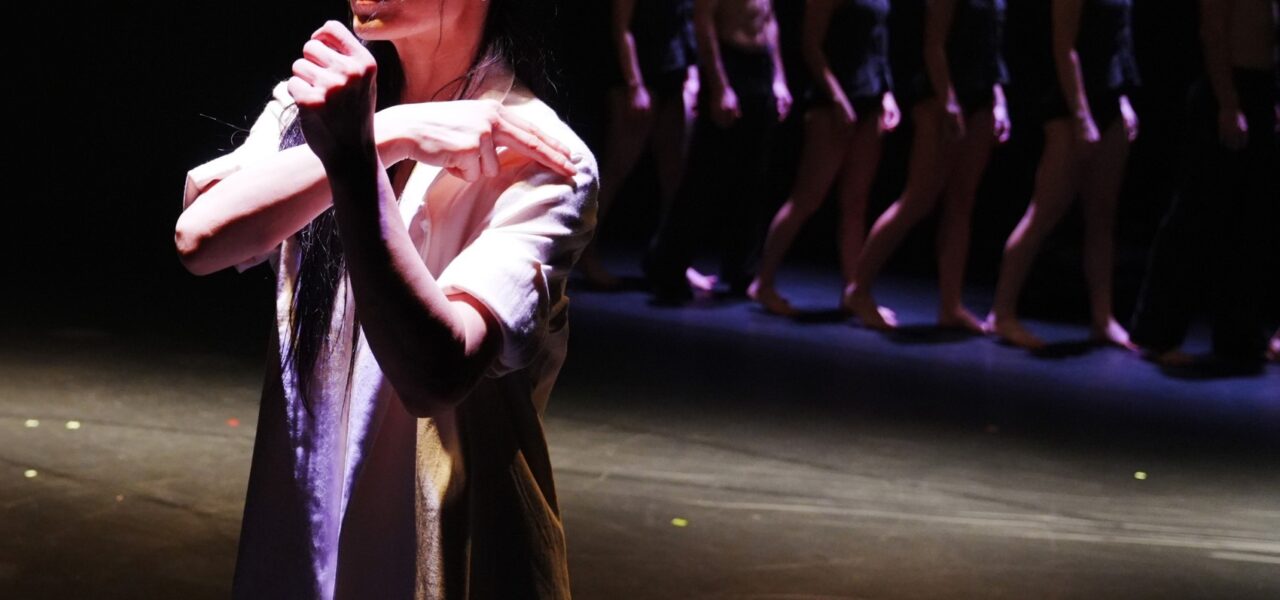
רוב הזמן הדימויים זעקו עליי. אור אדום, ריצה במקום, שורות וטורים של הליכה חיילית, טקסט ארוך של הצהרת זכויות האדם של האומות המאוחדות. שיר פתיחת המופע, עיבוד ל”אין לי ארץ אחרת” של קורין אלאל.
הנה כולנו כאן, מי שאין להם ארץ אחרת, כ1,600 איש ואישה באולם המפואר, יושבים בשקט לצפות באי השקט, בריקוד המציאות, בשיקוף המציאות. רק לפני רגע עברנו על פני כיכר החטופים וראינו את הפרצופים המוכרים מהתמונות, לפני עוד רגע ישבנו במקלטים וספגנו טילים וכמה עוד נספוג?
“Where do we go?” טקסט נוסף מהפסקול.
ואני רק רציתי לברוח, לשכוח, לצפות באמנות שתרחיק מהמציאות.
חלל המשכן לאמנויות הבמה הוא מרחב מוגן, כך אמר הקריין בתחילת המופע. “אבל התנפצו פה מלא זגוגיות” כך אמרה שכנתי לחברתה. בכלל היה לה הרבה מה להגיד. בקטע של משפטי הצהרת זכויות האדם היא נזעקה וזעקה “בית ספר!”. אולי התכוונה לכך שאנחנו, קהל המשכן המפונפן, בטח ובטח מכירים את הזכויות. אין צורך לחזור עליהן בפנינו שוב ושוב. אנחנו בטח ובטח גם יודעים שהן מופרות לא רחוק מכאן, שוב ושוב.
מחנק עלה בי עוד ועוד וניסיתי לנשום עמוקות ולהתמקד ביופיו של המחול. רקדנים ורקדניות צעירים שיכולים לעשות הכל. עד כמה הם משוחררים באמת? מאותו השחרור מהעבדות המדובר במופע? חלקם עלו מחו”ל רק כדי לרקוד במקום האדום הזה. הם מבטאים את הצורך שלנו בשחרור, הצורך שלנו רוקד. ריקוד הוא שחרור… הפרשנויות הגיעו ורקדו לי בראש.
“כל בני האדם נולדו חופשיים. אף אחד לא יוחזק כעבד. לכולנו זכות למגורים ומרחב אישי”, הפסקול המשיך לירות עלינו מילים בצרורות.
היו רגעים קסומים בהם הצלחתי להשתחרר ולהירגע מעט. דואט בין שני רקדנים גברים, ועוד רגעים קבוצתיים של יופי. רגעים שהשכיחו ממני את החוץ. לרגע. אולי אם הגברים היו רוקדים ולא נלחמים היה שקט? עוד פרשנות.
הנה שוב חוזר מארש המלחמה וצלילים צורמים, אורות אדומים ורקדנים שכובים, מוטלים.
והם יוצאים מזה ומתגברים והלוואי וכולנו נתגבר.
“Maybe next year” אומר פס הקול.
אני יוצאת למציאות שלא השתנתה כלל. נגמרו לי המילים. נגמר גם האוויר.
“לנשום עמוקות”, מזכירה לעצמי.
נשמתי והתבוננתי במחשבות הכהות. רציתי בתמימות אמנות שתשכיח ממני את המציאות ולו לרגע, אבל לא ניתן לשכוח, לא ניתן לברוח.
רמי באר יצר מתוך המתחולל בו ובנו אמנות יפיפיה שרוקדת את הקושי הזה, עד כדי כך שהיה קשה להינות ממנה.
כנראה שפשוט לא ניתן לברוח.
הלהקה הקיבוצית הציגה את ׳קול אדם׳ מאת רמי באר ב14.7.2025 בבית האופרה- המשכן לאומנויות הבמה תל אביב.
אלה גרינבום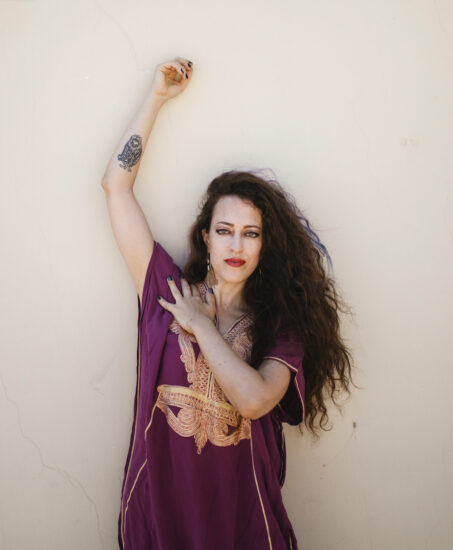
אלה גרינבום היא כוריאוגרפית ואמנית רב תחומית הפועלת בתל אביב-יפו. אלה למדה בתיכון הגימנסיה העברית במסלול תולדות האמנות וציור. בשנים 2001-2005 למדה בבצלאל אקדמיה לאמנות ועיצוב ירושלים, במחלקה לאנימציה. סרט הגמר שלה ״Wonderwoman״, זכה בציון לשבח בפסטיבל הבינלאומי לסרטי נשים ברחובות, והוצג בתערוכת אמניות עצמאיות בבית אנה טיכו בירושלים. עם סיום לימודיה בבצלאל החלה להשתלם במחול מזרחי והשתתפה במיצגים שונים כרקדנית, זמרת ושחקנית, בניהם: ״ערס פואטיקה״ – ערבי שירה שייסדה המשוררת עדי קיסר בתל אביב, ״אישה ללא בית” מאת ראידה אדון במוזיאון תל אביב לאמנות, “הנאשם הראשון” מאת סהר עזימי במוזיאון ישראל, וכן במופעים של להקות המוזיקה ״מידנייט פיקוקס״, ״וואצ’ומה בנד״, יוסי פיין ובן אילון, מקהלת אלשייך ומקהלת ראנה. משנת 2009 חברה בלהקת המחול של הכוריאוגרפית אורלי פורטל, איתה היא מופיעה באופן קבוע ביצירות שונות. גרינבוים התמחתה במחול מזרחי בסמינר הקיבוצים ובבי”ס ערבסק ירושלים, במוזיקה ותורת המקאם בבי”ס מוסררה וכן היא מדריכת פילאטיס מוסמכת מטעם Pilates Sports Center – PSC. אלה הצטרפה לעמותת הכוריאוגרפים בשנת 2022 ומשתתפת בשלל פרויקטים של העמותה כולל ׳חיים בתנועה׳.
בין היצירות שלה ׳בנות הים שרות׳, ׳כוכבת המזרח׳ ו׳דרך הלב׳, ׳פעמוני רוח׳, ׳דלת לחדר׳, ו׳לילתי- הלילה שלי׳.
Ella Greenbaum’s response to Kol Adam by Rami Be’er for the Kibbutz Contemporary Dance Company
“Every interpretation is redundant. Because interpretation leads to interpretation of the interpretation, and interpretation of the interpretation of the interpretation. In the end, the interpretations themselves seek to be interpreted, and meanwhile a person’s years pass, and the interpretations remain unexplained.”
S.Y. Agnon, The Book of Deeds
This is what was written in the program notes of the evening’s elaborate performance.
I tried not to interpret, and to simply surrender to the movement, but it was hard not to connect the outer world to the inner, reality to imagination, art to life. It is also hard for me as an independent artist in a country where the budgets for the arts keep getting slashed in favor of wars, not to think about the funds invested in this evening. And yes, I was envious.
Maybe I never dared to dream of staging a performance at the Opera House? I wondered.
I settled into my seat and thought how pleasant it is to sit and watch dance: beautiful bodies moving freely, with flexibility, strength, and softness, creating movement and imagery in space.
To sit and dive into movement and creation, to fly alongside them in my imagination.
To disconnect for an hour from the terrible reality outside, and just go with them.
And I did manage to, for a few brief moments.
Most of the time, however, the images screamed at me. A red light. Dancers running in place. Lines and columns of soldier-like marching. A long text, the Universal Declaration of Human Rights.
The opening song of the show was set to an arrangement of “Ein Li Eretz Acheret” (I Have No Other Country) by Corinne Allal.
There we all were, those who have no other country: around 1,600 men and women in the grand hall, quietly watching the unrest, the dance of reality, the mirror of our existence.
Just a moment ago we had passed Hostages Square and saw the familiar faces from the photos. A moment before that, we were sitting in bomb shelters, under rocket fire. And how much more will we have to endure?
“Where do we go?” another line from the soundtrack.
And all I wanted was to escape, to forget, to watch art that would distract me from reality.
The Opera House was described by the voiceover before the show started as a “protected space.”
“But so many glass panes shattered here,” my neighbor said to her friend.
She had a lot to say in general.
During the section with the Human Rights Declaration, she burst out: “School!”
Maybe she meant that we, the posh Opera House crowd, surely already know this text by heart.
There’s no need to repeat them to us again and again.
And surely, we also know that they’re being violated not far from here, over and over.
A growing sense of suffocation welled up inside me, and I tried to breathe deeply and focus on the beauty of the dance.
Young dancers, capable of anything. But how free are they, really?
Free from the same bondage referenced in the performance?
Some came here from abroad just to dance in this red land.
They express our need for freedom, our need is dancing.
Dance is liberation… and the interpretations started dancing in my head.
“All human beings are born free. No one shall be held in slavery. We all have the right to housing and personal space.”
The soundtrack kept firing bursts of words at us.
There were magical moments when I was able to let go and relax a bit: a duet between two male dancers, ensemble sections.
Moments that made me forget the outside world. For a moment.
Maybe if men danced instead of fought, there would be peace? Another interpretation.
And then the war march returned; harsh sounds, red lights, dancers lying down, cast aside.
And they rise from it. They overcome.
And may we will all overcome.
“Maybe next year,” says the soundtrack.
I leave to a reality that hasn’t changed at all.
I’ve run out of words. I’ve also run out of air.
“Breathe deeply,” I remind myself.
I breathed and looked square at my dark thoughts.
Naively, I wanted to see art that would make me forget reality, if only for a moment, but it’s impossible to forget, impossible to escape.
Rami Be’er created, from within what is happening to him and to us, a beautiful piece of art that dances this very hardship, so much so that it was hard to enjoy.
Apparently, escape is simply not an option.
The Kibbutz Contemporary Dance Company presented Kol Adam by Rami Be’er on July 14, 2025, at The Opera House, The Tel Aviv Performing Arts Center.
Ella Greenbaum is a choreographer and multidisciplinary artist based in Tel Aviv-Jaffa. Ella studied at the Hebrew Gymnasium High School in the Art History and Painting department. From 2001 to 2005, she studied animation at Bezalel Academy of Arts and Design in Jerusalem. Her final film, Wonder Woman, received an honorable mention at the International Women’s Film Festival in Rehovot and was exhibited at the Independent Women Artists Exhibition at the Anna Ticho House in Jerusalem.
After graduating from Bezalel, she began training in Middle Eastern dance and took part in various performances as a dancer, singer, and actress. These included Ars Poetica”, poetry evenings founded by poet Adi Keissar in Tel Aviv, A Woman Without a Home by Raida Adon at the Tel Aviv Museum of Art, The First Defendant by Sahar Azimi at the Israel Museum; and performances with the music groups Midnight Peacocks, WatchaMabean, Yossi Fine & Ben Aylon, the Elshiekh Choir, and the Rana Choir.
Since 2009, she has been a member of the Orly Portal Dance Group, with whom she performs regularly in various productions. Greenbaum specialized in Middle Eastern dance at the Kibbutzim College and at the Arabesque School in Jerusalem, in music and maqam theory at the Musrara School and she is a certified Pilates instructor through the Pilates Sports Center (PSC).
Ella joined the Choreographers’ Association in 2022 and participates in many of its projects, including Life in Motion. Among her works are Mermaids Singing, Star of the East, The Way of the Heart, Wind Chimes, Door to a Room, and Laylati.