
Reflections on Julyen Hamilton’s ‘Koan- For Our Times’ by Ori Lenkinski
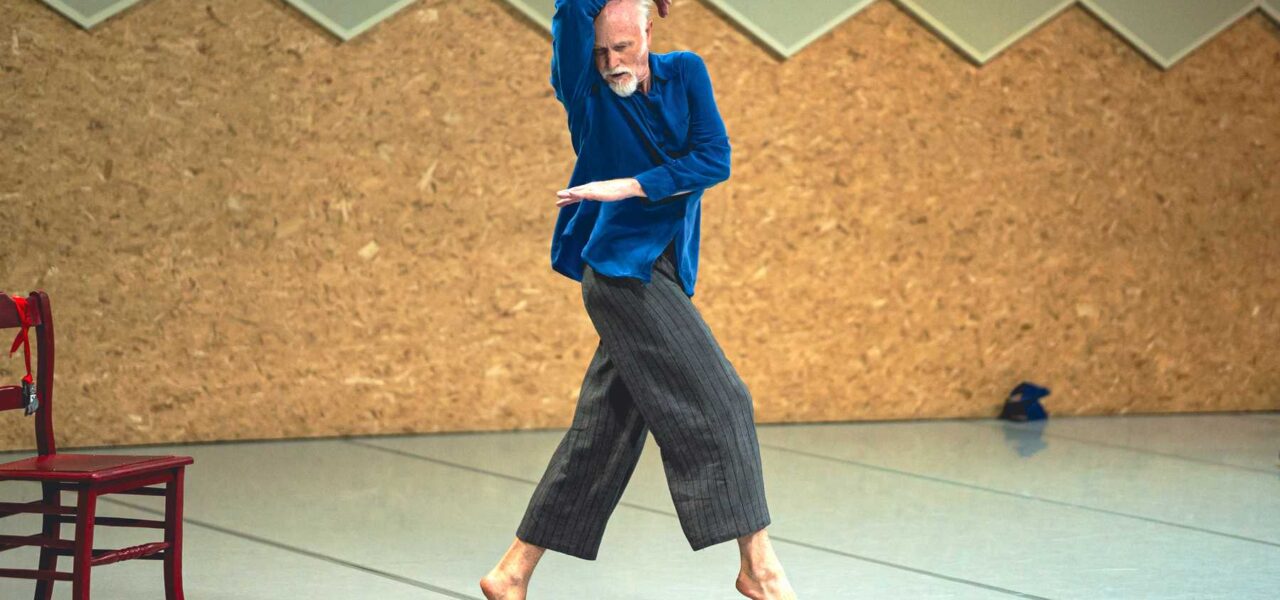
*Photo by Irene Occhiato
*Hebrew Follows
Once, while preparing for a show in Paris, (which is in France he reminded us), Julyen Hamilton got busted rummaging around the alley behind the theater. He told the technician who found him that he was looking for set pieces for his solo Koan- For Our Times, which he performed last week as part of the Tel Aviv Dance Festival.
“‘What do you want?’ he asked me,” remembered Hamilton.
“‘I don’t know until I’ve found it.’”
The story was told during the post show chat, which I must mention was as fascinating as the performance itself. Hamilton sat at the front of the room, off the stage, at eye level with the audience, next to his colleague Nitzan Lederman. Lederman explained that she brought the beer to help Hamilton transition from the act of performing to the act of talking about performing. Hamilton mentioned beer might help.
“If I wasn’t a selfish bastard I would have brought beers for all of you,” he laughed as he shyly took a swig. “But I am a selfish bastard.”
For a self proclaimed selfish bastard, Hamilton is one of the most gracious and generous people I have ever seen on stage.
“I don’t know until I’ve found it,” seemed to be the throughline of Hamilton’s work, an improvised solo including movement, text, storytelling, singing, props and more. Hamilton was looking for something. He searched with words, movements and objects for something. It was not clear to me what it was but I was with him for every breath and every shift of weight, not always understanding but fervently on board.
After 54 minutes of ceaseless activity, including some of the most masterful and whimsical uses of the Yaron Yerushalmi Hall I have ever seen, Hamilton stood at the rear of the stage, his frame interrupting a long diagonal piece of tape that had been stretched onto the back wall. It was the first moment of stillness in the work and also its final image. It seemed Hamilton had found what he was searching for. He had danced what he needed to dance, said what needed to be said, made whatever needed making.
“It’s not me speaking. It’s stuff that needs to be said,” he said after the show.
Some of the things that needed to be said were about two women, Alicia and Anna, one upstairs or somewhere above and the other below. It seemed that Hamilton was channeling a whole realm of ghosts only he could perceive.
Some of “the stuff” was in other languages, Dutch, German, Italian and perhaps others.
There was a recurring story about a couple waiting for the train. The first time the train came, the man was so unable to speak his desires that he could only stutter when asked if he wanted to board it, so they didn’t. Later, the train was electrical, with quiet doors and quiet wheels and a voice that asked the couple if they were getting on. Finally the train arrives but informs the couple that it doesn’t take people anymore.
“It feels like there should have been something else here,” said Hamilton, atop a small ladder and looking at a bare, black wall on the side of the theater. “Maybe it’s my sense of consequential architecture.” The audience gave a hearty laugh but Hamilton was already ten steps ahead, off onto the next wave of ideas and impulses.
Many things occurred to me while watching Julyen on stage. For one, it is a rare pleasure to see a man of Hamilton’s age (71) dancing, not just on stage but anywhere. I remember watching Ana Laguna and Mikhail Baryshnikov perform fifteen years ago at Suzanne Dellal and the wonder at seeing the vastness of the world those mature dancers brought to the stage. I had never seen anything like it before and rarely since.
For two, the knowledge that this solo is improvised, pinpoints my attention straight at Hamilton, who I have never seen perform or teach before. Who is this person? What does he want? Is he in control? How much of this was planned and how much is decided upon right now, this moment?
The post-performance chat only enhanced this curiosity.
He peppered into the conversation with Lederman that he used to hang out with Trisha Brown, Allen Ginsberg and William S. Boroughs. It took me a moment to pick my jaw up off the floor after those gargantuan name drops. He sees himself as a poet, explaining that the word poetry comes from the Latin “to do” and he is nothing if not a doer. He is a master of improv, performance, movement, something of a guru in the physical theater world. His expertise allows him a level of freedom on stage few would dare to flirt with.
In fact, he is so on top of his form he can allow it to be unraveled, chaotic even.
Hamilton has a rare combination of charisma and humility. His actions are funny for inexplicable reasons, he has impeccable timing, he draws the audience to him like a ten ton magnet yet leaves them hop-skip-running after his quick steps and turns of phrase, so light across the small stage. He doesn’t seem that interested in us understanding all of his texts. He appears buoyed by something we cannot see and it is baffling, impossible to keep up with but I find it irresistible to try.
Koan- For Our Times proves that you don’t have to be able to follow the internal rationale of a piece to feel it.
One of the recurring themes in the piece is a manipulation of a curious assortment of objects on stage; a stool, a ladder, some pieces of fabric, a metal grate hung from the ceiling, sticks. After the show he likened the choice of these objects to how one puts together an outfit. “Everything speaks on stage. I love objects. They are so important. In every culture people live with objects. I audition them like how you audition clothes. You pick up a necklace on, hold it up, look in the mirror and say, ‘this isn’t right for tonight, the blue would be better with the wallpaper where I’m going.’” In his eyes, and after those 54 minutes, in ours, those random items were the exact right objects for that night, for a show on a sweaty Wednesday evening in Tel Aviv, at a festival where Hamilton was one of two international guests that decided the dire political situation here wasn’t enough of a reason not to come here.
Julyen Hamilton presented Koan- For Our Times on August 13, 2025 as part of The Suzanne Dellal Centre’s Tel Aviv Dance Festival.
הרהורים על קואן- לתקופתנו של ג׳וליאן המילטון מאת אורי לנקינסקי
פעם, לפני הופעה בפריז (שזה בצרפת, הוא הזכיר לנו), ג’וליאן המילטון נתפס מחטט בסמטה מאחורי התיאטרון. הוא אמר לטכנאי שמצא אותו שהוא מחפש אביזרים לסולו שלו, קואן- לתקופתינו, שהציג שבוע שעבר במסגרת פסטיבל תל אביב דאנס של מרכז סוזן דלל.
״’מה אתה רוצה?’ הוא שאל אותי״, נזכר המילטון.
״’אני לא יודע עד שלא אמצא אותו.’״
הסיפור הזה סופר במהלך השיחה אחרי ההופעה, שהיה, אציין, מרתק לא פחות מהמופע עצמו. המילטון ישב בקדמת החדר, מקדימה לבמה, בגובה העיניים עם הקהל, לצד עמיתתו ניצן לדרמן. לדרמן הסבירה שהיא הביאה את הבירה כדי לעזור להמילטון לעבור מהאקט של להופיע לאקט של לדבר על ההופעה. ״ג׳וליאן אמר שבירה עשויה לעזור,״ היא סיפרה.
“לו הייתי ממזר אנוכי הייתי מביא בירות לכולכם,” הוא צחק תוך שהוא לוגם ביישנות. “אבל אני ממזר אנוכי.”
למרות התואר שהעניק לעצמו, המילטון הוא אחד האנשים הכי נדיבים שראיתי על הבמה.
“אני לא יודע עד שלא אמצא את זה” נדמה היה החוט המקשר בעבודה שלו, סולו אימפרוביזציה שכלל תנועה, טקסט, סיפורים, שירה, אביזרים ועוד. המילטון חיפש משהו. הוא חיפש באמצעות מילים, תנועות וחפצים. לא היה ברור לי מה הוא מחפש, אבל הייתי איתו בכל נשימה ובכל שינוי משקל, לא תמיד מבינה, אבל מושקעת בחיפוש.
לאחר 54 דקות של פעילות בלתי פוסקת, כולל כמה מהשימושים המשעשעים והאדירים ביותר באולם ירושלמי ירון שראיתי אי פעם, עמד המילטון בחלק האחורי של הבמה, גופו חוצץ קו אלכסוני של סרט מודבק על הקיר. זו היתה הרגע הראשון ביצירה ללא תנועה או מילים וגם התמונה הסוגרת שלה. נדמה היה כי המילטון מצא את מה שחיפש. רקד את מה שהיה עליו לרקוד, אמר את מה שהיה צריך להיאמר, יצר את מה שהיה צריך להיווצר.
“זה לא אני שמדבר. זה דברים שצריך לומר,” הוא אמר לאחר המופע.
חלק מהדברים שצריך היה לומר אותם עסקו בשתי נשים, אליסיה ואנה, אחת מעליו או במקום גבוה יותר, והשנייה למטה. נדמה שהמילטון הזמין למרחב עולם ומלואו של רוחות.
חלק מהדברים היו בשפות אחרות: הולנדית, גרמנית, איטלקית ואולי אחרות. היה סיפור חוזר על זוג שמחכה לרכבת. בפעם הראשונה שהרכבת הגיעה, הגבר היה כל כך חסר יכולת לבטא את רצונותיו, עד שנאלץ לגמגם כששאלו אותו האם הוא רוצה לעלות ולכן לא עלו. מאוחר יותר, הרכבת היתה חשמלית, עם דלתות שקטות וגלגלים שקטים וקול ששאל את הזוג אם הם רוצים לעלות. לבסוף הרכבת הגיעה אך הודיעה לזוג שהיא כבר לא מסיעה אנשים.
“מרגיש שצריך היה להיות כאן משהו אחר” אמר המילטון, עומד על סולם קטן ומתבונן בקיר שחור וריק בצד התיאטרון. “אולי זה החדווה שלי לאדריכלות משמעותית.” הקהל צחק, אבל המילטון כבר התקדם חמישה צעדים קדימה, כבר עלה על עוד גל של רעיונות ותנועות.
הרבה מחשבות עלו לי בזמן שצפיתי בהמילטון. ראשית, זו זכות נדירה לראות איש בגיל 71 רוקד, לא רק על הבמה, אלא בכל מקום. אני נזכרת שצפיתי באנָה לַאגוּנה ומיכאיל ברישניקוב כשהופיעו לפני חמש עשרה שנה בסוזן דלל, התמוגגתי מהעומק שהם הביאו לבמה. לא ראיתי דבר דומה לפני כן, ומעט מאז.
שנית, הידיעה שהסולו זה הוא אימפרוביזציה, מפנה את כל תשומת ליבי להמילטון שמעולם לא ראיתי מופיע או מלמד קודם לכן. מי האיש הזה? מה הוא רוצה? האם הוא בשליטה? כמה מתוכנן וכמה מחליט כרגע ברגע הזה? שיחת הפוסט מופע הוסיפה לסקרנות הזו.
הוא הפריז בשיחה עם לדרמן שהוא נהג לבלות עם טרישה בראון, אלן גינסברג וויליאם ס בורוס. לקח לי רגע להרים את הלסת מהרצפה אחרי הניים דרופ המרשים הזה. הוא רואה את עצמו כמשורר, מסביר שמקור המילה poetry׳׳ בלטינית הוא ׳לעשות׳ ואין הוא בהחלט בעשייה. הוא מאסטר של אימפרוב, ביצוע, תנועה, סוג של גורו בעולם התיאטרון הפיזי. המומחיות שלו מעניקה לו חופש על הבמה שכמעט אין מעזים לפלרטט איתו. למעשה, הוא כל כך שולט באומנות שלו, שהוא יכול לאפשר לה להתפרק, אפילו להיות כאוטית.
להמילטון יש קומבינציה נדירה של כריזמה וצניעות. הוא מצחיק מסיבות לא ברורות, יש לו טיימינג מדויק, הוא מושך את הקהל אליו כמו מגנט עשרה טון ובכל זאת משאיר אותם קופצים אחר צעדיו המזדנבים וקלילים על הבמה. לפעמים נראה שלא אכפת לא אם הקהל מצליח לעקוב אחרי כל הטקסט שלו. נראה שהוא נסחף אחרי משהו שלא ניתן לנו לראות. זה מבלבל ומרתק בו זמנית.
קואן- לתקופתנו מוכיח שלא חייבים להבין את ההיגיון הפנימי של היצירה כדי להרגיש אותה.
אחד הנושאים החוזרים ביצירה הוא מניפולציה של מבחר מסקרן ומעט אקראי של חפצים על הבמה: שרפרף, סולם, חלקי בד, רשת מתכת תלויה מהתקרה, מקלות. לאחר המופע השווה המילטון בין הבחירה של החפצים לדרך שבה מרכיבים אאוטפיט. “הכל מדבר על הבמה. אני כל כך אוהב חפצים. הם חשובים כל כך. בכל תרבות אנשים חיים עם חפצים. אני ממיין אותם כמו שממיינים בגדים. אתה מרים שרשרת, מחזיק מול המראה ואומר, זה לא מתאים להערב, הכחול יתאים יותר עם טפט בבית של החברים שלי.” בעיניו, ואחרי 54 הדקות הללו, בעינינו אותם פריטים אקראיים היו החפצים המדויקים לאותו ערב, למופע בליל רביעי לח בתל אביב, בפסטיבל שבו המילטון היה אחד משני אורחים בינלאומיים שהחליטו שהמצב הפוליטי הנוראי כאן אינו סיבה מספיק טובה לא לבוא לכאן.
ג׳וליאן המילטון הציג את קואן- לתקופתנו ב13.8.2025 במסגרת פסטיבל תל אביב דאנס של מרכז סוזן דלל.
Ori Lenkinski is a Tel Aviv-based dancer, choreographer and journalist. Her work, be it on stage, the Internet or on paper, is devoted to exploring the connection between words and movement. As a dancer, Ori has worked with independent choreographers in the USA, Europe and Israel. Ori’s writing has been published in Dance Magazine, The Huffington Post, The Jerusalem Post, Haaretz and others. She is the founder and editor of www.creativewriting.me. Her choreographic works include The Painting, Portrait #2, The Suit, Meet Me in the Market, Help Desk, Birth Preparation Course, a dance piece, Jackie Pink and Black, Escape Room as well as the dance films Carriage and Expecting. Ori’s works have been presented throughout Israel, North America and Europe. To read more about Ori, visit www.orilenkinski.com.