
Jenny Birger’s impressions after watching ‘Keep it up’ by Kazuyo Shionoiri and Dror Liberman
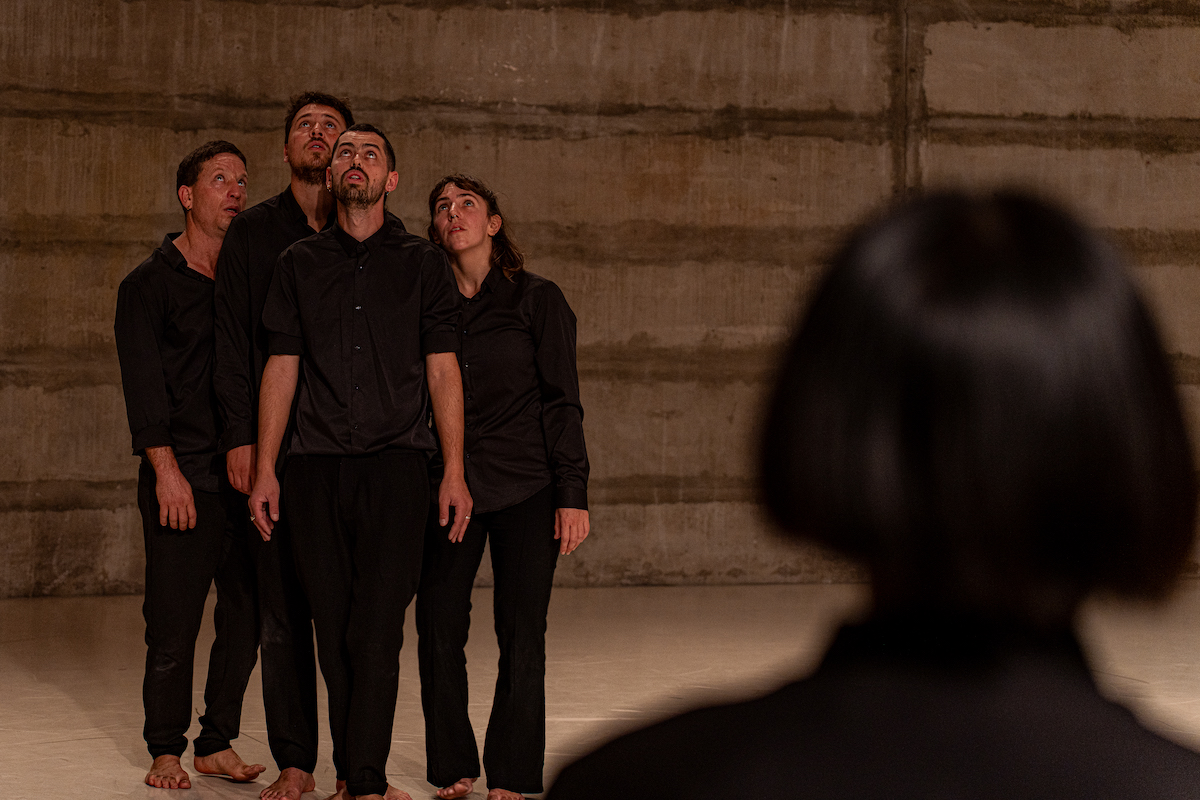
Photo by Omer Radak
*עברית בהמשך
There is so much magic in simple things, especially when simplicity is born from long and demanding labor. Such is the work of Kazuyo Shionoiri and Dror Liberman Keep it up: simple and profound, shifting from moment to moment and from performance to performance, and above all, touching and lingering.
With minimalist aesthetics, the piece is built on one single task: to keep the acrylic “feathers” (which look more like small clouds) hovering in the air. They are also the only prop on stage. Five performers dressed in black do everything they can to keep the feathers from touching the ground. It is important to clarify that the piece did not intervene in the laws of physics (there was no budget for that), so gravity still applied to everyone, feathers and dancers alike. The simple task forces them to find a range of movement strategies, generating intriguing relationships and images. At the heart of the task lies the act of breathing, which dictates the duration, speed and trajectory of the feather’s movement and essentially defines the dancers’ degree of freedom from one exhale to the next.
The five dancers embody two main approaches: the moderate approach and the risk-taking approach. Performers who adopt the first approach stay close to the feather and begin lifting it as soon as it reaches their face. With no unnecessary effort, they remain calm and allow the spotlight to rest on pure being. Performers who prefer the risk-taking approach enjoy wide freedom of action until the very last moment when the feather almost grazes the floor and demands that they leap with full force to save it. Sometimes they let themselves drift far from the feather, so far that it seems they have forgotten it exists, and their attention is completely elsewhere. They form relationships, fall in love, quarrel, while the slow but steady surrender of the feather to gravity becomes the hourglass that measures their time.
The beauty of Keep it up is that each of these approaches has a place. They create different worlds and each has its own internal logic, precise and coherent. The first approach, which could also be called the being approach, allows me as a viewer to observe the action gently, much like watching colorful autumn leaves drifting in the wind or raindrops sliding down a window. The feather stays aloft without unnecessary tension, so it too appears calm and at ease. And perhaps it is fair to add that I do not know whether the feather feels anything, but I feel on its behalf. The second approach, the doing approach, brings me to the edge of my seat, which is not very comfortable (if I might add). In the moments when the dancers toss the feather high and run far, I feel that responsibility is passed on to me. Perhaps this is the moment when I should shout from the audience before it falls to its death. A theatrical death, of course, yet still a death.
I am reminded of stories about people who discover superhuman strength for the sake of what is most delicate: mothers who suddenly manage to lift a car to save their children, or fathers who go on a hunger strike to fight the impossible reality of recent years. I think too about the enormous effort required simply to keep the beliefs in our hearts from falling, collapsing, dying. A symbolic death, of course, and yet. The second approach is full of tension, action and adrenaline, and its encounter with the softness and patience of the first approach creates a fascinating world of taking and transferring responsibility. And who is truly the most responsible? Is it the one who stays closest to the feather? The one who took the greatest risk? Or simply the one who decides to take responsibility?
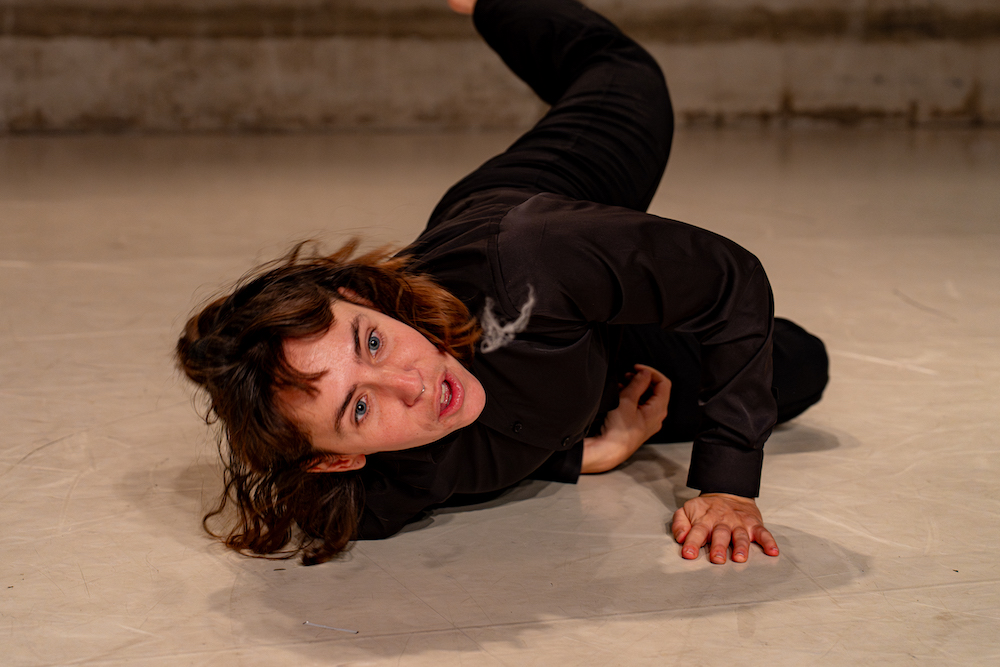
Photo Omer Radak
One of the special movement elements in the piece is the performers’ shifting gaze, moving from looking upward at the feather to their everyday gaze toward us and toward one another. And I find myself with them, looking up, discovering the tangle of red and white pipes in the Zehava and Jack hall at Suzanne Dellal. Each time the feather rises again into the space above, I feel a childlike thrill. A gaze that lifts upward encourages us to cling to the force of lift and not be pulled down into gravity. I think about the delicate things in my life that I fear might break. Although I do not consider myself someone who takes big risks, I discover that my actions are exactly that: waiting until the very last moment and then blowing hard, often with my eyes closed hoping for the best. But perhaps there is another way. Perhaps one can lift a little each day, dream a little. Small, gentle breaths. Maybe it even helps the feather feel safer, more self-assured. Because, remarkably, I feel what it feels: its fear that no one will reach it in time; The support carried in each precise puff of air; The intention inside every exhale. An inanimate object by every known definition becomes alive and breathing, connecting us to our own hidden, fragile thoughts, dreams and desires that only need a little bit of air.
It is important to add that on stage there was another guest, uninvited I assume, dressed in black and entirely incidental. A fly. Let us call him Moshiko. Moshiko flitted among the performers and the feathers with impressive speed and shifts of direction that would not shame a Formula 1 driver. Unlike the feathers, whose movement was on the vertical axis, the fly moved calmly parallel to the floor. As he crossed the stage and occasionally collided with the dancers and almost knocked the feathers down, I wondered what he made of the situation he had stumbled into. Did he sense the special atmosphere of a performance within the framework of International Exposure and the highly charged mood in the space? Was there anything unusual for him here, or in his world do things always fly and fall as part of daily life? I also wondered whether he was aware of being part of an original, touching and unusual work of art. You may wonder and ask me in return what any of this has to do with anything. And honestly, I understand you. But I insist that it has everything to do with the experience of watching. It drew my attention to something marginal that I probably would not have noticed in another piece. The humble, everyday fly received a kind of spotlight thanks to the charged atmosphere and the intense attention to flight and fall. And perhaps also because of the emotional attachment to an inanimate object that becomes just a little bit alive, like the fly.
I did not have time to ask Moshiko all the important questions that came up, but if you see him there in the Zehava and Jack Dellal hall, send him my regards and wish him a pleasant flight. Let us end with the words of Nick Cave:
But mostly I curl up inside my typewriter with my housefly and cry
I tell my housefly not to cry
My housefly tells me not to die
Because someone’s gotta sing the stars
And someone’s gotta sing the rain
And someone’s gotta sing the blood
And someone’s gotta sing the pain
Keep It Up was presented as part of International Exposure for Dance 2025 at the Suzanne Dellal Center on December 6, 2025.
רשמים של ג’ני בירגר בעקבות צפייה ב-Keep it up מאת קאזויו שיונוירי ודרור ליברמן
כמה קסם יש בדברים הפשוטים, במיוחד כשהפשטות נולדת מתוך עמל רב ומפרך. כזו היא יצירתם של קאזויו שיורוירי ודרור ליברמן Keep it up – פשוטה ועמוקה, משתנה מרגע לרגע וממופע למופע, ובעיקר – נוגעת ונשארת.
בעלת אסתטיקה מינימליסטית, היצירה מבוססת על משימה אחת ויחידה: לשמר בריחוף מתמיד את “נוצות” האקרילן (שנראות יותר כמו עננים קטנים) שהן גם האביזר היחיד על הבמה. חמישה פרפורמרים לבושי שחור עושים הכל על מנת שהנוצות יישארו מעל פני הקרקע. כאן חשוב להסביר שהיצירה לא התערבה בחוקי הפיזיקה (לא היה תקציב), ולכן כוח המשיכה עדיין פעל על כולם, נוצות ורקדנים כאחד. המשימה הפשוטה מאלצת אותם למצוא מגוון דרכי תנועה ואסטרטגיות התנהלות, ומייצרת מערכות יחסים ודימויים מרתקים. הכלי שנמצא בלב המשימה הוא פעולת הנשימה, שמכתיבה את משך הזמן, מהירות ומסלול התנועה של הנוצה, ולמעשה תוחמת את מידת החופש של הרקדנים בין נשיפה לנשיפה.
חמשת הרקדנים מייצגים שתי גישות עיקריות: הגישה המתונה והגישה המסתכנת. פרפורמרים שמאמצים את הגישה הראשונה נשארים בקרבתה של הנוצה ומתחילים להרים אותה כבר כשהיא מגיעה לגובה הפנים. ללא מאמץ מיותר מצידם, הם שלווים ומאפשרים לזרקור להיות על ההוויה. פרפורמרים המעדיפים את הגישה המסתכנת נהנים מחופש פעולה רחב, עד לרגע האחרון שבו הנוצה כמעט מלטפת את הריצפה ודורשת מהם לזנק בכל העוצמה כדי להציל אותה. לפעמים הם מרשים לעצמם להתרחק מהנוצה עד שנדמה כי שכחו מקיומה, ותשומת הלב שלהם היא בכלל במקום אחר: הם מייצרים מערכות יחסים, אוהבים, רבים, כששעון החול הוא התמסרותה האיטית אך העקבית של הנוצה לכוח המשיכה.
היופי ביצירה Keep it up הוא שלכל אחת מהגישות יש את המקום שלה. הן מייצרות עולמות שונים ובעלות היגיון פנימי שונה ומדויק. הגישה הראשונה, אפשר גם לקרוא לה גישת ה-being, מאפשרת לי כצופה להתבונן באופן רך בהתרחשות, קצת כמו להתבונן בעלי שלכת צבעוניים הנעים עם הרוח או טיפות גשם מטפטפות על החלון. הנוצה נשארת במעופה ללא מתח מיותר, כך שהיא בתורה רגועה ונינוחה. ואולי אפשר להוסיף – אינני יודעת אם הנוצה מרגישה דבר-מה אבל אני מרגישה בשבילה. הגישה השניה, אפשר לקרוא לה גם גישת ה-doing, לוקחת אותי אל קצה המושב (המאד לא-נוח, יש לומר). ברגעים שבהם הרקדנים מעיפים את הנוצה אל-על ורצים רחוק, אני מרגישה שהאחראיות עוברת גם אליי – ואולי זה הזמן שלי לצעוק להם מהקהל לפני שהיא תנחת אל מותה? מוות בימתי, כמובן, ובכל זאת. אני נזכרת בסיפורים של אנשים שמגלים כוחות על-טבעיים למען הרך מכל – אימהות שפתאום מצליחות להרים מכונית כדי להציל את ילדיהן, או אבות ששובתים רעב כדי להילחם במציאות הבלתי נתפסת של השנים האחרונות. אני חושבת גם על המאמץ האדיר שנדרש רק בשביל להחזיק את האמונה שבליבנו ולא לתת לה ליפול, לקרוס, למות. מוות במרכאות, כמובן, ובכל זאת. הגישה השנייה מלאת מתח, אקשן ואדרנלין – והמפגש שלה עם הרוך והמתינות של הגישה הראשונה על במה אחת מייצר עולם מרתק של לקיחת והעברת אחראיות. ומי באמת הכי אחראי? האם זה מי שנמצא הכי קרוב לנוצה? או אולי זה שלקח את הסיכון הרב ביותר? או פשוט מי שמחליט שהוא אחראי?
Photo Omer Radak
אחד המרכיבים התנועתיים המיוחדים של היצירה הוא מבט הפרפורמרים שמשתנה ממבט למעלה – על הנוצה – והמבט היומיומי, אלינו, אחד אל השני. וגם אני איתם, מביטה למעלה, מגלה את עושר הצינורות האדומים והלבנים באולם זהבה וז’אק בסוזן דלאל. אני מתרגשת כל פעם מחדש, כמו ילדה, כשהנוצה ממריאה שוב אל השמיים של המרחב. מבט שעולה מעלה מזמין לדבוק בכוח העילוי ולא להישאב לתוך כוח המשיכה. אני חושבת על הדברים העדינים בחיי שאני כל כך מפחדת שיישברו. למרות שאני לא מגדירה את עצמי כאדם שלוקח סיכונים גדולים, אני מגלה שפעולותיי הן בדיוק כאלה: לחכות עד לרגע האחרון ביותר, ואז לנשוף חזק (פלוס לעצום עיניים ולקוות לטוב). אבל אולי אפשר גם אחרת. אולי אפשר כל יום קצת להרים, קצת לחלום. נשיפות קטנות ומתונות. ואולי זה אפילו יעזור לנוצה להרגיש בטוחה יותר ולהאמין בעצמה. כי באורח פלא, אני מרגישה אותה: את החשש שלה שמא אף אחד לא יגיע בזמן; את התמיכה ממשב הרוח העדין והמדויק; את הכוונה שבתוך כל נשיפה. חומר דומם לפי כל ההגדרות המוכרות הופך לחי ונושם, ומחבר אותנו אל הרעיונות, חלומות ורצונות הכמוסים והשבריריים שלנו שרק זקוקים למעט אוויר.
**
חשוב להוסיף שעל הבמה, היה אורח נוסף שלא הוזמן (אני מניחה), לבוש שחור, והוא זבוב אירעי. נקרא לו מושיקו. מושיקו התעופף לו בין הפרפורמרים והנוצות, במהירות מרשימה ובשינויי כיוון שלא מביישים נהגי פורמולה 1. בשונה מהנוצות שמעופן היה כלפי מעלה, הזבוב נע בנינוחות במקביל לריצפה. כשהוא חוצה את הבמה ומתנגש לעיתים ברקדנים, וכמעט מפיל את הנוצות, תהיתי מה הוא מבין מהסיטואציה שהוא נקלע אליה. האם הוא מרגיש את האווירה המיוחדת של צפייה במופע במסגרת “חשיפה בינלאומית” והמתח המאד מיוחד בחלל? האם עבורו יש כאן משהו יוצא מהרגיל, או שמא בעולמו, דברים ממילא עפים ונופלים בשגרה? תהיתי גם אם הוא מודע להיותו חלק מיצירת אמנות מקורית, שונה ונוגעת. אתם יכולים לתהות ולשאול אותי בחזרה – מה זה קשור עכשיו? והאמת, אני מבינה אתכם. אבל אתעקש ואומר שזה קשור מאד לחוויית הצפייה, שהפנתה את תשומת ליבי לדבר-מה שולי שכנראה לא הייתי מבחינה בו ביצירה אחרת. הזבוב הזניח והכל כך יומיומי קיבל זרקור בזכות המרחב הטעון והתבוננות בתעופה ונפילה. ואולי גם בהיקשרות רגשית אל חפץ דומם שנהיה טיפ-טיפה חי כמו הזבוב. לא הספקתי לשאול את מושיקו את כל השאלות החשובות שעלו, אבל אם אתם רואים אותו שם, באולם זהבה וז’אק דלל, תמסרו לו דש וטיסה נעימה. נסיים במילותיו של ניק קייב:
But mostly I curl up inside my typewriter with my housefly and cry
I tell my housefly not to cry
My housefly tells me not to die
Because someone’s gotta sing the stars
And someone’s gotta sing the rain
And someone’s gotta sing the blood
And someone’s gotta sing the pain
Keep It Up עלתה במסגרת “חשיפה בינלאומית למחול” 2025 במרכז סוזן דלל ב-6.12.2025.
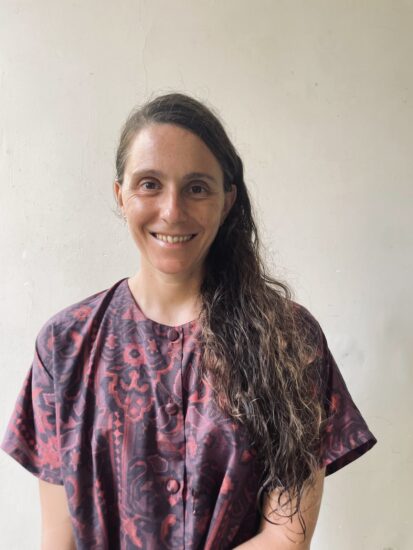 ג’ני בירגר
נולדה ב-1984 בקייב, אוקראינה, כיום חיה ופועלת בתל אביב.
יוצרת וחוקרת גוף רב-תחומית, פרפורמרית ומורה. יצירות הוידיאו-דאנס שלה הוקרנו במבחר פסטיבלים בארץ ובעולם (ביניהם Cinedans, Cyprus Film Festival, Burgundy Video Dance Festival, בית הנסן). בעלת קשת רחבה של הכשרה פיזית ואקדמית, ומחפשת ליצור חיבורים וקשרים חדשים בין גופי ידע שמדברים מטבעם בשפות שונות. בשנים האחרונות חוקרת את הממשק בין תנועה ומילים; דרכים ליצור חומר כוריאוגרפי בזמן אמת; תנועה בתוך מים ומחולות ממערב אפריקה. מלמדת שנים רבות בפרויקט “קהילה בתנועה” המקיימת שיעורי מחול עבור א.נשים החיים עם מחלת הפרקינסון (סטודיו יסמין גודר), כמו גם יוגה ופילאטיס באופן פרטי.
Jenny Birger
Born in 1984 in Kyiv, Ukraine, currently lives and works in Tel Aviv.
A multidisciplinary artist and researcher, performer, and teacher. Her video-dance works have been screened at selected festivals in Israel and abroad (including Cinedans, Cyprus Film Festival, Burgundy Video Dance Festival, Hansen House). She holds a wide range of physical and academic training and seeks to create new connections and links between bodies of knowledge that naturally speak different languages.
In recent years, she has been researching the interface between movement and words; ways of creating choreographic material in real time; movement in water; and dances from West Africa. She has been teaching for many years in the project Movement Communities, which holds dance classes for people living with Parkinson’s disease (Yasmeen Godder Studio), as well as teaching yoga and Pilates privately.