Joy Bernard’s Thoughts on ‘On the Threshold’ by May Zarhy
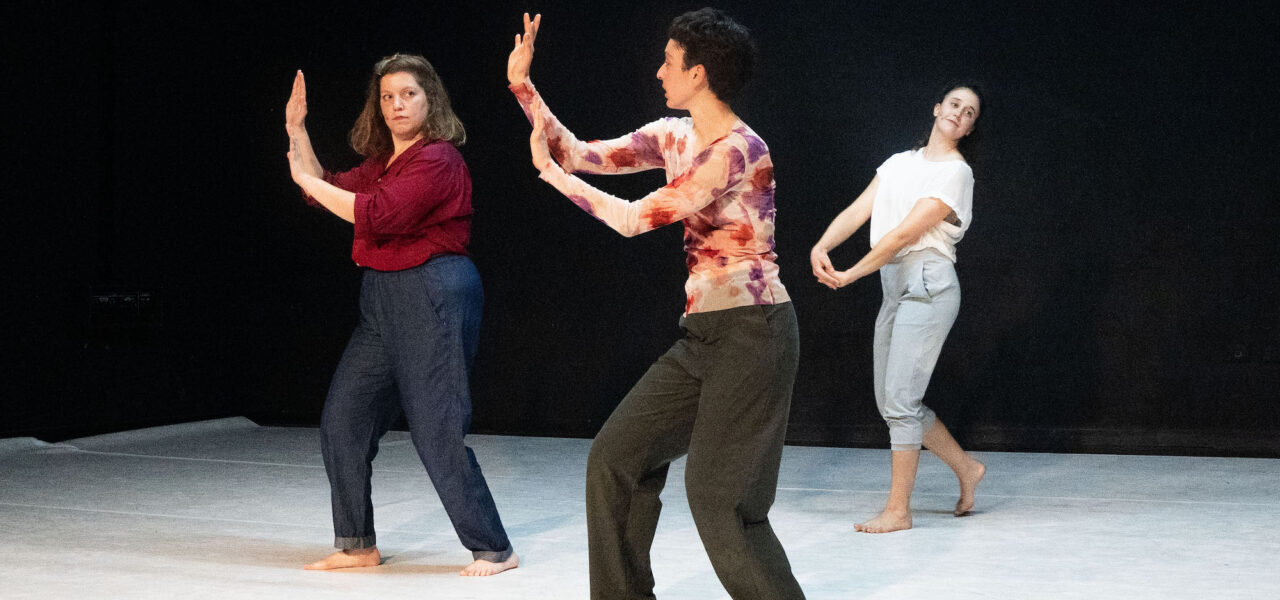
*Photo by Dan Ben Ari
*עברית בהמשך
May Zarhy’s “On the Threshold” moves between dance and spoken language, attempting to belong to both worlds at once
In his canonical book “Phenomenology of Perception” (1945), philosopher Maurice Merleau-Ponty expounded his thesis on the inner workings of human perception, investigating whether and how we attempt to bridge the gap between our internal experience and the external environment. Merleau-Ponty argued that “the full meaning of a language is never translatable into another. We may speak several languages, but one of them always remains the one in which we live.” He suggested that to truly assimilate a language, it would be necessary to make the world which it expresses one’s own — yet, as he pointed out, “one never does belong to two worlds at once.”
Choreographer May Zarhy’s new work, “On the Threshold,” seems to linger within the constraints of the inherent impossibility of the act of translation that Merleau-Ponty identified. The nearly two-hour-long piece features dancers Amit Zaretsky and Ella Gil, standup comedian and writer Adi Helman and even some particularly enjoyable guest appearances by Zarhy herself. Throughout the work, the four performers repeatedly toy with the idea of transmuting thoughts into language; of expressing dance with words and vice versa; of making their inner and private dialects not only heard but understood by others — be it a dancer interpreting the choreographer’s score, a dancer reacting to a fellow dancer on stage or a dancer communicating her sensations and thoughts with the audience through words or movements.
Zarhy appears to be grappling with what Merleau-Pointy determined to be an impossibility — fully inhabiting two areas of existence simultaneously — by combining, yet never fully blending together, various genres of performance, or, if you will, different languages: Contemporary dance, standup comedy and lecture-performance. She tries to place dance and spoken language on equal footing, not only by featuring them on the same stage but by making these elements consistently contradict or complete one another. It’s as though she were asking herself and us, the viewers of her work: Is it really true that one never does belong to two worlds at once?
Oddly but satisfyingly intimate
The piece begins well before we, the viewers, enter the darkened studio of Habait Theater in Jaffa. As each of the audience members wound his or her way to our respective seats, dispersing throughout the hall, the performers did the opposite on stage: They clung to one another in a closely-knit cluster, employing the contact improvisation technique to gently shift each other’s positions on stage. Later on in the piece, long after this unity will have been broken, I will wonder if this is Zarhy’s way of reminding us that it is our human nature to move about joyfully together, to meet the world by touching it generously — a bit like children so instinctively do — instead of trying to intellectualize our experience by approaching each other through the prism of language.

Photo by Dan Ben Ari
The playful proximity of the performers is cut short rapidly. Gil and Helman retreat to the sidelines, quietly observing Zaretsky as she strides across the stage, stands directly across from the audience and suddenly bends her legs in a deep plié in parallel position, bowing her head and shielding her face with one long arm that she flings horizontally across her face. The next movement is determined by the weight of her head: she lets it droop downward, hair cascading on the floor, while tossing both her arms up, as though attempting to grasp at the air behind her. She then goes on to perform variations of these two sequences in different angles of the stage, as if she were testing the movement materials. All the while, Gil and Helman observe her. They sit on a bench and sip on water, or move across the stage to better look at Zaretsky from various positions. The dynamic is oddly but satisfyingly intimate, and in certain moments I almost forget that I’m watching a live performance and rather feel as though I’m getting a private peek at the dancers warming up together in the studio.
When Zaretsky clears the stage, Gil enters and performs a brief solo that also consists of expansive and punctuated arm gestures, letting her lean, long and graceful hands guide her up and around, down and back up again. She is joined by Zaretsky, and they begin to perform a duet made up of these two solos. At times they appear to be reacting to one another, especially in beautiful moments when they move in relation to the shadows they each cast on the back wall — brilliantly illuminated by Oded Komemi — in a sequence that makes it seem as though they are melting into one another. In other moments, they don’t necessarily communicate with each other; instead, they co-exist in their solos, like two close friends who are comfortable interrupting their conversation for the sake of holding a silent introspection next to one another.
Trying to capture with words the ‘here and now that dissipates’
This aesthetic is familiar to me from Zarhy’s previous pieces: dense, expressive and detailed compositions where the dancers lose their center of gravity only to regain it, using their arms as their main tools of expression like in the solo Kristin (which I have written about here). But the poetic gesturality executed and interpreted by Zaretsky and Gil in their contrasting yet magnetic qualities is interrupted when Helman enters the stage. She turns her back to the audience and starts to move slowly, as if testing out the dance feature in her body.

Photo by Dan Ben Ari
“It’s complicated. It’s here and now, but it dissipates. You can’t hold it but it’s tangible. It’s trying to say something. It’s using gravity but also ignoring it. It’s strange. It’s really strange,” she begins to articulate, while shifting into an emulation of Zaretsky’s movements that elicits peals of laughter from the audience. Helman is a hilarious woman, and her unique monologue about the undefinable nature and purpose of dance as a medium of expression is funny. It’s amusing not just thanks to the precise text but also due to her timely and confident delivery, her stage presence that seems to spell out that she is deeply comfortable in her own skin, relaxed being up there and talking to us about a professional field she doesn’t strictly belong to but wants to be, feels that she is a part of. Her mix of vulnerability and confidence gives off an amicable aura, as if she stumbled into a party we are all part of and is now holding pleasant banter with us. “Dance performances are not meant to be understood. We’re all basically attending dance performances so we can finally be in a space where we don’t have to understand for an hour,” Helman proclaims as she is joined by the two dancers.
I appreciate the funny and self-deprecating jab at the medium I research, write about and also work in as a performer myself. When I glance about, I recognize many of the audience members who are fellow choreographers and dancers. As I take in the merriment around me, I ponder the paradox that is integral to the life of dancers and dancer makers: We all work very hard, devote hours (not to say decades) of our lives to be able to use our bodies in order to express ideas that the vast majority of the population then claims are incomprehensible. Our medium carved out a name for itself as an elitist art form, one that isn’t very communicative.
I wonder why that is. Is it the fault of the medium itself, the result of the quality of the works we toil to create, or something else altogether? Suddenly I find myself contemplating why it is that audience members approach dance as something that needs to be “understood.” When we attend a rock concert, do we expect to understand the lead guitarist, to be able to glean something about his life or his inner struggles by analyzing the meaning of every chord he plays? When we go to see a film, do we try to get inside the director’s mind and understand every tremor of the camera or zoom-in on the actors’ faces, or do we simply let ourselves get swept up in the plot and the scenery? As a professional dance critic, I often engage with works such as Zarhy’s with the understanding that I will later have to use the skills at my disposal to translate a visual and sensory experience into words. In fact, even when I go to see dance works “off-duty,” so to speak, just for my own viewing pleasure, I often struggle to shake off the analytical prism through which I am used to digesting dance pieces.

Photo by Dan Ben Ari
Perhaps what Helman is suggesting here is that dance’s incomprehensibility is its redeeming character. Maybe her statement was uttered to allow us to remember what made us (or at least this writer) fall in love with dance to begin with: Its ethereal yet earthly quality, being first and foremost a language rooted in the body. It allows us to speak without risking the same logical, ethical and emotional ramifications of spoken language. And before anything else, dance is energy: Unseizable, subject to constant change, immensely enjoyable. Dance is pure pleasure. It’s important to remember this, especially in a field that takes itself so seriously.
A radical form of communication
Before I manage to get swept up in a maze of thoughts about the meaning of dance and the role of dance critique, Zarhy gracefully alights the stage, clasping several sheets of paper with notes jotted down on them. She sits down and begins to explain how the work was created, the circumstances in which it was made and her own personal and ever-shifting relationship with dance and dance-making over decades of an impressive and diverse career. Her monologue is completely unpredictable and vulnerable: we’re not used to choreographers admitting publicly that they have doubts about their connection to dance or about its importance, role and meaning in society.
It is incredibly brave of Zarhy, a choreographer was has garnered significant success overseas, to admit that part of the reason this work is premiering in Israel is that since the war between Israel and Hamas in Gaza broke out two years ago, she was denied multiple requests for support for her choreographic work in Europe. This confession reminds me that as much as we sometimes wish to avoid it in our creation or discussion of it, dance isn’t merely an aesthetic language — it is also always political, because the body is political.
While this part of the work is eye-opening and generously honest, it also leaves me wanting more. In a work that centers on the relationship between dance and language, I had hoped to hear Zarhy talk about the political power of movement, or else explain the meaning of language in her creative practice. Anyone who has seen her work before and watched her collaborative dancers perform can understand that she possesses a rare ability to translate ideas and verbal cues into deeply moving situations on stage.
But just then Zarhy clears the stage, letting the dancers do the talking for her with their bodies and thereby proving that perhaps some things are better left unsaid. Maybe the magic of her particular dance, or dance at large, wouldn’t be so tantalizing l if we were able to explain it. The three performers take to the stage again. As they dance, together and apart, Helman interrupts Gil and Zaretsky from time to time to ask them questions that vary from the practical to the personal, such as: “Do you have a warmup routine?”, “What do you eat before a show?”, “Are you in a relationship?”.
The questions remain unanswered, a choice that leaves me quite baffled. I am then reminded of “Véronique Doisneau,” a work created by French choreographer Jérôme Bel in 2004. It features the titular dancer, Véronique Doisneau, a veteran “sujet” of the Paris Opera Ballet, who performs a solo “lecture-performance” just before her retirement. By speaking directly to the audience about her career, salary, and physical pain, she deconstructs the silent, idealized image of the ballerina to reveal the human labor behind the art. I wonder why in this piece, Zarhy and Helman speak much more than the dancers do. Is this a deliberate artistic choice?
When they do speak toward the end of the show, the monologue Zaretsky performs about physical, personal and performative memories, as well as the brief dialogue Gil and Zaretsky shary, carry heavy and important meaning. “How often do you dance?,” a viewer asks Gil in a part that opens up to audience participation. “Some days, not at all. Today I’ve been dancing for six hours straight. Maybe I’m constantly dancing.” “Do you feel like you’re talking when you dance?” Gil asks Zaretsky, to which the latter replies: “Not exactly. When I dance, it’s a different form of communication.”
Her answer leads me back to Merleau-Pointy, with whose insights I opened this essay. “Speech is not a means in the service of an external end,” the philosopher wrote. “It contains its own rule of usage, ethics, and view of the world, as a gesture sometimes bears the whole truth about a man.” Maybe that is the secret charm of Zarhy’s practice, which she shares with her dancers: The ability to create set, structured movement phrases as well as an improvisational choreographic universe, which serves as the overarching syntax of what they “say” on stage. Gil, Zaretsky and Helman’s interpretation of these two forms of movement and their ability to shift freely between them is their way of communicating who they are — with each other, with the audience, and with Zarhy, who made up the “grammar” of this particular performance.
“If we opened people up, we’d find landscapes,” muses filmmaker and artist Agnès Varda in her autobiographical film from 2008, “Les Plages d’Agnès.” Moving as it does on the threshold between movement and speech, Zarhy’s work leaves me wondering: If we opened dancers up, what would we find?
May Zarhy presented On The Threshold on January 21 & 22 at Habait Theatre.
״על סף״ מאת מאי זרחי הוא מופע שנע בין מחול לשפה מדוברת, ומנסה להשתייך לשני העולמות בעת ובעונה אחת
מאת ג’וי ברנרד
בספרו הקאנוני “פנומנולוגיה של התפיסה” (1945), הפילוסוף מוריס מרלו-פונטי הציג את משנתו בנוגע למנגנונים המפעילים את התפיסה האנושית, ובחן האם וכיצד אנחנו מנסים לגשר על הפער שבין החוויה הפנימית שלנו לסביבתנו החיצונית. מרלו-פונטי טען כי “המשמעות המלאה של שפה לעולם אינה ניתנת לתרגום לשפה אחרת. אנחנו עשויים לדבר כמה שפות, אך אחת מהן תמיד נותרת זו שבה אנחנו חיים”. הוא הציע שכדי להיטמע בשפה באמת, יהיה עלינו להפוך את העולם שהיא מבטאת לעולמנו שלנו — אך, כפי שציין, “אדם לעולם אינו שייך לשני עולמות בבת אחת”.
עבודתה החדשה של הכוריאוגרפית מאי זרחי, “על סף”, מצטיירת כיצירה השוהה בתוך המגבלות של חוסר האפשרות המובנה של פעולת התרגום, אשר עליה הצביע מרלו-פונטי. בעבודה, שאורכה כמעט שעתיים, משתתפות הרקדניות עמית זרצקי ואלה גיל, הסטנדאפיסטית והכותבת עדי הלמן, ואף זרחי עצמה, שמגיחה לכמה הופעות אורח מהנות במיוחד. לאורך היצירה, ארבע הפרפורמריות משתעשעות שוב ושוב בניסיון להתמיר מחשבות לשפה מדוברת; להביע מחול במילים ולהפך; להפוך את הדיאלקטים הפנימיים והפרטיים שלהן לא רק לנשמעים אלא גם למובנים על ידי אחרים — בין אם מדובר ברקדנית המפרשת את ה”סקור” של הכוריאוגרפית; ברקדנית המגיבה לעמיתתה על הבמה; או ברקדנית המתקשרת את תחושותיה ומחשבותיה עם הקהל באמצעות מילים או תנועות.
נראה שזרחי נאבקת במה שמרלו-פונטי קבע שאינו אפשרי — אכלוס מלא של שני תחומי קיום בו-זמנית — על ידי שילוב, אך לא מיזוג מלא, של ז’אנרים שונים של פרפורמנס (או, אם תרצו, שפות שונות): מחול עכשווי, סטנד אפ, והרצאה-מופע. היא מנסה להעניק למחול ולשפה המדוברת מעמד שווה, לא רק על ידי הצבתם על אותה הבמה אלא באמצעות הפיכת האלמנטים הללו לסותרים או משלימים זה את זה בעקביות. נדמה שזרחי שואלת את עצמה ואותנו, הצופים בעבודתה: האם זה באמת נכון שאדם לעולם אינו שייך לשני עולמות בעת ובעונה אחת?
אינטימיות משונה ומספקת להפליא
היצירה מתחילה זמן רב לפני שאנחנו, הצופים, נכנסים לסטודיו החשוך בתיאטרון הבית אשר ביפו. בעוד שכל אחד.ת פילס.ה את דרכו.ה למושבו.ה, הפרפורמריות עשו את ההיפך על הבמה: הן נצמדו זו לזו בצפיפות, משתמשות בטכניקת הקונטקט-אימפרוביזציה כדי להניע בעדינות זו את זו על גבי הבמה. בשלב מאוחר יותר של היצירה, זמן רב אחרי שהאחדות הזאת תישבר, אני אתהה לעצמי אם זו דרכה של זרחי להזכיר לנו שטבענו האנושי הוא לנוע יחד בשמחה, לפגוש את העולם דרך מגע נדיב — קצת כפי שילדים עושים באופן כה אינסטינקטיבי — במקום לנסות להפוך את החוויה שלנו לאינטלקטואלית על ידי פנייה זה אל זו דרך הפריזמה של השפה.
הקרבה המשחקית של הפרפורמריות נקטעת במהירות. גיל והלמן נסוגות לשולי הבמה, מתבוננות בשקט בשעה שזרצקי חוצה את החלל, נעמדת ישירות אל מול הקהל ופתע מכופפת את רגליה הניצבות במקביל לפלייה עמוק, מרכינה את ראשה וכמו מסוככת על פניה בזרוע אחת ארוכה שהיא מטיחה בכיוון אופקי. את התנועה הבאה היא יוזמת באמצעות ראשה: היא מניחה לו לצנוח מטה, שערה מדגדג את הרצפה, בעוד שאת שתי זרועותיה היא משליכה מעלה, כמו מנסה לאחוז באוויר שמאחוריה. בהמשך היא מבצעת וריאציות של שני הרצפים הללו בזוויות שונות של הבמה, כאילו היא עדיין בודקת את החומרים התנועתיים.
כל אותה העת, גיל והלמן מתבוננות בה. הן יושבות על ספסל ולוגמות מים, או נעות על הבמה כדי להיטיב לראות את זרצקי במיקומים שונים. הדינמיקה כאן היא אינטימית באופן משונה אך מספק להפליא, וברגעים מסוימים אני כמעט שוכחת שאני צופה בהופעה חיה ובמקום חשה כאילו זכיתי להצצה פרטית בחימום משותף של הרקדניות בסטודיו.
כשזרצקי מפנה את הבמה, גיל נכנסת ומבצעת סולו קצר המורכב גם הוא מג’סטות ידיים נדיבות ומודגשות, מאפשרת לזרועותיה הדקות, הארוכות והחינניות להוביל אותה מעלה ומסביב, מטה ושוב מעלה. זרצקי מצטרפת אליה, והן מתחילות לבצע דואט המורכב משני הסולואים הללו. לעיתים נדמה שהן מגיבות זו לזו, במיוחד ברגעים יפים שבהם הן נעות ביחס לצללים שכל אחת מהן מטילה על הקיר האחורי המואר בכישרון על ידי עודד קוממי. הרצף הזה גורם להן להיראות כאילו הן נמסות זו לתוך זו. ברגעים אחרים, נראה שהן לאו דווקא מתקשרות זו עם זו; במקום זאת, הן מתקיימות זו לצד זו בתוך הסולואים שלהן, כמו שתי חברות קרובות שמרגישות בנוח לקטוע את השיחה ביניהן לטובת התבוננות פנימית שקטה.
לנסות ללכוד במילים את “הכאן ועכשיו” ש”מתפוגג”
האסתטיקה הזאת מוכרת לי מעבודותיה הקודמות של זרחי: קומפוזיציות דחוסות, אקספרסיביות ומפורטות שבהן הרקדניות מאבדות את מרכז הכובד שלהן רק כדי להשיב אותו לעצמן תוך שימוש בזרועותיהן ככלי הביטוי העיקריים שלהן, כמו בסולו “קריסטין” (שאודותיו כתבתי כאן). המחוות הפואטיות המבוצעות ומפורשות על ידי גיל וזרצקי בעלות האיכויות המנוגדות אך ממגנטות נקטעות כאשר הלמן נכנסת לבמה. היא מפנה את גבה לקהל ומתחילה לנוע לאט, כאילו היא בוחנת אם קיימת בגוף שלה אפשרות לרקוד.
“זה מסובך. זה כאן ועכשיו, אבל זה מתפוגג. אי אפשר להחזיק את זה אבל זה מוחשי. זה מנסה להגיד משהו. זה משתמש בכוח המשיכה אבל גם מתעלם ממנו. זה מוזר. זה ממש מוזר”, היא מתחילה לומר, תוך שהיא עוברת לחיקוי של תנועותיה של זרצקי, המעורר פרצי צחוק בקהל. הלמן היא אישה מצחיקה, והמונולוג הייחודי שלה על טבעו ומטרתו הבלתי ניתנים להגדרה של המחול כמדיום של הבעה הוא משעשע. הנאום הקטן שלה מצחיק לא רק בזכות הטקסט המבריק אלא גם בזכות ההגשה הבטוחה והמדויקת שלה ובזכות נוכחותה הבימתית המשדרת שהיא מרגישה לגמרי בנוח בעור שלה, נינוחה לעמוד שם ולדבר איתנו על תחום מקצועי שהיא לא שייכת אליו באופן מובהק אך רוצה להשתייך אליו ומרגישה שהיא חלק ממנו. השילוב בין פגיעות לביטחון עצמי מעניק להלמן הילה ידידותית, כאילו הייתה מכרה שנקלעה למסיבה שכולנו נמצאים בה, וכעת היא מנהלת איתנו סמול טוק נעים. “מופעי מחול לא נועדו להיות מובנים. כולנו בעצם מגיעים למופעי מחול כדי שנוכל סוף-סוף להיות במרחב שבו אנחנו לא חייבים להבין כלום במשך שעה”, הלמן מצהירה.
אני מעריכה את העקיצה המצחיקה והמודעת לעצמה כלפי המדיום שאני חוקרת, כותבת אודותיו וגם עובדת בו כרקדנית יוצרת בעצמי. כשאני מביטה סביבי, אני מזהה בקהל קולגות רבים, כוריאוגרפים ורקדנים שמתפוצצים מצחוק. בעודי סופגת את העליצות סביבי, אני תוהה על הפרדוקס הבלתי נפרד מחיינו כרקדנים וכיוצרי מחול: כולנו עובדים קשה מאוד, מקדישים שעות (שלא לומר עשורים) מחיינו כדי שנוכל להשתמש בגופנו על מנת לבטא רעיונות שאחר כך רוב האוכלוסייה טוענת שאינם מובנים. המדיום שלנו נתפס כאמנות אליטיסטית, כזו שאינה תקשורתית במיוחד.
אני תוהה למה זה כך. האם זו אשמתו של המדיום עצמו? האם הסיבה היא איכות העבודה שאנחנו מוציאים תחת ידינו? או שהתשובה מצויה במקום אחר? פתאום אני מהרהרת מדוע הקהל ניגש למחול כאל משהו שצריך “להבין”. כשאנחנו הולכים להופעת רוק, האם אנחנו מצפים להבין את הגיטריסט, לקלוט משהו על חייו או על מאבקיו הפנימיים על ידי ניתוח המשמעות של כל אקורד שהוא מנגן? כשאנחנו הולכים לראות סרט, האם אנחנו מנסים להיכנס לראשו של הבמאי ולהבין כל רטט של המצלמה או כל תקריב על פניהם של השחקנים, או שאנחנו פשוט נותנים לעצמנו להיסחף לתוך העלילה והנופים? כמבקרת מחול, אני מרבה לצפות ביצירות מחול כמו של זרחי מתוך ידיעה שאחר כך אצטרך להשתמש במיומנויות העומדות לרשותי כדי לתרגם את החוויה החזותית והחושית שחוויתי לכדי מילים. למעשה, גם כשאני הולכת לראות עבודות מחול “לא בתפקיד”, כלומר, רק להנאתי, לעיתים קרובות אני מתקשה להתנער מהפריזמה האנליטית שדרכה אני רגילה לעכל את היצירות שאליהן אני נחשפת.
אולי מה שהלמן מציעה כאן הוא שחוסר המובנות של המחול זו בעצם התכונה הגואלת שלו. אולי הצהרתה נאמרה כדי לאפשר לנו להיזכר במה שגרם לנו (או לפחות לכותבת זו) להתאהב במחול מלכתחילה: האיכות השמימית אך ארצית שלו, בהיותו בראש ובראשונה שפה המושרשת בגוף. המחול מאפשר לנו לדבר ללא כל אותן השלכות לוגיות, אתיות ורגשיות שיש לשימוש בשפה המדוברת. ולפני הכל, מחול הוא אנרגיה טהורה: בלתי ניתן לאחיזה, נתון לשינוי מתמיד, מהנה לאין שיעור. מחול הוא מענג. חשוב לזכור את זה, במיוחד בתחום שלוקח את עצמו ברצינות כה רבה.
צורה רדיקלית של תקשורת
לפני שאני מספיקה ללכת לאיבוד בתוך מבוך של מחשבות על משמעות המחול ועל תפקידה של ביקורת המחול, זרחי עולה לבמה בחן ואוחזת בכמה דפים מלאים בהערות ששירבטה לעצמה. היא מתיישבת ומתחילה להסביר כיצד נוצרה היצירה, מה היו הנסיבות שבהן נוצרה ואיך נראית מערכת היחסים האישית והמשתנה שלה עם מעשה היצירה לאורך עשורים של קריירה מגוונת ומרשימה. זה מונולוג מאוד בלתי צפוי וחשוף, שהרי אנחנו לא מורגלים בכוריאוגרפים שמודים בפומבי שיש להם ספקות לגבי הקשר שלהם עם המחול או לגבי חשיבותו, תפקידו ומשמעותו בחברה.
זוהי הפגנת אומץ יוצאת דופן מצד זרחי, כוריאוגרפית שזכתה להצלחה משמעותית מעבר לים, להודות שחלק מהסיבה לכך שהעבודה הזו עולה בבכורה בישראל היא שמאז שפרצה המלחמה בין ישראל לחמאס בעזה לפני שנתיים, היא התמודדה עם סירובים רבים לבקשותיה לתמיכה בעבודתה הכוריאוגרפית באירופה. הווידוי הזה מזכיר לי שגם כשנרצה לפעמים להימנע מכך ביצירה או בדיון אודותיו, המחול אינו רק שפה אסתטית — הוא תמיד גם פוליטי, מפני שהגוף הוא פוליטי.
חלק זה של היצירה מאיר עיניים ומלא בכנות נדיבה, אך גם משאיר אותי עם טעם של עוד. מאחר שמדובר ביצירה המעמידה במרכזה את היחסים שבין מחול לשפה, קיוויתי לשמוע את זרחי מדברת על הכוח הפוליטי של הריקוד, או מסבירה את משמעות השימוש בדיבור בפרקטיקה הכוריאוגרפית שלה. כל מי שראה עבודות קודמות של זרחי וצפה ברקדניות עימן היא משתפת פעולה יכול להבין שיש לה יכולת נדירה לתרגם רעיונות והוראות מילוליות לסיטואציות בימתיות מרגשות ועמוקות.
אך זרחי מפנה את הבמה ומניחה לרקדניות לדבר בשמה באמצעות גופן, ובכך מוכיחה שאולי יש דברים מסוימים שעדיף לא לנסות להסביר באמצעות מילים. אולי הקסם של הריקוד שלה בפרט, או של המחול בכלל, לא היה כה מושך אילו יכולנו להסבירו. שלוש הפרפורמריות שבות אל הבמה, ובעודן רוקדות, יחד ולחוד, הלמן קוטעת את זרצקי ואת גיל מפעם לפעם כדי לשאול שאלות שנעות בין הפרקטי לפרסונלי, כמו למשל: “יש לך שגרת חימום?”, “מה את אוכלת לפני מופע?”, “את נמצאת בזוגיות?”.
השאלות הללו נותרות ללא מענה, בחירה אמנותית שמותירה אותי מבולבלת. אני נזכרת ביצירה Véronique Doisneau, שיצר הכוריאוגרף הצרפתי ז’רום בל ב-2004. בעבודה משתתפת הרקדנית שעל שמה היצירה קרויה, ורוניק דואנו, רקדנית ותיקה בבלט האופרה של פריז, והיא מבצעת לקצ’ר-פרפורמנס כסולו רגע לפני פרישתה. בדוברה ישירות אל הקהל על הקריירה שלה, השכר שלה והכאב הפיזי שממנו היא סובלת, היא מפרקת את הדימוי הדומם והאידאלי של הבלרינה כדי לחשוף את העבודה האנושית המפרכת שמאחורי האמנות. אני תוהה: מדוע יש מעט קטעי דיבור של הרקדניות עצמן ביחס לקטעי הדיבור של זרחי ושל הלמן? האם מיעוט הטקסט במקרה שלהן הוא תולדה של בחירה אמנותית מכוונת?
כשהן כן מתחילות לדבר לקראת סוף המופע, המונולוג שזרצקי נושאת אודות זיכרונות גופניים, פרטיים ופרפורמטיביים כאחד, כמו גם הדיאלוג בינה לבין גיל, נושאים משמעות גדולה. למשל: “באיזו תדירות את רוקדת?”, שואל אחד הצופים את גיל בחלק שנפתח לשאלות מהקהל. “יש ימים שבכלל לא. היום אני רוקדת כבר שש שעות רצוף. אולי אני רוקדת כל הזמן”, היא משיבה. “את מרגישה שאת מדברת כשאת רוקדת?”, היא פונה לשאול את זרצקי, והאחרונה משיבה: “לא בדיוק. כשאני רוקדת, זו צורה אחרת של תקשורת”.
תשובתה מחזירה אותי למרלו-פונטי, שעם תובנותיו פתחתי את המאמר הזה. “הדיבור אינו אמצעי בשירותה של מטרה חיצונית”, כתב הפילוסוף. “הוא מכיל חוקי שימוש, אתיקה ותפיסת עולם משל עצמו, כפי שמחווה נושאת לעיתים את האמת כולה על אודות אדם”. אולי זהו סוד קסמה של הפרקטיקה של זרחי, אותה היא חולקת עם הרקדניות: היכולת ליצור משפטי תנועה קבועים ומובנים לצד יצירתו של יקום תנועתי מאולתר, המשמש כמערך תחבירי כולל שמגדיר מה אפשר “להגיד” על הבמה. הפרשנות של גיל, זרצקי והלמן לשתי צורות התנועות הללו (אימפרוביזציה ופראזות קבועות) והיכולת שלהן לנוע בחופשיות ביניהן היא דרכן לתקשר את מי שהן — זו עם זו, עם הקהל, ועם זרחי, שחיברה את ה”דקדוק” של המופע הספציפי הזה.
“אילו היינו יכולים לפתוח אנשים ולהסתכל עליהם מבפנים, היינו מוצאים נופים”, אומרת הקולנוענית והאמנית אנייס ורדה בסרטה האוטוביוגרפי משנת 2008, “חופיה של אנייס”. בעודו נע על הסף שבין תנועה לדיבור, המופע של זרחי מותיר אותי תוהה: אילו היינו יכולים לפתוח רקדניות ולהסתכל עליהן מבפנים, מה היינו מוצאים?
מאי זרחי הציגה את ״על הסף״ ב21.1.2026 בתאטרון הבית.
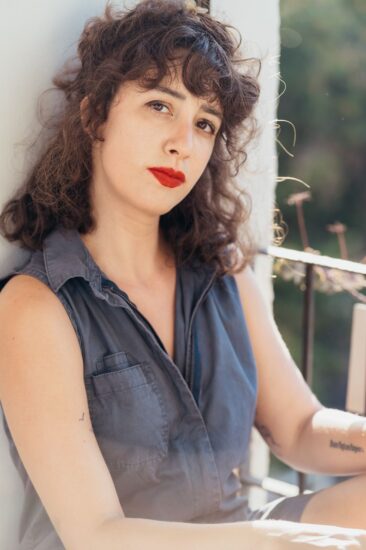
Joy Bernard is a choreographer, dancer, actress, multidisciplinary artist and writer. She creates in dance, physical and visual theater, writing, video and sound. She has been commissioned to create and perform her works in various museums, galleries, dance and film festivals across Israel, Europe and Asia.
For the past decade, in addition to her artistic practice Joy has been working as a journalist and critic, specializing in visual arts and dance. Her writing has been published in numerous newspapers and journals, such as: Haaretz, The Jerusalem Post, Flash Art, Collectors Agenda, The Art Newspaper, Portfolio Magazine, Erev Rav, literary magazine Granta and others. She has been a member of the Creative Writing team since 2024.
Joy holds a B.Dance from the Jerusalem Academy of Music and Dance, where she is currently attaining her M. Dance. She is presently training to become a Feldenkrais teacher and therapist.