תגובתה של ג׳ני בירגר ל׳לדמיין מחדש׳ מאת ניה בינגי ואילה מידן
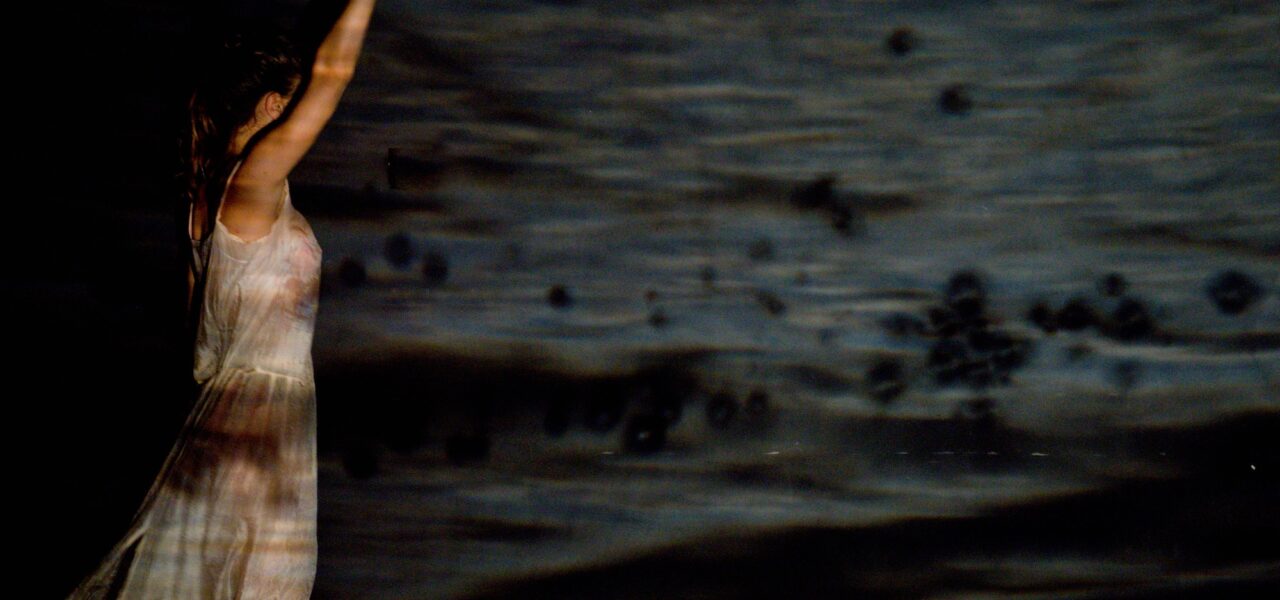
*Photo by Adin Davidson
*English Follows
רבות הן הדרכים אל המילים שאתם קוראים כעת. בחלק מהטקסטים שלי ב- Creative Writing הגעתי לצפות ביצירה עם כמה שפחות ידע מקדים אודות היוצרות.ים והתכנים של העבודות: טאבולה ראסה. פעמים אחרות, משהו בתוכי הרגיש קריאה לצאת למחקר מקדים בטרם התיישבתי באולם המחול. בין אסוציאציות ומחשבות הנעות בקצב מסחרר בתוך מוחי, מתחבאות מילים; חלקן נשארות איתי גם לאחר הצפייה במופע, ומוצאות את דרכן אל הטקסט הסופי. תהליך הכתיבה אודות ׳לדמיין מחדש׳ של ניה בינגי ואיילה מידן התחיל בדיוק כך: שילוב של מחול וציור ביצירה אחת לקח אותי הישר לקרוא על ה- Action painting משנות ה-40; צפיתי ביצירות וסרטונים של ג’קסון פולוק ווילם דה קונינג ויכולתי לדמיין את עצמי שוזרת את העולמות יחדיו בטקסט העתידי. אבל לפעמים המחקר המקדים נשאר במגירה, כי היצירה הולכת בכיוונים לא צפויים, והרפרנסים מתגלים כ-לא שייכים. ׳לדמיין מחדש׳ היא יצירה כזו: פותחת דלת לעולם חדש ומזמינה מילים אחרות מאלה שדמיינתי.
*
הכוריאוגרפית ורקדנית ניה בינגי והאמנית ומאיירת אילה מידן נכנסות לבמה, ומתיישבות זו מול זו. הן לבושות חולצות לבנות ומכנסיים/חצאית שחורים, מחויטות בשחור-לבן. “תעצמי עיניים. תאריכי את הנשימה שלך. את קלה או כבדה?” אילה מנחה את ניה, ומילותיה מהדהדות בין האנשים בקהל. אני שומעת מסביבי הנחות רווחה, נשימות עמוקות, חיוכי הזדהות וגם חוסר יכולת שקט אך מורגש להתמודד עם השאלה האחרונה. כמה שוקלים כאב, ייאוש, אכזבה? איך גופנו המוגבל יכול להכיל כמות בלתי-מוגבלת של צער ועצב? “דמייני את עצמך בעוד שנה, שנתיים. מה את רואה?”
היכולת לדמיין היא לא פחות מקסם. מבלי לזוז, יש בנו את הכוח לעזוב לרגע את המציאות מול עינינו, ולהפליג לעולם אחר. אולי נדמיין עולם שיאפשר לנו להביע את מה שעל ליבנו ללא חשש ובושה, עולם של תקשורת מיטיבה בין בני האדם, החוזרים לשפה ככלי מרפא? או שמא עולם ללא כוח כבידה, ואז באמת נרגיש קלילים כשכל הדמעות יצופו מסביב, בועות בועות, במקום להיות תקועות איפשהו בין הקיבה לארובות העין. ואפשר גם לדמיין עולם בו אנחנו מפסיקים לספור, שש מאות שמונים ושלוש, שש מאות שמונים וארבע; עוצרים כי כולם חזרו הביתה, ואפשר להתחיל לנשום.
Back to reality, או במילותיה של אילה, תתרגלו לחושך.
*
רגע לפני שהן ייפרדו וכל אחת תצלול לתוך עולמה, האמניות אוחזות בחבל אדום ארוך, חוט השני או אולי שליה: אילה מחזיקה קצה אחד בידה, וניה לוכדת את הקצה השני בין שינייה. תנועות ראשה המדודות כורכות אותה עוד ועוד סביב עצמה, ומפלגות את פניה. נקשרת ונפרמת, ומי מחזיקה את מי? מי אחראית על המושכות? האם היוצרת בגופה או היוצרת בכפות ידיה? כפי שתיכף נגלה, שתיהן. המתח בין היוצרות פותח את המרחב הבימתי אל הקלעים ואל מה שנמצא מלפני הקלעים, so to speak, כשכוונתי היא למרחב בין הקהל לבין הבמה. אילה מתיישבת ליד מטול השקפים הממוקם שם, והיא תישאר לצידו למשך רוב המופע. המטול, אובייקט עתיק וסימבולי, מקבל כאן חיים חדשים ושימושים מפתיעים. בנוסף, הוא מתפקד כנקודת אור יחידה, וביציבות ובהתמדה מקרין על הבמה את השתקפות פעולות ידיה של אילה.
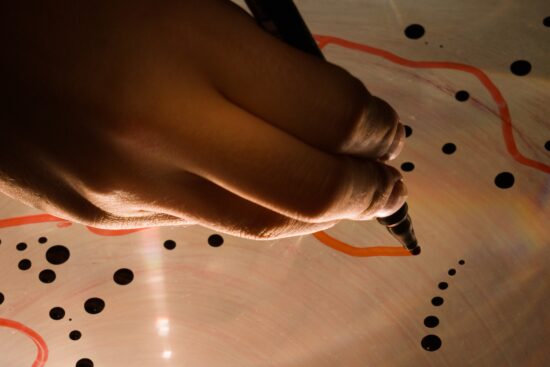
Photo Adin Davidson
המכחול ננעץ והסיפור מתחיל. ביצירתיות אין-קץ, אילה מאיירת עולמות פשוטים ומורכבים. חורטת קווים אדומים, נועצת נקודות שחורות, מציירת מפות ואני חושבת על הקלות הבלתי נסבלת בה אנשים מחליטים לפתע להעביר גבול על המפה ולפלג עמים שלמים. הבחירה להשתמש במטול שקפים במקום הקרנת וידיאו היא בחירה אמיצה; המטול מחייב דיוק ומחויבות מלאה לפעולה, כדי שרק הדבר הרצוי ישתקף על הבמה. נקודה נוספת ומובנת מאליה, אולי, היא שמה שאנו רואים קורה כאן ועכשיו, לעומת הקרנת וידיאו מוכן וערוך מראש; הגוף החי והרוקד של ניה, פועם ורוקע מולינו, כמו עולם הדימויים המתהווה על הבמה. שורשי הריקוד של ניה נטועים עמוק בתוך המסורת של הפלמנקו, והיא שולטת ברזי הטכניקה בצורה מרשימה ומעוררת השתאות. בזקיפות קומה, זריזות כפות רגליים והבעות פנים אסרטיביות, היא מדברת את שפת הפלמנקו כשפת אם ודרכה מייצרת דמות אישה איתנה ונחושה בדרכה; לעיתים היא נמצאת בדיאלוג גלוי עם הדימוי המשתקף דרף מטול השקפים לתוך הבמה ולעיתים נשארת נאמנה לעולמה הפנימי. לרגעים שפת האם מרפה קצת, ונותנת מקום למילים בשפות זרות. מרגש אותי לראות אותה בהבעה יותר פרומה וחופשית, ובמערכת יחסים אחרת עם הריצפה. אישה חזקה ואיתנה, אך גם רגישה ומרגישה, ומאפשרת לגופה להיות ערוץ דרכו עובר מנעד רחב של רגשות.
ברגע שיא בו הדימוי נראה כעולה על גדותיו, והבמה מלאה כמעט עד אפס-מקום, אילה חוזרת אל הבמה ומציירת באמת, עם מכחול וצבע, על גופה של ניה. זהו רגע מסקרן ואחר, וקיוויתי שיחזור עוד בהמשך. הוא מאפשר להרחיב את השיח הפנימי של עולם היצירה לעוד רבדים: הגוף החומרי והשתקפותו; החומר הממשי והשתקפותו; פעולות המאיירת ולעיתים בודדות גם השתקפות של ידה שתופסת את עיני.
ואז, בקלות מרשימה, אילה חוזרת אל המקרן, ומשתמשת בשפריצר מים כדי למחוק את הדימוי משולחן העבודה. טאבולה ראסה, עולם חדש. מצאתי את עצמי מחכה לרגע הבא שבו המים ניתזים, וחווה סיפוק עצום מפעולת המחיקה. כמה קל לשחרר את ההיסטוריה ולהתחיל מחדש. הקלות לא נובעת מקלות ראש, או מקלילות של קבלת החלטות, אלא מעצם מהות החומר, צבעי מים ולוח מחיק, שכמעט מזמין להמשיך ולמחוק, להמשיך ולברוא.
העולמות נעים בין מוחשיים לאבסטרקטיים, כשאילה עושה שימוש במגוון חומרים וטקסטורות. דמותה של ניה משתנה אף היא, הן מבחינת הלבוש והאביזרים בהם היא עושה שימוש בהתאם לכל עולם, הן בבחירות התנועתיות שלה שנעות מקצה אחד של עולם הפלמנקו הקלאסי אל הקצה השני שהוא עולם המחול העכשווי; בין הקצוות – אינסוף נקודות ביניים מרתקות היוצרות תמהיל כוריאוגרפי ייחודי. בסצינה עוצמתית במיוחד, ניה נמצאת צמוד לקיר האחורי, הבמה ריקה ושקטה. ידה של אילה מניחה אבן גדולה וכבדה במרכז הבמה. ואז עוד אבן, מעליה. ועוד אבן. האבנים נראות מאיימות, איך היא מצליחה לאזן אותן אני חושבת בליבי, ואז נזכרת שמה שאנחנו רואים כנבנה לגובה בעצם נפרס לעומק, אבל גם ההבנה השכלית הזו של ילדה שהבינה איך הקסם עובד לא מונעת ממנה להתרגש מהקסם כל פעם מחדש. ניה נלחמת על זכות קיומה כשהאבנים סוגרות עליה, ולמרות שברקע מוסיקה מעולם שונה, אני חושבת על השיר של פי ג’י הארווי בשם Dear darkness:
Dear darkness, dear darkness
Won’t you cover, cover me again
Dear darkness, dear
Well, I’ve been your friend for many years
מזל שמגיע השפריצר ואנחנו מוחקים את מה שהיה, ומתחילים מהתחלה.
*
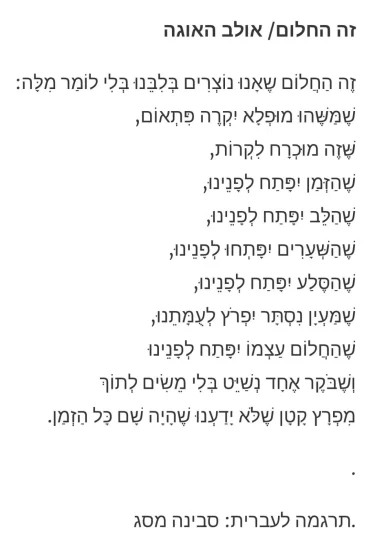
המטול מסתובב, לאט, והבמה הופכת לחשוכה באופן מוחלט. המשפט “וחושך על פני תהום…” עולה במחשבותיי. עלומת האור המסנוורת מופנית כלפינו והמכחול בידינו: להמשיך במציאות המתגלגלת מכורח ההרגל, או להעיז ולדמיין עולם אחר? סיום היצירה נוקב, אך ללא אצבע מאשימה, אלא יותר כתזכורת: אם לא עכשיו, אז מתי? אני נזכרת בשיר יפייפה של אולב ה. האוגה, משורר דני, שמאיר בדרכו שלו את האפשרות לדמיין.
*
ניה בינגי ואילה מידן הציגו את ׳לדמיין מחדש׳ ב15.8.2025 בפסטיבל תל אביב דאנס של מרכז סוזן דלל.
Jenny Birger’s Response to ‘Re.Imagined’ by Naya Binghi and Ayala Meidan
There are many paths that lead to the words you are reading now. In some of my Creative Writing texts, I arrived at the performance with as little prior knowledge as possible about the artists and the content of the work: tabula rasa. At other times, something inside me felt a call to do some research before sitting down in the dance hall. Among the associations and thoughts rushing through my mind at dizzying speed, I collect words; some of them stay with me after the performance, eventually finding their way into the final text.
Writing about Re.Imagined by Naya Binghi and Ayala Meidan began from a preliminary research: a fusion of dance and painting in a single work that led me straight to reading about Action Painting of the 1940s; I watched works and videos of Jackson Pollock and Willem de Kooning and could picture myself weaving those worlds together into the text I would later write. But sometimes the preliminary research remains tucked away, because the piece moves in unexpected directions, and the references turn out to be irrelevant. Re.Imagined is such a work: it opens the door to a new world and calls for words different to those I had imagined.
*
Choreographer and dancer Naya Binghi and artist and illustrator Ayala Meidan enter the stage and sit facing one another. They are dressed in white shirts and black pants/skirt, outfits tailored in black-and-white. “Close your eyes. Lengthen your breath. Are you light or heavy?” Ayala guides Naya, and her words reverberate among the audience. Around me I hear sighs of relief, deep breaths, smiles of recognition, and also a subtle, uneasy restlessness in response to the last question. How much do pain, despair and disappointment weigh? How can our limited body contain an unlimited amount of grief and sorrow? “Imagine yourself in a year, in two years. What do you see?”
The ability to imagine is nothing short of magic. Without moving, we have the power to leave reality for a moment and sail into another world. Maybe we’ll imagine a world where we can express what’s in our hearts without fear or shame, a world of generous human communication, returning to language as a tool for healing. Or perhaps a world without gravity, where we would truly feel light as all our tears would float around us like bubbles instead of getting stuck somewhere between the navel and our eyes. Or better yet: a world where we stop counting, six hundred and eighty-three, six hundred and eighty-four; we stop because everyone has returned home, and we can finally take a deep breath.
Back to reality, or in Ayala’s words, “you better get used to the darkness.”
*
Just before they part ways and each dives into her own world, the artists hold onto a long red rope, an umbilical cord of sorts: Ayala grips one end in her hand, and Naya clasps the other between her teeth. With deliberate movements of her head, she winds it again and again around herself, splitting her face. Tied and untied, but who is holding whom? Who is guiding the reins? Is it the creator with her body, or the creator with her hands? As we are about to see – the answer is both. The tension between the two artists directs our attention to the area between the audience and the stage, where lies an old overhead projector: an archaic, symbolic object, revived here with surprising uses. The projector serves as the single point of light, steadily casting onto the stage the reflection of Ayala’s actions, who’s situated beside it during most of the performance.
Photo Adin Davidson
The brush strikes, and the story begins. With boundless creativity, Ayala illustrates both simple and intricate worlds. Using watercolors, she carves red lines, pins down black dots, sketches maps, and I find myself thinking about the unbearable ease with which people decide to draw a border on a map and divide entire nations. The choice to use a overhead projector instead of projecting video art is a bold one; the projector requires precision and complete commitment to the action, so that only the desired image is reflected on stage. Another, perhaps obvious, point is that what we see happening is here and now, as opposed to a pre-prepared and edited video projection. Just as the body of Naya is breathing and dancing, clearly alive in front of our eyes, so is the rich world of images that is being created on stage. Naya’s dance is rooted deeply in the tradition of flamenco, and she masters its technique with breathtaking command. Upright posture, swift feet, assertive facial expressions, she speaks flamenco as her mother tongue, creating through it the figure of a strong, determined woman; at times in direct dialogue with the imagery reflected from the projector, and at times immersed in her inner world. Occasionally, the mother tongue loosens, making room for words in foreign languages. It moves me to see her in a more open, free expression and in another kind of relationship with the floor. A strong and powerful woman indeed, but also highly sensitive, allowing her body to channel a vast range of emotions.
At a climactic moment, when the projected image threatens to overflow and the stage is almost completely filled, Ayala returns to the stage and paints directly, with brush and pigment, onto Naya’s body. It is a striking and unusual moment, and I hoped it would return later on. It expands the creative dialogue into further dimensions: the material body and its reflection; the painted material and its reflection; the illustrator’s gestures, and at rare moments even the reflection of her hand catching my eye.
And then, with impressive ease, Ayala takes a spritzer and splashes water on the worktable, and the image disappears. Tabula rasa, a new world. I found myself waiting eagerly for the next time the water would splash, feeling immense satisfaction at the act of erasure. How simple it is to release an inner history and begin anew. The ease does not come from lightness of thought, nor from carelessness in decision-making, but from the very nature of the medium: watercolors and an erasable surface that invite one to erase and re-create, again and again.
The worlds oscillate between the tangible and the abstract, as Ayala employs a variety of materials and textures. Naya’s persona shifts as well, both through the costumes and accessories she adopts in each world, and through her movement choices, which range from the one end of classical flamenco to the other end of contemporary dance. Between these two poles lie countless fascinating points, creating a unique choreographic language. In a particularly powerful scene, Naya presses herself against the back wall, the stage empty and silent. Ayala places a large stone at center stage. Then another, on top. And another. The stones look heavy and threatening. How does she manage to balance them? I wonder, then remind myself that what seems to rise upward is in fact on the same plane (depth). Yet even this logical understanding, like a child who figures out how the trick works, does not stop me from being moved by the magic again and again. Naya fights for her right to exist as the stones close in around her. And though the background music comes from another world, I can’t help but think of PJ Harvey’s song Dear Darkness:
Dear darkness, dear darkness
Won’t you cover, cover me again
Dear darkness, dear
Well, I’ve been your friend for many years
Luckily, the spritzer arrives and we start anew.
*
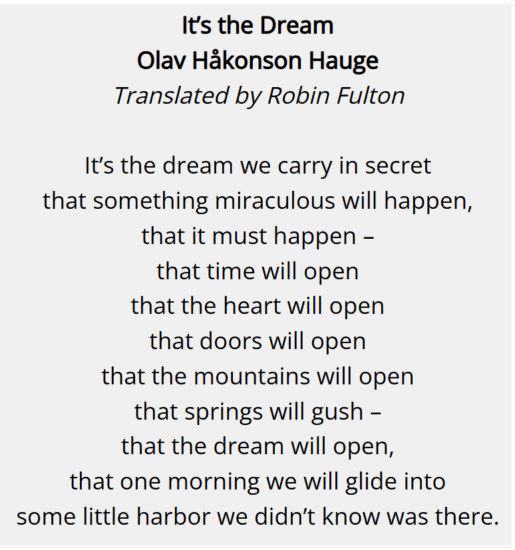
The projector slowly turns, and the stage goes completely dark. The phrase “and darkness was upon the face of the deep…” rises in my thoughts. The blinding beam of light now points at us, and the brush is in our hands: do we continue following the habitual way of the past, or dare to imagine another world? The ending is poignant, without adding guilt on our shoulders, more reminding us: if not now, when? I am reminded of a beautiful poem by the Norwegian poet Olav H. Hauge, which shines its own light on the possibility of imagining.
*
Naya Binghi and Ayala Meidan presented ׳Re.Imagined׳ on August 15, 2025 at the Suzanne Dellal Centre’s Tel Aviv Dance Festival.
 ג׳ני בירגר היא רקדנית, יוצרת וחוקרת גוף רב-תחומית. יצירות הוידיאו-דאנס שלה הוקרנו במבחר פסטיבלים בארץ ובעולם (ביניהם Cinedans, Cyprus Film Festival, Burgundy Video Dance Festival, בית הנסן ועוד). היצירה lurking (2014) חקרה את התנועה במרחב הציבורי ויצרה פראזות כוריאוגרפיות תלויות-מקום בתל אביב; היצירה the rope (2016) חקרה את תנועת אמנית הקרקס על מה שנראה כחבל אינסופי; בלב ים (2022) חקרה את חוויית ריבוי-הקולות שבתוכינו בחיפוש אחר האיחוד והשלמות. יצירת המחול-תיאטרון פעם (2024) השתמשה בהשראה של משל אפריקאי ליצירה עבור “קהילה בתנועה”, רקדנים לא-מקצועיים החיים עם מחלת הפרקינסון.
בעלת קשת רחבה של הכשרה פיזית, בין היתר העמיקה במחול מערב-אפריקאי (עם מורים מגינאה, מאלי, סנגל), אלתור עם מוסיקה חיה ויצירת כוריאוגרפיה בזמן-אמת (ג’וליאן המילטון ומאיה מ. קארול), קרקס מודרני ומחול עכשווי. למדה תיאטרון פיזי ב”קליפה” וב”פרסונה”, למדה לאבאן-ברטנייף ב”סמינר הקיבוצים” עם מילכה לאון. כיום מעמיקה בלימודי פאשייה (ליאן האן) ומחול מערב-אפריקאי (עדי זלינגר).
כפרפורמרית, הופיעה ביצירות של תמר בנימיני, רוני הלר, אריאל כהן, נועה פריאל ובמבחר יצירות של מחול אפריקאי בארץ ובחו”ל.
למדה בתוכנית לכוריאוגרפיה ב”כלים” (2018), ובסיומה הציגה את הסולו נקודת היעלמות אשר חוקרת האם וכיצד אפשר להיעלם על הבמה.
בעלת תואר דוקטור בבלשנות מאוניברסיטת תל-אביב, בו היא חקרה את האופן בו ילדים מבינים דימויים ומטאפורות. אוהבת לחבר בין מילים ותנועות, ומפתחת סדנאות של אלתור בגוף, קול, ומילה כתובה בשם תנועהמילה (מ-2024). מלמדת אלתור והבעה בתנועה ב”קהילה בתנועה”, סדנאות של מחול אפריקאי, מפתחת רצועת “ג’אמים” – מרחב לאלתור חופשי-מונחה עם מוסיקה אפריקאית חיה – יחד עם סער קמפלרר. בעלת תעודות הוראה של איינגאר יוגה ופילאטיס מזרן, ומלמדת באופן פרטי ובשיעורי סטודיו בתל-אביב.
Jenny Birger
born in 1984 in Kiev, lives and works in Tel Aviv. Multi-media artist, dancer, teacher. Holds a PhD in Linguistics, passionate about language and movement, the language of movement, the movement of language.