רשמים על המופע ‘ארץישובחילדומם’ של נועה דר מאת יוליה פריידין
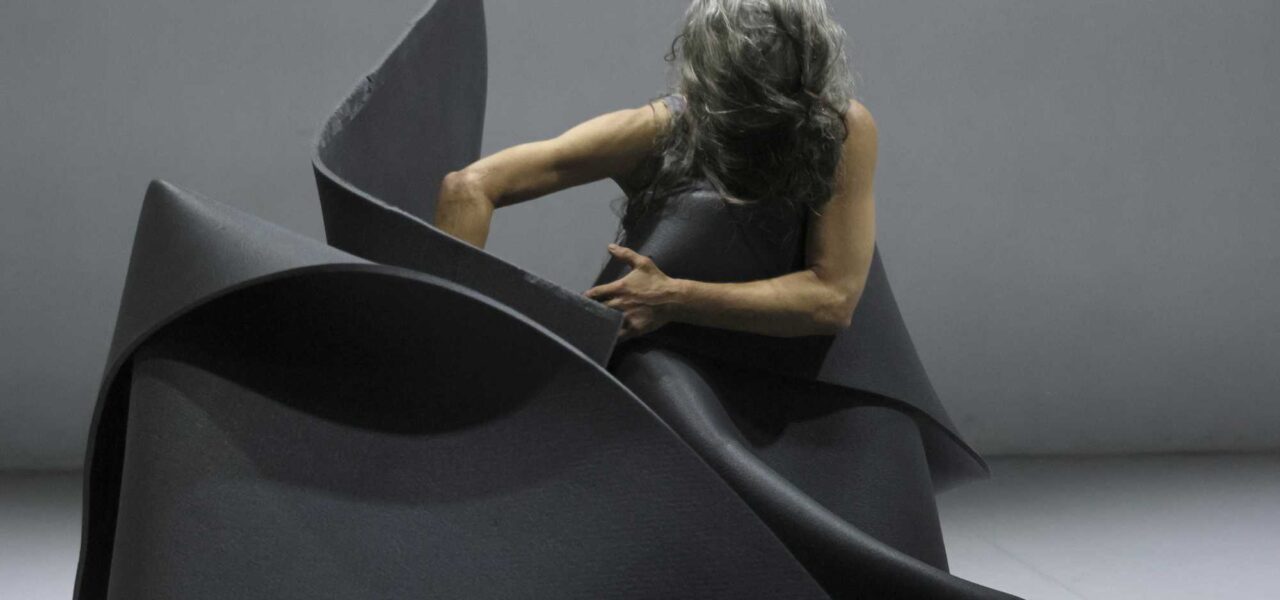
*Photo by Natasha Shaknes
*English Follows
נכנסתי לסטודיו אורה בו הקהל כבר היה ישוב בכיסאותיו ומולו נוכח חומר אפור גדול מסוג פוליגל, הנראה מקופל בצורה לא מסודרת, כמו חתיכת אדמה תלושה ממקומה, פיסת מקום שנלקחה והובאה לחלל.
במקרה של אזעקה, ילוו אותנו למקום בטוח, ושכבר כל החטופים יחזרו הביתה, ושהמלחמה הזאת תסתיים.
זוהי המנטרה שנשמעת כבר קרוב לשנתיים בפתיח של מופעי מחול, והיא כבר הפכה לחלק בלתי נפרד מהמופעים עצמם.
במופע של נועה דר אפשר לראות עד כמה המנטרה הזאת נטמעת ביצירה, ועד כמה היא רלוונטית לתוכן שלה.
כבר שם המופע חושף או משמש כסוג של טיזר או הקדמה על מה המופע הזה:
על ארץ,
על ישוב,
על חי,
על חיל,
על ילד,
על דומם.
רק לצפות ברשימה הזאת, מחסיר פעימה בלב ומחבר אותנו לתחושת הכיווץ המוכרת לנו בשנתיים האחרונות, ואפשר לומר גם מאז קום המדינה.
גוש אפור מחומר מסוג פוליגל שמקופל לכמה שכבות בלתי מאורגנות מתקרב אלינו. לא רואים את נועה, רואים רק את הגוש. נשמעת ברקע הקלטה וקולה של אישה, שאומרת: “בבת אחת תתקפלו ותעשו: האאאאאא”. ממש רציתי לבצע את ההנחיה, אבל זה “לא מקובל” או היחסים בין המבצעת לבין הקהל רק בתחילת הדרך, אז עשיתי אותה רק בלב. לשחרר את המתח הטמון בחיי היום-יום, והצטברות של היום שהיה, שאיתו אנחנו הקהל תמיד מגיעים למופע, כמו הצטברות של ההיסטוריה הפרטית שלנו שתמיד נמצאת בתוך תאי הגוף. נועה עומדת, מקופלת מתחת לחומר האפור, רואים רק רגליים מציצות וראש. נועה מושכת את עצמה דרך השיער.
הסולו הזה הוא בעצם יחסים בין נועה, לבין החומר האפור בגדול, לבין הקול הנשמע ברקע שתהיתי לפרקים אם זאת עצמה, או הקלטה של צ’אט גי.פי.טי או שזאת הקלטה של מורה לפלדנקרייז שנועה למדה אצלה.
אני אקרא לזה בטקסט: נועה-החומר-הקול, זה כמו השילוש הקדוש.
איזה תבנית יש לחרדה? איך לעבור לפאזה של רגיעה ורווחה? אלו שאלות שהקול שואלת.
נועה קולעת צמה על קודקוד הראש, תוך כדי שהראש מורד למטה. נועה מנסה לקפל בעזרת כפות הידיים את החומר – זה כמו לנסות לקפל סדין או שמיכה בלתי אפשרית. נועה מתגלגלת בתוך החומר, מזכירה את בתי, בת הארבע וחצי, שאוהבת לקפוץ על המיטה לפני השינה, ומתכסה בשמיכה, ורוצה שאנחנו נחפש אותה כשהיא מתחתה, וגם נמצא אותה בסופו של דבר.
נועה מקריאה רשימת תכונות שהורישה מהוריה, גם מאמה, סבה וסבתה, היא הורישה את אמא מאמא. שומעים סקירה של הביוגרפיה של נועה, של ה־DNA המרכיב אותה. היא פורמת את השיער. זוהי התחלה של שיעור שני, ונועה קולעת את הצמה לצד, כשהפנים של נועה ספונות בתוך החומר ולא רואים את פניה, ואין לה שם נשימה. זה מעורר אצלי חרדה. מה קורה כשעולה חרדה במופע למישהו מהקהל?
העיסוק בשיער והשזירה של הצמה ופירוקה לאורך המופע, מקבילה לשלבים בחייה של נועה: הילדה, המתבגרת, האישה, האימא, נועה בהווה.
כל פעם שנועה פורמת את הצמה שהיתה, ומסדרת אחרת את השיער, מתחיל פרק חדש בחייה ובהקלטה המלווה אותה לאורך כל המופע.
נועה הופכת לפועלת חזקה ושרירית שמדגימה כוח, כמו חופרת משהו בתוך האדמה. זה הזכיר לי את הפועלים והפועלות הקומוניסטים, שיש להם מגל והם קוצרים את האדמה. אני חושבת על אמנות פרפורמנס (performance art ) ובייחוד על אמניות פרפורמנס המבצעות פעולות פיזיות קונקרטיות ועובדות הרבה פעמים עם חומרים פלסטיים ובודקות את גבולות הגוף ומסוגלותו, כמו מרינה אברמוביץ’, סיגלית לנדאו וקרולי שנימן. דרך שימוש בגופן והמדיום הפלסטי, הן הופכות את הבשר, הגוף, לריקודים של כוח, כאב, תשוקה ושחרור. הדיאלוג בין גוף לחומר יוצר מטאפורה לחספוס, לחרדה, לכוח ולמאבק. נועה הופכת את החומר לשדה קרב, והיא חיילת בשטח האויב, מנסה לירות עלינו ועל האויב הדמיוני או האמיתי במקרה הזה. יש תרגול על מזרון יוגה שנועד להרגיע, להזרים נשימה לגוף, ולווסת חרדה. נועה בוחרת בעבודה בחומר שהוא מאוד כבד, ומגושם וגדול, ולא קל לסחיבה או לקיפול. היא גם נורא קטנה פיזית מול החומר.
נועה מתיישבת על המזרון ומפנה מבט לקהל. היא נכנסת למצב של אישה כורעת ומבצעת ריטואל כשהיא משתמשת בכפות ידייה האקספרסיביות הדברים שמגדירים אותנו, עליהם מדבר הקול בהקלטה. הקול מדבר בגוף רבות – “אנחנו”. היא מדברת על עצמה בקול רבות (אנחנו-גוף ראשון-נקבות-רבות), נועה היא אישה בעלת דמויות רבות או מייצגת נשים רבות שמרגישות כמוה. היא הגיעה לאיזה שיא תנועתי וקרסה בנפילה אל החומר.
שיעור שלישי – שם השיעור “חי”. נועה אוספת את השיער למין גולגול אחורי. היא הולכת על המרפקים שלה. הקול ממליץ לדרוך על כפות הרגליים. נועה הולכת על ארבע בכל מיני כיוונים. יש עידוד להשמיע קול ממעמקי הבטן. אין קורלציה בין ההמלצה של הקול לבין מה שנועה עושה. היא לא רגועה. הגוף בתנועה מצומצמת, כמו
סביבון המהלך על המרפקים ולא מוצא את מקומו.
נועה היא פרפורמרית בחסד, נראית בנוכחות מלאה במה שהיא עושה. אי אפשר להבין אם מה שאנחנו רואים הוא מכוריאוגרף מראש, אילתור, או גם וגם בו זמנית. יש אחריות מאוד נוכחת לרגע הזה, של ההווה, של הגוף. נועה חוזרת שוב להסתתר בתוך החומר, ואז מחזיקה אותו מעליה עם הידיים. החומר הוא כמו מטאפורה לאספלט לוהט. ברקע שומעים איזו אוטופיה של חיים מושלמים – נשמע כמו פנטזיה של חיי קיבוץ ליד הכנרת. נועה מסובבת את החומר סביב גופה. זה נראה כמו גלימה או מעיל גדול.
הקול אומרת: אצלנו לא מתלוננות ולא מתחצפות, אצלנו כולן שוות. יש איזה אידיאל נשי אוטופי, שנראה שעליו נועה גדלה, אידיאל קיבוצי, שבו נשים הן לא חלשות והן גם לא בוכות. זה מזכיר לי אידיאלים חברתיים, סובייטים, סוציאליסטיים עליהם גדלו הוריי בברית המועצות לשעבר וילדי וילדות הקיבוצים בארץ.
שיעור רביעי לחוסן גופני ונפשי:השם של השיעור הוא “ילד דומם”, אבל נועה בחרה לקרוא לו “התפילה”. בזמן שנשמעות ההוראות, נועה יושבת בתוך החומר, והן נשמעו כמו הוראות של שיעור פלדנקרייז: פיהוק, זמזום, לא להתעסק אם זה בסדר או לא בסדר. יש איזשהו אישור שאומר שזה בסדר לעשות מה שרוצים, כי זה אומר שאנחנו לא בדפוסים של חרדה. נועה נעמדת על הראש ,ונכנסת לתוך עמידת ראש. היא מסיימת את עמידת הראש ומתחילה לגלגל את החומר כמו שמגלגלים מזרון יוגה. היא מזמזמת תוך כדי שיר את שיר הערש “ערב מול הגלעד” של לאה גולדברג כשהיא נושאת את המזרון כמו ילד. היא יוצאת מהסטודיו, והקהל עוד לא הבין אם המופע נגמר או לא.
כשקוראים את מילות השיר אי אפשר שלא לחשוב על האימהות של החטופים, החיילים, ועל כל האימהות שנושאות את ילדיהן ברחמן, ומגדלות אותן , ואז חלק מהאימהות מקבלות הודעה שבנה הקטן אבד… ואף אחת לא רוצה להיות האמא הזאת, אבל לכל האימהות כואב כאילו לקחו את הטלה שלה.
Yulia Frydin’s Refections on ‘Lists of Longing and Lessons for Hope’ by Noa Dar
I entered Studio Ora, where the audience was already seated, facing a large grey material made of Polygal, which appeared crumpled and disorganized, like a chunk of earth torn from its place, a fragment of space that was taken and brought into the room. In case of a siren, we will be escorted to a safe place, and may all the hostages already return home, and may this war end. This is the mantra that has been heard for nearly two years at the beginning of dance performances, and it has become an inseparable part of the performances themselves.
In Noa Dar’s performance, one can see how deeply this mantra is embedded in the work and how relevant it is to its content. Even the title of the piece serves as a teaser or an introduction to what the performance is about:
about land,
about settlement,
about life,
about soldier,
about child,
about stillness.
Just reading this list takes your breath away and connects us to the familiar tightness we’ve felt over the past two years and arguably since the establishment of the state.
A grey lump made of Polygal material, folded into several disorganized layers, moves toward us. We don’t see Noa, only the lump. In the background, we hear a recording, a woman’s voice. “All at once, fold yourselves and go: ahhhhhhhhhhh.” I really wanted to follow the instruction, but it’s not acceptable, or maybe the relationship between the performer and audience is still just forming, so I did it in my heart. To release the tension built up from everyday life, from the accumulation of the day we’ve had, which we, the audience, always bring with us to a show, like the accumulation of our personal histories that always reside in our body’s cells. Noa stands, folded beneath the grey material. Only her legs and a head peek out. Noa pulls herself forward by her hair.
This solo is essentially a relationship between Noa, the large grey material, and the voice in the background, which I wondered at times whether it was her own voice, or a recording from ChatGPT, or perhaps a Feldenkrais teacher Noa once studied with. I’ll refer to this trio in the text as Noa Material Voice. It’s like a holy trinity.
What shape does anxiety take? How do we shift into a phase of calm and ease? These are the questions the voice asks. Noa braids her hair at the crown of her head while her head is bowed down. She tries to fold the material with her hands, like trying to fold an impossible blanket or sheet. Noa rolls around in the material, reminding me of my 4.5-year-old daughter who likes to jump on the bed before sleep, cover herself with the blanket, and wants us to find her under it, and eventually, we do.
Noa recites a list of traits she inherited from her parents, from her mother, her grandfather, and grandmother.
She inherited her mother from her mother.
We hear a review of Noa’s biography, the DNA that makes her up. She unravels her hair. This marks the beginning of the second lesson. Noa braids her hair to the side, her face buried in the material so we can’t see her expression, and she has no breath. This stirs anxiety in me. What happens when someone in the audience experiences anxiety during a performance?
The focus on the hair and the braiding and unbraiding of the braid throughout the performance parallels the stages in Noa’s life: the child, the teenager, the woman, the mother, Noa in the present.
Each time Noa unravels the braid that was and styles her hair differently, a new chapter in her life begins, accompanied by the recording that follows her throughout the performance.
Noa transforms into a strong, muscular laborer, demonstrating force, like she’s digging into the earth. It reminded me of communist workers, with sickles, harvesting the land. I think of performance art, especially of female performance artists who perform physical, tangible actions, often working with plastic materials and testing the body’s limits and capabilities, like Marina Abramović, Sigalit Landau, and Carolee Schneemann. Through their use of the body and physical materials, they turn flesh into dances of power, pain, desire, and release. The dialogue between body and material creates a metaphor for roughness, anxiety, strength, and struggle.
Noa turns the material into a battlefield. She is a soldier in enemy territory, trying to shoot at us and at an imaginary or real enemy in this case. There’s a practice on a yoga mat intended to calm, to breathe into the body, to regulate anxiety. Noa chooses to work with a material that is very heavy, clunky, large, and hard to carry or fold. She is also physically small compared to the material.
Noa sits on the mat and looks toward the audience. She enters the state of a crouching woman, performing a ritual using her expressive hands, about the things that define us, which the voice on the recording speaks of. The voice speaks in the plural, “we.” She refers to herself in the first-person plural, we feminine plural. Noa is a woman of many figures or represents many women who feel like her. She reaches a kind of movement climax and collapses into the material.
Lesson Three, the lesson is titled ‘Alive’. Noa gathers her hair into a back bun. She walks on her elbows. The voice recommends stepping on the soles of the feet. Noa moves on all fours in various directions. There’s encouragement to make a sound from deep in the belly. There’s no correlation between the voice’s recommendation and what Noa actually does. She is not calm. The body moves in a constrained way, like a spinning top walking on elbows that can’t find its place.
Noa is an exceptional performer, fully present in what she does. It’s impossible to tell whether what we’re seeing is choreographed, improvised, or both simultaneously. There is a strong sense of responsibility for the moment, for the present, for the body. Noa returns to hiding within the material, then lifts it above her with her hands. The material becomes a metaphor for burning asphalt. In the background, we hear an idyllic vision of a perfect life, it sounds like a kibbutz fantasy near the Sea of Galilee. Noa wraps the material around her body, it looks like a cloak or a large coat.
The voice says,
“In our place, we don’t complain or talk back. In our place, all women are equal.”
There’s a kind of utopian feminine ideal that seems to have shaped Noa, a kibbutz ideal where women are not weak and don’t cry. It reminds me of the social, Soviet, socialist ideals my parents grew up with in the former USSR, and the children of kibbutzim grew up with in Israel.
Lesson Four, for physical and emotional resilience. The lesson’s name is ‘Silent Child’, but Noa chose to call it ‘The Prayer’. While the instructions are heard, Noa sits within the material, and they sound like Feldenkrais class instructions: yawning, humming, not worrying whether it’s right or wrong. There’s a kind of permission to do what you want, because that means you’re not operating from anxiety patterns. Noa stands on her head, enters into a headstand. She finishes the headstand and begins to roll up the material like a yoga mat. She hums the lullaby “Evening in Front of Gilad” by Leah Goldberg, carrying the mat like a child. She exits the studio, and the audience still isn’t sure whether the performance is over or not.
Reading the song lyrics, one can’t help but think of the mothers of hostages, of soldiers, of all mothers who carry their children in their wombs, raise them, and then some of them get the message that their little son is gone. And no one wants to be that mother. But all mothers hurt as if someone took their lamb.
Evening in Front of Gilad by Leah Goldberg (1938)
The trees are so heavy,
the fruit bends the branches,
this is the soothing hour,
when the children fall asleep.
To the valley from Gilad a black, soft lamb descended,
a ewe bleats,
cries in the pen,
it’s her little son who is lost.
The lamb shall return to the mother’s embrace,
lie in the pen and fall asleep,
and the ewe shall kiss him,
and she will call him by name.
The night hides among the branches,
and the prophet of Gilad descends silently into the valley to watch the children sleep.
Noa Dar presented ‘Lists of Longing and Lessons for Hope’ on August 11, 2025, as part of the Tel Aviv Dance Festival at the Suzanne Dellal Center.
יוליה פריידין, אמנית רב תחומית, כוריאוגרפית ורקדנית עצמאית, יוצרת מחול
ופרפורמנס, ציירת, צלמת וכותבת. ילידת קייב, עלתה ארצה בשנת ,1990 חיה ויוצרת בתל אביב. אמא לדניאלה מאז 15.12.20.
המופעים של יוליה עוסקים בהגירה, אימהות וטקסיות. עבודותיה מוצגות במרחבי תצוגה לא קונבנציונליים כגון גלריות לאמנות ובמרחב הציבורי. המופעים משלבים תנועה, טקסט ופנייה ישירה לקהל, והזמנה להיות חלק פעיל במופע. המופעים של יוליה הם ברובם קומיים ומושפעים מסטנדאפ ו-lecture performance .יוליה משתמשת בהומור כמנגנון הישרדות את החיים, ומשתמשת בחומר מהם עשויים החיים כחומר גלם מתמיד להופעות שלה. יוליה בעלת תואר ראשון באמנות מטעם המדרשה לאמנות בבית ברל (FA ed.B) למדה בסמינר קיבוצים , בתוכניות כוריאוגרפיה: כלים (2015-2017) עם ענת דניאלי, סימולטור (2015-16) עם שרון צוקרמן ומשה שכטר, ושלומבל (2015-20) עם שלומית פונדמינסקי. מתרגלת איינגר יוגה בסטודיו של גבי דורון מאז 2013.
השתתפה במדרש יוצר בנווה שכטר בהנחייתם של עדילי ליברמן והרב רוברטו ארביב (2017), ובתוכנית רזידנסי לאמניות נבחרות במרכז הגר”א בנווה שאנן, תל אביב עם ענת ליטוין (2019). בעלת FA ed.B ,המדרשה לאמנות בבית ברל (2005-2009). זוכת מלגת רקדנית בקהילה, מטעם משרד התרבות והספורט בין השנים .2017-2020 השתתפה בתוכנית ACDP מטעם ארטפורט, ארטיס ואסולום. תוכנית מרוכזת לפיתוח קריירה מקצועית לאמנים נבחרים (2015).
זוכת מלגת עידוד אמנים צעירים תושבי נתניה בתחום הכתיבה והפרוזה (2008). השתתפה כפרפורמרית ורקדנית יוצרת במופע קווירי פמיניסטי לבני ובנות נוער “סיפורי סבתא בילבי”, של הכוריאוגרפית אורלי אלמי ארנבת מרץ (2019).
“נעמאמא, את לסיבוב”? שיתוף פעולה עם אמנית הספוקן וורד ,נעמה לופו ,בסיור אינטראקטיבי המשלב פרפורמנס, ספוקן וורד, ותנועה במרחב הציבורי השכונתי. המופע הוצג מספר פעמים במסגרת פסטיבל התחדשות עירונית (בתמיכת מפעל הפיס) ועושים שכונה (בתמיכת עיריית ת”א).
שיתפה פעולה עם אמנית הווידאו, סמנתה דה אוליברה, בווידאו דאנס Sleep No More שהוצג בגלרית המקרר בתערוכה “חופשת לידה”.
יוליה יצרה סולואים: שחלוליה (נווה שכטר), בוכה על חלב שנשפך (גלריה נווה שכטר, תיאטרון הבית), התנשלות-טקס פרפורמנס קהילתי במסגרת אוהבים אמנות (מרחב ציבורי של יד אליהו), מלח-מים (גלריית בנימין וגלריה ברמת מנשה), Dead.Line (גלריית צדיק). כמו כן, בתחום האמנות הפלסטית, יוליה הציגה שתי תערוכות יחיד, והשתתפה בעשור תערוכות קבוצתיות בגלריות בארץ. עבודותיה נמצאות באוסף של סרג’ תירוש ובאוספים פרטיים. הסולו האחרון של יוליה “לי זה לא יקרה”, הוא סולו קומי-אוטוביוגרפי המספר בכנות, רגישות והרבה הומור עצמי, על ההתמודדות האישית שלה עם דיכאון וחרדה, תוך כדי האימהות. הסולו הוצג במרכז קהילתי בת ציון בשבוע במלוא הדרה, בבית לאמנות של יד אליהו במסגרת רצועת תרבות, בשכונת בית הכרם בירושלים בשיתוף ותמיכה של מיזם “נפשות”, וממשיך לטייל בארץ ולפגוש נשים, ואימהות שחוו חוויות דומות.
יוליה מגדירה את עצמה כאמנית חברתית-קהילתית, ולוקחת השנה חלק בתוכנית חממה יציאה לפעולה בעבודה עם קהילות מגוונות בניהולה של נטלי צוקרמן בכלים.
Yulia Frydin is a multidisciplinary artist, choreographer, and independent dancer, creating dance and performance, as well as a painter, photographer, and writer.
Born in Kyiv, she immigrated to Israel in 1990 and currently lives and creates in Tel Aviv. She has been a mother to Daniela since December 15, 2020.
Yulia’s performances explore themes of migration, motherhood, and ritual. Her work is often presented in non-conventional spaces, such as art galleries and public areas. Her performances incorporate movement, text, direct audience engagement, and an invitation to actively participate.
They are largely comic in tone, influenced by stand-up comedy and lecture performance. Yulia uses humor as a survival tool and treats the raw material of everyday life as a constant source of inspiration for her performances.
She holds a B.Ed.F.A. in Art Education from the Faculty of Arts at Beit Berl College (2005–2009), and studied at Seminar Hakibbutzim and in several choreography programs.
She has been practicing Iyengar Yoga with Gabi Doron since 2013.
Yulia took part in the “Midrash Yotzer” program at Neve Schechter led by Adili Lieberman and Rabbi Roberto Arbiv (2017), and in the artist residency program at the Gra Center in Neve Sha’anan, Tel Aviv, curated by Anat Litwin (2019). She is a recipient of the Dancer in the Community Scholarship from the Israeli Ministry of Culture and Sports (2017–2020), and participated in the ACDP career development program for selected artists, organized by Artport, Artis, and Asylum Arts (2015).
She also won a writing and prose encouragement grant for young artists from Netanya Municipality (2008).
Yulia performed in the queer-feminist youth performance “Grandma Pippi Tales” by choreographer Orly Almi (March Hare, 2019), and collaborated with spoken word artist Naama Lupo in the interactive street performance “Naama’ma, Are You Coming for a Walk?”, combining performance, spoken word, and movement in the public space. This piece was performed as part of urban renewal festivals supported by National Lottery Association and Tel Aviv Municipality.
She collaborated with video artist Samantha de Oliveira on the video-dance work Sleep No More, presented at the HaMakom gallery as part of the exhibition “Maternity Leave”.
Yulia has created solo works including:
-
Shahlulia (Neve Schechter)
-
Crying Over Spilled Milk (Neve Schechter Gallery, HaBayit Theater)
-
Shedding – A Community Performance Ritual (Loving Art, Public Space in Yad Eliyahu)
-
Salt-Water (Benjamin Gallery and Ramat Menashe Gallery)
-
Dead.Line (Tzadik Gallery)
In the visual arts, she has held two solo exhibitions and participated in over ten group exhibitions in galleries across Israel. Her works are included in the Serge Tiroche Collection and other private collections.
Her most recent solo piece, “That Won’t Happen to Me,” is a comic autobiographical solo that honestly and sensitively addresses her personal experience with depression and anxiety, alongside motherhood.
It was presented at the Bat Zion Community Center during the In All Her Glory festival, at the House of Art in Yad Eliyahu as part of the Tarbut Strip program, and in Beit HaKerem neighborhood in Jerusalem, in collaboration with the Nefashot Initiative. The work continues to tour around the country, meeting women and mothers with similar experiences.
Yulia defines herself as a social-community artist and is currently participating in the “Incubator for Action” program, working with diverse communities, directed by Nataly Zukerman at Kelim Choreography Center.