
Yulia Frydin’s Reflections on ‘speech-less’ by Sharon Valevski
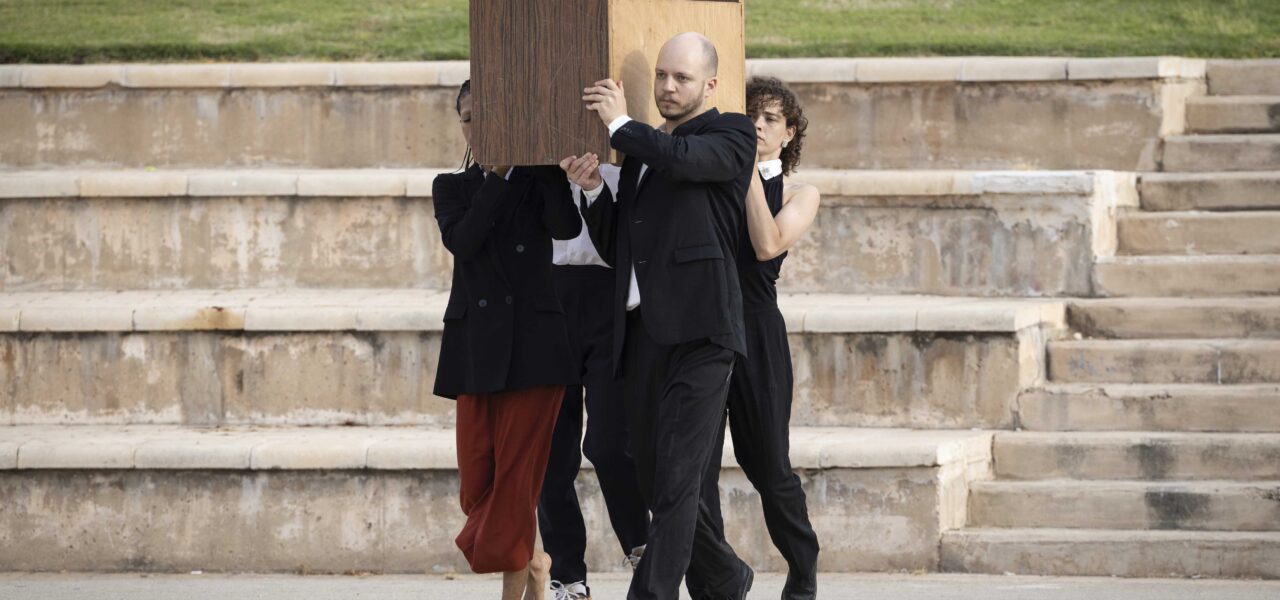
*Photo by Asya Skorik
*Hebrew follows
We, the audience, enter Zehava Hall, located on the third and final floor. The chairs in the hall are arranged in a circle, and hip hop music is playing in the background, under the auspices of a DJ. The hall is darkened, with blue lighting. My body feels relaxed in this situation and starts to move with the groove of the beat.
Five performers walk around relaxedly, talking among themselves. Sharon, the choreographer, plays a double role in the show. She both organizes and arranges the course of events, the choreographic and performative action, and simultaneously follows her own directions as the creator. Her gaze functions in a dual role: observing the performance from the outside and also from within, as if she were one of them, one of the performers, the speakers, the people.
She is in constant dialogue between the benefit of the work and the benefit of the individual, the radical free agents.
Outwardly, there is the vibe of an informal gathering in a kibbutz or community neighborhood, not the premiere of an excited young artist.
The two men and Sharon herself are dressed in black suits with white button down shirts underneath. These are the kinds of clothes worn at conferences or weddings, important events. To me, it recalled Michael Jackson’s outfit, whom I idolized long before the rumors began about him. In the ’90s, he was called the King of Pop and influenced generations of hip hop and breakdance dancers and everything that grew out of this fringe culture. The two female dancers wear velvet shirts, one olive green (Gal), the other orange red (Khaveevya), and black pants.
The performers shake hands with the audience, they give hugs. They clean the space, wiping the floor under the feet of those sitting in the front row. With a window cleaning spray, they give the floor a final spritz.
Dancer Gal Zusmanovich, whom I remember from the TV show “Just Want to Dance” (which aired in 2017, long before COVID and the current war), brings out a pedestal and then takes it away. There’s a sense that we, the audience, arrived at a party the hosts of which haven’t quite finished setting up. At the start of the performance, we’re told that if there’s a siren, we’ll move to another hall. And if we hear the sound of an ambulance during the show, it’s part of the performance.
I wonder if there are other countries where, before a show begins, they announce the possibility of a siren and where audiences, like us, are triggered by any sound resembling an ambulance.
Sharon brings a bucket of water and a rag to the stage. The formal choreography begins with the beat of a song, exploring how one might clean in rhythm. Sharon tests how the preparatory actions for the show can be blurred with the performance itself, both are pre-set choreographies, not incidental, even if they seem so. There is an attempt to play with the audience and break the thin, transparent fourth wall. Gal rides a bike across the space. Sharon sprays the audience with a water mist. All five performers execute a choreographic unison like something seen in music videos or learned in hip hop classes. I’m excited that Sharon chose to bring this dance style and scene, largely considered fringe culture, usually taking place in open public spaces, into a major, central dance festival.
Suddenly, the music stops, and the hall goes quiet. A spotlight shines on dancer Yogev Hendel, who begins to tell his personal story: his teacher once said he’d grow up to be Prime Minister. A quote from Yogev: “If you’re a really good Prime Minister, someone will probably try to kill you.” He starts moving in a style resembling “the human robot.”
The work includes spoken text, recorded text (speeches), and physical movement.
There is an exploration of how syllables affect movement dynamics, joint articulation, and how the performers connect to the verbal content in the recordings.
Yogev incorporates both movement and text, sometimes simultaneously. In the background, we hear a male voice speaking about the Watergate scandal. After reading the program, I assume the voice belongs to Richard Nixon.
Yogev continues to move. He’s a popping dancer, a dance style adjacent to breakdance, rooted in hip hop and connected to American funk music. Interestingly, Yogev learned the style from Korean teachers. The name “popping” comes from the word “pop,” meaning “to burst.” In popping, dancers contract and release muscles to jolt or “pop” their bodies. The style combines rhythm and movement with body control, allowing for exceptional flexibility. Popping includes substyles such as “robot”, where the dancer mimics robotic or puppet like movement, and “waving”, which creates the illusion of an electric current passing through the body.
There are influences from Michael Jackson’s movements. The voice in the background keeps referencing “break in.” There’s a correlation between the text and the fragmentation in the movement. The text tells the story of the break in at the Democratic HQ, which became a symbol of political corruption and led to Nixon’s dramatic resignation.
The structure of the show gives each performer a solo moment. After Yogev comes Khaveevyah Hercules.
Her movement is extremely precise, with brilliant timing between motion and pause. A female voice is heard, I assume it’s Sojourner Truth’s, from her 1851 speech at the Women’s Convention in Akron, Ohio, considered a landmark in the US fight for equal rights:
“She gave birth to 12 children, all sold into slavery… My intellect may be small, but isn’t that enough to deserve equal rights?”
“And ain’t I a woman?”
This line repeats throughout the speech to emphasize that Black women are women too, and their rights aren’t separate from all women’s rights. Occasionally, the performer joins the speech with her own voice.
Khaveevyah turns to the audience and asks how we’re doing so far, if we have any questions, and if we understand what she’s doing. She asks if we think this is modern dance.
In both Yogev’s and Khaveevyah’s solos, there is alignment between the personal stories of the performers and the messages of the speeches. I wonder: what came first, the speech, used as raw material for the solo, or the performer’s personal story, through which they found a speech representing their background and identity?
After her solo, a duet begins, an exploratory movement between the two male performers. It starts with shoulder taps, like casual Israeli “What’s up, bro?” gestures. These everyday touches become choreography that resembles a pre flight security check. Through choreography, they scan each other. Then they move in unison. The three female performers enter with mops and rags, and I reflect on the gender dynamics here. The men in suits, in positions of power, versus the women cleaning. Perhaps it’s a metaphor. They are cleaning up the chaos and wars men create (in a broad generalization).
Gal enters with simple, everyday steps. She stands in the center, her body flows into a wave that develops into a snake like, primal movement. It intensifies, becomes uncontrollable, and turns into a Moroccan African dance ritual where her head shakes powerfully, and her curls appear like an expressive human paintbrush. It’s wild and beautiful. Then suddenly, she gracefully exits the trance and returns to focus, fixing her hair as if nothing happened. She shares that she hasn’t stopped dancing since she was 12.
In the background, a woman’s voice talks about sexual orientation and identity.
Gal is a stunning dancer. Every bone and muscle in her body moves. She can dance in any style. She climbs onto the pedestal and jumps off. The background voice offers advice: “Don’t be afraid.”
She shares that she once lived in France, and the song “Alors on Danse” by Stromae begins to play.
The five performers return and begin conducting a security check on the audience, asking questions, talking over each other. One line among the chatter struck me deeply:
“There are times when the country was left unsupervised.”
It hit home with painful relevance.
Tuval Reshef, the dancer, introduces himself as a b-boy, slang for a male breakdancer. A female is called a b-girl. Tuval used to play violin and also fenced. He uses body movements to explain fencing techniques, which then turn into violin playing motions. The idea is how similar physical actions can serve different purposes depending on the context.
In Sharon’s work, each performer competes against themselves, their life story, their identity. Tuval performs resuscitation movements because he volunteered with Magen David Adom. This section is particularly moving, linking resuscitation actions with ambulance sirens, the very sounds we were warned about before the show began.
We hear a recorded speech by Alexei Navalny, the Russian lawyer and opposition activist, one of the leaders of anti government protests in Russia and a vocal critic of Putin.
In the recording, he recounts how, in the villages near Chernobyl, people were forced to collect contaminated soil with their bare hands so the government could present a false picture of “no dangerous radiation.”
As someone born in Kyiv, living about 100 kilometers from Chernobyl, I know these stories, how they tried to cover up the greatest man made disaster in human history.
A section is spoken in Russian, and I understand it since it’s my mother tongue. Navalny says: “We are a massive force.” He called on citizens to understand they are not powerless. Individually, the government appears stronger than them, but united, they can change reality. He spoke against fear and said that the regime only wins if we fear it. That it’s better to die standing on your feet than to live on your knees.
The performance presents the desire to be the chosen one of the public. Each and every one has a set time on stage during which they must convince us to choose them. They use every means at their disposal: virtuoso technique, unique movement, an individual personal story meant to stir our compassion and empathy. When necessary, they stand on a tall pedestal so that we can see and hear them better.
They want us to follow them. Their movement hypnotizes us into becoming captivated by them.
There are some very beautiful transitions in the work, in the movement between sections, in the stitching together of parts. The piece is tight and woven intelligently and with humor. The performers become bodies bending on all fours, and each bent body forms a step. When they’re in this bent-over position, standing side by side, they look like ascending stairs, or descending ones, depending on how you look at it.
At the end of the performance, a cacophony of sound is heard. All the speeches blend together to the point where you can no longer recognize words, syllables, or sentences. Everything turns into a mess of voice and noise. They remove one of the dancers while he is standing on a pedestal. In the end, they all roll on the floor and arrive at a single line.
They stand on their heads, and they look like plants growing in a flowerpot. Their legs resemble trunks and branches, creating a very poetic and powerful image. The performance ends with the pedestal standing at the center of the stage, tied with transparent strings. In each corner of the circle sits a different performer, and gradually each one pulls the pedestal stage toward themselves.
The image embodies Andy Warhol’s famous quote: “In the future, everyone will be world-famous for 15 minutes.” In the performance, each one wants to be the leader and pulls the stage in their direction.
I think the show is about place, about one’s place in the world and how to claim that place. What do we do when we are in a position where we are seen, where we are looked at? How are we presented? What do we say about ourselves? How do we want people to perceive us? What do we do so that they’ll like us? So that they’ll believe us? So that they’ll follow us? So that we can lead a new movement?
There is a call here for people to unite against authority, against hierarchies, even, I dare say, patriarchy, because when we are a force, a force of individuals, change can happen. Maybe the changes will take a lot more time, but slowly, they will come.
Sharon Valevski presented the premiere of ‘speech-less’ on August 14, 2025 as part of the Suzanne Dellal Centre’s Tel Aviv Dance Festival.
רשמים של יוליה פריידין על יצירתה של שרון ולבסקי ׳speech-less׳
אנחנו קהל הצופים והצופות, נכנסים לאולם זהבה שנמצא בקומה השלישית והאחרונה. הכסאות באולם מסודרים במעגל ויש מוזיקת היפ-הופ ברקע שמתפעל אותה DJ. האולם מוחשך ויש תאורה כחולה. הגוף שלי מרגיש נינוח בסיטואציה הזאת ומתחיל לזוז עם הגרוב של הביט.
חמישה פרפורמרים מתהלכים בנוחות, מדברים בינם לבין עצמם. שרון הכוריאוגרפית משמשת במופע כסוכנת כפולה, היא גם מארגנת ומסדרת את מהלך העניינים-המעשה הכוריאוגרפי וההתרחשותי, והיא גם נשמעת להוראות של עצמה בתור יוצרת. העין שלה בתפקיד כפול-גם התבוננות מבחוץ על המופע, וגם התבוננות מבפנים כאילו היא אחת מהן-מהמופיעים, הנואמים, העם.
היא נמצאת בדיאלוג מתמיד של טובת העבודה מול טובת הפרטים הבודדים, האינדווידואלים והרדיקלים החופשיים.
כלפיי חוץ, יש אווירה של התאספות לא רשמית של קיבוץ או שכונה קהילתית ולא של בכורה של יוצרת צעירה ונרגשת.
הגברים וגם שרון עצמה, לבושים בחליפות שחורות, וחולצות לבנות מכופתרות מתחתיהן. אלו בגדים שלובשים בכנסים, או חתונות, אירועים חשובים. לי זה הזכיר את ההאוטפיט של מייקל ג’קסון אותו הערצתי וסגדתי הרבה לפניי שהתחילו השמועות עליו. הוא כונה בשנות ה-90 מלך הפופ והשפיע על דורות של רקדני היפהופ, ברייקדאנס וכל מה שצמח מהתרבות שוליים הזאת. שתי הרקדניות לובשות חולצות קטיפה בצבע ירוק-זית (גל) ובצבע כתום-אדום (חביביה) ומכנסיים שחורות.
הפרפומרים לוחצים ידיים לקהל, מביאים חיבוק. הם מנקים את החלל, מעבירים סמרטוט מתחת לרגליים של היושבים בשורה הראשונה. בעזרת שפריצר לניקוי חלונות, מתיזים שפריץ אחרון של מים על הרצפה.
הרקדנית גל זוסמנוביץ’, אותה אני זוכרת מהתוכנית טלוויזיה “רק רוצים לרקוד” אשר שודרה בשנת 2017 הרבה לפניי תקופת הקורונה והמלחמה הנוכחית, מוציאה לבמה את הפדיסטל ואז מכניסה אותו שוב. יש תחושה שאנחנו הקהל הגענו למסיבה והמארחים עוד לא סיימו לארגן את המקום. בתחילת המופע מודיעים, שאם תהיה אזעקה, אז נלך לאולם אחר. ובמקרה שנשמע במופע סאונד של סירנה של אמבולנס, שנדע- זה חלק מהמופע. מעניין האם יש עוד מדינות שבתחילתן של הופעות מודיעים על אופציה לאזעקה, ושהם מטרורגרים כמונו מכל צליל שמזכיר אמבולנס.
שרון מביאה לבמה דלי מים וסמרטוט. הכוריאוגרפיה הרשמית מתחילה עם קצב של שיר, ויש בדיקה תנועתית איך אפשר לנקות לפי הקצב. שרון בודקת כיצד ניתן לטשטש פעולות הכנה למופע, למופע עצמו, ששתיהן הן כוריאוגרפיה שנקבעה מראש, ולא משהו אגבי גם אם זה נראה ככה. יש נסיון לתעתע בקהל, ולשבור את הקיר הרביעי הדק והשקוף. גל חוצה את החלל באופניים. שרון מרססת ספרי מים על הקהל. כל חמשת הפרפומרים מבצעים יוניסון כוריאוגרפי שרואים בקליפים או קומבינציה שניתן ללמוד בשיעורי היפ-היפ. אני מרוגשת ששרון בחרה להביא את סגנון וסצינת הריקוד הזה, שנחשב לתרבות שוליים המתרחשת ברובה במרחב הציבורי הפתוח, לפסטיבל המחול גדול ומרכזי.
המוזיקה מפסיקה פתאום, ונהיה שקט באולם. יש ספוט על הרקדן יוגב הנדל, והוא מתחיל לספר את הסיפור האישי שלו: המחנכת שלו אמרה לו שבעתיד הוא יהיה ראש ממשלה. ציטוט של יוגב: “אם אתה ראש ממשלה ממש טוב, כנראה ינסו להרוג אותך”. הוא מתחיל לזוז בסגנון שנראה כמו “הרובוט האנושי”.
ביצירה יש שילוב של טקסט מדובר, טקסט שנשמע מתוך הקלטות (הנאומים), והתנועה הפיזית.
יש בדיקה של איך הברות של מילה, משפיעות על דינמיקות של תנועה, של תזוזת מפרקים, ואיך הפרפומרים מתחברים לתוכן המילולי שבוקע מההקלטות.
ליוגב יש תנועה וטקסט ולפעמים הם באים ביחד. ברקע נשמע קול של גבר המדבר על פרשת Watergate. אחריי שקראתי בתוכניה את ההשראות לנאומים, אני מניחה שהקול שייך לריצ’רד ניקסון.
יוגב ממשיך לזוז. הוא רקדן פופינג Popping. זה סגנון ריקוד נוסף לברייקדאנס, שבא מתרבות ההיפהופ והוא קשור גם במוסיקת הפאנק (funk) האמריקאית. יוגב דווקא למד את הסגנון ממורים קוריאניים. שמו של סגנון ה”פופינג” הגיע מהמילה “פופ” (Pop) שפירושה “להקפיץ”. בפופינג נוהגים הרקדנים לכווץ ולשחרר את השרירים, בכדי לטלטל או להקפיץ את גופם. סגנון הפופינג משלב תנועה וחוש קצב, עם שליטה באיברי הגוף. כך משיג הרקדן גמישות גבוהה במיוחד. ישנם בסגנון הפופינג סגנונות משנה כמו ה”רובוט” (Robot) שבו הרקדן מתנועע כמו רובוט או בובה. סגנון אחר הוא ה”גל” (Waving), שבו הרקדן זז כאילו עובר בגופו זרם חשמלי.
ישנן השפעות מהתנועות המזוהות עם מייקל ג’קסון. הקול ברקע מדבר הרבה על break-in. יש קורלציה בין הטקסט וההברות לשבירות של התנועה. הטקסט מספר על הפריצה למטה הדמוקרטים שהפכה לסמל שחיתות פוליטית, ונגמרה בהתפטרות הדרמטית של נשיא ארה”ב ריצ’רד ניקסון.
מבנה של המופע, כל פרפומר/ית מקבל זמן סולו. אחרי יוגב מגיעה חביביה הרקולס. התנועה שלה מאוד מדויקת, עם טיימינג מופלא של תנועה ועצירה. שומעים קול של אישה ברקע, אני מנחשת שהקול בנאום שייך לסוג’ורנר טרות’ שנשמע בשנת 1851 בכנס נשים באקרון, אוהיו, ונחשב לאבן דרך במאבק לשוויון זכויות בארצות הברית. “נולדו לה 12 ילדים וכולם נמכרו לעבדות… האינטלקט שלי אולי קטן, אבל האם זה לא מספיק כדי לקבל זכות שווה?“And ain’t I a woman?” (“האם אינני אישה?”) משפט שחזר כמה פעמים לאורך הנאום, כדי להדגיש שנשים שחורות הן גם נשים, וזכויותיהן אינן נפרדות מזכויות כלל הנשים. לפעמים הפרפורמרית מצטרפת בקולה לנאום. חביביה פונה לקהל ושואלת אותנו איך אנחנו עד כה, ואם יש לנו שאלות, ואם אנחנו מבינים מה בעצם היא עושה, ואם לדעתנו הקהל זה ריקוד מודרני.
גם אצל יוגב וגם אצל חביבה, יש תיאום בין הסיפור האישי של הפרפורמר למסר של הנאום. אני תוהה מה בא קודם? הביצה או התרנגולת? הנאום כחומר גלם לצאת ממנו לסולו, או הסיפור האישי של הפרפורמר, ודרכו למצוא נאום שנותן ייצוג לרקע והזהות ממנו היא מגיעה.
אחריי שנגמר הסולו, מתחיל דואט שהוא היכרות תנועתית של שני הפרפומרים הגברים. זה מתחיל בטפיחות על הכתפיים כמו ג’סטות ישראליות בסגנון “מה איתך, אחי?”. טפיחות יומיומיות הופכות לכוריאוגרפיה שנראית כמו סריקת גוף לפני טיסה. דרך הכוריאוגרפיה הם עושים בידוק ביטחוני אחד לשני. אחר כך הם ממשיכים ביוניסון, ושלושת הפרפומריות נכנסות עם המגב והסמרטוט, ואני חושבת על יחסי גברים-נשים בקטע הזה. הגברים בחליפות ובעמדות כוח מול נשים המנקות. אולי זאת גם מטאפורה. הן מנקות את הכאוס והמלחמות שיוצרים הגברים (בהכללה גסה וכוללנית).
גל נכנסת בצעדים רגילים, יומיומיים, בהליכה. היא נעמדת במרכז, הגוף שלה נכנס לתנועת גל שמתפתחת ביצריות לתוך תנועת נחש. התנועה הולכת ומתפתחת ומתפתחת ומתפתחת, יוצאת משליטה והופכת לטקס ריקוד מרוקאי-אפריקאי בו הראש מטלטל בעוצמה והתלתלים פזורים ונראים כמו מכחול אנושי אקספרסיבי. זה מטורף ויפהפה. ואז היא פתאום יוצאת בחינניות מהטראנס, ושוב היא בפוקוס, מסדרת את השיער כאילו לא קרה כלום הרגע. היא מספרת שהיא לא מפסיקה לרקוד מגיל 12. ברקע שומעים קול של מישהי מדברת על נטייה וזהות מינית. גל היא רקדנית מהממת. כל עצם ושריר זז אצלה בגוף. היא יודעת לרקוד בכל הסגנונות. היא עולה על פדסטל וקופצת ממנו. הקול ברקע נותנת עצות: לא לפחד. היא מספרת שהייתה תקופה שהיא גרה בצרפת ואז מתחיל השיר הצרפתי, Alors on Danse של Stromae.
חמשת הפרפומרים חוזרים לבמה ועושים לקהל בידוק בטחוני. שואלים שאלות. הם מדברים כולם ביחד. ואומרים: “יש מקרים שהמדינה נשארה בלי השגחה”- משפט אחד מכל המלל שמאוד תפס אותי ועשה צביטה בלב ברלוונטיות שלו לתקופה.
תובל רשף, הרקדן, מציג את עצמו B-boy שזה בעצם כינוי לרקדן ברייקדאנס ממין זכר. אם את אישה, יקראו לך: B-girl . בעברו תובל היה גם נגן כינור. הוא מדבר על סייף ומסביר דרך תנועות הגוף איך זה להיות סייף ואילו תנועות פיזיות מבצעים מי שעוסקים בתחום הזה, ואז התנועה הזאת הופכת לניגון על כינור. העיסוק כאן, כיצד פעולות פיזיות דומות יכולות לשמש לאביזרים או לכלים בעלי תכלית כל כך שונה. בברייקדאנס בעצם מתחרים אחד בשני, יש קרבות ריקוד הנקראים באטלים וצורת סידור הישיבה של הקהל מזכירה זירת קרב.
בעבודה של שרון, כל אחד בעצם מתחרה מול עצמו, מול הסיפור חיים שלו, מול הזהות שלו. תובל מבצע פעולות של החייאה, כי הוא היה התנדב במד”א. זה קטע מאוד יפה המחבר בין הפעולות של החייאה והסאונד של האמבולנס-מה שהתריעו אותנו לפני תחילת המופע.
אנחנו שומעים הקלטה של הנאום של אלכסיי נבלני, שהיה עורך דין רוסי ופעיל פוליטי; ממובילי המחאה האופוזיציונית ברוסיה וממתנגדי השלטון של פוטין. בהקלטה המשמעת ברקע, הוא מספר על צ’רנוביל ועל הכפרים הסמוכים שבהם הכריחו את התושבים לאסוף את האדמה המזוהמת בידיים חשופות, רק כדי שהשלטון יכול להציג מצג שווא שאין קרינה מסוכנת. בתור מישהי שנולדה בקייב וגרה כמאה קילומטר מצ’רנוביל, אני מכירה את הסיפורים על איך ניסו לטייח את האסון הגדול ביותר בתולדות האנושות שנעשה על ידי המשטר הסובייטי . יש קטע דיבור ברוסית שאני מבינה אותו בזכות זה שזה בשפת אימי, ונבלני אמר: “אנחנו כוח גדול/עצום”.
נבלני קרא לאזרחים להבין שהם לא חסרי אונים: כשהם יחידים, השלטון נראה חזק מהם, אבל כשהם מאוגדים, הם יכולים לשנות מציאות.
הוא דיבר נגד הפחד ואמר שהמשטר שולט רק כל עוד אנשים מפחדים.
המופע מכיל בתוכו את הרצון להיות הנבחר של הציבור. לכל אחד ואחת יש במה זמן מוקצב, בו היא צריכה לשכנע אותנו לבחור בה. היא משתמשת בכל האמצעים שיש ברשותו: טכניקה וירטואוזית, ייחודיות תנועתית, סיפור אישי אינדיבידואלי שנועד להפעיל אצלנו את רגש החמלה והאמפטיה. כשצריך, הם נעמדים על פדיסטל גבוה, שנראה ונשמע אותם יותר טוב. הם רוצים שנלך אחריהן, התנועה שלהן מהפנטת אותנו ללכת שבי אחריה.
יש חיבורים מאוד יפים בעבודה, במעברים, בתפירה בין הקטעים. היצירה מהודקת ושזורה באופן אינטליגנטי ועם הומור. הפרפומרים הופכים לגופים הרוכנים בעמידת שש וכל גוף רכון, יוצר מדרגה, וכשהם עומדים בתנוחת הרכינה, אחד ליד השני, הם נראים כמו מדרגות עולות, או יורדות, תלוי איך מסתכלים על זה.
בסוף ההופעה נשמעת קקופוניה של סאונד. כל הנאומים מתערבבים אחד בשני כשכבר לא ניתן לזהות מילים, הברות או משפטים. הכל נהפך לבלילה של קול ורעש. הם מוציאים את אחד הרקדנים כשהוא עומד על הפדסטל. בסוף כולם מתגלגלים על הרצפה ומגיעים לשורה אחת.
הם נעמדים על הראש, הם נראים כמו צמחים הגדלים בתוך עציץ. הרגליים מזכירות גזעים וענפים, וזה יוצר דימוי מאוד פיוטי וחזק. המופע מסתיים כשהפדיסטל עומד באמצע הבמה, והוא קשור בחוטים שקופים. ובכל פינה של המעגל יושב פרפורמר אחר, ולאט לאט הוא מושך את הבמת פדיסטל לכיוון שלו.
הדימוי ממחיש את הציטוט המפורסם של אנדי וורהול, ״בעתיד, כל אדם יזכה לפרסום עולמי של 15 דקות״. במופע, כל אחד רוצה להיות המנהיג, ומושך את הבמה לכיוונו. אני חושבת שהמופע הוא על מקום, על מקום בעולם, ואיך לתפוס את המקום הזה. ומה אנחנו עושים כשאנחנו נמצאים בעמדה, שרואים אותנו, שמסתכלים עלינו. איך אנחנו מוצגים? מה אנחנו אומרים על עצמנו? איך אנחנו רוצים שההתרשמות של האנשים תהיה מאיתנו? מה אנחנו עושים כדי שיאהבו אותנו? כדי שיאמינו לנו? כדי שילכו אחרינו? כדי שנוביל תנועה חדשה.
יש פה עידוד של אנשים להתאגד מול השלטון, מול היררכיות, אפילו אני רוצה להגיד פטריארכיה, כי כשאנחנו כוח, כוח של אינדיבידואלים, שינויים יכולים לקרות. אולי השינויים יקחו הרבה יותר זמן, אבל לאט לאט הם יקרו.
שרון ולבסקי הציגה את הבכורה של ׳speech-less׳ ב14.8.2025 כחלק מפסטיבל תל אביב דאנס של מרכז סוזן דלל.
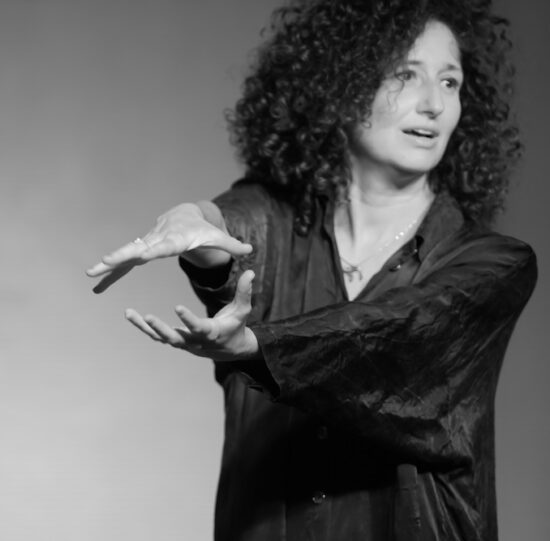
יוליה פריידין, אמנית רב תחומית, כוריאוגרפית ורקדנית עצמאית, יוצרת מחול
ופרפורמנס, ציירת, צלמת וכותבת. ילידת קייב, עלתה ארצה בשנת ,1990 חיה ויוצרת בתל אביב. אמא לדניאלה מאז 15.12.20.
המופעים של יוליה עוסקים בהגירה, אימהות וטקסיות. עבודותיה מוצגות במרחבי תצוגה לא קונבנציונליים כגון גלריות לאמנות ובמרחב הציבורי. המופעים משלבים תנועה, טקסט ופנייה ישירה לקהל, והזמנה להיות חלק פעיל במופע. המופעים של יוליה הם ברובם קומיים ומושפעים מסטנדאפ ו-lecture performance .יוליה משתמשת בהומור כמנגנון הישרדות את החיים, ומשתמשת בחומר מהם עשויים החיים כחומר גלם מתמיד להופעות שלה. יוליה בעלת תואר ראשון באמנות מטעם המדרשה לאמנות בבית ברל (FA ed.B) למדה בסמינר קיבוצים , בתוכניות כוריאוגרפיה: כלים (2015-2017) עם ענת דניאלי, סימולטור (2015-16) עם שרון צוקרמן ומשה שכטר, ושלומבל (2015-20) עם שלומית פונדמינסקי. מתרגלת איינגר יוגה בסטודיו של גבי דורון מאז 2013.
השתתפה במדרש יוצר בנווה שכטר בהנחייתם של עדילי ליברמן והרב רוברטו ארביב (2017), ובתוכנית רזידנסי לאמניות נבחרות במרכז הגר”א בנווה שאנן, תל אביב עם ענת ליטוין (2019). בעלת FA ed.B ,המדרשה לאמנות בבית ברל (2005-2009). זוכת מלגת רקדנית בקהילה, מטעם משרד התרבות והספורט בין השנים .2017-2020 השתתפה בתוכנית ACDP מטעם ארטפורט, ארטיס ואסולום. תוכנית מרוכזת לפיתוח קריירה מקצועית לאמנים נבחרים (2015).
זוכת מלגת עידוד אמנים צעירים תושבי נתניה בתחום הכתיבה והפרוזה (2008). השתתפה כפרפורמרית ורקדנית יוצרת במופע קווירי פמיניסטי לבני ובנות נוער “סיפורי סבתא בילבי”, של הכוריאוגרפית אורלי אלמי ארנבת מרץ (2019).
“נעמאמא, את לסיבוב”? שיתוף פעולה עם אמנית הספוקן וורד ,נעמה לופו ,בסיור אינטראקטיבי המשלב פרפורמנס, ספוקן וורד, ותנועה במרחב הציבורי השכונתי. המופע הוצג מספר פעמים במסגרת פסטיבל התחדשות עירונית (בתמיכת מפעל הפיס) ועושים שכונה (בתמיכת עיריית ת”א).
שיתפה פעולה עם אמנית הווידאו, סמנתה דה אוליברה, בווידאו דאנס Sleep No More שהוצג בגלרית המקרר בתערוכה “חופשת לידה”.
יוליה יצרה סולואים: שחלוליה (נווה שכטר), בוכה על חלב שנשפך (גלריה נווה שכטר, תיאטרון הבית), התנשלות-טקס פרפורמנס קהילתי במסגרת אוהבים אמנות (מרחב ציבורי של יד אליהו), מלח-מים (גלריית בנימין וגלריה ברמת מנשה), Dead.Line (גלריית צדיק). כמו כן, בתחום האמנות הפלסטית, יוליה הציגה שתי תערוכות יחיד, והשתתפה בעשור תערוכות קבוצתיות בגלריות בארץ. עבודותיה נמצאות באוסף של סרג’ תירוש ובאוספים פרטיים. הסולו האחרון של יוליה “לי זה לא יקרה”, הוא סולו קומי-אוטוביוגרפי המספר בכנות, רגישות והרבה הומור עצמי, על ההתמודדות האישית שלה עם דיכאון וחרדה, תוך כדי האימהות. הסולו הוצג במרכז קהילתי בת ציון בשבוע במלוא הדרה, בבית לאמנות של יד אליהו במסגרת רצועת תרבות, בשכונת בית הכרם בירושלים בשיתוף ותמיכה של מיזם “נפשות”, וממשיך לטייל בארץ ולפגוש נשים, ואימהות שחוו חוויות דומות.
יוליה מגדירה את עצמה כאמנית חברתית-קהילתית, ולוקחת השנה חלק בתוכנית חממה יציאה לפעולה בעבודה עם קהילות מגוונות בניהולה של נטלי צוקרמן בכלים.
Yulia Frydin is a multidisciplinary artist, choreographer, and independent dancer, creating dance and performance, as well as a painter, photographer, and writer.
Born in Kyiv, she immigrated to Israel in 1990 and currently lives and creates in Tel Aviv. She has been a mother to Daniela since December 15, 2020.
Yulia’s performances explore themes of migration, motherhood, and ritual. Her work is often presented in non-conventional spaces, such as art galleries and public areas. Her performances incorporate movement, text, direct audience engagement, and an invitation to actively participate.
They are largely comic in tone, influenced by stand-up comedy and lecture performance. Yulia uses humor as a survival tool and treats the raw material of everyday life as a constant source of inspiration for her performances.
She holds a B.Ed.F.A. in Art Education from the Faculty of Arts at Beit Berl College (2005–2009), and studied at Seminar Hakibbutzim and in several choreography programs.
She has been practicing Iyengar Yoga with Gabi Doron since 2013.
Yulia took part in the “Midrash Yotzer” program at Neve Schechter led by Adili Lieberman and Rabbi Roberto Arbiv (2017), and in the artist residency program at the Gra Center in Neve Sha’anan, Tel Aviv, curated by Anat Litwin (2019). She is a recipient of the Dancer in the Community Scholarship from the Israeli Ministry of Culture and Sports (2017–2020), and participated in the ACDP career development program for selected artists, organized by Artport, Artis, and Asylum Arts (2015).
She also won a writing and prose encouragement grant for young artists from Netanya Municipality (2008).
Yulia performed in the queer-feminist youth performance “Grandma Pippi Tales” by choreographer Orly Almi (March Hare, 2019), and collaborated with spoken word artist Naama Lupo in the interactive street performance “Naama’ma, Are You Coming for a Walk?”, combining performance, spoken word, and movement in the public space. This piece was performed as part of urban renewal festivals supported by National Lottery Association and Tel Aviv Municipality.
She collaborated with video artist Samantha de Oliveira on the video-dance work Sleep No More, presented at the HaMakom gallery as part of the exhibition “Maternity Leave”.
Yulia has created solo works including:
-
Shahlulia (Neve Schechter)
-
Crying Over Spilled Milk (Neve Schechter Gallery, HaBayit Theater)
-
Shedding – A Community Performance Ritual (Loving Art, Public Space in Yad Eliyahu)
-
Salt-Water (Benjamin Gallery and Ramat Menashe Gallery)
-
Dead.Line (Tzadik Gallery)
In the visual arts, she has held two solo exhibitions and participated in over ten group exhibitions in galleries across Israel. Her works are included in the Serge Tiroche Collection and other private collections.
Her most recent solo piece, “That Won’t Happen to Me,” is a comic autobiographical solo that honestly and sensitively addresses her personal experience with depression and anxiety, alongside motherhood.
It was presented at the Bat Zion Community Center during the In All Her Glory festival, at the House of Art in Yad Eliyahu as part of the Tarbut Strip program, and in Beit HaKerem neighborhood in Jerusalem, in collaboration with the Nefashot Initiative. The work continues to tour around the country, meeting women and mothers with similar experiences.
Yulia defines herself as a social-community artist and is currently participating in the “Incubator for Action” program, working with diverse communities, directed by Nataly Zukerman at Kelim Choreography Center.