
Let’s Assume, for a Moment, That God Exists By Carmen Elmakiyes Amos
*English follows
ואם נניח, לרגע, שיש אלוהים / על הדוקומנטרי של רם לוי
מאת כרמן אלמקייס עמוס
יש שאלות שהן לא שאלות. הן חדרים. את נכנסת אליהן ומגלה שאין דלת יציאה, רק קירות שמתרחקים ככל שאת מתקדמת. ״ואם נניח, לרגע, שיש אלוהים״ של רם לוי הוא חדר כזה. לא סרט שבא לענות, אלא סרט שבא לשבת בתוך השאלה ולאפשר לנו לשבת שם איתו.
הסרט נפתח במשפט שחור על לבן: ״סרט דוקומנטרי הוא ניסיון נואש לתעד את מה שאינו ניתן לתיעוד״. כבר ברגע הראשון לוי מוותר על היומרה ללכוד אמת. המצלמה, כמו השפה, כמו התפילה, היא רק אצבע המופנית אל ירח שאינה יכולה להגיע אליו.
וזה גם הטיעון הקולנועי העמוק של הסרט. המצלמה, גם כשהיא מתיימרת להיות אובייקטיבית, תמיד בוחרת. תמיד מסדרת. תמיד מחליטה מה ייכנס לפריים ומה יישאר בחוץ. ואם ככה, מה ההבדל בין דוקומנטרי לעלילתי? אולי רק ההסכמה הגלויה. הסרט של לוי מסרב לחתום על ההסכמה הזאת. הוא מבקש מאיתנו לצפות בלי לדעת בוודאות מה אמיתי. ובלי הוודאות הזאת אנחנו, הצופים, נחשפים לאי-נוחות שהיא בדיוק הנקודה, כך מרגישה אמונה. כך מרגיש ספק. ״ואם נניח, לרגע, שיש אלוהים״ נע במכוון על הגבול שבין תיעוד לבימוי: חנווני, שען, רקדנים, כבשים ונביא זועם מופיעים בו כדמויות שנראות אמיתיות ומבוימות בו זמנית. כמו החיים עצמם.
לוי מתמקד בשיחות הטלפון כמטאפורה לתקשורת האנושית בכלל: מקוטעת כמו שידורי טלוויזיה, מקוטעת כמו שיחות בנייד, מקוטעת כמו החיים. במקוטעות הזאת טמון טיעון חמור, אנחנו לא באמת מדברים אחד עם השני. אנחנו שולחים הודעות לחלל. מקווים שמישהו שם, בצד השני של הקו, מקשיב.
הבימוי של לוי הוא לא תרמית הוא עמדה. הוא אומר, אולי הסצנה הזאת מבוימת, אבל הכאב שבה אמיתי. אולי השאלה עוצבה בתסריט, אבל הבלבול שבפנים לא. כך גם אמנות, היא מסגרת מלאכותית שמשמשת ככלי לגעת במה שאמיתי מדי כדי לגעת בו ישירות. לוי, כבמאי,שעשה למעלה משישים סרטים, יודע שהמצלמה אף פעם לא “תופסת” את האמת. היא רק יוצרת תנאים שבהם האמת עשויה להופיע.
אני מחשיבה את עצמי אישה מאמינה, מסורתית, לסבית, פמיניסטית. למדתי לחיות בתוך זהויות שהעולם מתעקש שלא יכולות להתקיים יחד. אולי בגלל זה

צילום כרמן אלמקייס עמוס
הסרט של לוי נגע בי כל כך. הוא מסרב להכריע. מסרב להוציא מישהו מהפריים. לא דורש שתבחרי צד, הוא לא מבקש לפתור את הסתירה אלא לשהות בתוכה.
ויש משהו כמעט בלתי נסבל בצפייה בסרט הזה בישראל של 2026. נדמה שהיכולת לשהות בתוך שאלה הולכת ונעלמת. כולם יודעים. כולם בטוחים. כולם מדברים בסיסמאות. הזעם הפך לאוויר שאנחנו נושמים.
הדמות שלוי מכנה ״הנביא הזועם״ כבר אינה רק דמות בסרט. היא מצב תודעה לאומי. בישראל 2026 כולנו נביאים זועמים. כולנו משוכנעים שידינו אוחזות באמת מוחלטת. ובתוך הוודאות הזאת כבר קשה להקשיב, קשה להטיל ספק, קשה לשאול את האפשרות הפשוטה והמבהילה שאולי האחר צודק.
בתוך המציאות הזאת, הסרט של לוי מרגיש כמעט רדיקלי. לא משום שהוא מציע תשובות, אלא משום שהוא מסרב להציע אותן. הוא מתעקש להישאר בתוך ה״אולי״. בתוך אי הנוחות. בתוך המרחב שבו אמונה וספק יכולים להתקיים יחד.
יש משפט אחד בסרט שנוחת כמו אבן: ״אנחנו העם הנבחר, ויש לנו כוח. כוח לעשות רע״. לא כאזהרה, אלא כהכרה מפוכחת בכך שכוח אינו מבטיח מוסר. הוא רק מעניק אפשרות. גם לבנות. גם להרוס.
הסרט צולם שנים לפני הרגע הפוליטי הנוכחי, ובכל זאת הוא מרגיש היום כמעט נבואי. לא נבואת זעם, אלא נבואת אזהרה שקטה. תזכורת לכך שחברה שמפסיקה לשאול שאלות מתחילה להתפורר מתוך הוודאות של עצמה.
רם לוי נפטר בנובמבר 2025 בגיל 85. שאני כותבת את השורות האלה, הוא כבר אינו כאן לשמוע את השאלה שהציב. במובן מסוים, הסרט הזה מרגיש היום כמו צוואה. לא צוואה של תשובות, אלא של ספק. רגע אחד שבו מותר לא לדעת. הבמאי שביקש מאיתנו לשהות בתוך “האולי” עבר אל הצד שבו אין יותר שאלות, רק אולי תשובות, או שקט.
בישראל שבה הוודאות הפכה לנשק והספק לבגידה, זו אולי הצעת השלום הנועזת ביותר שאפשר להציע.
שיהיה זכרו ברכה.
נכתב בתגובה לואם נניח לרגע שיש אלוהים מאת רם לוי.
״סרט תיעודי לא־נרטיבי החוקר את המרחב הסובב את היוצר במרכז רמת גן. רם לוי בוחן, מתוך אהבה וביקורת גם יחד, את הקונפליקטים והמורכבויות הטמונים בו, ונע בחופשיות בין אלמנטים מבוימים ופנטסטיים לבין תיעוד טהור של המציאות.״
[2013, 71 דקות, עברית עם כתוביות באנגלית]
There are questions that are not really questions. They are rooms. You enter them and discover there is no exit door, only walls that recede the further you move forward. “And If We Assume, for a Moment, That God Exists” by Ram Loevy is such a room. A film that does not attempt to answer rather a film that sits inside the question and allows us to sit there with it.
The film opens with a sentence in black on white: “A documentary film is a desperate attempt to document that which cannot be documented.” From the very first moment, Loevy gives up the pretension of capturing the truth. The camera, like language, like prayer, is merely a finger pointing at the moon that it can never truly reach.
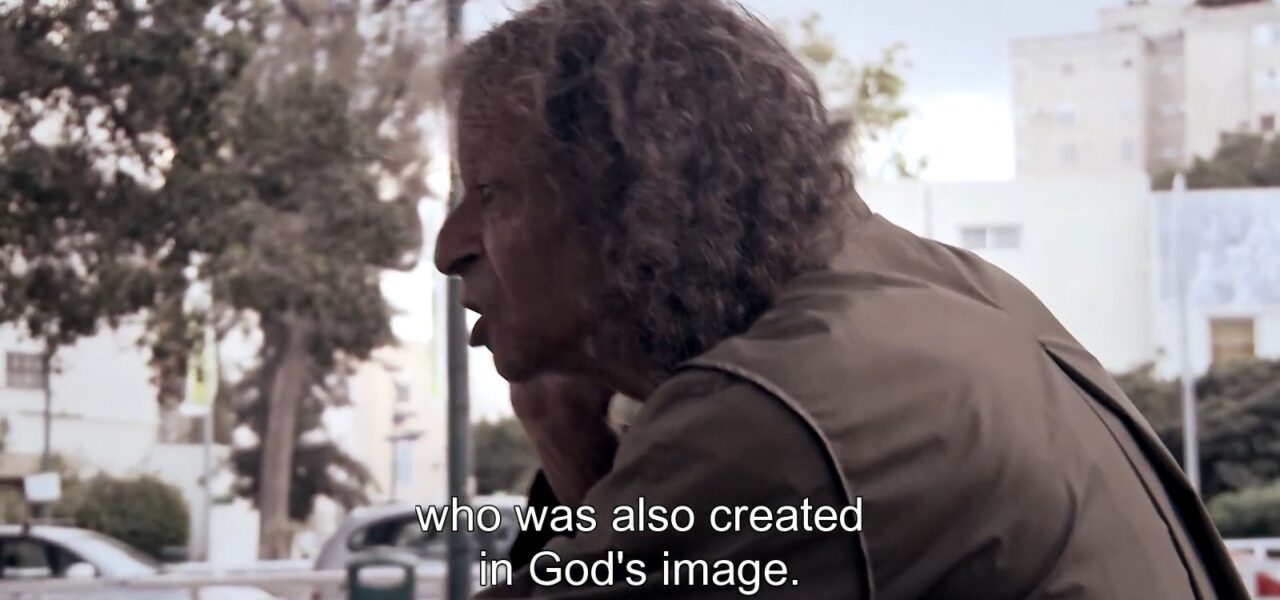
And this is also the film’s deepest cinematic argument. The camera, even when it claims objectivity, always chooses. Always arranges. Always decides what enters the frame and what remains outside it. And if that is so, what is the difference between documentary and fiction? Perhaps only a mutual agreement. Loevy’s film refuses to sign that contract. It asks us to watch without ever knowing for certain what is real. And without that certainty, we as viewers are exposed to a discomfort that is precisely the point. This is what faith feels like. This is what doubt feels like. “Let’s Assume, for a Moment, That God Exists” intentionally moves along the border between documentation and direction: a shopkeeper, a watchmaker, dancers, sheep and an enraged prophet appear as figures who feel both real and staged at the same time. Like life itself.
Loevy focuses on telephone conversations as a metaphor for human communication: fragmented like television broadcasts, fragmented like cellphone conversations, fragmented like life. Within that fragmentation lies a stark argument: we are not truly speaking to one another. We are sending messages into space, hoping someone there, on the other end of the line, is listening.
Loevy’s direction is not deception, it is a position. He says: perhaps this scene is staged, but the pain within it is real. Perhaps the question was shaped through a script, but the confusion inside it was not. Art works in the same way. It is an artificial framework used as a tool to touch what is too real to touch directly. Loevy, a director who made more than sixty films, understood that the camera never truly “captures” truth. It only creates conditions in which truth might appear.
I consider myself a woman of faith, traditional, lesbian, feminist. I have learned to live within identities the world insists cannot coexist. Perhaps that is why Loevy’s film touched me so deeply. It refuses to decide, refuses to remove anyone from the frame. It does not demand that one choose a side. It does not seek to resolve the contradiction, only to dwell within it.
And there is something almost unbearable about watching this film in the Israel of 2026. It feels as though the ability to remain inside a question is disappearing. Everyone knows. Everyone is certain. Everyone speaks in slogans. Rage has become the air we breathe.

Photo by Carmen Elmakiyes Amos
The figure Loevy calls “the enraged prophet” is no longer merely a figure in the film. It is a national state of consciousness. In Israel of 2026, we are all enraged prophets. We are all convinced our hands hold absolute truth. And within that certainty it becomes difficult to listen, difficult to doubt, difficult to consider the simple and terrifying possibility that the other person is right.
Within this reality, Loevy’s film feels almost radical. Not because it offers answers, but because it refuses to. It insists on remaining inside the “maybe.” Inside discomfort. Inside the space where faith and doubt can coexist.
There is one sentence in the film that lands like a boulder: “We are the chosen people, and we have power. Power to do evil.” Not as a warning, but as a sober recognition that power does not guarantee morality. It merely grants possibility. The possibility to build, and the possibility to destroy.
The film was shot years before the current political moment, and yet today it feels prophetic. Not a prophecy of doom, but a quiet prophecy of warning. A reminder that a society that stops asking questions begins to crumble beneath the weight of its own certainty.
Ram Loevy passed away in November, 2025 at the age of 85. As I write these lines, he is no longer here to hear the question he posed. In a certain sense, this film reads like a last will. Not a testament of answers, but of doubt. One moment in which not knowing is permissible. The director who asked us to remain inside the “maybe” has crossed over to the side where there are no more questions, only perhaps answers, or silence.
In an Israel where certainty has become a weapon and doubt a betrayal, this may be the boldest peace offering one can make.
May his memory be a blessing.
Written in response to Let’s Assume, for a moment, that God exists by Ram Loevy.
“A non-narrative documentary exploring the space surrounding the filmmaker in central Ramat Gan. Ram Loevy examines, with both affection and critique, the conflicts and complexities embedded within it, moving fluidly between staged and fantastical elements and pure documentation.”
[2013, 71 min, Hebrew w/ ENG subs]
כרמן אלמקייס עמוס (אמנית פארוס 2026) היא צלמת, אמנית ופעילה פמיניסטית. היא ממייסדות תנועות חברתיות מהשטח, בהן שוברות קירות ותנועת לא נחמדים לא נחמדות, וכן של ביתן 17, פרויקט לתיעוד ופיתוח ארכיון עדויות של שורדות ושורדי הגזזת.
Carmen Elmakiyes Amos (Fáros Fellowship 2026) is a photographer, artist, and feminist activist. She is the founder of grassroots social movements, including Breaking Walls and the Not Nice movement, and of LAB 17, a project to document and develop an archive of testimonies from the survivors of ringworm radiation treatment.