Photos by Vojtěch Brtnický
*English follows
הגמר של התחרות הבינלאומית לכוריאוגרפיה שבו נצפו ארבע עבודות המחול אינו מתכנס לכדי נושא מוצהר, אך מתגלה כמרחב עקבי של הלך רוח: בדידות כנקודת מוצא וכחומר גלם. שלוש עבודות סולו וטריו אחד מציירים יחד דיוקן של המחול העכשווי כפרקטיקה של הימצאות לבד, גם כאשר יש אחרים על הבמה ועל אף נוכחותם של הצופים. אין זו בדידות רומנטית או סנטימנטלית, אלא בדידות קיומית של האמן והרקדן, מי שפועלים בתוך עצמם, מתוך פיצול, מתח ומאבק פנימי, ומבקשים לתקשר אותו לא באמצעות וידוי או נרטיב, אלא דרך גוף נע בחלל הפנימי והחיצוני ובזמן. הווירטואוזיות, החוזרת בכל העבודות, אינה מופיעה כהפגנת יכולת אלא כצורך: כדרך להחזיק את המאבק מבלי לפשט אותו, לנסח מחשבה מבלי לסגור אותה. כל אחד מן היוצרים נע מתוך בדידותו שלו, אך כולם מציעים תנועה שאינה מבקשת פתרון אלא נוכחות: ריקוד כפעולה של התהוות. מתוך כך כל העבודות מאפשרות לצופה להיפגש עם בדידותו שלו, ועם השאלה שהיא מעלה: מי אני ומהי תנועתי בתוך המאבק הפנימי שלי?
על וירטואוזיות כמאבק פנימי
Wong Tan-ki , בעבודה: IT’S NOT MY BODY, CHAPTER 3.5 (הונג קונג)- מקום ראשון
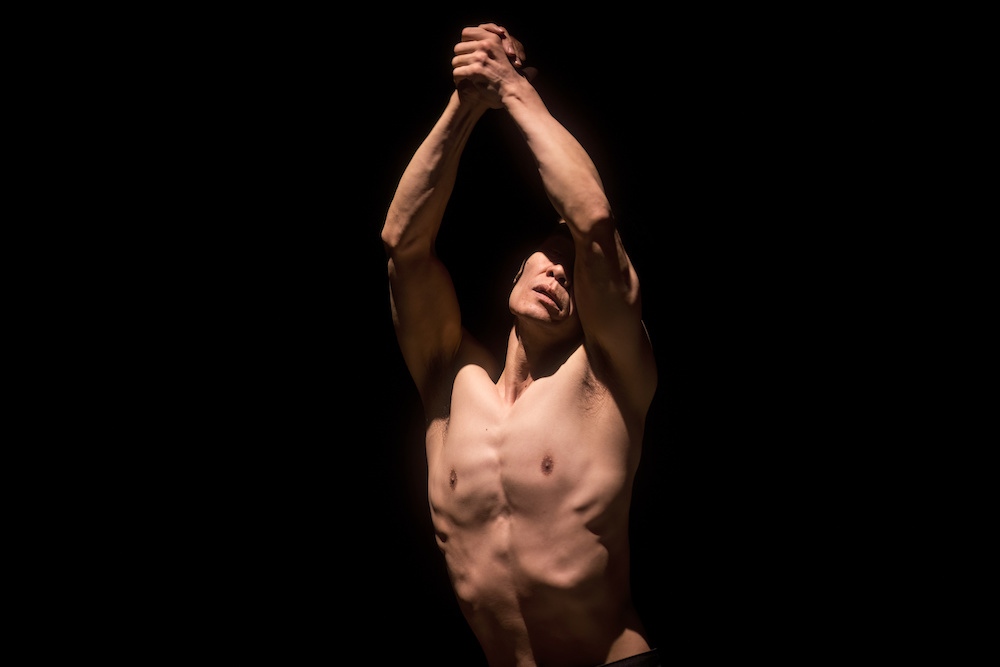 הווירטואוזיות בעבודת הסולו של Wong Tan-ki אינה מפגן של יכולת לשם ראווה, אלא מנגנון חשיבה גופני, והיא מעין דרך לנהל שיחה פנימית מורכבת, אכזרית כמעט, בין חלקי הגוף-נפש שלו. חנה ארנדט מתארת את מושג ה-virtu לא כהצטיינות טכנית אלא כיכולת לפעול בעולם מתוך חירות. כך בעבודה זו, כאשר הווירטואוזיות נולדת מתוך מתח והסיזיפיות של האמן המבצע לחקור את עצמו ואת תנועתו. הגוף אינו מבצע את הרצפים אלא מתווכח עם עצמו. כל חלקי הגוף, קטנים וזעירים, מהגפיים והגב ועד לשרירים הקטנים ביותר שבין השכמות, נדמים כישויות עצמאיות המתנגשות זו בזו, יוצרות באמצעות השהיות ועצירות צירופים תנועתיים מבריקים ומפתיעים, כאילו כל איבר מושך לכיוון אחר, מבטא דחף, התנגדות, או ניסיון לשליטה והכרעה.
המאבק הפנימי הזה אינו נפתר, הוא ממשיך להתרחש עד כלות. Tan-ki מפגין אינטליגנציה כוריאוגרפית חדה, שבה המיומנות הגבוהה משמשת לא לאיחוד אלא דווקא לפירוק ולפיצול מודע של הגוף לשכבות של רצון, פחד, שליטה והשתחררות. הווירטואוזיות, אם כן, אינה הישג אלא תהליך. היא דרך לגעת בפער שבין היכולת לשלוט לבין הצורך להרפות, בין פעולה לבין עצירה, בין הגוף כנתון לבין הגוף כזר לעצמו, כפי שמרמז שם היצירה, It’s Not My Body.
דווקא משום שהמאבק שהאמן מפגין מתרחש ברמת מיומנות גבוהה כל כך, הוא אינו נסגר בתוך האמן בלבד. הצופה מוזמן להיסחף אל תוך אותה שיחה פנימית, ולמצוא את עצמו מהדהד את השאלות שהגוף הרוקד מציב: מי אני בתוך הסתירות שבי? האם אני בשלום עם עצמי? מה אני מרוויחה מן המאבק הפנימי שלי? והאם בכלל ניתן, או צריך, לפתור אותו? כך הופכת הווירטואוזיות למעשה אתי: פעולה שמתרחשת על הבמה אך ממשיכה לפעול בתודעת הצופה, כמרחב שבו מאבק פנימי אינו חולשה אלא מקור של חיות, של חירות ושל מחשבה מתנועעת.
על הרקדן בדמותו של האל הבודד
Vitor Hamamoto בעבודה: Missing Names (ברזיל)- מקום שני
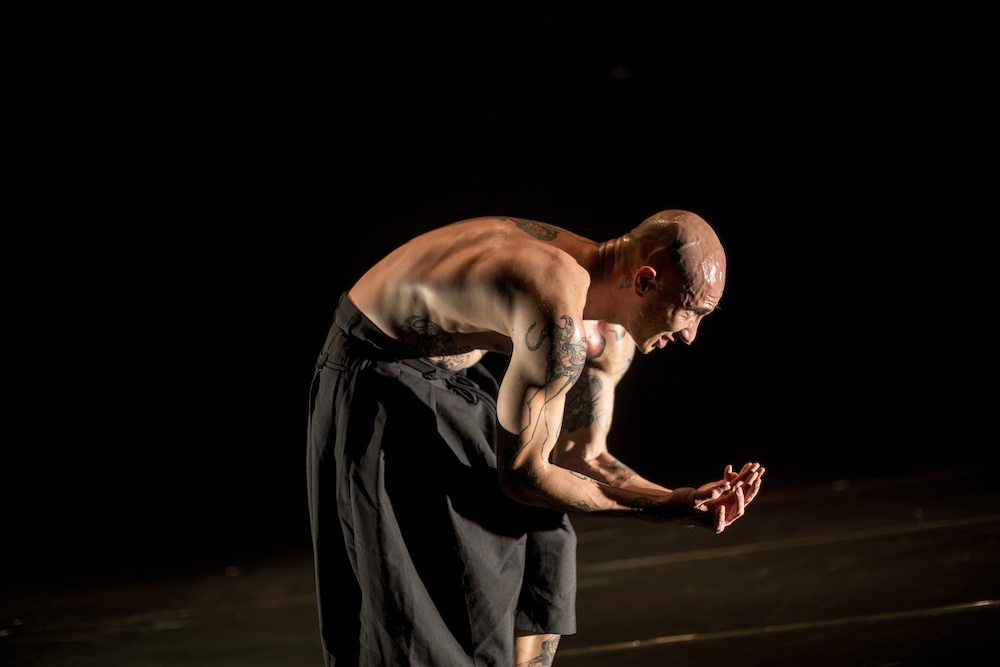 בעבודה Missing Names הרקדן והיוצר Vitor Hamamoto ניצב על הבמה כמעין בן-אל מודרני: גוף שרירי, חשוף, מקועקע, הנושא עליו סימנים של זמן, של זהות, של חיכוך עם העולם. יש בנוכחות שלו עוצמה מיידית, כמעט מאיימת, אך היא אינה נסגרת לכדי דימוי של שליטה, אלא להיפך. הגוף החזק הזה מתגלה כגוף פגיע, כזה שנע בין התפרקות לריכוז, בין הצגת כוח לבין נסיגה פנימית. הקעקועים אינם רק שכבת עור. הם נטמעים בתנועה, נמתחים ומתעוותים יחד עם השרירים, כמו זיכרונות החקוקים בגוף ומופעלים מחדש בכל שינוי משקל.
התנועה של הרקדן חדה ומדויקת, אך אינה זורמת לכדי רצף נוח. יש בה עצירות פתאומיות, החזקות מאומצות, ועל אף שהוא עומד מולינו נדמה כי הוא בעצם נופל בתוך עצמו. לעיתים הוא נדמה כמי שמפעיל את גופו בכוח עילאי, ולעיתים כמי שנאבק בו, כאילו הגוף עצמו מסרב לציית. הדואליות הזו שבין בן-אל לבין אדם יוצרת מתח מתמיד. הגוף נראה בו־זמנית כפסל וכשדה קרב, כמשהו שמוצג לראווה וכמשהו שמתרחש בו מאבק שקט.
הווירטואוזיות כאן אינה תיאטרלית אלא פנימית. היא מתבטאת ביכולת לשהות בקיצון, להחזיק מתח לאורך זמן, ולאפשר למורכבות של הגוף, כוחו וחולשתו, יופיו וסימניו, להופיע ללא פתרון. כך נוצר דימוי של גוף שאינו מבקש להיות שלם או הרואי, אלא גוף שחי בתוך הסתירה, ומאפשר לצופה לפגוש לא אידיאל, אלא אנושיות טעונה ומורכבת.
בסיום המופע הרקדן חוצה את הבמה בהליכה איטית וזהירה. כאשר גופו כפוף מטה וידיו מול פניו השמוטות. באופן טבעי זיעה ניגרת מפניו ונראה כאילו הוא אוסף את דמעותיו מן המסע שהיה, שהווה ושיהיה. זהו רגע שלא סוגר כי אם פותח את העבודה ומותיר את הצופה עם תחושת הזדהות, עם ההכרה שכולנו באותה סירה, הולכים כפופים אל עבר גורלינו ובעל כורחינו אוספים את זיעת הצער הניגרת מפנינו.
מוריס בלאנשו כותב על אחריותו של המחבר כשהוא כותב על סמואל בקט:
“אמנות דורשת שהאדם המתרגל אותה יוקרב למען האמנות, יעשה אחר , לא עוד אחד, שלא יהפוך מיצור האנוש שהוא היה לאמן בעל חובות, סיפוקים ותחומי עניין אמנותיים, אלא לאף אחד, למרחב הריק, החי, שבו נשמעות קריאות הזימון של האמנות.” (בלאנשו, מתוך: מחול פורק עול, רמזי ברט, תרגום: ניב סבריאגו, ע”מ 169, אסיה, 2019)
המחבר, הלוא הוא היוצר והמבצע Vitor Hamamoto, הופך עצמו באמצעות הדימויים הויזואלים המקועקעים על גופו ודרך התנועה הייחודית ובעלת הסתירה הפנימית, מיצור אנושי לאף אחד, ובכך מזמין את הצופה המהופנט לחוש קריאה חיה המדהדת אל עולמו האישי והכללי.
על הזרות המתפוררת במבט העין הרואה
Béatrice Larrivée, בעבודה: Briefly (קנדה / ישראל)- מקום שלישי
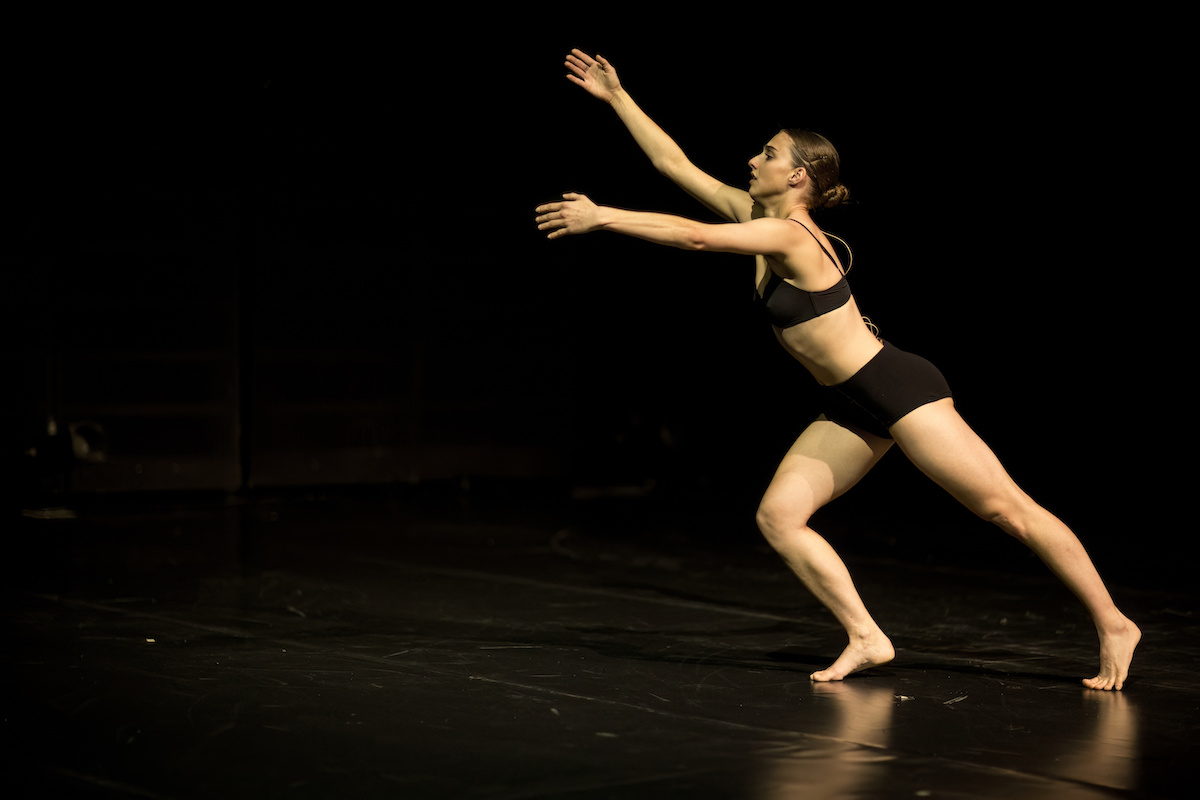 בעבודת הסולו Briefly של Béatrice Larrivée אנו נחשפים למחול עדין אך מצמרר המונכח בגופה ובקולה השברירי של הרקדנית-יוצרת. לאריבה עומדת על הבמה בגוף חשוף ובנפש הנדמית לפצועה ומדממת, ומקריאה חלקים מתוך On Earth We’re Briefly Gorgeous מאת המשורר והסופר האמריקאי-וייטנאמי Ocean Vuong . המילים הפואטיות הן בעצם מכתב שכותב נער לאמו בשפה הזרה לה, כך שהאם אינה יכולה לקרוא את דבריו. הטקסט פותח מרחב אינטימי של פגיעוּת, ושל שותפות הצופים עם החוויה האישית הפנימית התהומית ביותר של הרקדנית. הרקדנית לכודה בפרדוקס של היותה נראית ובלתי נראית, ומביעה באמצעות המחול והטקסט את התשוקה והחרדה מהמבט, שעשוי לחבק אותה אך בה בעת לפצוע, לכלוא ולקבע אותה. ברגע הסיום הסולו מגיע לשיא כאשר היא נראית בתנועה כמי שנחבלת או מוכה, ידה האחת עוצמת את עינה והיא אומרת: “כדי להיות נפלאה צריך קודם להיראות, אך להיראות הופך אותך לניצודה”. באותו רגע, היא מזכירה את דמות הרקדנית עליה דיבר מלרמה “היא עושה לעצמה גוף”(מלרמה, 1976). בעוד מלרמה רואה ברקדנית דמות מטאפורית כמעט אל אנושית היוצרת את עצמה מתוך התנועה, כאן, ביאטריס כמו מאחה את חלקי הנפש הפצועה שלה בתנועה ובמילה, מתוך השברים, ובאמצעות מבטו המלווה והקשוב של הצופה.
לאריבה מציגה בפנינו דימוי של מי שנמצאת על הבמה אך גם איננה כאן. באמצעות תאורי הטבע שהיא מדברת, וכן בגופה ובתנועתה היא בוראת עולמות נוספים פנימיים וחיצוניים הפועלים בו זמנית אל מולינו. הבדידות של לאריבה שונה מבדידותו של הנזיר. בעוד הנזיר פורש מן העולם כדי להיות לבדו, לאריבה פורשת אל תוך התנועה כדי לגלות ולהשמיע את בדידותה. בניגוד לנזיר המנתק עצמו מן החוץ, היא נעה אל מחוץ לעולם ומחוץ לעצמה בעת ובעונה אחת: היא מתקרבת אל בדידותה לא כדי להסתתר, אלא כדי לגלף את עצמה בתוכה. יש באקט הזה אומץ. לא אומץ הירואי, אלא אומץ שקט, כזה של מי שמוכן להישיר מבט אל החלקים הפנימיים המתפוררים ולומר: גם זה אני.
הרקע האישי של Béatrice Larrivée מוסיף עוד שכבת משמעות הדוקה לעבודת הסולו שלה. היא עצמה מהגרת: ילידת קנדה שחיה ויוצרת בישראל, מרחפת בין שפות, בין תרבויות, בין תחושות שייכות וזרות. כמו דמותו של ליטל דוג בספר של Ocean Vuong, גם היא נושאת על גופה את החוויה של מי שחוצה גבולות גיאוגרפיים לשוניים ופנימיים.
על האיזון שבסדק
אבשלום לטוכה, בעבודה: בעיית שלושת הגופים (ישראל)- מקום רביעי
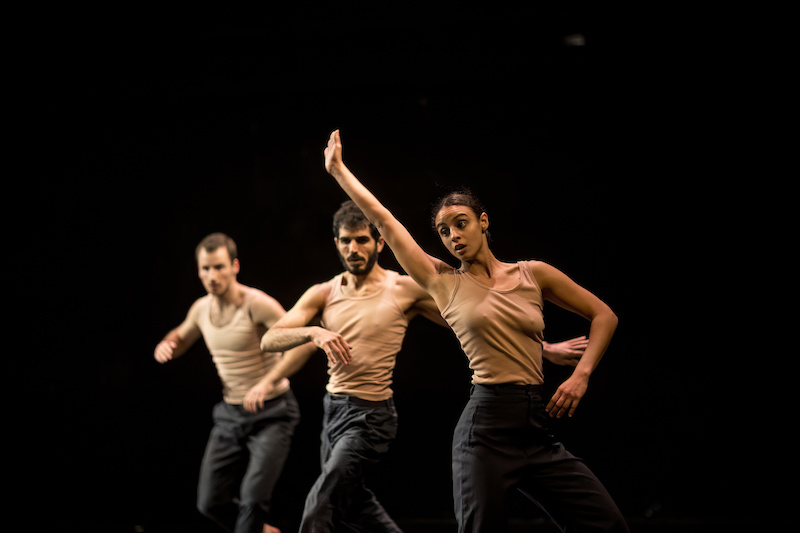 לאורך מרבית העבודה The Three-Body Problem שומרים שלושת הרקדנים על איזון כמעט עיקש: הם אינם נוגעים זה בזה, אינם מתלכדים, ואף על פי כן היחסים ביניהם נשמרים בקפדנות. כל תנועה של גוף אחד מלווה בתזוזה של האחרים אל חלק אחר של הבמה, כאילו הם מקיימים מערכת כבידה עדינה, נעים זה סביב זה מבלי להתמזג, שומרים מרחק אך גם תלות. זהו מרחב מטאפיזי של שלושה גופים המאורגנים באי-יציבות נשלטת, הדהוד ברור לבעיית שלושת הגופים מן הפיזיקה: מערכת שאין לה מרכז קבוע, אך גם אינה קורסת. האיזון הזה אינו נוסך שלווה אלא מהווה מאמץ מתמשך, החזקה רצופה של יחס.
רק לקראת סיום העבודה מתרחש שינוי כמעט חרישי אך טעון: שני גופים מתקרבים זה אל זה, יוצרים מראית עין של קִרבה, בעוד הגוף השלישי נותר, לכאורה, לבדו. הרגע הזה אינו שיא דרמטי אלא סדק קטן, שבו מתגלה מה שהיה חבוי כל העת: שהאיזון אינו שוויון, ושהקִרבה של שניים תמיד מייצרת את בדידותו של האחר.
הפילוסוף עמנואל לוינס, כותב: “אני אחראי לאחר מבלי לצפות להדדיות, גם אם זו הייתה אינסופית” (לוינס, 1961). האחריות, כפי שהמחול מנסח אותה בגוף, היא פעולה של החזקת מרחבית ואינה ניתנת לפתרון. היא נעה ללא מעצור, משתנה, ומעמידה בכל רגע מישהו על תהום ההישארות לבדו.
בעבודה בעיית שלושת הגופים מוצג בפנינו טריו, אך בעצם על אף ההליכה המשותפת במרחב, נוכחת ההימנעות זה מזו והבדידות הגדולה של כל אחד מהרקדנים בעולמו הפנימי, גופו מדבר אך קולו אינו נשמע.
הגמר של התחרות הבינלאומית לכוריאוגרפיה של מרכז מחול שלם התרחש ב11.12.2025.
Efrat Nehama’s Thoughts on the International Choreography Competition
The final round of the International Choreography Competition, in which four works were presented, does not coalesce into a overarching theme, rather it reveals itself as a consistent emotional space. Loneliness emerges as a point of departure and as raw material. Three solo works and one trio draw a portrait of contemporary dance as a practice of being alone, even when others are present on stage and despite the presence of spectators. This is not romantic or sentimental loneliness, but an existential loneliness of the artist and the dancer, those who operate within themselves, out of division, tension and inner struggle, and who seek to communicate it not through confession or narrative, but through a moving body in inner and outer space and in time.
The virtuosity that recurs in all the works does not appear as a display of skill, but as a necessity. It is a way to hold the struggle without simplifying it, to articulate thought without shutting it down. Each creator moves from within their own loneliness, yet all propose a movement that does not seek resolution but presence. Dance as an act of becoming. Through this, all the works allow the viewer to encounter their own loneliness and the question it raises. Who am I and what is my movement within my inner struggle?
On virtuosity as an inner struggle
Wong Tan ki- It’s Not My Body Chapter 3.5- Hong Kong- First Prize
The virtuosity in Wong Tan ki’s solo work is not a show of ability for spectacle, but a mechanism of embodied thinking. It is a way of conducting a complex and almost cruel inner conversation between the parts of his body and mind. Hannah Arendt describes the concept of virtu not as technical excellence but as the ability to act in the world from freedom. So it is in this work, where virtuosity is born from tension and from the Sisyphean effort of the performing artist to investigate himself and his movement.
The body does not execute sequences but argues with itself. All parts of the body, large and minute, from the limbs and back to the smallest muscles between the shoulder blades, appear as independent entities colliding with one another. Through suspensions and stops they create brilliant and surprising movement combinations, as if each organ pulls in a different direction, expressing impulse, resistance or an attempt at control and decision.
This inner struggle is not resolved. It continues relentlessly. Tan ki demonstrates sharp choreographic intelligence, in which high skill serves not for unification but precisely for dismantling and conscious fragmentation of the body into layers of desire, fear, control and release. Virtuosity, then, is not an achievement but a process. It is a way of touching the gap between the ability to control and the need to let go, between action and pause, between the body as given and the body as foreign to itself, as the title of the work suggests, It’s Not My Body.
Precisely because the struggle the artist presents occurs at such a high level of skill, it does not remain confined to the artist alone. The viewer is invited to be drawn into that inner conversation and to find themselves echoing the questions posed by the dancing body. Who am I within my contradictions? Am I at peace with myself? What do I gain from my inner struggle? And is it even possible or necessary to resolve it? In this way virtuosity becomes an ethical act, an action that takes place on stage yet continues to operate within the consciousness of the viewer, as a space where inner struggle is not a weakness but a source of vitality, freedom and moving thought.
On the dancer as a solitary god
Vitor Hamamoto- Missing Names- Brazil- Second Prize
In Missing Names, dancer and creator Vitor Hamamoto stands on stage as a kind of modern demigod. A muscular, exposed and tattooed body bearing marks of time, identity and friction with the world. There is an immediate and almost threatening power in his presence, yet it does not crystallize into an image of control. On the contrary, this strong body reveals itself as vulnerable, moving between disintegration and concentration, between the display of strength and inward retreat.
The tattoos are not merely a layer of skin. They are absorbed into the movement, stretching and distorting with the muscles, like memories etched into the body and reactivated with every shift of weight. The dancer’s movement is sharp and precise, yet it does not flow into a comfortable sequence. There are sudden stops and strenuous holds, and although he stands before us, it seems as though he is falling inward. At times he appears to wield his body with divine force, and at other times to struggle against it, as if the body itself refuses to obey.
This duality between demigod and human creates constant tension. The body appears simultaneously as sculpture and battlefield, as something displayed and as something in which a quiet struggle unfolds. The virtuosity here is not theatrical but internal. It is expressed in the ability to remain at the extreme, to sustain tension over time, and to allow the complexity of the body, its strength and fragility, its beauty and its marks, to appear without resolution. Thus emerges an image of a body that does not seek to be whole or heroic, but a body that lives within contradiction and allows the viewer to encounter not an ideal, but a charged and complex humanity.
At the end of the performance the dancer crosses the stage in a slow and cautious walk. His body is bent downward and his hands are held before his lowered face. Sweat naturally pours from his face and it seems as though he is gathering his tears from the journey that was, that is and that will be. This is a moment that does not close the work but opens it, leaving the viewer with a sense of identification, with the recognition that we are all in the same boat, walking bent toward our destinies and unwillingly collecting the sweat of sorrow that streams from our faces.
Maurice Blanchot writes about the responsibility of the author when writing about Samuel Beckett:
“Art demands that the person who practices it be sacrificed for the sake of art, be made other, no longer someone, not transformed from the human being he was into an artist with duties, satisfactions and artistic interests, but into no one, into the empty and living space in which the summons of art are heard.”
-from Unbound Dance by Ramzi Barth, translation by Niv Sabriego, page 169, Asia, 2019
The author, namely the creator and performer Vitor Hamamoto, transforms himself through the visual tattooed images on his body and through movement that carries inner contradiction, from a human being into no one. In doing so, he invites the hypnotized viewer to feel a living call that resonates into their personal and collective world.
On dissolving estrangement in the gaze of the seeing eye
Béatrice Larrivée- Briefly- Canada/Israel- Third Prize
In the solo work Briefly by Béatrice Larrivée we encounter a delicate yet chilling dance embodied in the fragile body and voice of the dancer creator. Larrivée stands on stage with an exposed body and a soul that appears wounded and bleeding, reading aloud excerpts from On Earth We’re Briefly Gorgeous by the American Vietnamese poet and writer Ocean Vuong. The poetic words are in fact a letter written by a boy to his mother in a language foreign to her, so that she cannot read his words.
The text opens an intimate space of vulnerability and draws the audience into partnership with the most abyssal inner personal experience of the dancer. The dancer is trapped in the paradox of being seen and unseen, expressing through dance and text the desire for and anxiety of the gaze, which may embrace her and at the same time wound, imprison and fix her.
At the climax of the solo she appears in movement as if injured or struck, one hand covering her eye as she says, To be wonderful you must first be seen, but being seen makes you prey. In that moment she recalls the figure of the dancer described by Mallarmé, she makes herself a body. While Mallarmé viewed the dancer as an almost superhuman metaphorical figure creating herself through movement, here Béatrice seems to stitch together the parts of her wounded soul through movement and word, from the fragments, with the attentive and accompanying gaze of the viewer.
Larrivée presents an image of someone who is on stage and yet not here. Through her descriptions of nature, as well as through her body and movement, she creates additional inner and outer worlds that operate simultaneously before us. Larrivée’s loneliness differs from that of the monk. While the monk withdraws from the world to be alone, Larrivée withdraws into movement in order to discover and voice her loneliness. Unlike the monk who disconnects from the outside, she moves outside the world and outside herself at the same time. She approaches her loneliness not to hide, but to carve herself within it.
There is courage in this act. Not heroic courage, but quiet courage, the courage of one willing to look directly at the crumbling inner parts and say, this too is me.
The personal background of Béatrice Larrivée adds another dense layer of meaning to her solo work. She herself is a migrant, born in Canada and living and creating in Israel, floating between languages, cultures, and sensations of belonging and estrangement. Like the character Little Dog in Ocean Vuong’s book, she carries in her body the experience of crossing geographic, linguistic and inner borders.
On balance within the crack
Avshalom Latucha- The Three Body Problem- Israel- Fourth Prize
Throughout most of The Three Body Problem, the three dancers maintain an almost stubborn balance. They do not touch one another and do not merge, yet their relationships are preserved with meticulous care. Every movement of one body is accompanied by a shift of the others to another area of the stage, as if they are sustaining a delicate gravitational system, moving around one another without merging, maintaining distance yet also dependence.
This is a metaphysical space of three bodies organized in controlled instability, a clear echo of the three body problem in physics, a system with no fixed center that nevertheless does not collapse. This balance does not instill calm but constitutes an ongoing effort, a continuous holding of relation.
Only toward the end does an almost silent yet charged change occur. Two bodies move closer to one another, creating the appearance of closeness, while the third body remains, seemingly, alone. This moment is not a dramatic climax but a small crack in which what was hidden all along is revealed, that balance is not equality, and that the closeness of two always generates the loneliness of the other.
The philosopher Emmanuel Levinas writes, “I am responsible for the other without expecting reciprocity, even if it were infinite. Responsibility, as articulated by the dance through the body, is a spatial act that cannot be resolved. It moves without rest, changes, and at every moment places someone on the edge of remaining alone.”
In The Three Body Problem we are presented with a trio, yet despite the shared movement in space, what is present is avoidance of one another and the profound loneliness of each dancer in their inner world. Their body speaks, but their voice is not heard.
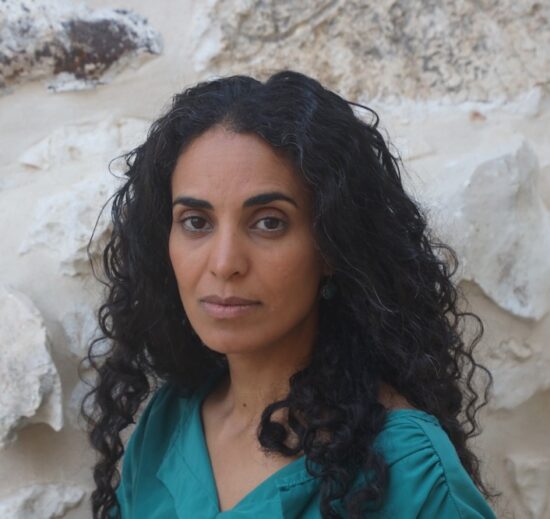 אפרת נחמה- כוריאוגרפית, משוררת, אמנית פרפורמנס, דוקטורנטית ומרצה.
יוצרת, חוקרת ומגישה בשאלה על החיבורים המתחוללים בין השפה המילולית לתנועתית ובין שירה למחול.
עבודות שירה ומחול עלו בין היתר במוזיאון ישראל, תיאטרון ירושלים, מחול שלם, בית טיכו, גלריה אלפרד, פסטיבל מנופים, פסטיבל ירושלים לאמנויות, כנס מחול באריזונה, culture בוסטון ארה”ב.
ספרי שיריה שראו אור: בשרירים רפויים (2019), הילד/הילדה ( 2021).