
To Shush or Not to Shush? The Nutcracker Question by Ori Lenkinski
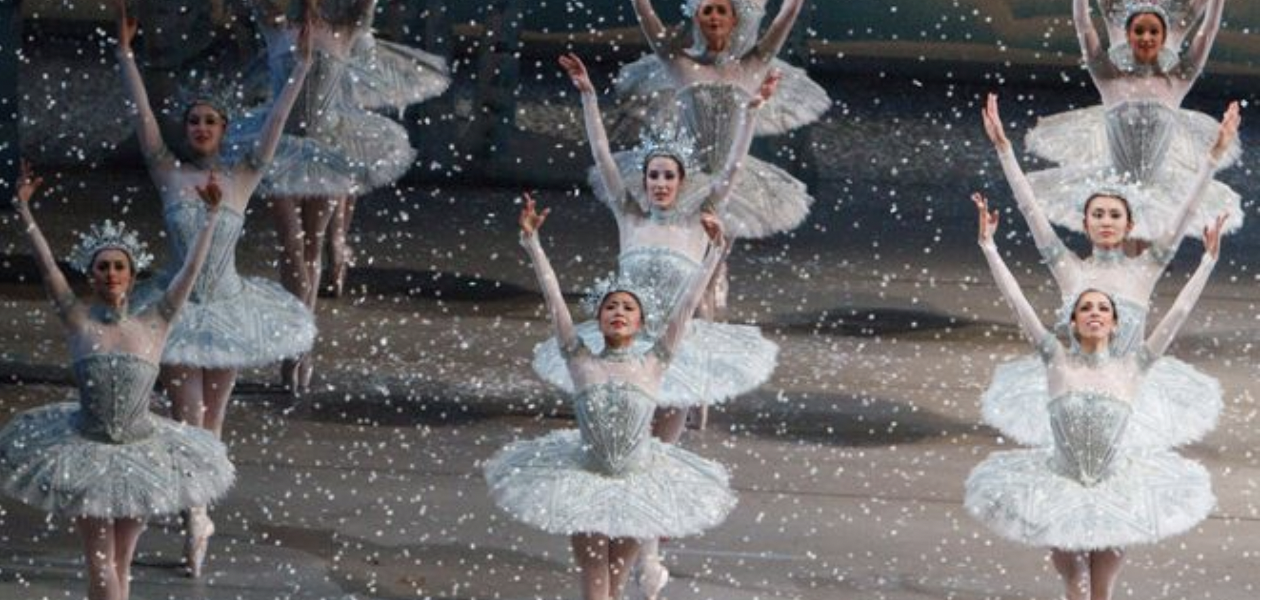
*Photo by Bruce Zinger
*originally published in Hebrew as part of the Parental Choreography column on Haaretz.com
Not long ago, we took our girls to see the Israel Ballet’s The Nutcracker. It was a weekday afternoon toward the end of a holiday, and the balcony was packed with families. As the lights went down, I was faced with a dilemma that would torment me for the next two hours, set to a score by Tchaikovsky: to shush or not to shush?
At intervals of thirty to forty seconds, the little girl seated behind me kicked my chair. Not hard, but enough to startle me. To our right, a pair of seven-year-old cousins loudly critiqued the ballet’s storyline. There were sniffles, snacks, and wiggling all around.
Naturally, I was annoyed. We had driven an hour from our home to attend this performance, and I wanted my girls and myself to be able to enjoy the ballet without constant interruptions.
Then again, I reminded myself, the people sitting in the theater, the ones coughing and crinkling candy wrappers, are the audience we talk about so often when discussing the problems facing art and culture. Where is the audience? Who is our audience? How do we get more of them? These people, even the toddlers among them, belonged to a cherished category, those who chose to spend their money and time on the ballet, either instead of or alongside the Festigal, a fancy dinner, or a movie.
If I shushed these children, and by proxy their parents and grandparents, would I sour their experience of the ballet?
Ballet is one of those special events that requires a certain amount of restraint, poise, and attention. When I was a girl, my mother would take us to see the local ballet company. We dressed up and headed downtown. It was a big deal. The theater itself was worth the trip, as was observing our fellow audience members.
As children, one of the societal rules we learn is that different spaces require different behavior. One does not shout in a library or run through a museum. There are choreographies we know instinctively. We organize our bodies according to the space we are in, even if it means tamping down the desire to hike up a collapsing pair of wool tights, as I often had to do during those performances.
And yet here, in Israel of 2026, dressing up has been demoted to “optional.” People attend weddings in jeans, so why not the ballet? Where food was once forbidden in theaters, ushers now turn a blind eye to bags of Bamba or apple slices. Parents once self-selected, opting out of more structured events for fear their children would not comply with the choreography of sitting still. Generally speaking, you would not take a toddler to the Metropolitan Opera.
The Israel Ballet had managed to fill the hall, no small feat these days. But to do so, had they let go of what makes the ballet the ballet?
The casual, come-as-you-are approach may pry open elitist doors for audiences who would otherwise find the ballet too stuffy, but I wonder about the cost. When you can buy popcorn or cotton candy at intermission, does everything become one big circus? Have we excused ourselves from dressing up and behaving politely because it is easier not to? Just because it is hard for children to sit quietly through a show, does that mean they should not be required to? And when we let ourselves off these hooks, do we miss out on the magic of the experience or ruin it for others?
As Sartre said, hell is other people.
For most of the second act, the toddler behind me provided a loose narration of what was happening onstage in a stuffed-nose voice. “That’s the snow, Mom.” “Those are candies, Mom.” “Why is the prince back again, Mom?”
Her mother, who had grown tired of shushing, responded with small grunts of affirmation.
To shush or not to shush?
It is not always the girls in the prettiest dresses who are most moved by the ballet. Often, it is the children whose lives do not include ribbons and velvet who are won over by tutus and tiaras. Over the years, performing for children across Israel, I have seen that in nearly every group, no matter how rowdy or disruptive, there is at least one child who asks a meaningful question afterward, someone who seems to awaken to a broader range of possibilities than they had previously imagined.
We build audiences one by one, show by show. It is tiring and often discouraging, but with an art form like dance, it is the only way. We step onstage knowing that many audience members will not connect, will not return, and will simply wait for the curtain to fall so they can move on with their day. But we also know that for one or two, or perhaps a handful, the experience will linger and shape future choices in small or significant ways.
If this little girl experiences the ballet as a place where a total stranger scolds her into silence, will she be lost forever as a ballet lover? Will her mother, next time, choose tickets to Skyjump instead?
In the end, I chose not to shush. As an independent artist, the overarching and urgent need for audience outweighed my personal, momentary need for quiet. I did notice, however, that other audience members had no such internal debate and shushed to their hearts’ content, from the Waltz of the Flowers to the Sugar Plum Suite and beyond.


Photo by Yair Meyuhas
Ori Lenkinski is a Tel Aviv-based dancer, actress, choreographer and journalist. Her work, be it on stage, the Internet or on paper, is devoted to exploring the connection between words and movement.
As a dancer, Ori has worked with independent choreographers in the USA, Europe and Israel. Ori’s writing has been published in Dance Magazine, The Huffington Post, The Jerusalem Post, Haaretz and others. She is the founder and editor of www.creativewriting.me, an online platform to response to performance. Her choreographic works include The Painting, Portrait #2, The Suit, Meet Me in the Market, Help Desk, Birth Preparation Course, a dance piece, Jackie Pink and Black, Escape Room as well as the dance films Carriage and Expecting. Ori’s works have been presented throughout Israel, Asia, North America and Europe.