

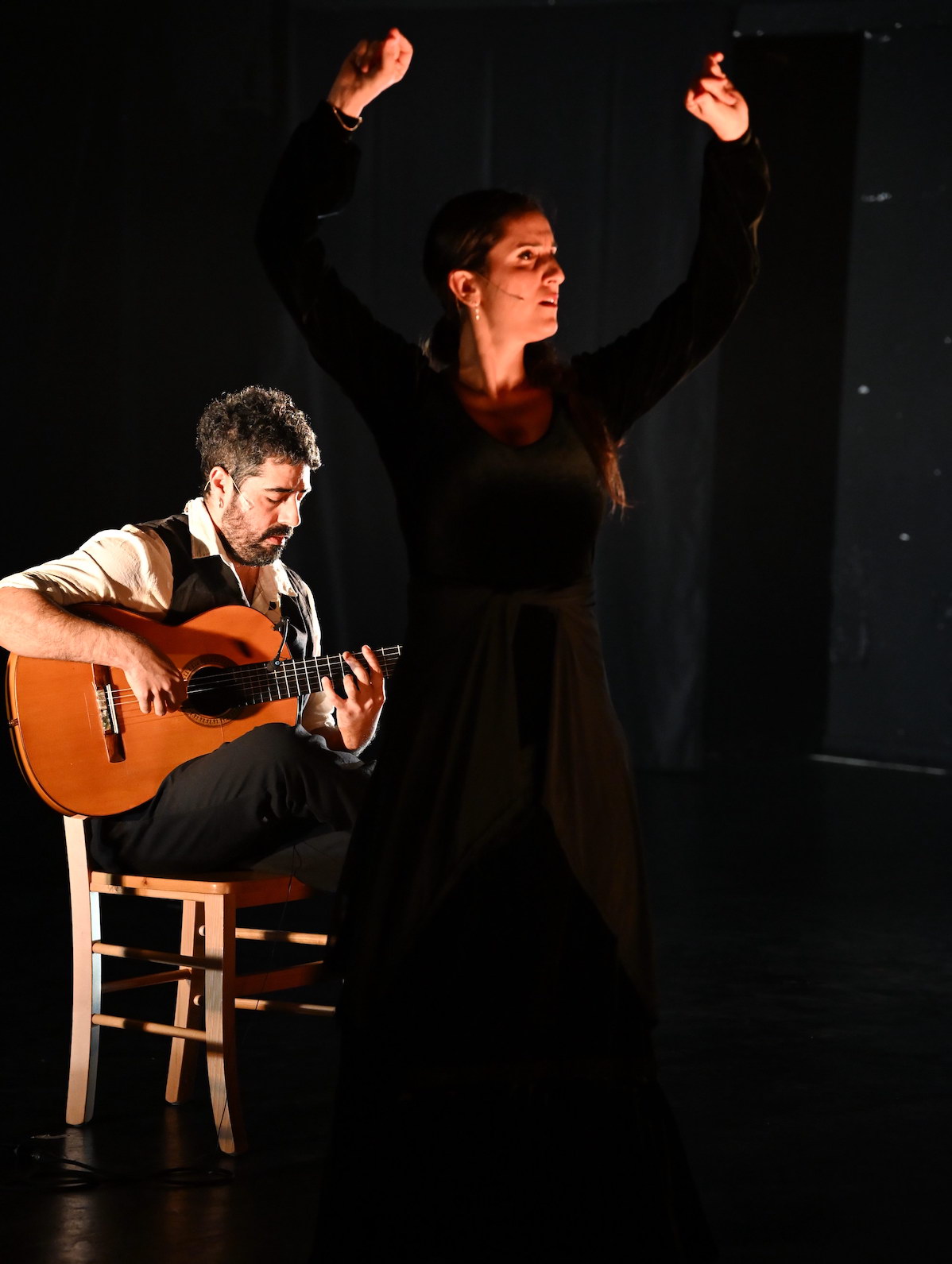
…it seemed that together, the four embodied in their bodies and movements the nomadic, hybrid spirit so characteristic of flamenco’s history. This was precisely because the four insisted on integrating — alongside typical Spanish gestures and sounds —movement languages and imagery external to flamenco, whether through the use of Hebrew, plastic objects, or references to modern dance.Read more
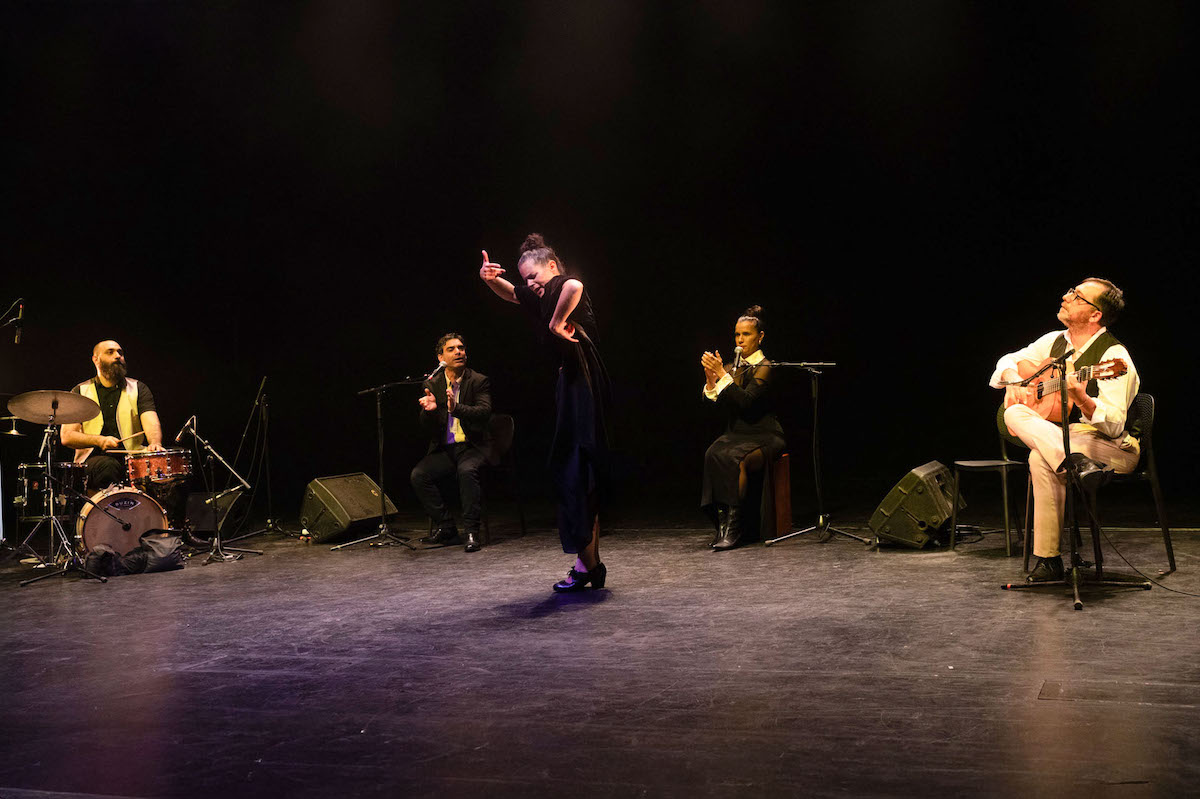
Tula Ben Ari, a singer of Yemenite and Polish descent, decided to step into the very large shoes of Ofra Haza and did so with great success in this performance.
She did not try to imitate Ofra Haza’s singing. Her voice was deep, strong, present, enveloping the entire space with its power and resonating into the fibers of the soul.Read more

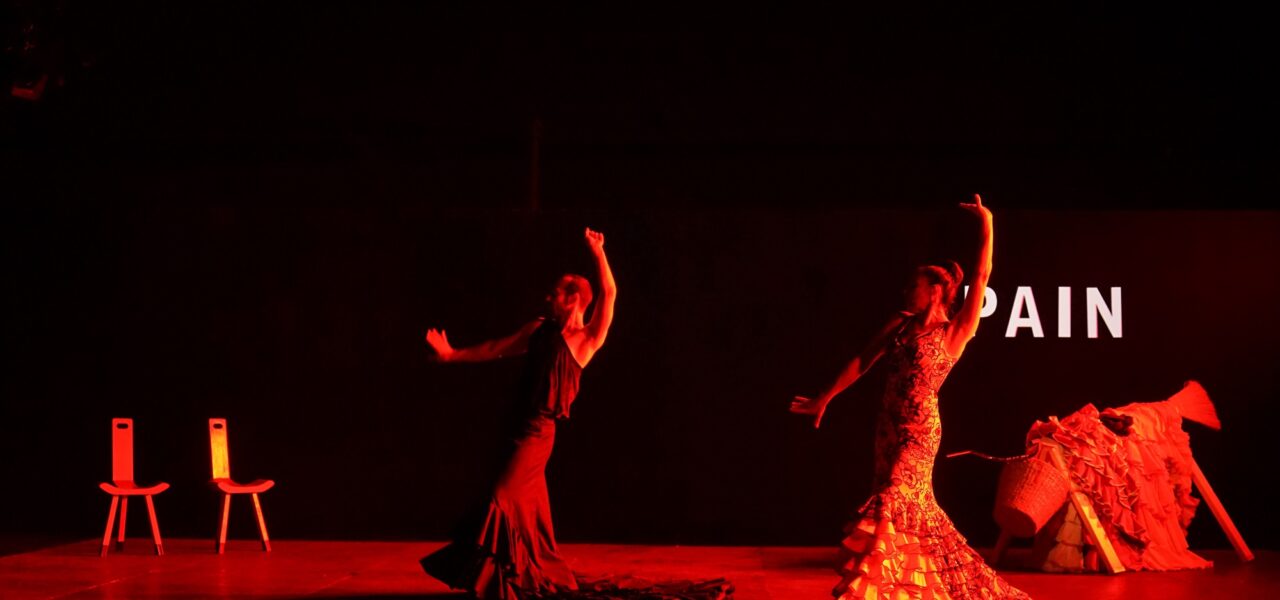
The worlds oscillate between the tangible and the abstract, as Ayala employs a variety of materials and textures. Naya’s persona shifts as well, both through the costumes and accessories she adopts in each world, and through her movement choices, which range from the one end of classical flamenco to the other end of contemporary dance.Read more
דרך דמיון, הומור ועם הרבה רגישות, המופע לוקח אותנו הלאה לתוך מסעות היסטוריים, שאלות של פאתוס ומיתוס, בין ה”כאן ועכשיו” ל-“שם המיוחל”. היסטוריה של זהויות לתוכן אנחנו מתחבאים, ואחרות שאנחנו מתחבאים מהן. הדמיון של האמן משאיר גם מקום לדמיון שלי ולתנועה שלו, פנימה והחוצה, להיסטוריה הפרטית שלי וחזרה למופע.Read more