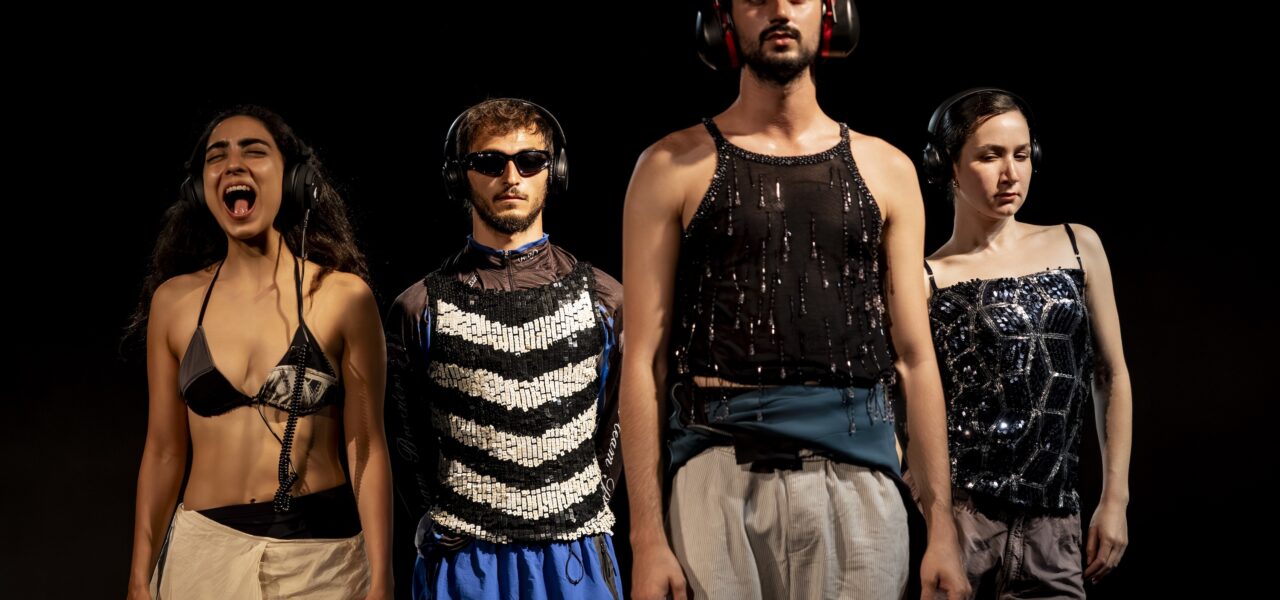
התרשמות של יוליה פריידין מהמופע ‘שקט בקופסה (שחורה)’ מאת איסק צ’וקרון ושחר חנין

*English follows
*Photos by Asya Skorik
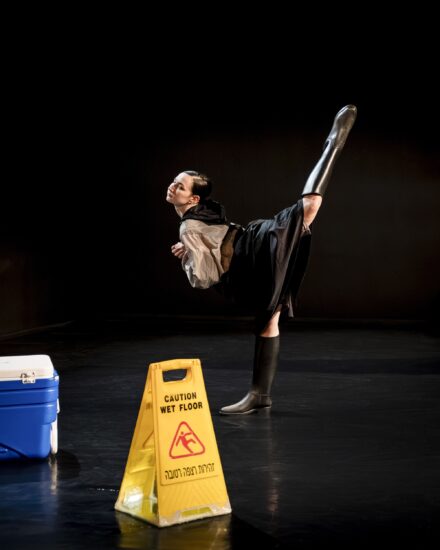
נכנסים לחלל, ויש צליל של מטרונום ברקע. למטה, על הבמה, מוצב שלט צהוב שהרצפה רטובה. בתוך המשולש, למטה יש מים. אני שומעת את צליל המטרונום וקצב הנשימה שלי ואת דפיקות הלב.

ידעתי שאני הולכת לראות מופע שמתעסק בחיפוש אחר השקט, וכמו שחברה טובה הגדירה פעם: יש לך אלרגיה לשקט. 

כשהגעתי בפעם הראשונה בחיים לישון במדבר השקט המוחלט מסביבי בהחלט עורר אי שקט במחשבות. המחשבות קיבלו ווליום גבוה במיוחד, והיה ניתן להרגיש ולשמוע את רחשי הגוף הפנימיים בתוכי.

עכשיו אני מחפשת רגעים של שקט במציאות החיים העמוסה ומלאת תהפוכות. אני מניחה שגם איסק ושחר, היוצרים של המופע, חיפשו איך נשמע השקט, ואיך נשמעות פעולות שעושים עם הגוף, הבגדים, הנעליים בתוך השקט הזה. 

במשך המופע הרגשתי שאני צופה במעין מעבדת סאונד. ארבעת הרקדנים: תמר רוזנצווייג, אלה איסמן־ליבר, דניאל בן עמי, ושחר חנין בודקים אילו צלילים יכולים להיות מופקים דרך תנועה כאשר לובשים בגדים שונים. איזה סאונד מפיקים מעילי רוח וגשם, נעליים מסוגים שונים: מגפיים, נעלי עם עקב ונעליי ריקוד, כשהם פוגשים רצפה דרך סוגי תנועה ומקצבים שונים. הם מתופפים על הגוף, מקשיבים לרעש שהבגדים מייצרים בזמן תנועה, בוחנים את הבדלי הצלילים בין סוגי הנעליים, ובהמשך חולצים אותן ותולים אותן על וווים התלוים מהתקרה, כאילו גם הן סיימו את תפקידן. 

הם לבושים בשיטת הבצל. שכבות על שכבות של בגדים העשויים מחומרים שונים: ניילון, פייטים, חצאית מבד סינטטי. הם מתחילים להשיל ולקלף את שכבות וככל שהמעטפת נעלמת, כך נשארים הצלילים החשופים יותר: המאמץ הפיזי, הנשימה והצליל של הדופק של הלב.

תמר מנענעת בחצאית גדולה, ויש סאונד לחצאית כשהיא מתנועעת. ואז, כשהיא מורידה אותה, היא עושה את אותה תנועה, ושומעים רק את הצליל של המאמץ, הנשימה שיוצאת ממנה.

סצנה מאוד יפה ופיוטית שדניאל ושחר יושבים קרוב אחד לשני, וכל אחד מניח אצבעות על הדופק בצוואר של האחר. שחר מדגים דרך כף היד שלו, פתיחה וסגירה של אגרוף, מה הוא שומע בדופק של דניאל. אלה נראית כמו extension לקצב של הדופק דרך התנועה שהיא מבצעת.

התחושה היא של מחקר מתמשך, כמעט ילדי בסקרנות שלו, שבוחן שוב ושוב מה עוד אפשר לגלות דרך הגוף ואיך נשמעים צלילים כשיש שקט מוחלט, מה קורה לגוף כאשר המוסיקה משתלטת עליו. למשל, תמר נכנסה לשפגט ועולה ויורדת בתוכו, בודקת כמה פעמים היא יכולה לעשות את זה ואיך ההטחה של הגוף במנח הזה נשמעת כשיש שקט מוחלט בחלל.

כשהמוזיקה הקלאסית נכנסת, היא מרגישה כמו חלק מהניסוי. איך היא משנה את איכות התנועה של כל אחד מהרקדנים, שכל אחד מהם מגיב אליה מתוך הגוף וההיסטוריה התנועתית שלו? דווקא בשלב הזה התחלתי לתהות מהי עמדת היוצרים כלפי המוזיקה. לא היה לי ברור אם הם מתמסרים אליה או מתבוננים בה מבחוץ, והשאלה הזאת נשארה פתוחה עבורי לאורך החלק האחרון של היצירה. 

הסקרנות שהמופע עורר בי לא הסתיימה עם מחיאות הכפיים. רציתי להבין מאיפה התחיל המחקר הזה של הקשבה ושקט, ולכן פניתי ליוצרים וקיימתי שיחה עם איסק.

מה נקודת המוצא של העבודה?

האמת שהרעיון למופע התחיל מרגע יחסית מקרי. בתקופת הקורונה עלו כל מיני סרטונים של בכורות מחול במקום הופעות שבוטלו, ובאחת הצפיות שחר נהנה מריקוד כלשהו והתלהב ממנו, עד שגילה שהטלפון שלו היה על מיוט. כשהוא הפעיל את הסאונד, הריקוד פתאום הרבה פחות הפעיל אותו, ועניין אותו לחקור יחד איתי ועם הרקדנים את המתח הזה.

בהתחלה רצינו ליצור מופע שבו הסאונד מבודד לחלוטין עבור הקהל, אבל המחקר בסטודיו, שזלג לתוך ימי המלחמה, הוליד תרגילים אחרים שהשתמשו בשקט כחומר גלם כדי לחפש משהו אנושי וערני יותר. בסופו של דבר נטשנו את הגימיק שהוציא אותנו לדרך.

מה עניין אתכם בתהליך ומה רציתם לחקור או לבדוק?
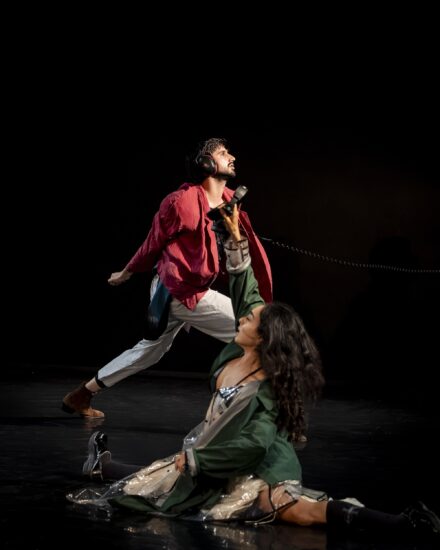
אני חושב שבהתחלה לא ממש ידענו למה הדבר הזה כל כך מושך אותנו. עם הזמן גילינו שהשקט עבורנו הוא כמו משימה בלתי אפשרית, וזה הוביל אותנו לחפש איכות של הקשבה רדיקלית, להקשיב להכול, בלי היררכיה. למה שקורה בכוונה, למה שקורה בטעות, למה ששומעים, לסאונד של מה שרואים ומושתק, לרוחות, למחשבות שלנו או למוזיקה שנתקעה לנו בראש, הכול חשוב באותה מידה.

בהתחלה ניסינו לפתוח את האוזניים החוצה, לרעשים שנכנסים דרך חלונות הסטודיו, ובהמשך גם פנימה, אל הגוף שמנסה להחזיק את השקט שהחלל דורש, אבל גם את הרעש או הסימפוניות שמבעבעות בתוכו.

לאורך המלחמה הכמיהה לשקט, או הרצון להשיג שקט, נראתה פתאום כמו תפילה קולקטיבית ובלתי ניתנת להשגה, וגם כמו קריאת השכמה נגד האדישות וערפול החושים.

הרגשנו שכל המטען, העוול, הרעש הפנימי והחברתי הם שכבה נוספת שמקשה על התרגילים שיצרנו. אנחנו חוקרים טכנית את השקט, אילו צורות ואילו דרכים אפשריות יש להשיג אותו, ובו בזמן לובשים על עצמנו שכבות של רעש ומטענים ומנסים להסיר אותן, אף שהן תמיד נשארות נוכחות.

משם נולד כל הקטע של ההתפשטות והורדת הבגדים.

חיפשנו לעשות מחול שהוא מאוד מונגש, במובן שבו אנחנו, כפרפורמרים, מנסים לשדר החוצה את זרם המחשבות שעובר לנו בראש: מוזיקה שכל אחד מהרקדנים שמע באופן פרטי ובחר לעצמו לרגע במופע, או את הסאונדים של הקהל מהסרטון של ברישניקוב רוקד את מפצח האגוזים, שתמר פשוט גרמה לנו לראות באחת החזרות.

איזה מקורות השראה היו ליצירה?

היה מודבורד אינטואיטיבי ועשיר. הרבה מהעבודות עסקו בסאונד או בניצוח. עברנו בין לימוד התנועתיות של מנצחים שונים לבין לימוד איכויות שונות של ניצוח, כמובן גם בהשראת קסוויאר לה רואה, אבל גם מתוך צפייה במנצחים אחרים באינטרנט.

היו גם הרבה השראות מהאינסטגרם. למשל, לקראת הבכורה גנזנו קטע שכמעט הועתק מסרטון של קבוצת מעודדות שמאתגרת אחת את השנייה לרקוד לפי מנגינות שהן ממציאות זו לזו ברגע.

בתחילת התהליך חיפשנו חוויה דומה לזו של נע באוזן של דנה רוטנברג, אבל בסופו של דבר התקרבנו יותר לכיוון של The Show Must Go On של ז’רום בל.

עבורי ההשראה החזקה ביותר היא זיכרון מההופעה של May B בארץ, של מאגי מארן: דקות ארוכות בחושך, שבהן רק שומעים את הרקדנים בלי לראות אותם, עד שהעין מתרגלת. זו הייתה חוויית צפייה מאתגרת, מפתיעה, שאפשרה לראות דברים אחרת.

וכמובן, אולי ההשראה הנוכחת ביותר היא דואט של שני מוזיקאים (https://youtu.be/ClbSMBJGHJM?si=IHLWhgu79wo4dqWa) שיושבים זה לצד זה, מתנשפים, גונחים ונאנקים, שמלווה את רוב המופע. במופע שלנו הוא מקבל נופך דרמטי, אפילו מאיים, אבל במקור הוא כמעט מגוחך ורשמי מאוד. היה מרתק לגלות איך דבר מאבד את ההקשר שלו.


איסק צ׳וקרון ושחר חנין הציגו את הבכורה של ׳שקט בקופסא (שחורה)׳ ב31.7.2026 כחלק מפסטיבל תל אביב דאנס של מרכז סוזן דלל. 
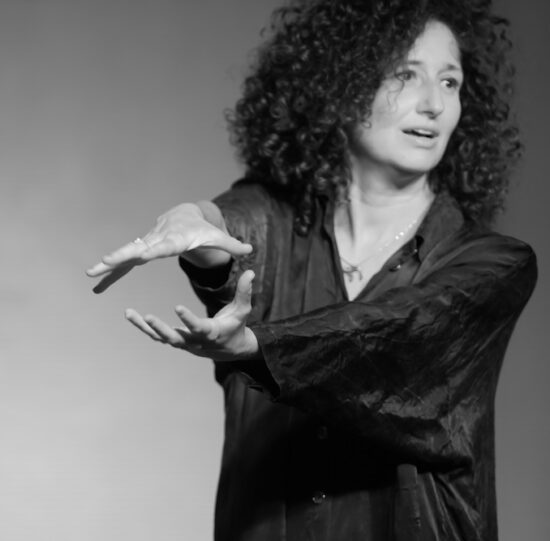

Yulia Frydin’s Response to Sound Shelter by Isak Chocron and Shahar Hanin


You enter the space and hear the sound of a metronome. Down on the stage stands a yellow “Caution: Wet Floor” sign. Inside the warning triangle is a small pool of water. I hear the metronome, the rhythm of my own breathing, and the beating of my heart.

I knew I was about to see a performance about the search for silence. As a close friend once said to me, “You’re allergic to silence.”

The first time I ever spent a night sleeping in the desert, the absolute silence surrounding me stirred a deep sense of restlessness. My thoughts suddenly became much louder. I could feel and hear the subtle sounds inside my own body.

Now I find myself searching for moments of silence in a reality that feels increasingly busy and full of upheaval. I imagine that Isak and Shahar, the creators of Sound Shelter, were asking themselves what silence sounds like, and what actions performed with the body, clothing, and shoes sound like within that silence.

Throughout the performance, I felt as though I were watching a kind of sound laboratory. The four dancers, Tamar Rosenzweig, Ella Eisman Lieber, Daniel Ben Ami, and Shahar Hanin, investigate the sounds that movement can produce while wearing different kinds of clothing. What sounds do windbreakers and raincoats create? What about different kinds of shoes, boots, high heels, dance shoes, as they meet the floor through different rhythms and qualities of movement?

The dancers drum on their bodies, listen to the sounds their clothes produce as they move, examine the differences between the sounds made by different shoes, and eventually remove them and hang them on hooks suspended from the ceiling, as though they too have completed their role.

They are dressed like onions, layer upon layer of clothing made from different materials: nylon, sequins, synthetic fabrics. As they gradually peel away these layers, the remaining sounds become increasingly exposed: physical effort, breathing, and the sound of the heartbeat.

Tamar sways in a large skirt, the fabric rustling with every movement. Then she removes it and repeats the very same phrase. Now, all that can be heard is the sound of exertion, her breath escaping her body.

One particularly beautiful and poetic scene finds Daniel and Shahar sitting close together, each placing two fingers on the other’s pulse. Through the opening and closing of his fist, Shahar demonstrates what he hears in Daniel’s heartbeat. Nearby, the dancer Ella seems like an extension of that pulse, translating its rhythm into movement.

The entire performance feels like an ongoing investigation, almost childlike in its curiosity. Again and again, it asks what else can be discovered through the body, what sounds emerge in complete silence, and what happens to the body when music takes over.

For example, Tamar lowers herself into a split, then repeatedly rises and sinks back down, exploring how many times she can repeat the action and how the impact of her body in that position sounds in absolute silence.

Even when classical music enters the performance, it still feels like part of the experiment. How does it alter the movement quality of each dancer, each responding from within their own body and movement history? It was at this point that I began wondering about the creators’ relationship to music. I wasn’t sure whether they were surrendering to it or observing it from the outside, and that question stayed with me throughout the final section of the work.

The curiosity the performance sparked in me did not end with the applause. I wanted to understand where this research into listening and silence had begun, so I spoke with Isak Chocron about the creative process.

What was the starting point for the work?

Honestly, the idea for the performance began with a fairly accidental moment. During COVID, there were all kinds of videos of dance premieres replacing cancelled live performances. At one point, Shahar was watching a dance piece and was completely captivated by it, until he realized his phone had been on mute. The moment he turned the sound on, the dance suddenly affected him much less. That tension became something he wanted to explore together with me and the dancers.

At first, we wanted to create a performance in which sound would be completely isolated for the audience. But the research we were doing in the studio, which gradually unfolded during the war, led us toward different exercises that used silence as raw material in the search for something more human and more alert. In the end, we abandoned the gimmick that had originally sent us down this path.

What interested you during the process? What were you trying to investigate?

At first, I do not think we really understood why we were so drawn to this idea. Over time, we realized that, for us, silence is almost an impossible task. That realization led us to search for a kind of radical listening, listening to everything without hierarchy. To what happens intentionally, what happens accidentally, what is heard, the sound of what is seen but remains silent, the wind, our thoughts, or the music stuck inside our heads. Everything became equally important.

We first tried opening our ears outward, toward the sounds entering through the studio windows, and later inward, toward the body trying to hold both the silence the space demands and the noise or symphonies bubbling inside it.

As the war continued, the longing for silence, or even the desire to achieve silence, suddenly felt like a collective prayer that could never really be fulfilled. It also became a kind of wake up call against numbness and emotional fatigue.

We felt that all the emotional baggage, the injustice, the personal and social noise had become another layer making our exercises more difficult. Technically, we were investigating silence itself, what forms it can take and what possible ways there are to achieve it. At the same time, we kept piling layers of noise and emotional weight onto ourselves and trying to remove them, even though they never truly disappear.

That is where the whole sequence of undressing and removing the clothing came from.

We wanted to make dance that feels accessible, in the sense that we, as performers, are constantly trying to project the stream of thoughts passing through our minds. Music that each dancer privately chose for themselves at a particular moment in the performance, or the sound of the audience in that famous video of Baryshnikov dancing The Nutcracker, which Tamar made us watch during one of our rehearsals.

What inspired the work?

We had a very intuitive and rich moodboard. Many of the references dealt with sound or conducting. We studied the movement vocabulary of different conductors and different conducting qualities, inspired, of course, by Xavier Le Roy, but also by watching conductors online.

There were also many inspirations that came from Instagram. For example, just before the premiere, we cut a section that was almost directly inspired by a video of a cheerleading team challenging one another to improvise dances to melodies they invented on the spot.

At the beginning of the process, we were looking for an experience similar to Dana Rotenberg’s Moving Through the Ear, but eventually we found ourselves moving closer to The Show Must Go On by Jérôme Bel.

For me, the strongest inspiration is a memory of seeing Maguy Marin’s May B in Israel. There are long stretches of darkness during which you hear the dancers before you can see them, until your eyes slowly adjust. It was a challenging and surprising viewing experience that made it possible to perceive things differently.

And finally, perhaps the most significant inspiration throughout the work is a duet by two musicians who sit side by side, breathing, groaning, and vocalizing together. It accompanies much of the performance. In our piece, it takes on an almost dramatic, even threatening quality, whereas in its original context it is almost ridiculous, very formal. It was fascinating to discover how completely something can change once it is removed from its original context.


Isaac Chocron and Shahar Hanin presented the premiere of Sound Shelter on July 31, 2026 as part of the Suzanne Dellal Centre’s Tel Aviv Dance Festival. 

יוליה פריידין היא אמנית רב־תחומית, כוריאוגרפית, פרפורמרית, כותבת ואמנית חזותית. יצירתה משלבת תנועה, טקסט, הומור והשתתפות קהל, ועוסקת בהגירה, אימהות, טקסיות וחיי היומיום.

Yulia Frydin is a multidisciplinary artist, choreographer, performer, writer, and visual artist. Her performances combine movement, text, humor, and audience participation while exploring migration, motherhood, ritual, and everyday life through a distinctly personal lens.