
תגובה של אלה גרינבום ל׳הארדקור [ריקוד האור]׳ מאת תמי לייבוביץ
*English follows
*Photos by Asya Skorik
אוגוסט סמיך. אני נכנסת לאולם הקריר כמו לעולם אחר.
הפסטיבל מרגיש השנה חגיגי במיוחד. כולם בתחושת הקלה שהוא מתקיים ושעוד לא פרצה מלחמה, לעת עתה.
זהו המופע השלישי שאני רואה בפסטיבל. מופע שלישי שבו נשים נמצאות במרכז.
נשים על הבמה. נשים יוצרות יצירות לנשים.
כמה שעות לפני המופע חוויתי עוד גל של כאב נשי שהשתלט עליי מבפנים והכריח אותי לעצור ולנוח.
זה בא עם הגיל, או אפקט המלחמה. קשה לדעת במדויק. כך אמרה הרופאה. וכך גם אני יודעת.
אספתי כוחות ושמתי פעמיי לצרוך תרבות.
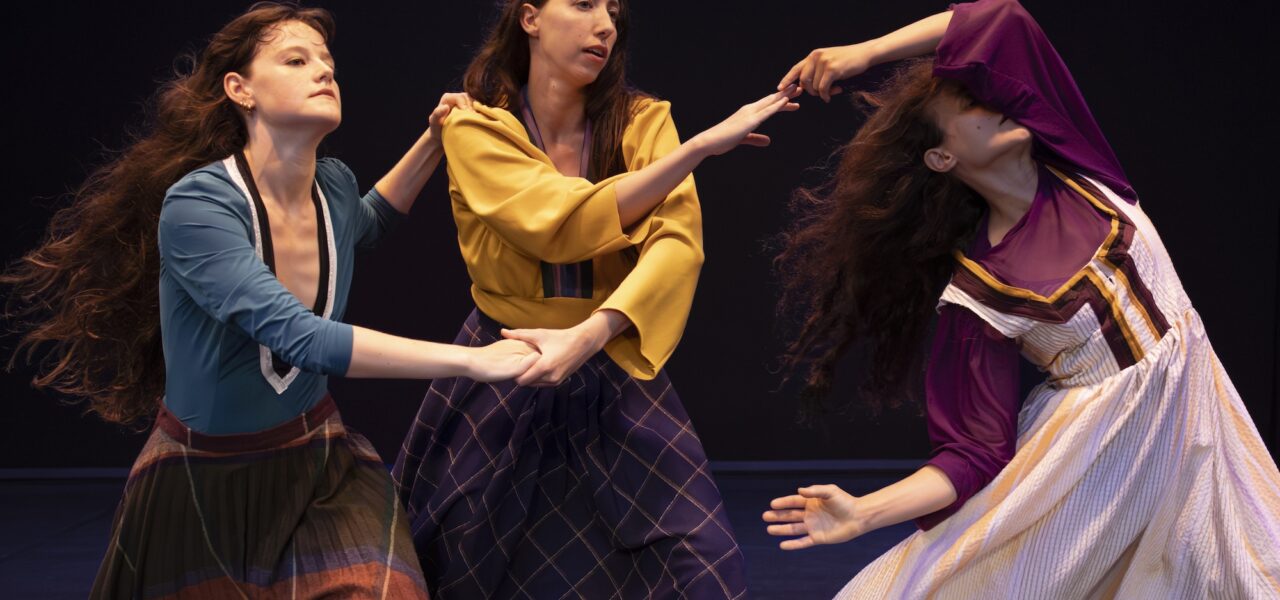
המסך נפתח ומגלה סילואטות של שלוש נשים צעירות בשמלות ארוכות. הן זזות בהילוך איטי לצלילי מוזיקה אלקטרונית.
כירושלמית לשעבר אני לא יכולה שלא לחשוב על נשים דתיות במרחב. הן אוספות את שיערן הארוך ומתקדמות בתנועה איטית, כמוכנות לקרב.
המוזיקה הופכת קצבית ומתגברת. האורות עולים והתלבושות מתגלות בצבעוניותן. שילוב של גראנג’ משנות התשעים ורקמות פולקלור. מאוחר יותר, בשיחת האמנית, תכנה זאת תמי: “דוסיות עם מחשוף. חצי דיסקו, חצי בני עקיבא.”
האם לתמי יש רקע דתי? האם זה ריקוד דתי? האם הן רוצות להשתחרר מהדת דרכו או להתחבר אל אלוהות אחרת?
אני משחררת את השאלות כדי לתת לגוף להתמסר.
הריקוד והמוזיקה הופכים לטקס רפטטיבי שהולך ומתעצם. טקס נשי שבא לי להצטרף אליו.
גם בכוריאוגרפיה עצמה יש חיבור בין איסוף לשחרור. בין דיוק כוריאוגרפי, סדר וריתמוס פנימי, לבין הרפיה של הגוף וזריקה שלו לתנועה מתפרצת. לעיתים הן נראות לי כמו חבורת נערות מתבגרות שברחו משיעור ומרשות לעצמן לפרוק כל עול.
והכאב הנשי שחוזר על עצמו.
הכאב הנשי שחוזר על עצמו.
הכאב הנשי שחוזר על עצמו.
נוגע בי.
קיים בי.
חי בי.
בועט בי.
זועק בי.
אני רוקדת בכיסא ומתה להצטרף.
לפתע רגיעה, אך ברור שהמסע עוד לא הסתיים.
הרקדניות, פזורות שיער, משתמשות בקולן כדי ליצור קולות של פיצוצים. גם בגוף הפיצוץ מורגש. הן מתלכדות ויוצרות מבנה צפוף, הראש מורכן קדימה והשיער מכסה את פניהן. הן משחקות בקולות הפיצוץ, כמו מזכירות שהמלחמה עדיין כאן. “מכונות ירייה ומכונות ריקוד”, תקרא לזה תמי.
נדמה שהטקס התנועתי מתחיל מחדש ויכול היה להימשך לנצח, אך אחת הרקדניות שוברת את הרצף, יורדת מהבמה ופורצת החוצה דרך דלת החירום, רק כדי לחזור מהצד השני כעבור כמה דקות, כמעין קסם. אחריה ממשיכות באותו מסלול גם האחרות, כאילו הן רוצות לברוח או לפרוץ את המעגל, ואז חוזרות.
כך הטקס זורם וממשיך מהפנים אל החוץ, ומהחוץ אל הפנים.
והמלחמה עדיין כאן.
המלחמה עדיין כאן.
המלחמה עדיין כאן.
והחיים ממשיכים.
החיים ממשיכים.
החיים ממשיכים.
בו בזמן נכנסים לבמה שני מוזיקאים. גיא גוטמן עם גיטרה חשמלית, שגם יצר את המוזיקה למופע והוא בן זוגה של תמי, ומיטל אלה על מערכת התופים.
הם מרוממים את הטקס למחוזות חדשים של שבטיות מטאלית.
הרקדניות והמוזיקאים מלווים אותנו בקולם אל רגע של התעלות, ונדמה שהאולם כולו נצבע בצבעי קולם. רגע של רוך, כקונטרה למכונות הירייה.
שיער סערה.
שיער סערה.
שיער סערה.
קולות הנשים
ממלאים אותי תקווה.
תמי לייבוביץ הציגה את ׳הארדקור [ריקוד אור]׳ ב3.8.2026 כחלק מפסטיבל תל אביב דאנס של מרכז סוזן דלל.
Ella Greenbaum’s Response to ‘Hardcore [Light Dance]’ By Tami Leibovits
Dense August. I step into the cool theater as though entering another world.
This year’s festival feels especially celebratory. Everyone seems relieved that it is taking place, and that, for now, another war has not broken out.
This is the third performance I’ve seen at the festival. The third in which women are at the center.
Women on stage. Women creating work for women.
A few hours before the performance, another wave of female pain washed over me, taking hold from within and forcing me to stop and rest.
Maybe it comes with age, or maybe it’s another effect of the war. It’s hard to know. That’s what the doctor said. And somehow, I already knew it myself.
I gathered my strength and set out to consume culture.
The curtain rises, revealing the silhouettes of three young women in long dresses. They move in slow motion to the sound of electronic music.
As a former Jerusalemite, I can’t help thinking of religious women moving through public space.
They gather up their long hair and advance slowly, as though preparing for battle.
The music gathers momentum. The lights come up, revealing richly colored costumes, a blend of 1990s grunge and folk embroidery. Later, during the post-show artist talk, Tami would describe them as “religious girls with cleavage. Half disco, half Bnei Akiva.”
Does Tami come from a religious background? Is this a religious dance? Are these women trying to free themselves from religion through dance, or to connect to another kind of divinity?
I let go of these questions so that my body can surrender.
The dance and the music become a repetitive ritual that steadily intensifies. A feminine ritual I find myself longing to join.
The choreography itself moves between gathering and release, between choreographic precision, order, and inner rhythm, and a body that lets go, surrendering to explosive movement. At times they remind me of a group of teenage girls who have skipped class and are finally allowing themselves to let loose.
And the female pain that returns.
The female pain that returns.
The female pain that returns.
It touches me.
It lives in me.
It breathes in me.
It cries out through me.
I dance in my seat, desperate to join them.
Suddenly, a moment of calm. But it is clear the journey is far from over.
Their hair now loose, the dancers use their voices to create the sounds of explosions. The explosions reverberate through their bodies as well. They gather into a dense formation, heads bowed, hair covering their faces. They play with the sounds of blasts, as though reminding us that the war is still here. Later, Tami will call them “machines of war and machines of dance.”
The ritual seems to begin again and could continue forever. Then one dancer breaks the pattern. She steps off the stage and rushes out through the emergency exit, only to reappear a few minutes later from the opposite side, almost like a magic trick. One by one, the others follow the same path, as though trying to escape, or to break the circle, only to return.
The ritual continues to flow.
From inside to outside.
From outside to inside.
And the war is still here.
The war is still here.
The war is still here.
And life goes on.
Life goes on.
Life goes on.
At the same time, two musicians enter the stage. Guy Gutman, on electric guitar, who also composed the score for the performance and is Tami’s partner, and Meital Ella on drums.
They lift the ritual into new territories of metallic tribalism.
The dancers and musicians carry us with their voices toward a moment of transcendence. It feels as though the entire theater is washed in the colors of their voices, a moment of tenderness that stands in quiet contrast to the sounds of gunfire.
Storm hair.
Storm hair.
Storm hair.
The voices of women
Fill me with hope.
Tami Leibovits presented ‘Hardcore [Light Dance]’ on August 3, 2026 as part of the Suzanne Dellal Centre’s Tel Aviv Dance Festival.
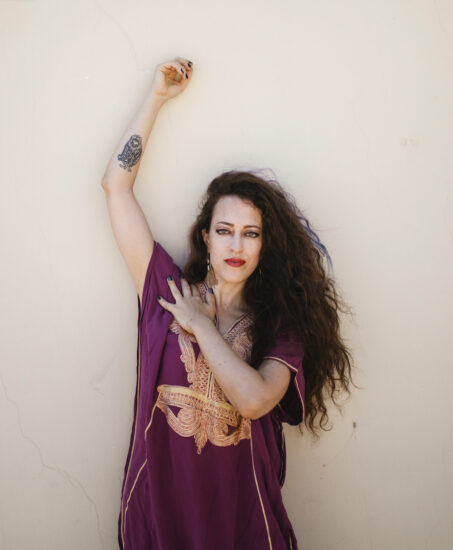
אלה גרינבאום היא כוריאוגרפית, פרפורמרית ואמנית רב־תחומית. עבודתה משלבת מחול מזרחי, מוזיקה, אמנות חזותית ופרפורמנס, ומחפשת דרכים חדשות לספר סיפורים דרך הגוף.
Ella Greenbaum is a choreographer, performer, and multidisciplinary artist whose work draws from Middle Eastern dance, visual art, music, and performance. She has collaborated with leading artists across Israel while developing an independent choreographic practice rooted in cultural dialogue and physical storytelling.