
תגובה של אלה גרינבום ל׳סולידריות׳ מאת נאור וולקר
*English follows
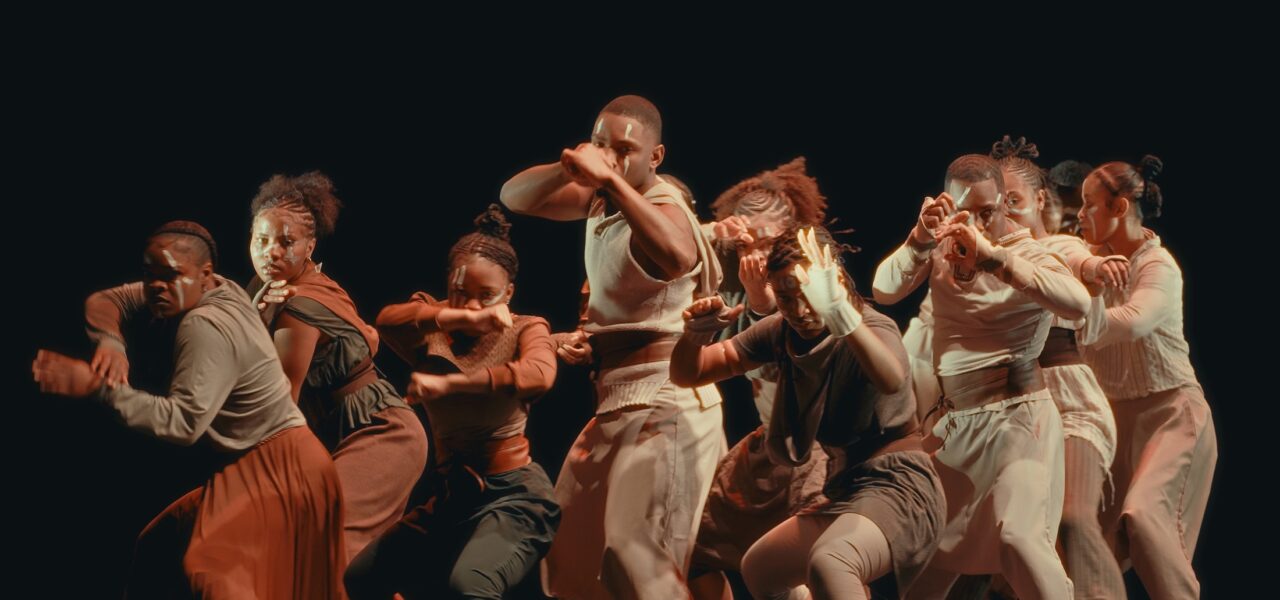
*Photo by Rob Ras Black Judah
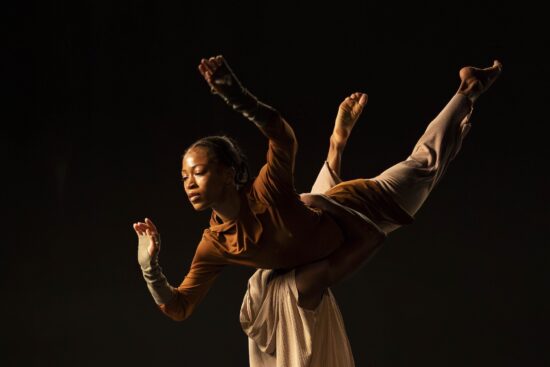
Photo by Asya Skorik
מרימים כל פעם מישהו אחר. כמה כח יש לתמיכה, לסולידריות.
Ella Greenbaum’s Response to ‘Solidarity’ by Naor Walker/ Light Dance Company
Arison Hall is currently serving as the Suzanne Dellal Centre’s main performance venue while the original theater undergoes renovations.
The entire African Hebrew Israelite community from Dimona is here, dressed in elegant gowns and matching hats. The hall fills with the sound of crying babies and conversations in English. The atmosphere feels like one large family gathering, even for those of us who are not part of the family. There is a palpable sense of excitement, like arriving at a celebration where everyone somehow belongs.
The performance begins with a figure dressed in white standing at center stage. This is Grandma Kadisha, choreographer Naor’s grandmother and perhaps, in some way, everyone’s grandmother.
On stage left, a group of dancers lean into one another through small gestures of support, pulling and holding each other up. On stage right, musicians dressed in white wait quietly.
A gentle rhythm begins, and the dancers dissolve into constantly shifting formations, moving between solos and duets while creating images drawn from everyday life. Everything flows with harmony and ease until the group gathers into a collective embrace and begins singing “Hinei Ma Tov U’Ma Naim, Shevet Achim Gam Yachad” (“How good and pleasant it is when brothers dwell together in unity”).
Here too, there is order. They sit in a semicircle while Grandma dances in the center.
The drumming grows louder, the singing becomes more powerful, and the audience instinctively joins in with perfectly synchronized clapping. More embraces follow until suddenly one dancer falls, breaking the harmony.
From that moment on, everything changes.
The live music gives way to a recorded soundtrack. The energy intensifies. The bodies no longer move like water but like fire.
There are solos and shifting formations that evoke different kinds of struggle. The individual against society. Internal conflict. The struggles of the community itself.
Again, someone is left alone.
Photo by Asya Skorik
Again, the others gather around to lift them.
Each time it is someone different.
The power of support and solidarity becomes unmistakable.
In another section, the dancers kneel together for another song, accompanied by rhythmic clapping. Once again, the audience joins in almost instinctively.
The following image is one of complete stillness.
The dancers stand quietly as a recording of community leader Ben Ammi Ben Israel, born Ben Carter, fills the theater. His speech commemorates the “Day of the Show of Strength,” April 22, 1986, when members of the African Hebrew Israelite community engaged in a nonviolent public confrontation with Israeli security forces after the Ministry of the Interior sought to deport community members who lacked legal status. Dressed in traditional white garments, the community stood together in silent determination. The event became a turning point, halting the planned mass deportations and eventually leading to the long process of recognizing the community’s legal status in Israel. To this day, the date is commemorated as a symbol of courage, faith and resilience.
In the final section, the dancers paint their faces white and the choreography becomes increasingly forceful and untamed, transforming into an unmistakable act of protest.
One by one they collapse.
Defeated.
Only one man and one woman, Naor and Haviva, continue moving quietly, searching for light until they too finally fall.
The singer steps forward and speaks about simultaneity, existence, sustainability, movement and flow, asking almost philosophically, “Who is the one who acts, and who is the one being acted upon?”
In the final image, Naor dances with his grandmother. Once again the audience is invited to clap along, and everyone joins willingly. He lifts her high into the air.
She flies.
She lives forever, just as she wished.
During the post performance discussion with Naomi Perlov, the festival’s artistic director, Naor becomes visibly emotional and breaks into tears. He speaks about solidarity between people, between communities, between generations, and even with the land itself, especially the land on which we live.
He speaks about our shared story and the journey we undertake together.
As an older brother and as a leader, he sees it as his responsibility to carry his community forward and spread light.
It was fascinating to witness the ancient, intergenerational knowledge embodied in the dancers’ voices and bodies. At the same time, Naor has clearly absorbed new knowledge through his work as a contemporary dancer at the heart of Israel’s dance scene. It is compelling to watch these different traditions meet and see how inherited forms evolve through dialogue with contemporary practice.
The conversation after the performance also touched on the time such a process of deepening and integration requires. It will be fascinating to follow this work as it continues to develop.
The trauma, the pain and the protest expressed in this performance are realities that are rarely given such a visible platform in Israel’s cultural center. That this work was presented here, and received with such respect, felt moving in itself.
Most of all, it was extraordinary to experience the entire theater as a living community. The audience surged with emotion, inhabiting the performance with their own bodies from their seats. The resonance could be felt everywhere, around us, above us and beneath us.
Naor Walker/ Light Dance Company presented the premiere of ‘Solidarity’ on August 4, 2026 as part of the Suzanne Dellal Centre’s Tel Aviv Dance Festival.
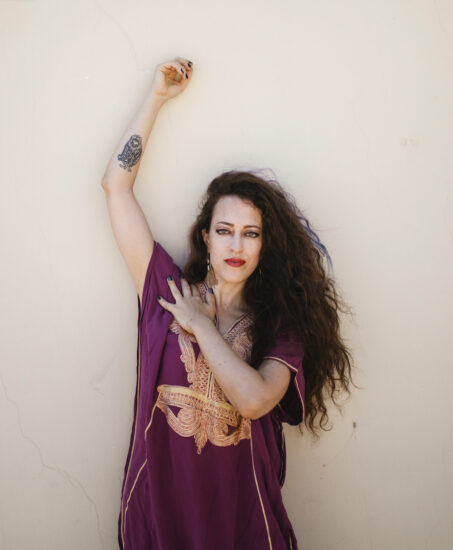
אלה גרינבאום היא כוריאוגרפית, פרפורמרית ואמנית רב־תחומית. עבודתה משלבת מחול מזרחי, מוזיקה, אמנות חזותית ופרפורמנס, ומחפשת דרכים חדשות לספר סיפורים דרך הגוף.
Ella Greenbaum is a choreographer, performer, and multidisciplinary artist whose work draws from Middle Eastern dance, visual art, music, and performance. She has collaborated with leading artists across Israel while developing an independent choreographic practice rooted in cultural dialogue and physical storytelling.