
Metamorphosis: An Even (Green) Playing Field by Ori Lenkinski
Recently, I visited the city where I spent a considerable amount of time in my younger life. It was a period of great freedom in which I ripped around the city on a pink and purple bicycle, flanked by dozens of brilliant international artists.
I took my family back to that city for a vacation and, while boarding the plane, began to feel anxious that I would be haunted by this younger version of myself while in town. That in every street and along every bicycle path, I would see her and feel remorse for her absence, for her replacement by this older, more weathered version of myself.
The juxtaposition of young and old seems almost always to imply that the older is the lesser of the two. Less shiny, less fruitful, less alluring. We are encouraged to celebrate youth, preserve it, prolong it and, when all else fails, mourn its passing. Yet in watching Metamorphosis by Yossi Berg and Oded Graf, I encountered a different proposition.
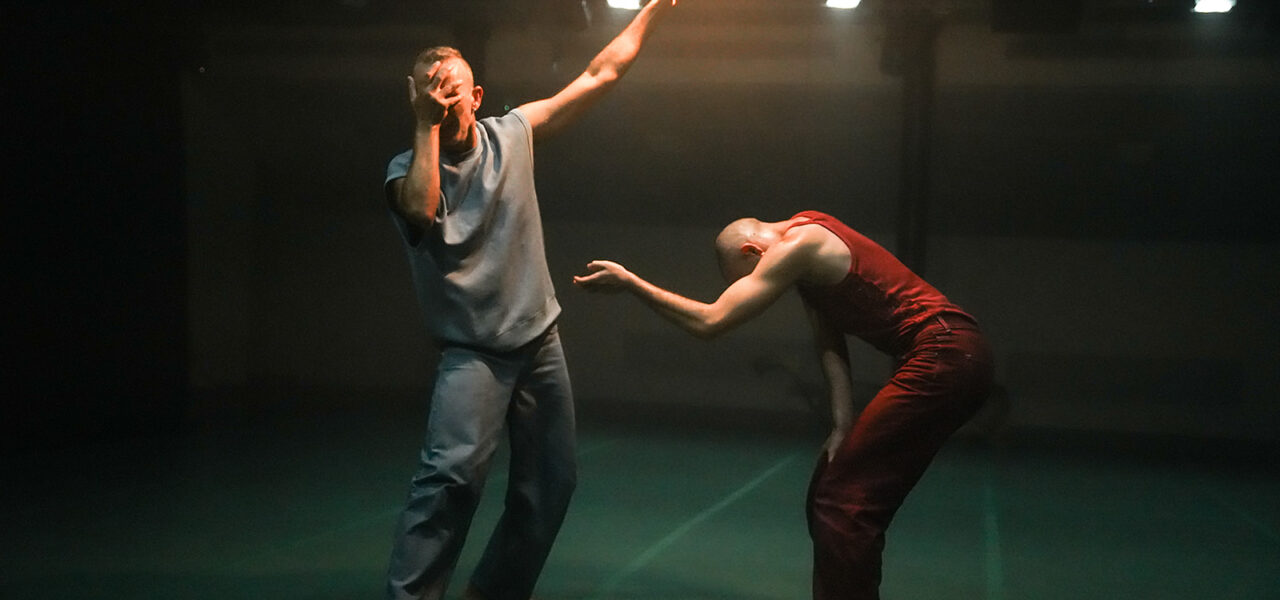
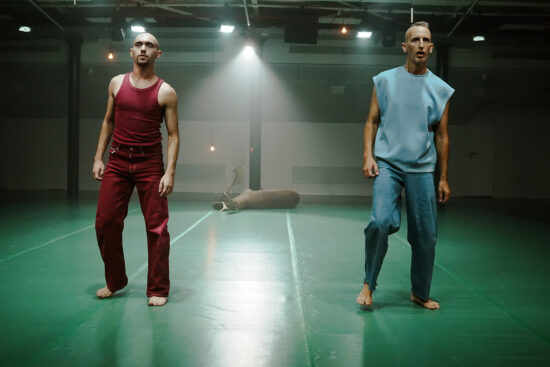
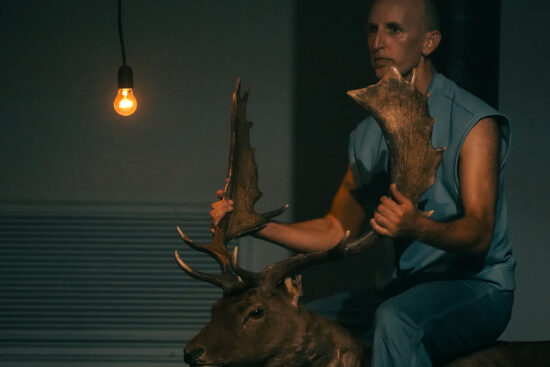
On stage, two men. One, 50 years of age. The other, 21. One wears a maroon ensemble, the other blue. They occupy a green floor alongside a stuffed deer whose origins trace back to the Dresden Opera Company. Yossi Berg, a brilliant performer, is no less intriguing, no less physical and no less commanding a presence than his counterpart, Ori Mbazbaz. Despite being at the beginning of his career, Mbazbaz is precise, grounded and direct. Together, these two men present a picture of life at different stages without falling prey to the societal tropes of aging.
Their encounter is one of equality, not to be confused with sameness.
Woven into the fibers and text of Metamorphosis are two literary works in which bodily transformation is the stuff of nightmares. In Franz Kafka’s The Metamorphosis, Gregor Samsa awakens one morning to discover that he has become a monstrous creature. His body, once familiar and useful, renders him unrecognizable. In Oscar Wilde’s The Picture of Dorian Gray, a young man is granted the ability to remain eternally youthful while his portrait bears the increasingly grotesque evidence of the passage of time. In both works, the changing body becomes a site of horror, whether through its transformation or through the desperate attempt to prevent it.
 The third male voice in this constellation hints at the outlook of the choreographers. Philip Glass’s Metamorphosis provides the musical landscape for much of this work. Glass’s composition, itself connected to Kafka’s novella, unfolds through repetition and gradual variation. Rather than a sudden, violent transformation, the music suggests an ongoing process in which change emerges through continuity.
As I watched Berg and Mbazbaz move through this world of male literary and musical references, my mind wandered to a haunting female representation of aging- Coralie Fargeat’s film The Substance.
I will attempt to avoid spoilers because this film must be watched to understand its true scope and it should only be watched by those outfitted with stomachs of steel. In the film, Demi Moore plays Elisabeth Sparkle, an aging television star obsessed with youth. Sue, played by Margaret Qualley, is Moore’s counterpart. The two women must share resources to survive yet their resentment one of the other and inability to coexist eventually destroys them both in a spectacularly gruesome fashion.
Where Kafka imagines the horror of becoming unrecognizable and Wilde the horror of refusing to age, Fargeat imagines the younger and older selves as mortal enemies. In her gory world, there cannot be enough room for both.
I wondered if a female version of Metamorphosis could exist. Could two women separated by the same age gap occupy the stage on equal terms? Would our preconceived notions of a woman in her 50s alongside a woman in her early 20s overshadow the choreographic choices? Would we immediately prescribe suffering even if none was outwardly present?
But back to this work.
Berg and Mbazbaz begin the piece in a long unison, oscillating between controlled contemporary movements, gestures and nods to pop dancing. After some time, they break into text, giving a rundown of the scenario before us.
The two share the roles of presenter, narrator and performer, refusing to succumb to a clear hierarchy. Mbazbaz is not the voiceless ingenue. Berg is, for the most part, not the pedantic director.
Throughout the piece, both dancers remain contained within the staged world. While they look out into the audience at times, their presence does not cross into the crowd. They remain on their green floor while we remain in our tightly packed rows on three sides of the space.
At one point, as Mbazbaz approached the audience, my eyes were drawn to a group of beautiful young dancers sitting cross-legged on the floor. Perhaps the binary of young and old was felt more acutely by the audience than normal while watching this particular work.
In one of the text segments, Berg flings questions at Mbazbaz about their relationship. He asks whether Mbazbaz is attracted to him, whether he wants to replace him, and other questions that are nearly drowned out by the soundtrack. These questions go unanswered and unattended to, left to evaporate in the air, much like the cold sweat on both men’s foreheads, pointed out several times, will after the performance.
 The work reaches something of a climax in a sequence built around the repeated declaration “we both.” Berg and Mbazbaz take turns making increasingly inane statements about what they have in common, accompanying their declarations with movement. Here, Berg and Graf weave in the current political moment, the particularities of performing this piece in Israel and in Hebrew, and the wordplay for which they have become known. The insistence on “we both” begins to acquire a significance of its own. Two men separated by nearly three decades repeatedly assert their common ground. They are not the same, nor do they need to be. They are united by their humor, their drive to move, their willingness to play.
There is something almost countertheatrical about the build of the piece. The work establishes the conditions for a catastrophic event and then declines to deliver it. A dramatic story starts but is never finished. Questions are asked but never answered. The deer is a kind of Chekhov’s gun that never goes off. Throughout the piece it remains a dead deer. It is not brought to life by the performers, even in the rare moments that Berg (never Mbazbaz) manipulates it. What is gone is gone. The older dancer remains an extraordinary performer. The younger dancer does not replace him. The conflict persists in the questions the work raises and our expectations of how they might be answered.
What I came away with from Metamorphosis echoed a sense that washed over me on the last day of our vacation. Youth is, in fact, haunting. Such is life. We are all older than we once were, and there is no getting around that.
I cannot pretend that I am not aware of the ghost of the young woman on that pink and purple bicycle, that I don’t occasionally long for her freedom, her energy or the seemingly endless possibilities that lay before her. The mistake is imagining that she and I are in competition. That everything she possessed must represent something I have lost.
Yossi Berg and Oded Graf presented ‘Metamorphosis’ on September 30, 2026 at the Suzanne Dellal Centre.
מטמורפוזה: על מגרש (ירוק) שווה
לאחרונה ביקרתי בעיר שבה ביליתי פרק זמן משמעותי בצעירותי. זו הייתה תקופה של חופש גדול, שבה דהרתי ברחבי העיר על אופניים ורודים וסגולים, מוקפת בעשרות אמנים בינלאומיים מבריקים.
חזרתי אל העיר הזאת לחופשה עם משפחתי, וכבר בזמן העלייה למטוס התחלתי לחשוש שהגרסה הצעירה ההיא של עצמי תרדוף אותי בזמן שהותי שם. שבכל רחוב ולאורך כל שביל אופניים אראה אותה ואחוש צער על היעדרה, על כך שהוחלפה בגרסה המבוגרת והשחוקה יותר שלי.
ההצבה של צעיר ומבוגר זה לצד זה כמעט תמיד מרמזת שהמבוגר הוא הפחות מבין השניים. פחות זוהר, פחות פורה, פחות מושך. מעודדים אותנו לחגוג את הנעורים, לשמר אותם, להאריך אותם, וכשכל זה נכשל, להתאבל על לכתם. אלא שבצפייה ב״מטמורפוזה״ מאת יוסי ברג ועודד גרף, נתקלתי בהצעה אחרת.
על הבמה שני גברים. האחד בן 50. השני בן 21. האחד לבוש בגווני בורדו, האחר בכחול. הם חולקים רצפה ירוקה עם אייל מפוחלץ שמקורו בבית האופרה של דרזדן. יוסי ברג, פרפורמר מבריק, אינו מסקרן פחות, פיזי פחות או בעל נוכחות פחותה מזו של שותפו, אורי מבזבז. אף שהוא נמצא בתחילת דרכו המקצועית, מבזבז מדויק, מקורקע וישיר. יחד מציגים שני הגברים תמונה של חיים בשלבים שונים, מבלי ליפול למלכודות של הקלישאות החברתיות סביב הזדקנות.
המפגש ביניהם הוא מפגש בין שווים, ואין לבלבל בין שוויון לבין זהות.
אל תוך הסיבים והטקסט של ״מטמורפוזה״ שזורות שתי יצירות ספרותיות שבהן שינוי גופני הוא חומר שממנו עשויים סיוטים. ב״הגלגול״ של פרנץ קפקא, גרגור סמסא מתעורר בוקר אחד ומגלה שהפך ליצור מפלצתי. גופו, שהיה פעם מוכר ושימושי, הופך אותו לבלתי ניתן לזיהוי. ב״תמונתו של דוריאן גריי״ מאת אוסקר ויילד, צעיר זוכה ביכולת להישאר צעיר לנצח, בעוד דיוקנו נושא את העדויות ההולכות ונעשות גרוטסקיות לחלוף הזמן. בשתי היצירות הגוף המשתנה הופך לזירה של אימה, בין אם בשל השינוי שעובר עליו ובין אם בשל הניסיון הנואש למנוע אותו.
הקול הגברי השלישי בקונסטלציה הזאת מרמז על נקודת המבט של הכוריאוגרפים. ״מטמורפוזה״ של פיליפ גלאס מספקת את הנוף המוזיקלי לחלק ניכר מן העבודה. היצירה של גלאס, שגם היא קשורה לנובלה של קפקא, מתפתחת באמצעות חזרתיות ושינויים הדרגתיים. במקום טרנספורמציה פתאומית ואלימה, המוזיקה מציעה תהליך מתמשך שבו השינוי צומח מתוך המשכיות.
בזמן שצפיתי בברג ובמבזבז נעים בתוך העולם הזה של מקורות ספרותיים ומוזיקליים גבריים, המחשבה שלי נדדה אל ייצוג נשי מטריד של הזדקנות: סרטה של קוראלי פארז׳ה, ״יופי מסוכן״.
אנסה להימנע מספוילרים, משום שזהו סרט שחייבים לצפות בו כדי להבין את ממדיו האמיתיים, ורצוי שיעשו זאת רק מי שניחנו בקיבה עשויה מברזל. בסרט מגלמת דמי מור את אליזבת ספארקל, כוכבת טלוויזיה מזדקנת שאובססיבית לנעורים. סו, בגילומה של מרגרט קוואלי, היא הקונטרה של מור. שתי הנשים חייבות לחלוק משאבים כדי לשרוד, אך הטינה שהן רוחשות זו לזו וחוסר היכולת שלהן להתקיים זו לצד זו מביאים בסופו של דבר לחורבן של שתיהן באופן מחריד.
אם קפקא מדמיין את האימה שבהפיכה לבלתי ניתן לזיהוי, וויילד את האימה שבסירוב להזדקן, פארז׳ה מדמיינת את הצעירה והמבוגרת כאויבות בנפש. בעולם המדמם שלה, פשוט אין מספיק מקום לשתיהן.
תהיתי אם יכולה להתקיים גרסה נשית של ״מטמורפוזה״. האם שתי נשים שפער גילאים זהה יכולות לחלוק במה כשוות? האם התפיסות המקדימות שלנו לגבי אישה בשנות ה־50 לחייה לצד אישה בתחילת שנות ה־20 לחייה יאפילו על הבחירות הכוריאוגרפיות? האם מיד נייחס למפגש ביניהן סבל, גם אם שום סבל אינו נוכח בו באופן גלוי?
אבל בחזרה ליצירה.
ברג ומבזבז פותחים את היצירה ברצף ארוך של אוניסונו, נעים בין תנועות עכשוויות מבוקרות, מחוות ואזכורים של ריקודי פופ. כעבור זמן מה הם עוברים לטקסט ומספקים מעין סקירה של התרחיש הניצב לפנינו.
השניים חולקים ביניהם את תפקידי המנחה, המספר והמבצע ומסרבים להיכנע להיררכיה ברורה. מבזבז אינו הצעיר היפה וחסר הקול. ברג, ברוב הזמן, אינו הבמאי הפדנטי.
לאורך היצירה שני הרקדנים נותרים תחומים בתוך העולם הבימתי. אף שלעתים הם מביטים אל הקהל, נוכחותם אינה חוצה את הגבול אל הצופים. הם נשארים על הרצפה הירוקה שלהם ואילו אנחנו נותרים בשורות הצפופות שלנו, המקיפות את החלל משלושה צדדים.
בשלב מסוים, כשמבזבז התקרב אל הקהל, עיניי נמשכו לקבוצה של רקדניות צעירות ויפות להפליא שישבו על הרצפה ברגליים משולבות. ייתכן שהבינאריות שבין צעיר למבוגר הורגשה בקרב הקהל באופן חריף יותר מהרגיל בזמן הצפייה ביצירה המסוימת הזאת.
באחד מקטעי הטקסט, ברג מטיח במבזבז שאלות על מערכת היחסים שלהם. הוא שואל אם מבזבז נמשך אליו, אם הוא רוצה להחליף אותו, ושאלות נוספות שכמעט נבלעות בפסקול. השאלות נותרות ללא מענה וללא התייחסות, מתפוגגות באוויר, בדומה לזיעה הקרה על מצחיהם של שני הגברים, שמוזכרת כמה פעמים ושגם היא תתאדה לאחר המופע.
העבודה מגיעה למעין שיא ברצף שנבנה סביב ההכרזה החוזרת ״שנינו״. ברג ומבזבז מתחלפים באמירות שהולכות ונעשות מופרכות יותר ויותר על הדברים המשותפים להם, ומלווים את ההכרזות בתנועה. כאן שוזרים ברג וגרף את הרגע הפוליטי הנוכחי, את הייחוד של ביצוע העבודה הזאת בישראל ובעברית ואת משחקי המילים שהפכו לסימן היכר שלהם. ההתעקשות על ״שנינו״ מתחילה לקבל משמעות משל עצמה. שני גברים שכמעט שלושה עשורים מפרידים ביניהם שבים ומכריזים על המכנה המשותף שלהם. הם אינם זהים, וגם אין כל צורך שיהיו. הם מאוחדים בהומור שלהם, בדחף שלהם לנוע, בנכונות שלהם לשחק.
יש משהו כמעט אנטי־תיאטרלי באופן שבו היצירה נבנית. היא מציבה את התנאים להתרחשות קטסטרופלית ואז מסרבת לספק אותה. סיפור דרמטי מתחיל אך לעולם אינו מסתיים. שאלות נשאלות אך לעולם אינן נענות. האייל הוא מעין האקדח של צ׳כוב שלעולם אינו יורה. לאורך היצירה הוא נשאר אייל מת. המבצעים אינם מפיחים בו חיים, גם ברגעים הנדירים שבהם ברג, ולעולם לא מבזבז, מזיז או מפעיל אותו. מה שאבד, אבד. הרקדן המבוגר נותר פרפורמר יוצא דופן. הרקדן הצעיר אינו מחליף אותו. הקונפליקט ממשיך להתקיים בשאלות שהעבודה מעלה ובציפיות שלנו לגבי האופן שבו הן עשויות להיענות.
מה שלקחתי איתי מ״מטמורפוזה״ הדהד תחושה ששטפה אותי ביום האחרון של החופשה שלנו. הנעורים אכן רודפים אותנו. כאלה הם החיים. כולנו מבוגרים יותר מכפי שהיינו פעם, ואין דרך לעקוף את העובדה הזאת.
אני לא יכולה להעמיד פנים שאינני מודעת לרוחה של אותה אישה צעירה על האופניים הוורודים והסגולים, שאינני מתגעגעת לפעמים לחופש שלה, לאנרגיה שלה או לאפשרויות שנדמו אז כאינסופיות ונפרשו לפניה. הטעות היא לדמיין שהיא ואני נמצאות בתחרות. שכל מה שהיה לה מוכרח לייצג משהו שאני איבדתי.
יוסי ברג ועודד גרף הציגו את ׳מטמורפוזה׳ ב30.9.2026 בסטודיו זהבה, מרכז סוזן דלל.
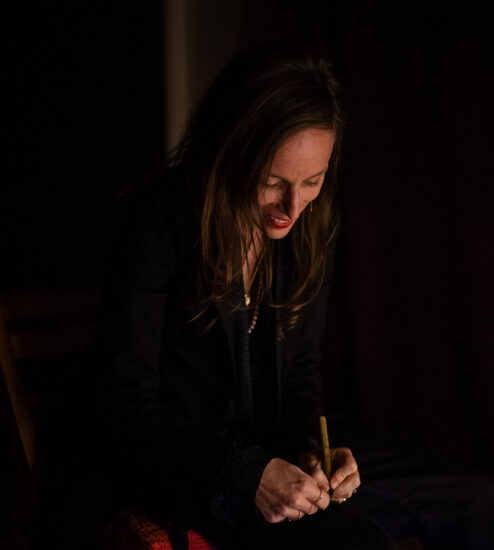 Ori Lenkinski is a choreographer, dramaturg, and arts journalist based in Tel Aviv. She is the founder and editor of Creative Writing and has written about dance and performance for publications including The Jerusalem Post, Dance Magazine, Haaretz, and The Huffington Post. Her choreographic work has been presented internationally across Europe, North America, and Asia.
אורי לנקינסקי היא כוריאוגרפית, דרמטורגית ועיתונאית, מייסדת ועורכת Creative Writing. היא כותבת על מחול ואמנויות הבמה מאז 2008, ופרסמה ב־The Jerusalem Post, Dance Magazine, Haaretz ובפרסומים בינלאומיים נוספים. יצירותיה הכוריאוגרפיות הוצגו בישראל, אירופה, צפון אמריקה ואסיה.