
התרשמות של יוליה פריידין מ׳הומסיק׳ מאת איריס ארז
*English follows
*Photos by Asya Skorik
שישי בצהריים, שעה 14:00. נכנסים לאולם של תיאטרון ענבל. האולם מלא עד אפס מקום.
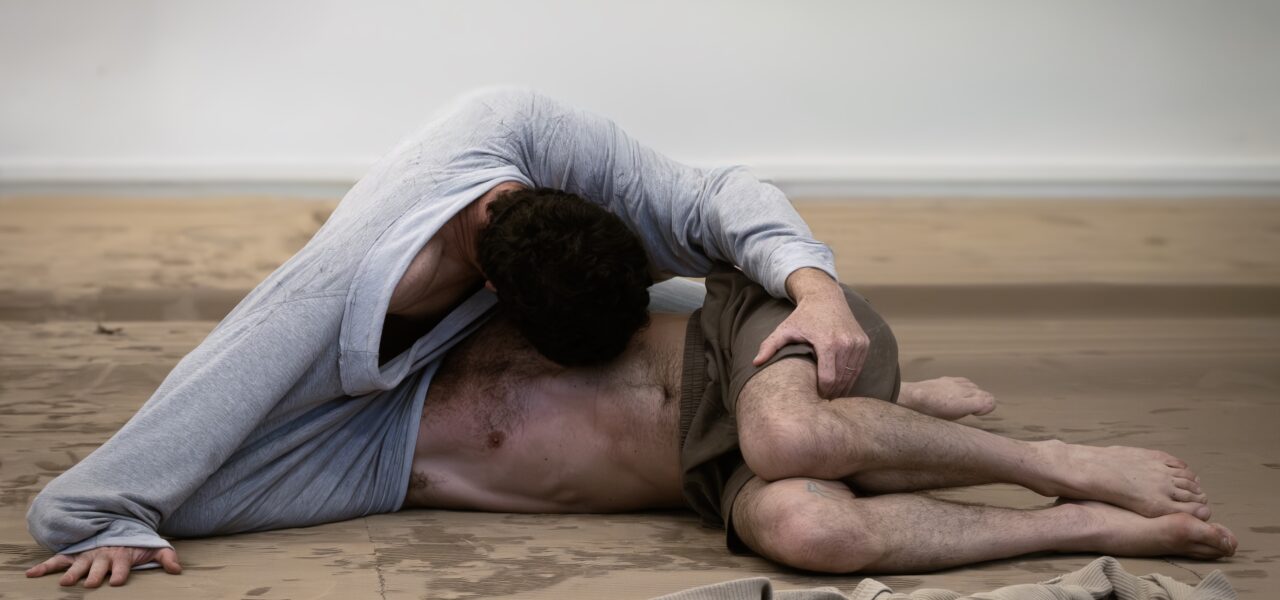
על הבמה פרוש קרטון גדול, שהופך בהדרגה למצע המרכזי של העבודה. בהתחלה הוא נראה כמו אדמה יציבה, אבל ככל שהמופע מתקדם הוא מתחיל לזוז, להיקרע, להשתנות ולהפוך למרחב חי שנרשמים עליו סימני הגוף. יש תנועה פנימית המבעבעת במה שאמור להיות יציב וחזק ולספק לנו תחושת קרקוע. יש עקבות על הקרטון, מסמנות דרכים שהלכו בהן. יש איזו מפת דרך, מפה של היסטוריה. זה מזכיר לי פרפורמנס של action painting, שבה תנועות מייצרות את הרישום על הנייר. הקרטון כמו ספר זכרונות הלוכד בתוכו רגעים של תנועה ומנציח אותה. הרקדנים זוחלים מתחתיו, משאירים עליו עקבות, קורעים ממנו חתיכות, מנסים לנגוס בו, לאכול אותו, מחליפים ביניהם בגדים וזהויות, ונמצאים כל הזמן במתח שבין קרבה למאבק. הבנים מתקוטטים ביניהם על פיסות הקרטון, בעוד שתמי נראית לי כמו אמא שמנסה לשמור על מה שנשאר.
Homesick הוא געגוע הביתה. העצב, תחושה אי הנחת והגעוגעים העזים שאדם מרגיש כשהוא נמצא רחוק מסביבתו המוכרת, ממשפחתו ומביתו. לפעמים מתרגמים את המילה גם כ”חולה בית”. געגוע כל כך חזק שהוא כבר מורגש בגוף ואינו נותן מנוח.
העבודה Homesick עוסקת בזהות הטעונה שיש במקום הזה שנקרא ארץ ישראל, הממוקמת בתוך המזרח התיכון הסוער. איריס בודקת דרך הגופים בתנועה את הקשר שלה למקום הזה, ואיזו ערגה או רצון וגעגוע לארץ ישראל אחרת, כמיהה.
למשהו שפעם היה, או אף פעם לא היה, ויש רצון עז שהוא יקרה.
אני תמיד בוחנת את המציאות, מהזהות האישית שלי, של ילדה שעלתה לארץ בגיל 7 ויש לה ערגה וגעגוע לתרבות הסובייטית ולנוף הספציפי של עצי ליבנה שנשארו בעבר, מול הזהות הישראלית שלי וההתמודדות עם החיים בארץ, שרוב הזמן מרגישים כמו ג’ונגל פרוע וחסר מעצורים.
כשאני מסתכלת על איריס ארז והאמנות שלה, בשבילי איריס מייצגת עבורי זהות ישראלית מאוד ברורה. היא נולדה וגדלה במקום הזה. איריס היא בהחלט חלק מתבנית נוף מולדתה, והנוף הזה בא לידי ביטוי בעבודה, גם מבחינת ויזואלית-חומרית, וגם מבחינת הדינמיקות שנוצרו בין הרקדנים. איריס אוהבת את המקום הזה, וניתן לראות את זה בתנועות פיוטיות ורכות של הרקדנים, העונג שלהם להתגלגל על הנוף כמו ילדים, תנועות ידיים רכות ומגששות, ומצד שני לאורך כל העבודה יש איזשהו חוסר שקט פנימי.
איריס חוזרת בעבודה הזאת לקאסט המקורי שהופיע את העבודה בשנת 2010: תמי לבוביץ, אופיר יודילביץ’ ואסף אהרונסון.
אז הם היו בשנות ה-20 לחייהם, ועכשיו הם הגיעו בכבוד למועדון גיל ה-40. הגופים שלהם עברו שינויים, אבל בהופעה סימני הגיל לא ניכרו עליהם. הם זזו, התגלגלו, התקוטטו, והיו בפיזיות שלהם כאילו לא עברו 16 שנה מאז הפעם הראשונה שהם עשו את זה.
חשבתי על מצב של גירוי או אלרגיה בעור, שאנחנו ממש רוצים לגרד, ואומרים לנו שלא כדאי כי זה יזיק לריפוי, ואנחנו בכל זאת מגרדים ומתעסקים בזה כי אנחנו לא יכולים אחרת.
הגירוד והפצעים חזקים מההיגיון. ככה הרגשתי לאורך המופע. שיש כל הזמן חוסר שקט.
רצון להנכיח את הגוף של הרקדנים דרך רישום של הקונטור שלו, להסתתר מתחת לשכבת הקרקע, להתגלגל בתוכה,
או לקרוע אותה לגזרים, כי אנחנו כל כך אוהבים אותה, וגם שונאים בו זמנית כי היא מעצבנת ומביאה לנו את הסעיף.
האנשים יכולים פה להיות מעצבנים, עצבניים, וחסרי סבלנות, התנהגות ברברית, אלימה, ומצד שני גם רכים, וטובים, ואכפתיים, ודואגים אחד לשני באמת. רק תבקשו עזרה, ומיד יגיעו נשמות טובות לתת יד ולפתוח את הלב.
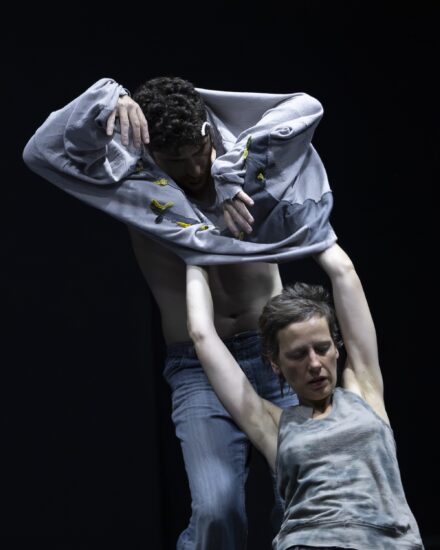 אחד הדברים שנשארו איתי הוא הדרך שבה הרקדנים לוקחים אחד מהשני בגדים. הם לא מורידים חולצה כמו שאנחנו רגילים או כמו שאנחנו מורידים אותה מהילדים שלנו. הם נכנסים לתוך החולצה של האחר, ורק אז פושטים אותה ממנו. כאילו הם לובשים לרגע גם את הגוף שלו. הם משאילים זהויות. מחליפים זהויות.
יש תחושה של חמקמקות כל הזמן. משהו שאי אפשר להצביע עליו בבירור, או לאחוז בו. הכל שברירי ויכול להתפרק בין רגע. והוא אכן התפרק לנו.
לקראת סוף ההופעה, תמי אוספת אליה חתיכת קרטון, עוטפת את עצמה בה כמו בחצאית גדולה או שמיכה ויוצאת איתה מהחלל, כאילו היא מנסה להציל משהו. לאט לאט הקרטון הופך עבורי למטאפורה של פיסת אדמה: משהו שכולם רוצים להיות בתוכו, לנגוס בחתיכה ממנו ועדיף כמה שיותר גדולה, להחזיק בו או לקחת ממנו חלק. בסוף כל אחד יוצא מהחלל עם חתיכה משלו, והמופע ממשיך החוצה, כאילו השאלה על שייכות, טריטוריה וזהות כבר לא נשארת רק בתוך הבמה.
כמו שאני מבינה את הרעיון של העבודה, איריס מתייחסת לגוף הפיזי שלנו, שאנחנו חיים בו את חיינו, והגוף הזה משמש לנו בית, הגנה, תקשורת עם העולם,
ויש את הארץ שאנחנו חיים בה, בין אם נולדנו בתוכה, או הגענו אליה, ואנחנו ממשיכים להתקיים בתוכה, והארץ הזאת מלאת שסעים, מריבות, מלחמות, בעבוע פנימי, חוסר שקט ויש התמודדות אינסופית עם המפגש של הגוף הפיזי שלנו ששואף לחיות בשקט, שלווה, שלום, ועם הנוף החסר שקט מסביב, ועם השכנים שלנו וגם במריבות ביננו לבין עצמנו.
איריס מגלמת את היחסים האלו דרך תנועה פיוטית, שימוש בחומרים פלסטיים בדמות קרטון ופחם ובגדים, פרפורמנס, מוסיקה מדוייקת ונוגעת ורקדנים מיומנים.
כל מה שאיריס ארז נוגעת בו הופך לזהב, היא אלכימאית של חומרים.
חשבתי על השימוש בחומר פלסטי בעבודה של איריס. כמו הקרטון שנמצא כאן, שזאת בעצם עבודה משנת 2010, ואז הוא המשיך גם לעבודה האחרונה שלה “בקרבנו” ביחד עם בן זוגה. יש שם גם שימוש בקרטון, כאלמנט פיסולי, אלמנט פרפורמטיבי.
המופע יוצא החוצה, למטה, לקומת הכניסה, ותמי ואופיר שוכבים מתחת לעץ האקליפטוס, מתחת לקרטון, ואסף והקרטון נמצאים ליד הבאר.
וככה נגמר המופע.
הקהל עומד מסביב ומוחא כפיים בהתלהבות, וכולנו יודעים שהמופע הזה ילך איתנו הביתה, לתוך הסופ”ש,
לתוך המחשבות, כי אנחנו בעצם חיים אותו בתוכנו כל יום מחדש.
איריס ארז הציגה את Homesick ב31.7.2026 כחלק מפסטיבל תל אביב דאנס של מרכז סוזן דלל.
Yulia Frydin’s Thoughts on Homesick by Iris Erez
Friday, 2:00 PM. We enter the auditorium at Inbal Theatre. The house is completely full.
Spread across the stage is a large sheet of cardboard that gradually becomes the central surface of the work. At first it resembles solid ground, but as the performance unfolds it begins to shift, tear, transform, and become a living landscape upon which the traces of bodies are inscribed. There is an inner movement bubbling beneath something that is supposed to be stable, solid, and grounding. Footprints remain on the cardboard, marking paths that have been walked. It becomes a kind of map, a map of history. It reminds me of Action Painting, where movement itself creates the drawing on the canvas. The cardboard becomes a memory book, capturing moments of movement and preserving them. The dancers crawl beneath it, leave their marks upon it, tear pieces from it, try to bite into it, eat it, exchange clothes and identities, and exist in a constant tension between intimacy and struggle. The two men wrestle over pieces of cardboard, while Tammy appears to me like a mother trying to preserve what remains.
Homesick is the longing for home. The sadness, unease, and profound yearning a person feels when they are far from familiar surroundings, from family, from home. Sometimes the word is translated as “homesick” in the sense of becoming physically ill from longing. A longing so powerful that it is felt in the body and refuses to let go.
Homesick explores the charged identity of this place called the Land of Israel, situated within the turbulent Middle East. Through moving bodies, Iris examines her relationship to this place, the longing she feels for it, and perhaps also for another version of Israel. A yearning for something that once existed, or perhaps never existed at all, yet one desperately wishes could.
I always look at reality through my own identity, as a child who immigrated to Israel at the age of seven. I carry with me a longing for Soviet culture and for the specific landscape of birch trees that belongs to my past, alongside my Israeli identity and the experience of living here, where life often feels like a wild, untamed jungle.
When I think about Iris Erez and her work, she represents a distinctly Israeli identity. She was born and raised here. She is unmistakably part of the landscape that shaped her, and that landscape is present throughout the work, both in its visual materiality and in the dynamics created between the dancers. Iris loves this place, and you can see it in the dancers’ gentle, poetic movement, in the pleasure they take in rolling across the ground like children, in their soft, searching hands. Yet alongside this love there is an unmistakable undercurrent of unrest.
In this work, Iris reunites the original cast from its 2010 premiere: Tammy Leibovitz, Ofir Yudilevitch, and Assaf Aharonson. Back then they were in their twenties. Today they have proudly joined the forty-something club. Their bodies have changed, yet onstage almost no trace of age is visible. They roll, wrestle, and move together as though sixteen years have never passed.
I kept thinking about the feeling of an itch or an allergic reaction. We desperately want to scratch it. People tell us not to because it will only make the wound worse. Yet we scratch anyway because we simply can’t help ourselves. The itch is stronger than reason. That is how the entire performance felt to me. A constant state of restlessness.
There is a desire to make the dancers’ bodies visible through the tracing of their contours, to disappear beneath the surface of the earth, to roll inside it, or tear it to pieces because we love it so much and hate it at the same time. Because it drives us crazy.
People here can be irritating, impatient, short-tempered. Their behavior can be coarse, even violent. And at the same time they can be kind, generous, deeply caring, ready to help one another at a moment’s notice. All you have to do is ask, and good souls immediately appear with open hands and open hearts.
One of the things that stayed with me most was the way the dancers take clothes from one another. They don’t remove a shirt in the ordinary way, or the way we take a shirt off our children. They step inside another person’s shirt first, and only then remove it from their body. It is as though, for a brief moment, they also put on that person’s body. They borrow identities. Exchange identities.
There is a constant feeling of elusiveness. Something impossible to point to directly or fully grasp. Everything feels fragile, capable of falling apart in an instant. And eventually, it does.
Toward the end of the performance, Tammy gathers a piece of cardboard around herself like a large skirt or blanket and walks away with it, as though trying to save something. Slowly the cardboard becomes, for me, a metaphor for a piece of land. Something everyone wants to belong to, to bite into, preferably taking as large a piece as possible, to possess or claim as their own. In the end, each performer leaves with a fragment of cardboard, and the performance itself continues outside, as though questions of belonging, territory, and identity can no longer remain confined to the stage.
As I understand it, Homesick is about two homes. The physical body we inhabit, which shelters us, protects us, and allows us to communicate with the world, and the country we inhabit, whether we were born there or arrived later. A country full of fractures, conflict, war, internal unrest, and endless negotiations between our bodies’ desire for peace and the unsettled landscape around us, with our neighbors and with ourselves.
Iris embodies these relationships through poetic movement, the use of cardboard, charcoal, and clothing as sculptural materials, performance, precise and deeply affecting music, and a cast of extraordinary dancers.
Everything Iris Erez touches turns to gold. She is an alchemist of materials.
I found myself thinking about her use of sculptural materials. The cardboard that appears here, in a work first created in 2010, returns again in her more recent piece Among Us, created together with her partner. There, too, cardboard functions both as sculptural object and performative material.
The performance leaves the theater and continues downstairs in the entrance courtyard. Tammy and Ofir lie beneath the eucalyptus tree, covered by cardboard, while Assaf and his piece of cardboard settle beside the old well.
And that is how the performance ends.
The audience stands around them, applauding enthusiastically. We all know this performance will follow us home, into the weekend, into our thoughts, because in many ways we are already living it every single day.
Iris Erez presented ‘Homesick’ on July 31, 2026 as part of the Suzanne Dellal Centre’s Tel Aviv Dance Festival.
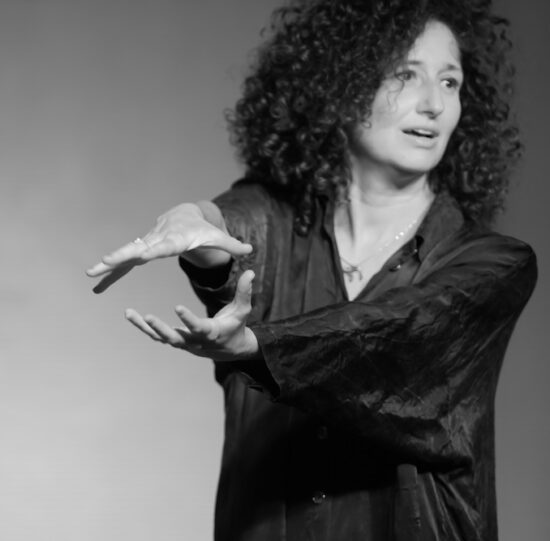
יוליה פריידין היא אמנית רב־תחומית, כוריאוגרפית, פרפורמרית, כותבת ואמנית חזותית. יצירתה משלבת תנועה, טקסט, הומור והשתתפות קהל, ועוסקת בהגירה, אימהות, טקסיות וחיי היומיום.
Yulia Frydin is a multidisciplinary artist, choreographer, performer, writer, and visual artist. Her performances combine movement, text, humor, and audience participation while exploring migration, motherhood, ritual, and everyday life through a distinctly personal lens.