
Heather DeAtley’s Musings on ‘Alma Galbi’ by Adva Yermiyahu
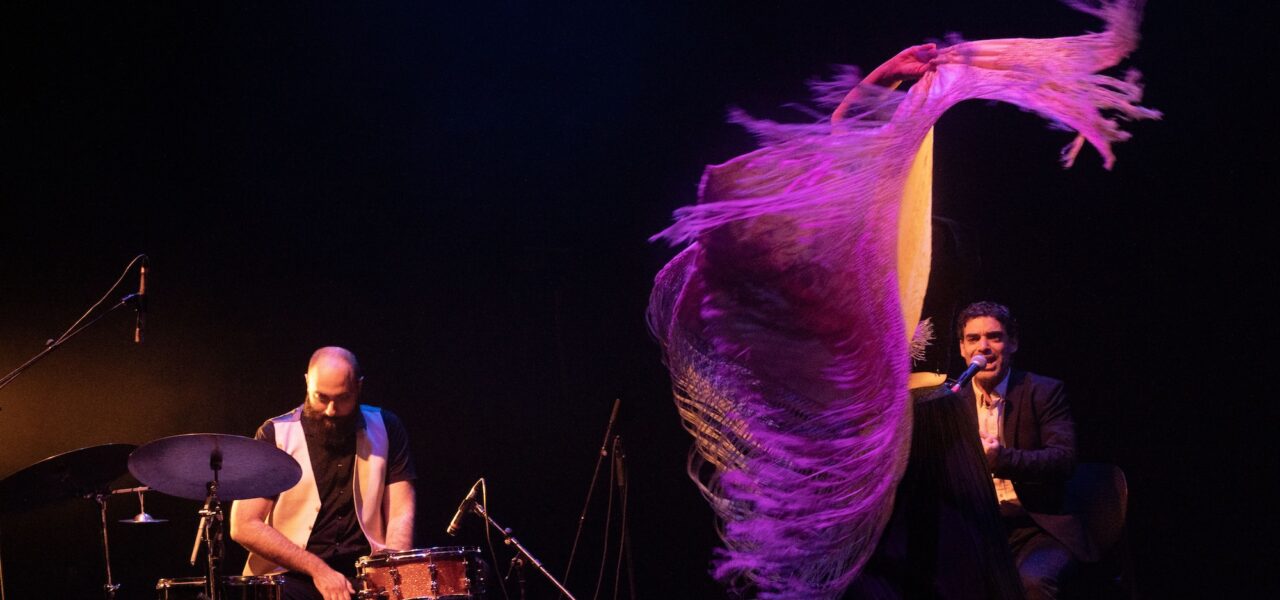
*Photo by Dan Ben Ari
I have been deep in the throes of dancing with Grief the last nearly year and a half. It has been churning me into unrecognizable expressions of myself and who I perceive myself to be in the world. I am clay being pounded by the elements, every movement stripping away what is no longer true.
Grief is cathartic. Deeply somatic. It is an ongoing freefall with no seeming end. The waves of it can hold tsunami-like power that overwhelms and overhauls everything you knew about yourself. It had started in the center of my body, moving slowly to the periphery in jolts of electricity and undulations of ache. But Grief took time to fully arrive to my feet, to my soles.
That milestone finally occurred last month, as I sat in the audience of Adva Yermiyahu’s stunning “Alma Galbi,” a moving tribute to iconic Israeli singer Ofra Haza and her Yemeni-Jewish vocal heritage roots woven through the potent language of flamenco. An epic evening fusing rich movement and sound cultures across the Mediterranean and Andalusia, Alma Galbi ushered in a new level of connection to and expression of my Grief. On more than one occasion, tears fell and my broken heart opened again. And I just let the sounds of stamping feet, cante (the vocal art of flamenco), exquisite guitar, and ancestral movement metabolize what had no words, only feeling.
This is the power of flamenco, an art form I have been connected to in some shape or form since first seeing a creation by Adva Yermiyahu back in 2018/19. I have admired her passion and creativity, especially in creating innovative collaborations and fusion experiences. That said, there was always something elusive about flamenco for me. Elements of its power, heritage, tradition seemed buried within a secret language encoded in movement, sound, snaps, claps, rhythm, and “ole”s!
Until Alma Galbi.
That night at the Container in the Menashe complex, what had eluded me became a deeply felt sense, a knowing experienced through soma and sensation. The interplay of rhythm, singing, cultural fusion and storytelling through movement landed deep in the marrow of my bones. And I finally arrived at some understanding of this art form. Flamenco embodies and expresses all of the paradoxes of this human experience; life and death, joy and sorrow, longing and lust…it’s all embedded within the zapateado (the dancers’ footwork). The symbiotic relationship unfolding in real time between the singer, El Cajon (percussive heart beat), La Guitara (percussive guitar played by the impressive and ever so generous Manuel Casas), and Palmas (handclapping), carried unique medicine. It melted my Grief, alchemized my sorrow.
In flamenco, Duende is the emotional surge that rises from the feet of the artist and evokes a visceral response from the audience. It is the magic that unfolds when an artist transcends perceived physical and cymatic limitations; an earthy expression of the Quantum field rising through the feet. Spanish Poet and playwright Federico Garcia Lorca described Duende best in his lecture “Theory and Play of the Duende”:
“The Duende climbs up inside you, from the soles of the feet.”
The evening began with Adva entering the stage with a large white shawl (manton). Moving elegantly and fluidly, the momentum evoked equal parts grace and strength. The first seeds of Duende had thus been planted.
Guest dancer Yael Tuchfeld entered the stage with a force of presence and power the great Carmen Amaya would have been proud of. There is an epic story about the legendary flamenco dancer, Carmen Amaya (known as “La Capitana”) and her birth into this world. Torrential rain and fierce storms enveloped the shanty beach town of Somorrostro, Spain. She was born in the dance of thunder and lightning, under a wagon, the story is told. Her origins carried the imprint of her powerful dancing and the rule breaking she would come to represent in the rich world of flamenco. Yael infused her movement with an imprint of Amaya’s style, continuing a dialogue over time and space through movement and reminding us that flamenco is a dynamic, living eco-system in constant conversation with itself and the world. The duets Adva and Yael shared throughout the evening brought these dynamic truths to life on stage so vividly. The dialogue that unfolded between these two powerful women invoked a sense of the depth within each movement.
The introduction of singer Tula Ben Ari carried a seismic and haunting frequency, amplified by her barefoot status that seemed to bring even more depth to the Duende that moved through her. Her Yemenite and Polish roots wove such depth into each song. From the first release of her voice, her power to transport us was evident. As she sang classic songs of Ofra Haza like Umetok Ha’or Ba’einayim and Anaphasa, the audience fell under the spell of flamenco rhythms invigorating Haza’s original tunes. Having learned Ofra Haza had been born in the Hatikva neighborhood of Tel Aviv, her origins, much like Amaya, were poetic and symbolic of her destiny to inspire Hope (Tikva) in a nation that adored and celebrated her embodiment of a rich cultural heritage.
Crimson skirts and dresses. Exquisite pairing of artists. Percussive rhythms expressed as if pulled from the center of the earth. A touch of cultural and collective nostalgia connected with a singing legend who shaped Israel. Everything about Adva Yermiyahu’s “Alma Galbi” evoked soulful nourishment,and a reminder that we carry the thunder, the lightning, and tsunamis within us. The artists of Alma Galbi embodied these truths as living expressions of what it means to be Human, to be fully alive to all that is. And still the Duende rises, through the artist’s feet and into ours.
Alma Yermiyahu presented ‘Alma Galbi’ on July 23, 2026 at The Container of Menashe Dance House.
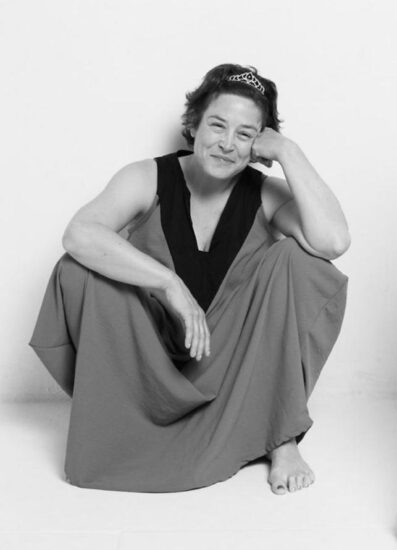
Heather DeAtley is a movement practitioner, writer, and former gymnast whose work bridges somatics, poetry, and performance. Drawing on the Ilan Lev Method, neuroscience, and embodied practice, she explores how movement shapes the way we experience ourselves and the world.