
רשמים של אפרת נחמה מ׳4 פנטזיות וקוף׳ מאת יוסי ברג ועודד גרף
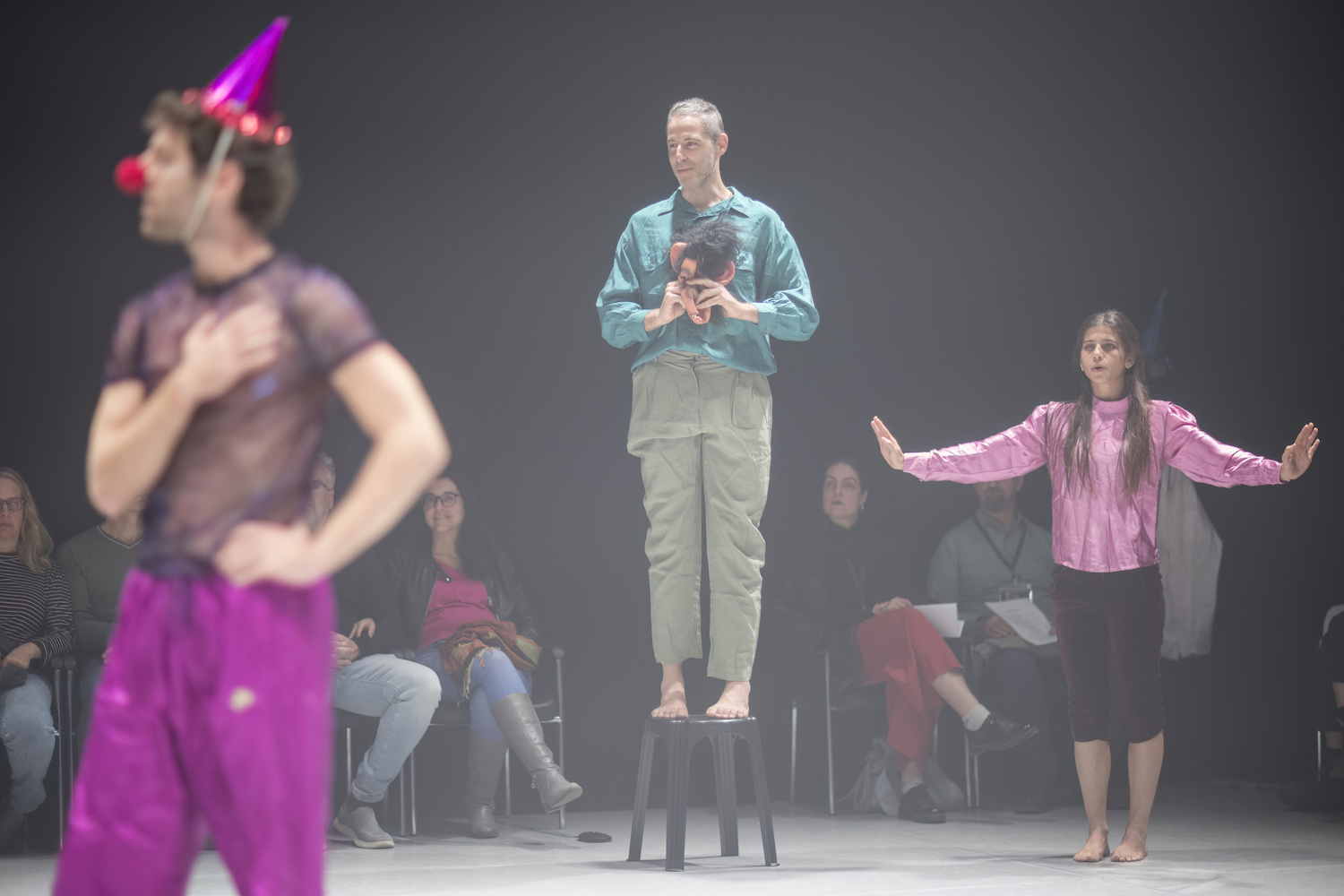
Photo by Vojtěch Brtnický
*English follows
לְעִתִּים
אוֹחֶזֶת בִּי עֶרְגָּה
כֹּה עַזָּה לַדְּבָרִים
שֶׁאֲנִי מִתְאַוָּה לְחַלֵּץ מֵחֲלוֹמוֹתַי
תְּמוּנוֹת הֲזוּיוֹת,
יְצוּרִים בְּהִירִים וּמְצֹעָפִים,
עוֹלָם סוּרֵאָלִיסְטִי
שֶׁתְּשׁוּקָה כַּבִּירָה רוֹחֶשֶׁת בּוֹ
אוֹרוֹת לוֹהֲטִים
עַל פְּנֵי תֵּאַטְרוֹן צְלָלִים
הַמְּשַׂחֲקִים בַּחֲשֵׁכָה,
רוּחוֹת מַמָּשִׁיּוֹת
הַנָּעוֹת וְנָדוֹת,
קְרֵבוֹת אֵלַי
מִבְּלִי גַּעַת,
מַבִּיטוֹת בִּי
כְּמוֹ רָצוּ לֶאֱהֹב.
–
(בטין מרגלית אמיר, מתוך: ‘כל חלומות העולם שוכנים בי’ תרגם מצרפתית: אבנר להב)
*
היצירה ‘4 פנטזיות וקוף’ נפתחת כאשר הקהל מוזמן לשבת בארבע צלעות הבמה. זה אחר זה מתיישבים המוזמנים וכך בונים בגופם את החלל הריק אל תוכו תפסע עוד רגע היצירה.
באויר מתנוסס מתח של ציפייה שכן האורות דלוקים והרקדנים נראים בצדי הבמה כדמויות קפואות. בלבושם התיאטרלי והצבעוני, ספק יצאו מסיפור אגדה או מסרט פנטזיה כ “תאטרון צללים המשחקים בחשיכה…”
כבר בפתיחה זו מיטיבים היוצרים, גרף וברג, לדייק את מה שיתברר כגרעין היצירה. הם פוערים מרחב ריק, פיסי ותודעתי, מהול בבדידות ובשותפות גורל, עטוף בנוכחות המחבקת של הקהל, והסוריאליסטית של הרקדנים הקפואים הנטמעים לצידו. מרחב המדגיש את החסר אך בה בעת מצהיר: הריק הוא המלא.
במבט חוקר מתגלות דמויות הרקדנים: לאחת גלימת כיפה אדומה, השניה עם כתר על ראשה, השלישי ישוב בצד הבמה בכובע של ליצן ובאף אדום, והרביעי אוחז בידו מסכת קוף אדם והוא זקוף ומחוייך. חיוכו כמו מספר כי הוא רואה איזה דבר נפלא שאנו לא מצליחים להבחין בו עדיין.
מראה הדמויות וההמתנה לפעילות שלהן מתחילה לפתוח מרחב תודעתי למניפת אפשרויות ההתרחשות.
לפתע הרקדנים מתחילים לדבר אל הקהל. הם שואלים שאלות כמו: מה הסיבה שאנו הולכים לתאטרון? ועונים בעצמם: “זו ההנאה שבלראות מחול” וגם “זה בכדי למצוא את הקול האישי שלי” ואחר מוסיפים “זה כדי לא להרגיש לבד”.
בשפה תנועתית בהירה ומדוייקת הרקדנים ניגשים לחלל וחוצים אותו, נוגעים ומשחקים בו, מתנסים בו במשחקיות.
הרקדן הרביעי עוטה את מסיכת הקוף שבידו וקופא בפוזיציות ספק אנושיות ספק ריקודיות. נוכחות הדימוי של קוף האדם מהתלת בצופים ומגרה שאלות הנוגעות לעצם קיומנו: מי אנו? במה כוחנו? האם בתנועה? במחשבה? בדיבור? במעשה? האם מיוחדים אנו או שאיננו שונים מן הקוף? ואולי הדימוי רומז שכוחנו הוא ביצירה, ביכולת להרכיב דימויים מופשטים, לחברם ולפרקם?
הרקדנים מוסיפים ומכריזים: “אני הרקדן שלכם הערב…הכל יקרה בזמן הנכון אם רק תאמינו… ברוכים הבאים לחלל הריק!”
הם נעים במרחב, יוצאים ונכנסים לתוכו שוב ושוב.
בצדי הבמה הכיסאות של הרקדנים משמשים להם נקודות מוצא או מנוחה, לסירוגין.
מידי פעם הם מכניסים את הכיסאות ומשחקים עם המיקומים שלהם על הבמה, אולי רוצים להטיף על ההכרח לחפש את המקום כל פעם מחדש, לשנות, להשתנות, למצוא נקודות פתיחה חדשות, להעז.
לפתע הם יוצאים מהמרחב ואוחזים את ידיהם של היושבים בארבע צלעות המרובע. נוצרת תחושה של חיבור. הם אומרים: “אני רואה אנשים שלא רוצים להיות לבד”.
אחד הרקדנים מתחיל להשתעשע בטקסט אסוציאטיבי ולרקוד אל תוכו את אישיותו, את פחדיו ותשוקותיו. המילים נעות בין אסוציאציות רנדומליות כמו “אני יושב ואוכל אננס על חוף הים” לבין “אני רקדן טוב, אני מצליח להחזיק את הרגל למעלה גם מאה שנה…”. סביבו הרקדנים הנוספים צועדים ונעים עם אביזרים רנדומליים כמו מסיכת סיף ומשוט. המוח לא מצליח לעשות את ההקשר. מהו הרגע בו השכל ירפה? האם נאפשר לתחושת המשחק להשתלט ולייצר מרחב מותר? המשוט מתורגם על ידי אחד הרקדנים לתנועת חתירה על רצפת הבמה, ורקדנית אחרת נראית שוחה בסלואו מושן. אחד הרקדנים אומר: ” אני רואה סירה, היא לוקחת אותי החוצה מכאן”. ולשבריר שנייה כולנו שטים איתה הלאה ורחוק, צוללים במי התודעה האי ממשית.
בהדרגה, הפעולה הפיזית נסוגה. הרקדנים מפנים את מרכז הבמה, והחלל נותר כמעט ריק מתנועה, אך טעון במילים ובהצהרות עתידיות, ספק הבטחות ספק בדיות. הטקסט אינו מתאר את מה שמתרחש, אלא מייצר אפשרויות: דברים שיקרו, שאולי לא יקרו לעולם. כך הופכת השפה עצמה לפעולה דרמטורגית, כזו שבונה עולמות בלי לממש אותם.
עם דעיכת האור והעמקת האפלה, משתנה אופן ההתבוננות. דימויים גופניים קצרים ומקוטעים צפים ונעלמים, והמוזיקה דוחפת את התודעה אל מעבר למה שניתן לאחיזה חזותית ברורה. המבט נאלץ להרפות, והדמיון תופס את מקומו ככוח המארגן של החוויה. זהו שלב שבו המופע אינו מבקש הבנה, אלא כניסה למצב תודעתי: שהות בין מציאות לפנטזיה, בין נוכחות להיעלמות.
היצירה, על שלל האלמנטים שהיא מייצרת, מיטיבה לקחת אותנו למרחבים מדומיינים שנעים בין מציאות לפנטזיה, להתל בנו רצוא ושוב בין פיסות של תודעה נעלמות וחלומות בתוך עצמינו. באמצעות דימויים ויזואליים, שחלקם אף נותרים ללא שימוש, ודימויים טקסטואליים עשירים ופתוחים, מוצעת אפשרות לשוטט במרחב תת המודע. ישובים יחד, אנו מנסים לדלות פיסות מידע ולהבין על מה ולמה, אך הרצון והיכולת להבנה ממילא אבודים, כיוון שבסופו של דבר אנו נותרים כולנו מכורים לתחושה הנחלמת, המדומיינת, למרחב שבו הכל יכול לקרות ושהעיקר בו הוא שנאפשר לעצמינו לרקוד, להשתנות, לשחק, לחלום. ואולי רק כך לא נרגיש בודדים.
המשורר טד יוז מתאר בשירו ‘שועל המחשבה’ את תנועתו של השועל המתהלך בשלג בודד בלילה בקרחת יער:
רַכּוּת
חֹטֶם שׁוּעָל נוֹגֵעַ בְּעָלֶה, עָנָף;
וְהַתְּנוּעָה נוֹבַעַת לָהּ מִזּוּג עֵינָיו
–
מַטְבִּיעַ סִימָנִים בְּתוֹךְ
הַשֶּׁלֶג- –
הוּא מִתְנַהֵל
בְּגוּף חָלוּל שֶׁלֹּא חוֹשֵׁשׁ לַחֲצוֹת
קָרַחַת יַעַר-
בשיחה על שירו הוא אומר כי השועל שלו עדיף על השועל הרגיל, משום שהוא יחיה לנצח, ללא רעב וסבל.
כוחה של היצירה ‘4 פנטזיות וקוף’ הוא בכך שהיא מאפשרת ומייצרת מרחב מדומיין להתהלך בו ולו לכמה רגעים. הקהל מוזמן להלך בקרחת היער, והוא אינו חושש לחצותה, משום שהוא מובל נאמנה על ידי שלל הדימויים. כמו השועל הנצחי של יוז, היצירה ‘4 פנטזיות וקוף’ הופכת את הרגע החד פעמי לנצחי ואת תודעות הא.נשים שבתוכו למרחב מטויל ואינסופי.
יוסי ברג ועודד גרף הציגו את ׳4 פנטזיות וקוף׳ ב7.12.2025 במסגרת פסטיבל שבוע מחול הבינלאומי של מרכז מחול שלם.
Efrat Nehama’s Impressions from ‘4 Fantasies and a Monkey’ by Yossi Berg and Oded Graf
At times
a longing takes hold of me
so fierce for things
that I desire to extract from my dreams
hallucinatory images,
lucid and veiled creatures,
a surrealistic world
in which immense desire seethes,
blazing lights
across a theater of shadows
playing in darkness,
tangible spirits
that move and wander,
drawing close to me
without touching,
gazing at me
as though they wished to love.
(Bettine Margalit Amir, from All the Dreams of the World Reside Within Me, translated from French)
The work 4 Fantasies and a Monkey opens as the audience is invited to sit along the four sides of the stage. One by one, the guests take their seats, and in doing so construct with their bodies the empty space into which the piece will soon step.
A tension hangs in the air. The lights are on and the dancers are visible at the sides of the stage like frozen figures. In their theatrical, colorful costumes, they seem as though they have stepped out of a fairy tale or a fantasy film, like a theater of shadows playing in the dark.
Already in this opening, the creators, Graf and Berg, precisely articulate what will later be revealed as the core of the work. They open up an empty space, both physical and mental, infused with loneliness and shared fate, wrapped in the embracing presence of the audience and the surreality of the frozen dancers blending in alongside them. It is a space that emphasizes absence while simultaneously declaring that emptiness is fullness.
Upon closer inspection, the dancers’ figures emerge. One wears a Little Red Riding Hood cloak, the second has a crown on her head, the third sits at the side of the stage wearing a clown’s hat and a red nose, and the fourth holds a human monkey mask in his hand, standing upright and smiling. His smile seems to suggest that he sees something wonderful that we are not yet able to perceive.
The appearance of the figures and the waiting for their activity begins to open a mental space for a spectrum of possibilities.
Suddenly the dancers begin to speak to the audience. They ask questions such as why we go to the theater and then answer themselves. It is the pleasure of watching dance. It is to find my personal voice. And another adds it is so as not to feel alone.
Through a clear and precise movement language, the dancers approach the space and cross it, touching it and playing with it, experimenting with it playfully.
The fourth dancer puts on the monkey mask he holds and freezes in poses that are at once human and dance-like. The presence of the ape-man image teases the viewers and provokes questions about our very existence. Who are we? Where does our power lie? In movement? In thought? In speech? In action? Are we special or are we no different from the monkey? Or perhaps the image hints that our power lies in creation, in the ability to assemble abstract images, to connect them and dismantle them.
The dancers continue and declare: I am your dancer tonight. Everything will happen at the right time if you just believe. Welcome to the empty space.
They move through the space, exiting and reentering it again and again.
At the sides of the stage, the dancers’ chairs serve alternately as points of departure or rest.
From time to time they bring the chairs into the space and play with their placement onstage, perhaps wishing to preach the necessity of searching for one’s place anew each time, to change, to transform, to find new points of beginning, to dare.
Suddenly they leave the space and take the hands of those seated along the four sides of the square. A sense of connection is created. They say: I see people who do not want to be alone.
One of the dancers begins to play with associative text and dances his personality, fears, and desires into it. The words move between random associations such as I am sitting and eating pineapple on the beach and I am a good dancer, I can hold my leg up even for a hundred years. Around him, the other dancers walk and move with random props such as a fencing mask and a paddle. The mind cannot form a connection. At what moment will reason let go. Will we allow the sense of play to take over and create a permissive space. The paddle is translated by one dancer into a rowing motion along the stage floor, while another dancer appears to swim in slow motion. One dancer says: I see a boat, it is taking me out of here. And for a split second we all sail with it onward and away, diving into the unreal waters of consciousness.
Gradually, the physical action recedes. The dancers clear the center of the stage, and the space remains almost empty of movement, yet charged with words and future declarations, part promise, part fabrication. The text does not describe what is happening but rather generates possibilities, things that will happen, that may never happen at all. Thus language itself becomes a dramaturgical action, one that builds worlds without realizing them.
As the light fades and the darkness deepens, the mode of observation changes. Short, fragmented bodily images surface and disappear, and the music pushes consciousness beyond what can be grasped visually with clarity. The gaze is forced to let go, and imagination takes its place as the organizing force of the experience. This is a stage in which the performance does not seek understanding, but entry into a state of consciousness, a lingering between reality and fantasy, between presence and disappearance.
The work, with all the elements it generates, succeeds in taking us into imagined spaces that move between reality and fantasy, teasing us back and forth between fragments of vanishing consciousness and dreams within ourselves. Through visual images, some of which remain unused, and rich, open textual images, an opportunity is offered to wander through the subconscious. Sitting together, we attempt to extract bits of information and understand what and why, yet the desire and ability to understand are in any case lost, since ultimately we all remain addicted to the dreamlike sensation, the imagined one, to the space in which anything can happen and whose essence lies in allowing ourselves to dance, to change, to play, to dream. And perhaps only in this way do we not feel alone.
The poet Ted Hughes describes in his poem The Thought Fox the movement of the fox walking alone in the snow at night in a forest clearing:
Softness
the fox’s nose touches leaf, branch
and the movement arises from the fusion of its eyes
imprinting marks within the snow
it moves about
in a hollow body unafraid to cross
a forest clearing
In speaking about his poem, he says that his fox is preferable to the ordinary fox, because it will live forever, without hunger or suffering.
The power of the work 4 Fantasies and a Monkey lies in its ability to allow and create an imagined space to wander through, even if only for a few moments. The audience is invited to walk through the forest clearing, and it does not fear crossing it, because it is faithfully guided by a multitude of images. Like Hughes’s eternal fox, 4 Fantasies and a Monkey turns the one-time moment into the eternal, and the human consciousnesses within it into a walkable, infinite space.
Yossi Berg and Oded Graf presented ‘4 Fantasies and a Monkey’ on December 7, 2025 as part of Machol Shalem Dance House’s Jerusalem International Dance Week.
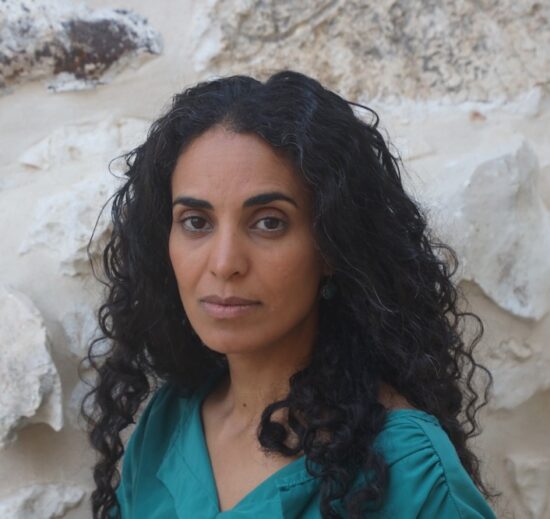 אפרת נחמה- כוריאוגרפית, משוררת, אמנית פרפורמנס, דוקטורנטית ומרצה.
יוצרת, חוקרת ומגישה בשאלה על החיבורים המתחוללים בין השפה המילולית לתנועתית ובין שירה למחול.
עבודות שירה ומחול עלו בין היתר במוזיאון ישראל, תיאטרון ירושלים, מחול שלם, בית טיכו, גלריה אלפרד, פסטיבל מנופים, פסטיבל ירושלים לאמנויות, כנס מחול באריזונה, culture בוסטון ארה”ב.
ספרי שיריה שראו אור: בשרירים רפויים (2019), הילד/הילדה ( 2021).