
ב׳מוזר ב-26׳ הכוריאוגרפית נעה דר מוצאת קלות בעול החזרה הנצחית
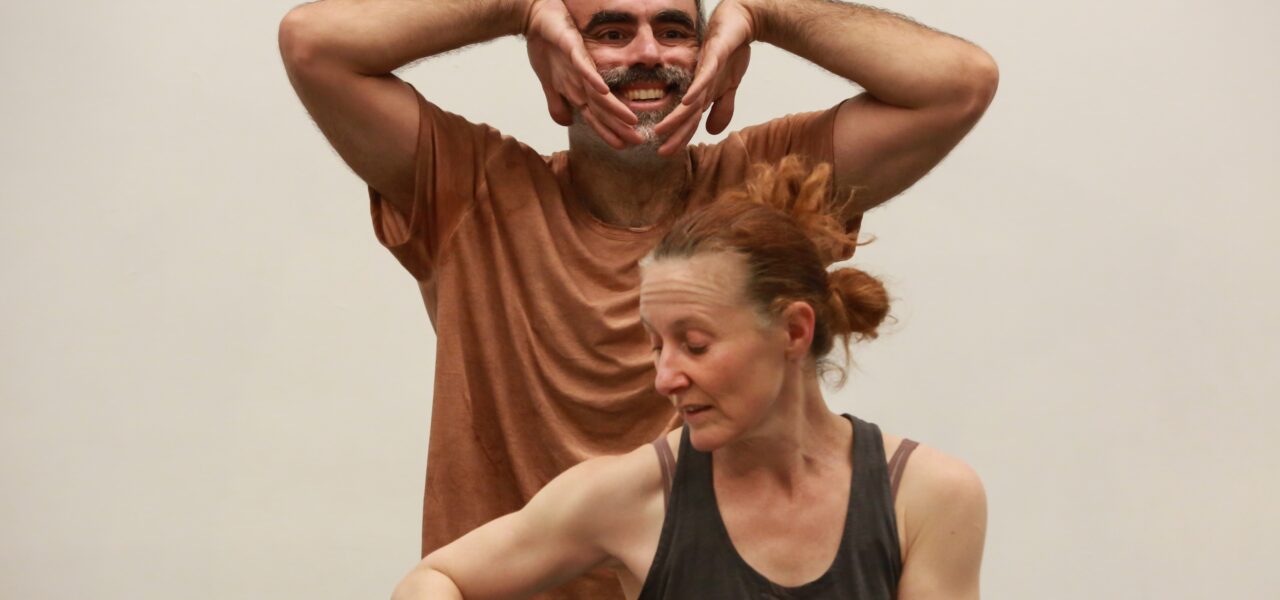
*photo by Tamar Lamm
*English follows
מאת ג’וי ברנרד
חם מדי בחוץ. בפנים נעים. שמש רכה מלטפת את דפנות הסטודיו. לפניי יושבת אישה גבוהה, וכדי להיטיב לראות אני נשענת קדימה, לפעמים כמעט עומדת. מיכל מתגלגלת על הרצפה במהירות, והצלפות הראש שלה נרשמות בי כמו משיכות מכחול של צבע אדום לוהט, בגוון סרט הטול שלראשה. במרחק שני מושבים מהאישה הגבוהה יושב ילד, מרותק לאורך כל המופע. לפרקים נדמה שמשה מכוון את כל הווייתו אל הילד הזה, שמחייך במבוכה. אני תוהה אם הוא בנו או ילד זר, ותוך כך חושבת שילדים הם, כפי שכתב עמיחי: “משהו אחר. ילד מתעורר אחר הצהריים ומיד מלא מילים. ילד הוא טיל לתוך הדורות הבאים… ילד מציל ממוות”.
הרגעים האינטימיים הללו נרשמו בי בתחילת החודש, כשצפיתי ביצירה “מוזר ב-26” שהציגה הכוריאוגרפית נעה דר בסטודיו אורה שבמרכז סוזן דלל. העבודה, דואט שיצרה דר עבור ובשיתוף הרקדנים משה שכטר אבשלום ומיכל מועלם, היא יצירת מחול עכשווית המתכתבת ישירות עם עבודה שהעלתה דר בבכורה בפסטיבל “הרמת מסך” בשנת 1999, ונקראה בפשטות: “מוזר”.
החוויה הזו בסטודיו, המפגישה באופן בלתי אמצעי את הגוף הנע בהווה עם שרידי עברו הנמוג, הזכירה לי את הדילמה הפותחת את אחד הספרים שאני מוצאת את עצמי חוזרת אליהם שוב ושוב,”הקלות הבלתי נסבלת של הקיום” מאת מילן קונדרה. כבר בתחילת ספרו, הסופר הצ’כי-צרפתי מפגיש את קוראיו עם סוגייה פילוסופית מורכבת: רעיון החזרה הנצחית. אילו חיינו היו חוזרים על עצמם שוב ושוב במעגל סגור, איזה ערך היה לכל בחירה או תנועה שאנו עושים, הן פנימה, כלפי חיי הרוח שלנו, והן החוצה, במגעינו עם העולם?
“בעולם של חזרה נצחית”, הוא מכריז, “רובץ על כל תנועה כובד בלתי-נסבל של אחריות. זאת הסיבה שניטשה קרא לרעיון החזרה הנצחית ‘העול הכבד ביותר’. אך אם החזרה הנצחית היא אמנם העול הכבד ביותר, יכולים חיינו להצטייר לעומתו בכל קלותם הנפלאה. אך האמנם הכובד נורא כל כך והקלות נהדרת?”
השאלה הזו דומיננטית במיוחד בתגובתה הכוריאוגרפית של דר ליצירת העבר שלה, אשר עולה כעת כחלק מתוכנית הרזידנסי “שישי באורה” של סוזן דלל: תוכנית חדשה המזמינה כוריאוגרפים להציג פרשנות עכשווית למופעי עבר שלהם שנוצרו בין 1990 ל-2015.
‘דומה לחיים, כמו שירה’
התיאורטיקן אנדרה לפקי משתמש במושג Will to re-enact (“הרצון לשחזר”) כדי להוכיח שהחזרה לריקודי עבר אינה פעולת שימור פסיבית, אלא מעשה אקטיבי המבקש להוליד מתוך החזרה דווקא את השונה והחדש — “חזרה מתוך הבדל”, כדבריו, המשחררת את ההיסטוריה ומניעה את הגוף “כארכיון טרנספורמטיבי ויצירתי ללא קץ”.
הגרסה העכשווית של דר מדגימה את “הרצון לשחזר” הלכה למעשה. היא אינה מנסה לייצר רפליקה משומרת בפורמלין של עבודתה מ-1999; היא לוקחת את שאלות היסוד של המופע המקורי, שעסק במנגנון הצפייה במחול ובשאלה מה עובר בראשו של הקהל, ומפשיטה אותן לכדי ריאקציה עכשווית, מינימליסטית וחשופה. בגרסה המקורית, הטקסט המושחז שכתב הבמאי והתסריטאי יוסף אל-דרור וביצע השחקן גל זייד, פנה אל הרקדנים (אסף שץ, עילאיה שליט ומיכל מועלם) וניסח את המחשבות של הצופים מול המחול כאמנות מופשטת ולא תמיד מפוענחת. בסטודיו אורה, דר בוחרת לוותר על המרחק התיאטרלי המוגן, ולהציב את השאלות הללו פנים אל פנים מול הקהל, באור יום מלא.
חלוקת התפקידים מדגישה את הבחירה הדרמטורגית בצמצום. מיכל מועלם, השרידה היחידה מהקאסט המקורי, נותרת כמעט נטולת קול מדובר; היא מפקירה את עצמה לשפת הגוף, לטונוס השרירי המורכב ולתנועה הטהורה. משה שכטר אבשלום נכנס אל הוואקום של ההווה, ומתפקד כמתווך בימתי. הוא זה שבונה את הגשר בין הפעולה התנועתית לבין קול הרפאים המוקלט של גל זייד המהדהד מהעבר, כשהוא תוהה: “כי מה שאת עושה שייך כאילו לאמנויות היותר מכובדות… נחשב, ככל שזה יותר מטאפורי, פחות קונקרטי… דומה לחיים… כמו שירה. והשירה, הרי, אומרים שהיא במצב רע, איזוטרית… כשאני חושב על זה, גם אני קצת במצב של השירה. תקופה לא כל כך טובה בשבילי עכשיו… בכלל, די הרבה דברים נמצאים במצב של השירה”.
 ‘כל תחושה היא מראש זיכרון’
ההצבה של שני הרקדנים מול הארכיון הזה חושפת פגיעות כפולה ונוגעת ללב. מועלם פגיעה בחשיפה הגופנית הטוטאלית שלה, בבשר הרוקד המונח לפנינו ללא הגנות; שכטר אבשלום פגיע ברגעים שבהם הוא נדרש לתפקד כפרפורמר שמתווך מילים, במהלכם הוא מודה שאינו שחקן בהכשרתו, תוהה בקול רם איך הכי כדאי להגיש את הטקסט, ומנכיח את הפער החשוף שבין הגוף למילה.
הפגיעות הזו מקבלת ביטוי כוריאוגרפי מדויק, מלא חמלה, ברצף הפעולות הקטנות: שכטר אבשלום עוטה את משקפיו כדי לקרוא את הטקסט של המופע המקורי מתוך הטלפון הנייד שלו, מוריד אותם כדי לחזור אל הריקוד, ואז מועלם היא זו שמחזירה לו אותם בעיצומה של התנועה. המחוות הללו הופכות את הדיאלוג ביניהם למערכת יחסים חיה של תלות ודאגה הדדית. בעד הוא מנכיח את מנגנון התיווך הפגיע, מועלם היא המנגנון הקינסתטי עצמו — חפה ממילים, זוכרת את היצירה כבר רבע מאה ומסרבת להצטמצם לכדי הגדרות של זמן.
דרך הפירוק הזה, דר מציבה מראה נוקבת המשקפת את מצבו העכשווי של המדיום. הבחירה להפשיט את המופע מרוב מרכיביו הקודמים מבהירה לנו כי המחול, כאמנות אפמרית המתפוגגת ברגע התרחשותה, מצוי תמיד ב”מצב של השירה”: בסכנת הכחדה מתמדת, איזוטרי, וחשוף שבעתיים בעידן מואץ ומנוכר. אולם, דווקא מתוך הסכנה הזו, “מוזר ב-26” הופך למניפסט של הישרדות. הבחירה להציג את הגוף המתבגר ללא פילטרים או תעתועי תאורה, מבהירה שאנחנו זקוקים למחול כעת יותר מתמיד. גם אם די הרבה דברים סביבנו נמצאים כרגע במצב של השירה, המחול הוא אחד ממצבי הקיום היחידים שבהם הגוף מתעמת עם העול של החזרה הנצחית, ומוצא בו רגע קל של חסד.
ביצירתה דר מוכיחה כי מחול טוב אולי מסובב את ראשו אחורה, כבתנועתו של אורפאוס, אך בעיקר מתמסר להווה בכל הנפת רגל ובכל טלטול ראש. הוא מכיר בכך ש”ההווה הטהור הוא התפתחות בלתי נתפסת של העבר, הנוגס בעתיד. האמת היא, שכל תחושה היא מראש זיכרון”, כפי שכתב הפילוסוף אנרי ברגסון. ברוח דבריו, אני חותמת את רשמיי עם יתר התחושות-שהפכו-זיכרונות שלי מאותו מופע, שהניע אותי בין היותי הצופה של אז לכותבת של עכשיו, השולחת את ידה אליכם, הקוראים שכבר נמצאים בעתיד:
משה ממסגר את פניו בזרועותיו הארוכות, יוצר מעין משולש, ומניע את ראשו בקו אופקי בין כפות ידיו ברצף תנועות זריזות והומוריסטיות שמזכירות לי מחול הודי. אני מחייכת. הילד צוחק. גל זייד אומר בהקלטה שכולנו בודדים, שהפרפורמנס קורא תיגר על הבדידות ומתרפק עליה בה-בעת; ושאנחנו הצופים רק רוצים שיניחו לנו להיות בודדים באופן ממוסד — לא הבדידות החורכת של המציאות אלא הבדידות של התיאטרון, זו שמאפשרת לנו להיעלם בחשכה. כאן לא חשוך. כאן השמש זורחת, והשיער של מיכל אדום כמו שמש שוקעת. התנועות שלה אינסופיות: אטטיוד ברגל שנמתחת עד הנצח, דוולופה מחוץ לזמן, תנועות כל כך יפות עד שהן מביאות אותי לידי בכי. הנה היא מבליחה בווידאו על הקיר האחורי, ושם היא בת עשרים ומשהו או שלושים וקצת, כלומר בגילי היום. אני מרגישה שאני מכירה אותה למרות שלא פגשתי אותה מעולם. אני שואלת את עצמי אם היכולת שלה לנוע בכזו רכות אך בטונוס שריר גבוה היא תולדה של היכרות ממושכת עם עצמה, עם גופה הרוקד, ועם האיכויות המנוגדות והמשלימות של החיים.
משה ומיכל של היום מתקרבים אל מיכל של אז. הם לא חוזרים על התנועות שלה מפעם. גם אם היו חוזרים על הרפרטואר ההוא עכשיו, הוא היה אחר. פתאום אני שואלת את עצמי: למה אנחנו, הרקדנים, קוראים לכל מפגש בסטודיו “חזרה”? הרי פעמים רבות אנחנו נפגשים בסטודיו כדי ליצור חומרים חדשים. החזרה לופתת אותנו, אי אפשר לחמוק ממנה. אבל נעה מוצאת קלות בעול החזרה הנצחית.
משה ומיכל נותנים ידיים, מתכופפים שפופים ומתרחקים ממיכל של אז, עד שהיא נעלמת. מיכל של היום טובלת באוויר.
אני מוחה את דמעותיי כדי להיטיב לראותה. אני רוצה לראות יותר רקדנים בני גילם על הבמה. אני רוצה יותר מופעים שחוגגים את הגוף החי, המשתנה, המתבגר, שמכירים בכך שאנחנו חיים, מחוללים ומתחוללים בתוך ובזכות הזמן. אני רוצה שהיא תתרפק על משה, אבל הם חולקים רצף קונטקט סוער: תנועות של מאבק להתאזן, ולצאת מאיזון. אי-שקט מתוזמן. מתחת לפני השטח, למרות המתח, הזיעה והנשימות המאומצות, יש סינכרון מוחלט. היא יודעת שהוא יתפוס אותה; הוא סומך על עצמו שיהיה שם עבורה, שידע לשאת את המשקל. הוא מניף אותה באוויר ומנחית אותה על הקרקע. טלטלה והקלה. כמו באהבה.
גל זייד אומר בהקלטה משהו חכם על אהבה. אני מצווה על עצמי לזכור את מילותיו כדי לצטט אותן בכתבה, אבל שוכחת בשנייה שהוא מסיים לדבר. כנראה אצטרך ללמוד אהבה בחיים עצמם. משה ומיכל מבצעים רצף תנועתי על הספסל בירכתי הסטודיו. פתאום הם חושפים את המנגנון הכוריאוגרפי, מדברים את הספירות שמכתיבות את קצב הריקוד. בהדרגה הם מחסירים אותן, ומבלי משים אני מוצאת את עצמי משננת בלב את הספרות החסרות, מנסה להדביק את הפער, לרשום בי את התנועות, כפי שקורה לי במופעים שמהפנטים אותי במיוחד.
פתאום הם רודפים זה אחר זו במעגל, רוקדים וואלס פוסט-מודרני ושרים בלי מילים. הם נראים מאושרים להיות כאן, לרקוד. משה מתיישב בשורה הראשונה, יחד עם הקהל, וצופה במיכל. היא מחייכת אליו, ולמרות שאני יודעת שזה מופע, שהחוקים של הפרפורמנס הם make-believe, אני מאמינה שהיא רוקדת רק בשבילו. הילד מסתכל על משה מסתכל על מיכל. אני חושבת שלרקוד בשביל מישהו זאת אהבה. אילו חיות מסתוריות, מוזרות, הן בני האדם.
נעה דר הציגה את ׳מוזר ב׳26׳ ב8.6.2026 בסטודיו אורה, מרכז סוזן דלל.
In “Strange in ‘26,” choreographer Noa Dar finds lightness in the burden of eternal return
By Joy Bernard
It is too hot outside. Inside, it is pleasant. Soft sunlight caresses the walls of the studio. Seated in front of me is a tall woman, and to see better I lean forward, at times almost rising from my seat. Michal rolls swiftly across the floor, and the whipping motions of her head register within me like brushstrokes of blazing red paint, the same shade of the tulle ribbon tied around her hair.
Two seats away from the tall woman sits a child, captivated throughout the performance. At moments, it seems that Moshe directs his entire being toward this child, who smiles shyly in return. I wonder whether he is his son or a stranger’s child, and in doing so I think that children are, as Yehuda Amichai wrote, “something else again. [A child] Wakes up in the afternoon and in an instant he’s full of words, in an instant he’s humming, in an instant warm, instant light, instant darkness. A child is a missile into the coming generations… a child delivers you from death.”
These intimate moments made their lasting impression on me earlier this month, as I watched Strange in ‘26, presented by choreographer Noa Dar at Studio Ora in the Suzanne Dellal Centre. The work, a duet created by Dar for and in collaboration with dancers Moshe Shechter Avshalom and Michal Mualem, is a contemporary dance piece that engages directly with an earlier work Dar premiered at the Curtain Up Festival in 1999, simply titled Strange.
This experience in the studio, bringing the moving body of the present into immediate contact with the fading traces of its own past, reminded me of the opening dilemma in one of the books I find myself returning to time and again: The Unbearable Lightness of Being by Milan Kundera. At the very beginning of his novel, the Czech-French writer confronts his readers with a complex philosophical conundrum: the idea of eternal return. If our lives were to repeat themselves over and over in a closed circle, what value would remain in every choice or movement we make, both inwardly, in our spiritual lives, and outwardly, in our encounters with the world?
“In the world of eternal return,” he declares, “the weight of unbearable responsibility lies heavy on every move we make. This is why Nietzsche called the idea of eternal return ‘the heaviest of burdens.’ If eternal return is the heaviest of burdens, then our lives can stand out against it in all their splendid lightness. But is heaviness truly deplorable and lightness splendid?”
This question is especially prominent in Dar’s choreographic response to her earlier work, now presented as part of Suzanne Dellal’s Friday at Ora residency program: a new initiative inviting choreographers to create contemporary interpretations of works they originally made between 1990 and 2015.
“Like life, like poetry”
The theorist André Lepecki uses the term “will to re-enact” in order to argue that returning to dances of the past is not an act of passive preservation, but rather an active gesture that seeks to generate difference and novelty precisely through repetition — “difference with repetition, repetition because of difference,” as he puts it — liberating history and setting the body in motion “as an endlessly creative, transformational archive” (from “The Body as Archive: Will to Re-enact and the Afterlives of Dances,” Dance Research Journal, vol. 42, 2010)
Dar’s contemporary version embodies this will to re-enact in practice. She does not attempt to produce a mummified, unchanged replica of her 1999 work. Instead, she takes the original performance’s fundamental questions — concerning the mechanisms of watching dance and what passes through the audience’s mind — and strips them down into a contemporary, minimalist and exposed reaction.
In the original version, the sharp text written by director and screenwriter Yosef El-Dror and performed by actor Gal Zaid addressed the dancers (Assaf Schatz, Ilaya Shalit and Michal Mualem), articulating the thoughts of spectators confronted with dance as an abstract and not always decipherable art form. At Studio Ora, Dar relinquishes the protective distance of theatricality and lets these questions resound with the audience members seated an arm’s length away from the performers, in broad daylight.
The distribution of roles underscores this dramaturgical emphasis on reduction. Michal Mualem, the only member of the original cast who performs in the current piece, remains almost entirely without spoken voice; she surrenders herself to body language, to complex muscular tonality and to pure movement. Moshe Shechter Avshalom fills in the void left by Mualem’s former co-performers, functioning as a stage mediator. He builds a bridge between physical action and the ghostly recorded voice of Gal Zaid echoing from the past, wondering aloud: “What you do belongs, supposedly, to the more respectable arts… The more metaphorical it is, the less concrete it becomes… Like life… like poetry. And poetry, they say, is in a bad state — esoteric… When I think about it, I’m also somewhat in the state of poetry. Not such a good period for me right now… Actually, quite a lot of things are in the state of poetry.”
“Every sensation is already memory”
Placing the two dancers opposite this archive elicits from them a dual vulnerability, one that is deeply moving. Mualem is vulnerable in her total corporeal exposure, in the dancing flesh laid before us without defenses. Shechter Avshalom is vulnerable in the moments when he is asked to function as a performer mediating words: he admits that he is not a trained actor, wonders aloud how best to deliver the text, and makes palpable the exposed gap between body and language.
This vulnerability finds precise and compassionate choreographic expression in a sequence of small gestures: Shechter Avshalom puts on his glasses in order to read the text of the original performance from his cellphone, removes them to return to dancing, and then Mualem hands them back to him in the midst of movement. These actions transform their dialogue into a living relationship of mutual dependence and care. Through him, the fragile mechanism of mediation is made visible, while Mualem is the kinesthetic mechanism itself — wordless, carrying the work in her body for a quarter of a century and refusing to be reduced by the limitations of time.
By opting for minimalism and stripping away most of the previous layers of the work, Dar makes a truthful, if harsh, statement about the condition of the medium itself. The decision to strip the performance bare makes clear that dance, as an ephemeral art that vanishes in the very moment of its occurrence, is always “in the state of poetry”: perpetually endangered, esoteric, doubly exposed in our accelerated and alienated age. Yet precisely due to dance’s jeopardized state, Strange in ‘26 becomes a manifesto of survival. The choice to present the aging body without filters or lighting illusions makes it clear that we need dance now more than ever. Even if many things around us are currently in the grim and unpopular state of poetry, dance remains one of the few states of being in which the body confronts the burden of eternal return and discovers within it a fleeting moment of grace.
In this work, Dar demonstrates that good dance may turn its head backward, like Orpheus, but above all it surrenders itself to the present in every lifting of a dancer’s leg and every tossing of her head. It recognizes that “the pure present is the invisible progress of the past gnawing into the future. The truth is that every sensation is already memory,” as philosopher Henri Bergson wrote.
In that spirit, I conclude these reflections with the rest of my sensations-that-became-memories from this performance. These impressions set me in motion too, between the state of spectator I was in then and the role of writer I inhabit now. A strange role that forever means I am reaching out to you, readers who are already in the future:
Moshe frames his face with his long arms, creating a kind of triangle, and moves his head horizontally between his palms in a sequence of quick, humorous gestures that remind me of Indian dance. I smile. The child laughs. In the recording, Gal Zaid says that we are all lonely, that performance both challenges loneliness and celebrates it at the same time; that we, the audience, simply wish to be allowed to be lonely in an institutionalized way — not the scorching loneliness of reality, but the loneliness of the theater, the kind that allows us to disappear into darkness.
Here, it is not dark. Here, the sun is shining, and Michal’s hair is a blazing red, the shade of a setting sun. Her movements are endless: an attitude extending toward eternity, a développé outside of time, movements so beautiful that they bring me to tears. Suddenly she appears in the video projected on the back wall, looking about twenty-something, perhaps in her early thirties — my age today. I feel as though I know her, despite never having met her. I ask myself whether her ability to move with such softness and yet such muscular tone is the result of a long acquaintance with herself, with her dancing body, and with the contradictory yet complementary qualities of life.
Today’s Moshe and Michal move closer to the Michal of then. They do not repeat her movements from the past. Even if they were to perform that repertoire now, it would inevitably be different. Suddenly I ask myself: why do we, dancers, call every meeting in the studio a rehearsal? Re-hearsal, implying a repeat or redoing of something already in existence. So often we gather in the studio in order to create entirely new material. Repetition grips us; there is no escaping it. But Noa finds lightness within the burden of eternal return.
Moshe and Michal join hands, bend forward, hunched, and move away from the Michal of the past until she disappears. The Michal of present day dips in the air.
I wipe away my tears so that I can see her better. I want to see more dancers their age on stage. I want more performances that celebrate the living, changing, aging body, performances that acknowledge that we live, move and are being moved within and thanks to time.
I want her to lean into Moshe, but instead they share a turbulent contact sequence: movements of a struggle to find balance and to lose it. Choreographed unrest. Beneath the surface, despite the tension, sweat and labored breathing, there is absolute synchronization. She knows he will catch her; he trusts himself to be there for her, to know how to bear the weight. He lifts her into the air and lowers her back to the ground. Upheaval and relief. Like love.
In the recording, Gal Zaid says something clever about love. I command myself to remember his words so that I can quote them in this article, but forget them the instant he stops speaking. Apparently, I will have to learn about love in life, outside the studio.
Moshe and Michal perform a movement sequence on the bench at the back of Ora Studio. Suddenly they reveal the choreographic mechanism, speaking aloud the counts that dictate the rhythm of the dance. Gradually they omit them, and without noticing, I find myself silently reciting the missing numbers, trying to bridge the gap, inscribing the movements within myself, as I sometimes find myself doing in performances that particularly mesmerize me.
Suddenly they chase one another in circles, dancing a postmodern waltz and singing without words. They seem happy to be here, happy to dance. Moshe sits down in the front row among the audience and watches Michal. She smiles at him, and although I know it is a performance, that the rules of performance are make-believe, I believe that she is dancing only for him.
The child watches Moshe watching Michal.
I think that dancing for someone is love.
What mysterious, strange creatures human beings are.
Noa Dar presented ‘Strange in ’26’ on June 8 at the Suzanne Dellal Centre’s Studio Ora.
 Joy Bernard is a choreographer, dancer, actress, multidisciplinary artist and writer. She creates in dance, physical and visual theater, writing, video and sound. She has been commissioned to create and perform her works in various museums, galleries, dance and film festivals across Israel, Europe and Asia.
For the past decade, in addition to her artistic practice Joy has been working as a journalist and critic, specializing in visual arts and dance. Her writing has been published in numerous newspapers and journals, such as: Haaretz, The Jerusalem Post, Flash Art, Collectors Agenda, The Art Newspaper, Portfolio Magazine, Erev Rav, literary magazine Granta and others. She has been a member of the Creative Writing team since 2024.
Joy holds a B.Dance from the Jerusalem Academy of Music and Dance, where she is currently attaining her M. Dance. She is presently training to become a Feldenkrais teacher and therapist.