
תגובתה של ענת דרימר ל׳ניצבים׳ מאת יהונתן רון
*English follows
*צילום דור קדמי
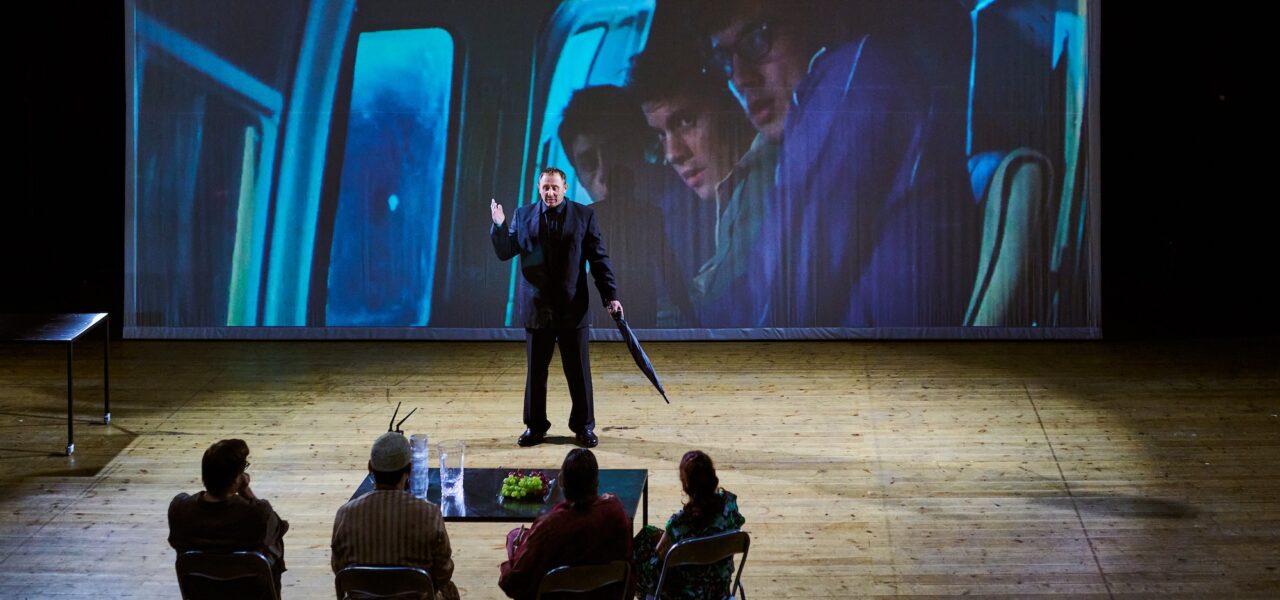
שלושה גברים ואישה אחת חושפים על הבמה את מאחורי הקלעים של תפקידם כניצבים, ובפרט – ניצבים שמשימתם היא למות. כבר הפרמיס של המופע נפלא, ומשלב שני אלמנטים מאוד תוססים בימים אלו, תאטרון דוקו ומוות. הבחירה להתעסק במוות שהוא מצד אחד קולנועי, ובמובן הזה – מוות שאנחנו רגילים לראות, שאנחנו אפילו מחפשים לראות, אפילו מתענגים ממנו במידה מסויימת שאנחנו משתדלים לא לחשוב עליה, ומצד שני במוות צדדי, לא במותו של הגיבור, אלא במוות של דמויות משניות, היא בחירה מרתקת שמגרה את המחשבה עוד לפני שהתחיל המופע. הבחירה הזו מהדהדת קודם כל את המציאות של המלחמה שבה אנחנו חיים. את היחס האמביוולנטי שלנו בישראל למוות – ההתמסרות אל ההרואיות, הרומנטיקה והצער האינסופי, לצד אדישות וכהות עמוקה.
הניצבים הם: אילן ברזילי, אמיר חרבאוי, יבגני גולן, רבקה אופק, ולצידם על הבמה נמצא גם הבמאי – יהונתן רון, שהציב את עצמו בתפקיד מראיין/צלם דוקו/חוקר כלשהו, ששאלת המחקר שלו מתגלה לאט לאורך המופע. השיחות שלו עם הפרפורמרים בעלות אופי מעט מתעתע, מצד אחד יש בהן משהו קז׳ואלי, דרך השיחות מהבהבים הבלחים של היחסים האותנטיים שנוצרו ביניהם לאורך התהליך (או לפחות ככה זה נדמה), ומצד שני יש משהו כמעט טכני, או מהונדס באופן שבו הוא פונה אליהם. לעיתים זה הפריע לי, חשדתי בחוסר כנות מסויים, אבל מצד שני לאורך כל המופע לא הרגשתי שהיה רגע אחד שמשקרים לי בו. הפרפורמרים, למרות שהם מגיעים מעולם של קולנוע, מתפקדים במופע כנון-פרפורמרים, בעיקר בגלל החירות שניתנת להם או שהם נותנים לעצמם, באופן שבו הם מספרים על החיים שלהם, בפשטות והומור עצמי, וגם באופן שבו הם מגיבים ליהונתן, כאילו הם מאיימים למרוד בו לרגעים ולעשות פתאום משהו אחר לגמרי ממה שתוכנן.
אפילו שהמופע מאוד מוחזק ושמור, או אולי בזכות זה, יוצאים מבין החריצים ניצוצות של משהו פראי שהניצבים מביאים. ובמובן הזה אני חושבת שיהונתן והיצירה הצליחו לנסח תובנה מרגשת על תפקיד הניצב בחברה בכלל ולא רק באמנות. על החופש שמתאפשר לדמויות השוליים – לידן הגיבורים נראים מבוייתים, כמעט חסרי מעוף. זו דרך יפה לערער על מי מספר את הסיפור, למי מעניין להקשיב, איזה סיפורים אנחנו מפספסים כשאנחנו דובקים באסתטיקה המוכרת ובלחן השגור, ובכלל, איזה סיפורים אנחנו מרשים לעצמנו לשמוט, להיחסם בפניהם, לאבד.
השימוש במצלמה במעגל סגור מחמיא למופע ומטופל באסתטיקה עדינה ומדוייקת, הוא מצליח להביא עולם קולנועי לתאטרון שמוציא החוצה עוד יותר את האיכויות הלא מתאמצות של הפרפורמרים – למשל ריאליזם של תקריב נוגע ללב של כפות ידיים, שמאפשר לקהל להתמסר לעושר שהקולנוע מציע, לפרטים הקטנים, לניואנסים בפנים, לרגש שמוגש בזום אין, כזה שהתאטרון בדר״כ יותר מתקשה לתווך. במקביל הוא מצליח להביא את הפואטיקה של התאטרון, ולייצר על הבמה תמונות מופשטות וחלומיות, כמו כשאחד השחקנים נעמד בתוך הקרנה גדולה של עצמו על הבמה, ונראה פתאום קטן ושברירי בתוך הבבואה הגדולה שלו עצמו.
לאורך המופע יש שתי שאלות מרכזיות שמופנות כלפי הפרפורמרים – שאלה ראשונה – ביחס למוות. יהונתן מראיין את אילן שבנוסף לעבודתו כניצב עובד גם כצוללן בזק״א, ובשאלותיו יהונתן מנסה להתעמק בין השאר בפרקטיקות של מציאת גופה במים. לאורך המופע תהיתי לעצמי למה יש כל כך הרבה אזכורים של מוות בטביעה, עד הרגע שבו מתברר החיבור האישי של יהונתן לנושא, לא אפרט כדי לא לחטוא לחוויה של מי שעוד לא ראה, רק אכתוב שהרגע הזה מוגש בפני הקהל בעטיפה זהובה, עצובה ויפהפיה.
שאלה שנייה שהמופע עסוק בה קשורה לנושא של התגלות, של חלימה, של הרצון בהגשמה של הניצבים, הגשמה יצירתית, פרפורמטיבית, משחקית. הם מדברים על הכמיהה לבלוט, לצאת החוצה, ועל המשיכה הבלתי מוסברת לאור הזרקורים. אני מודה שבזמן אמת האספקט הזה של המופע פחות נגע בי, הרגשתי שלא נעשה חיבור מספיק עמוק או נהיר בין שני הנושאים שהמופע מציב במרכזו. עכשיו כשאני כותבת, אני נזכרת בסצנה שמופיעה לקראת סוף המופע, שבה יבגני מספר על הצגה שהוא השתתף בה בתור ילד בבית הספר, ואיך שיחק את תפקיד העכביש שבשלב מסויים כורתים את ראשו והוא מת. הוא מתאר איך הקהל התפעל מהמוות שלו, וכמה הוא התרגש והרגיש אהוב. זה רגע מצחיק ומתוק, ובמבט לאחור, הרגע הזה אולי גם שופך אור על הקשר שהמופע מציע בין מוות לאור הזרקורים, או בין מוות לכמיהה להתגלות. לא במובן הנרקסיסטי המוכר שבו אנחנו נהנים לדמיין את הלוויות שלנו, אלא באופן עמוק יותר ואולי קצת יותר חמקמק. תובנה שברירית על איך לפעמים דווקא רגע של סוף מחזיק בתוכו פוטנציאל לפתוח צוהר אל רגש שהיה מחוץ להישג ידינו, אולי אפילו אל אהבה שלא ידענו שיש בנו.
יהונותן רון הציג את הבכורה של ׳ניצבים׳ ב5.8.2026 בפסטיבל ישראל.
Anat Dreamer’s Response to ‘Extra’s by Jonathan Ron
Three men and one woman reveal onstage what goes on behind the scenes of their work as extras, and more specifically, extras whose job is to die. The premise of the performance is already wonderful, combining two elements that are very much alive these days: documentary theater and death. The choice to deal with death that is, on the one hand, cinematic, and in that sense a death we are used to seeing, that we even seek out, even take a certain pleasure in that we try not to think about, and on the other hand, with peripheral death, not the death of the hero but the death of secondary characters, is a fascinating choice that provokes thought before the performance has even begun. First and foremost, this choice echoes the reality of the war we are living through. Our ambivalent relationship to death in Israel: the surrender to heroism, romance, and endless grief, alongside profound indifference and numbness.
The extras are Ilan Barzilai, Amir Harbawi, Yevgeny Golan, and Rivka Ofek, and alongside them onstage is the director, Jonathan Ron. He has placed himself in the role of interviewer/documentary cameraman/some kind of researcher, whose research question is slowly revealed over the course of the performance. His conversations with the performers have a slightly deceptive quality. On the one hand, there is something casual about them; through the conversations, flashes of the authentic relationships that developed between them over the course of the process flicker through (or at least that is how it seems). On the other hand, there is something almost technical, or engineered, in the way he addresses them. At times this bothered me. I suspected a certain lack of sincerity, but at the same time, throughout the entire performance I never felt there was a single moment in which I was being lied to. The performers, although they come from the world of film, function in the performance as non-performers, mainly because of the freedom they are given, or give themselves, in the way they talk about their lives, with simplicity and self-deprecating humor, and also in the way they respond to Yehonatan, as though at moments they are threatening to rebel against him and suddenly do something entirely different from what was planned.
Even though the performance is very contained and controlled, or perhaps because of this, sparks of something wild that the extras bring with them emerge through the cracks. And in this sense, I think Jonathan and the work have managed to articulate a moving insight about the role of the extra in society as a whole, and not only in art. About the freedom afforded to marginal figures, beside whom the heroes seem domesticated, almost devoid of imagination. It is a beautiful way of unsettling the question of who tells the story, who is interesting to listen to, what stories we miss when we cling to familiar aesthetics and familiar melodies, and more broadly, what stories we allow ourselves to let slip away, to close ourselves off to, to lose.
The use of closed-circuit video suits the performance and is handled with a delicate and precise aesthetic. It manages to bring a cinematic world into the theater that draws out even further the effortless qualities of the performers. For example, the realism of a touching close-up of hands allows the audience to surrender to the richness cinema offers, to the small details, the nuances of the face, to emotion delivered in zoom-in, something theater generally has more difficulty conveying. At the same time, it manages to bring in the poetics of theater, creating abstract and dreamlike images onstage, as when one of the actors stands inside a large projection of himself on the stage and suddenly appears small and fragile within his own enormous reflection.
Throughout the performance, there are two central questions directed at the performers. The first concerns death. Jonathan interviews Ilan, who, in addition to his work as an extra, also works as a diver for ZAKA, and in his questions Jonathan attempts, among other things, to delve into the practicalities of finding a body in the water. Throughout the performance I wondered why there were so many references to death by drowning, until the moment when Jonathan’s personal connection to the subject becomes clear. I won’t elaborate, so as not to spoil the experience for anyone who has not yet seen it. I will only say that this moment is presented to the audience wrapped in something golden, sad, and beautiful.
The second question the performance is concerned with has to do with revelation, with dreaming, with the extras’ desire for fulfillment: creative, performative, theatrical fulfillment. They talk about the longing to stand out, to emerge, and about the inexplicable pull of the spotlight. I admit that, in the moment, this aspect of the performance touched me less. I felt that a sufficiently deep or clear connection had not been made between the two subjects the performance places at its center.
Now, as I write, I remember a scene that appears toward the end of the performance, in which Yevgeny tells us about a play he took part in as a child at school, and how he played the role of a spider whose head is cut off at a certain point and who dies. He describes how impressed the audience was by his death, and how excited and loved he felt. It is a funny and sweet moment, and in retrospect, perhaps this moment also sheds light on the connection the performance proposes between death and the spotlight, or between death and the longing to be revealed. Not in the familiar narcissistic sense in which we enjoy imagining our own funerals, but in a deeper and perhaps slightly more elusive way. A fragile insight into how sometimes it is precisely a moment of ending that holds within it the potential to open a window onto an emotion that had been beyond our reach, perhaps even onto a love we did not know we carried within us.
Jonathan Ron presented the premiere of ‘Extras’ on August 5, 2026 in the Israel Festival.
 ענת דרימר היא יוצרת תיאטרון, כותבת, פרפורמרית רב תחומית, אמנית ספוקן וורד, מנחת סדנאות ומלווה אמנותית. בין יצירותיה לבמה – ׳מקום טוב הכל רע’ בשיתוף עם נורית דרימר עליו זכו בפרס הצגת השנה של ׳קיפוד הזהב׳ 2023 , בפרס הבמאיות, המחזאיות ופרס השפה הבימתית בפסטיבל הקומדיה של תיאטרון האינקובטור, ׳עמדתי מחוץ לעולם זמן רב מדי׳ – בשיתוף נורית דרימר יצירה תלוית מקום בספריה הלאומית, ‘להציל את שיפוק’, ‘לילית’ – מותחן מיתולוגי פנטסטי, ו – ‘נשף קמח’. בין יצירותיה במרחב הציבורי: ‘המרכבה’ מופע שירה נוסע, ‘דואר הכוכבים’ פרוייקט קהילתי של דואר שכונתי.