תגובתה של נופר סלע ל׳הוסר זמנית׳ בפסטיבל ישראל
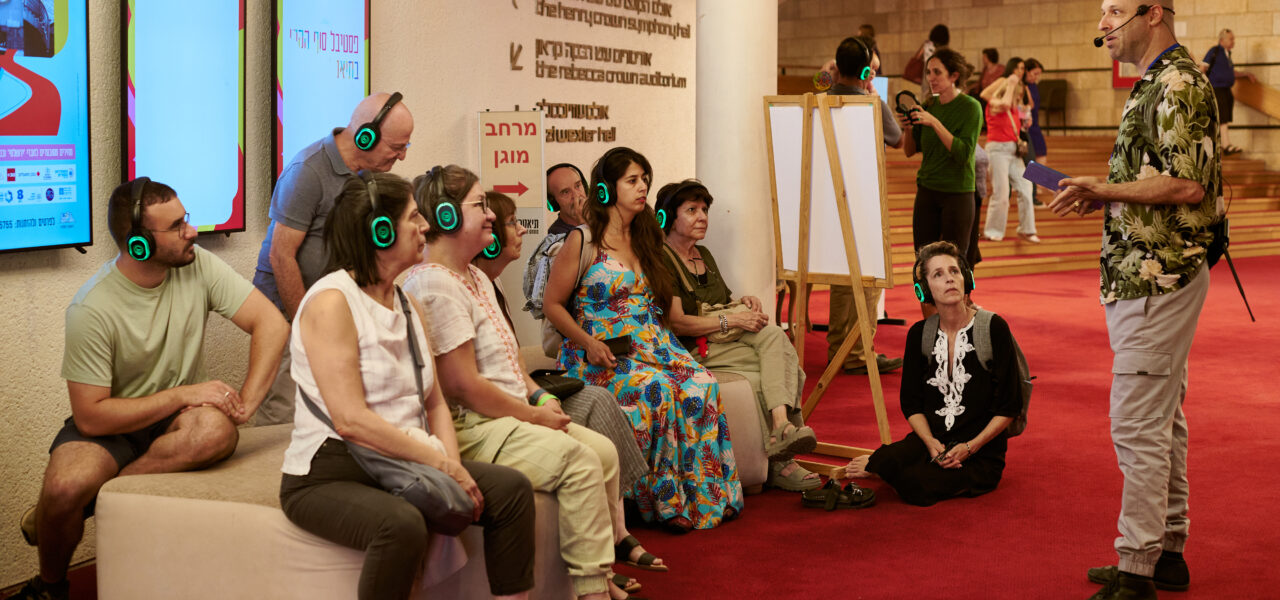
*צילום דור קדמי
*English follows

“לאא!! אמא!! אמא!!! אמאאאאא!!!”

בת ה-4.5 תופסת את היד שלי ולא משחררת.

“מותקי, אמא חייבת ללכת.”

“לבוא איתך!”

אי אפשר אהובה. את הולכת לישון עכשיו, וכשאחזור אעיר אותך ואתן לך נשיקה, בסדר?”

“לאאא!! אמא אמא אמא אמאאא!!!”

כשאני מצליחה להשתחרר ולצאת מהבית אני מציצה רגע בשעון – השעה 20:12, יש לי 3 דקות להגיע. לא הספקתי להתקלח או להחליף שמלה, הידיים שלי בריח של קארי מהמרק שכרגע סיימתי לבשל,

אני יוצאת מהבניין, רצה עד סוף הרחוב, חוצה את הכביש לרחוב הנשיא ומשם במהירות לרחוב שופן, כבר רואה את תיאטרון ירושלים, פסטיבל ישראל, פסטיבל ישראל, איך אני באה ככה, אין ברירה, עכשיו 20:15 ואני ממהרת פנימה והבנאדם הראשון שאני רואה כשאני נכנסת לאולם המבואה של התיאטרון – זה ארז.

חיוך.

נשימה.

פרופ׳ ארז מעין שלו הוא מנהל אמנותי שותף של תיאטרון תמונע וראש המחלקה ללימודי תיאטרון ופרפורמנס באוניברסיטת חיפה. למרות הטייטלים המרשימים, חווית המפגש איתו דווקא תמיד מרגיעה. ארז הוא בנאדם שאוהב אמנות, ואוהב את האנשים שיוצרים אותה. את העבודה המאד חשובה ורצינית שהוא עושה, הוא עושה מהלב, בגובה העיניים, ומתוך אמון מלא ביוצרים.ות וביצירה. הוא מסוג האנשים שבגללם שווה לעשות תיאטרון בארץ הזאת שלנו.

הערב, ארז נמנה עם משלושת האנשים שמעבירים את הסיור “הוסר זמנית” בניהולה האמנותי של איב קריסטל – לצד ד״ר עידית סוסליק ואיתי דורון. הסיורים עוסקים ביצירות בינלאומיות מדהימות, שלא הגיעו לארץ בעקבות “הפיל שנכנס לחדר, ואי אפשר להוציא אותו”, כפי שכתוב בתכנייה. ובמילה אחת: החרם. הייתי רוצה להיות בכל הסיורים, אבל הם מתקיימים במקביל, ותחושת ה”פומו” היא חלק מהבחירה האמנותית שנעשתה כאן.

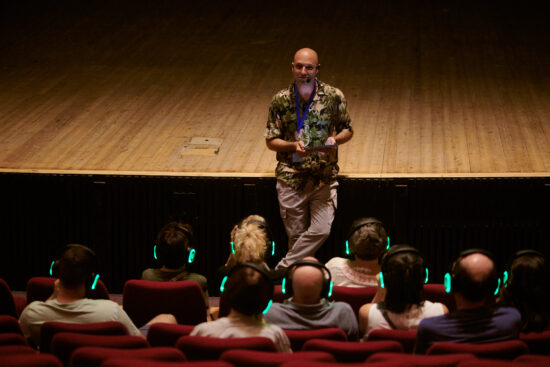
מתחילים. כולנו חובשים אזניות והולכים אחרי הרועה שלנו ברחבת התיאטרון. ארז מדבר ואנחנו מקשיבים. האזניות מנתקות אותנו מהרעש וההמולה שמסביב, וככל שארז ממשיך לדבר, הניתוק הופך לקרבה.

למעשה זהו סיור בעקבות שום דבר. אין מה לראות, כיוון שהעבודות שעליהן מדברים לא הגיעו לכאן. כל מה שנשאר לנו הוא – אחד את השנייה.

ארז פותח את הסיור ואומר: “אחד התפקידים המסורתיים של פסטיבל ישראל תמיד היה להביא לארץ מופעים חשובים מחו”ל. הפסטיבל היה ה-מקום לבוא ולראות בו את מיטב העשייה העכשווית ממקומות אחרים בעולם. עבור יוצרים ישראלים זו היתה הדרך להשאר עם האצבע על הדופק לגבי מה עושים עכשיו הקולגות שלנו ברחבי העולם, להרגיש חלק מקהילה בינלאומית.”

אני שומעת את זה והלב שלי נצבט. קהילה בינלאומית. פעם היינו חלק מקהילה. מאז ה-7.10 הרבה מאד קשרים עם מוסדות, קולגות וחברים מחו”ל התערערו והתנתקו. יוצרים מחו”ל לא מעוניינים להגיע לכאן, ואותנו לא כ”כ רוצים להביא לשם. אנחנו מנודים, מבודדים, מוחרמים בעל כורחנו, ולא משנה מה עמדתנו לגבי מה שהממשלה שלנו עושה. ולא משנה המורכבות שרואים מכאן ולא רואים משם.

ארז מספר על הופעה של הכוראוגרפית הקרואטית איוונה מולר, שראה בפריז אי אז בתחילת 2023. הוא מראה לנו קצת תמונות וסרטונים של היצירה בטאבלט ומספר עליה – 6 פרפורמרים נעים בחלל בזמן שהם קשורים זה לזו בכבל של טיפוס. בגדול, תיעוד של עבודות פרפורמנס זה אחד הדברים הכי מבאסים שיש. וידאו ואפילו תיאור לשוני לא ממש יכול להעביר את התחושה שקיבלת כשהיית שם, וכל עבודה שתנסי לתאר תמיד תישמע פחות או יותר כמו אותה גברת בשינוי אדרת. הפעם, למוגבלות של התיעוד יש פונקציה נוספת – היא קשורה בתחושת ההעדר שהסיור מבקש להנכיח.

אני לא מצליחה להבין הרבה מהדימויים שארז מראה, אבל אני מבינה הכל מהניצוץ שבעיניים שלו כשהוא מדבר על העבודה. הוא כ”כ התלהב מהעבודה שהחליט לפנות אל מולר ולהציע לה להגיע לתיאטרון תמונע. הוא פנה, כאחד האדם, דרך ה”צור קשר” באתר שלה. היא ענתה. הם קבעו זום. לבסוף היא הסכימה לבוא, למרות שגם אז ב-2023 היה חרם. התכנית להביא אותה התחילה להרקם.

ארז תכנן להביא לתמונע עבודה של מולר שנקראית We are still watching  – יצירה בביצוע הקהל, שבה הקהל יושב בריבוע ומקריא טקסטים שנכתבו עבורו. הטקסטים מלאים בהוראות ביצוע, וגם שאלות כמו: “מי כתב לנו את הטקסט הזה?” “למה אנחנו מקריאים אותו?” “למה שלא פשוט נלך?”..

היצירה עוסקת בדינמיקה חברתית, שיתוף פעולה וציות. מתי אנחנו משתפים פעולה ולמה? מהו הכוח המניע אותנו לקחת חלק, לבצע הוראות מבחוץ, לציית?
ארז מספר שככל שהתכנית להביא את מולר הלכה ונרקמה, כך הקשר איתה הלך והעמיק. הוא ציין כבדרך אגב שהם החליפו תמונות של הילדים, וזו נקודה שנגעה בליבי. יש משהו ברגע הזה עם אנשים מרחוק, מארץ אחרת או מתרבות אחרת, הרגע הזה שמספרים על הילדים. כל מי שיש לו ילדים מכיר את רגעי השיא והשפל של ההורות, את ה “אמא!! לאאא!!! אמא אמא אמא”, וההבנה ההדדית הזאת מייצרת חוטים של חיבור בן רגע, בלי מילים.

כשהגיע ה-7 לאוקטובר, מולר כתבה לארז מיד והביעה דאגה ואמפתיה. אבל בסופו של דבר היא ויתרה על הרעיון להגיע. הזמן עבר, וארז נהג להזכר ולספר על האמנית שהיתה אמורה לבוא לכאן ובסופו של דבר החרימה אותנו, כמו רבים אחרים.

בסוף הסיור ארז מספר בחיוך ופליאה: “רק עכשיו כשהזמינו אותי להעביר את הסיור הזה, חזרתי שוב להתכתבות עם איוונה – ופתאום הבנתי שכל הזמן הזה סיפרתי סיפור לא נכון.” כשקרא שוב את המיילים ממנה הבין שמולר ויתרה על ההגעה בצער, ואף ציינה שהיא מקווה להגיע בזמן אחר. “הרגשתי כמו בעבודה של איוונה מולר” – הוא אומר. ארז נדהם להבין שהזכרון שלו תעתע בו, שגם הוא, כמו הקהל בעבודה של מולר, שיתף פעולה עם סיפור שסופר כאן שוב ושוב, הסיפור על האמנים המחרימים.

חשבתי על הסיפור הזה לא מעט בשלוש שנים האחרונות. מי הם בעצם אותם אמנים מחרימים? מה זה אומר להחרים? האם להמנע מלהגיע לכאן במצב הנוכחי זה חרם? האם אני במקומם הייתי באה?

לפני שנה וחצי הוזמנתי ליצור עבודה עבור פסטיבל בברלין. המלחמה היתה בעיצומה, שמעתי אינסוף סיפורים על חוויות קשות מאד שעברו יוצרים ישראלים בחו”ל, והרגשתי שאם אני מסכימה להגיע לברלין, אין לי ברירה אלא לייצג את מה שאינני מעוניינת לייצג. רציתי לדבר על זה בדיוק, אבל פחדתי. למעשה כ”כ פחדתי, שהחלטתי ליצור עבודה שבה אני אינני נוכחת. קראתי לה Almost There, ועיצבתי אותה כפגישה על קפה איתי, אלא שאני – לא שם. המשתתפ.ת יושבת מול כסא ריק ושומעת את קולי באזניות. אני מספרת על עצמי, שואלת שאלות על המאזינ.ה, מייצרת קרבה. בסוף העבודה אני מודה שלא הגעתי כי פחדתי שאם ניפגש – המלחמה תעמוד ביננו.

המשתתפים מוזמנים להשאיר לי כמה מילים כתובות, והכנתי את עצמי לכל ה- free palestine שבעולם. באמת קיבלתי כמה. אבל לתדהמתי, רוב התגובות היו תומכות ונרגשות. יש בני אדם שם בחוץ, המון מהם, ויש להם לב פתוח. במקרה הזה – דווקא ההעדר היה הדרך להפגש.

ארז קרא לזה “כיסי התנגדות”, אפשרות של אנשים להפגש ולפעול ביחד למרות הסיפורים שמוכתבים לנו מבחוץ. בסופו של דבר אני בטוחה שמערכת הערכים שלי לא רחוקה מאד מזו של אנשים שמחרימים אותנו, הרי פעם היינו חלק מאותה קהילה. אלא שאני נמצאת בסיטואציה אחרת לגמרי מהם, סיטואציה שאולי הם לא יכולים להבין, או שאולי, במובן מסויים הם מבינים יותר טוב ממני.

ואני גם מזכירה לעצמי שמאד יכול להיות שלו הייתי חיה אי שם, באירופה או איפשהו, ומסתכלת מבחוץ על מה שקורה כאן – על ההרס והנישול והחורבן שאנחנו ממיטים סביבנו – הייתי מדירה את רגליי מכאן. הייתי זועמת ומתנגדת ומחרימה. אבל כשאני חיה כאן, אין לי ברירה. אני לא רק אוהבת את המקום הזה – אני גם תלויה בו. עכשיו יותר מתמיד, אין לי לאן ללכת, ולאן שלא אלך – אהיה ישראלית, ויהודייה. אני לא יכולה להתנתק מהארץ, אבל זה לא עושה אותי יותר טובה או צודקת. זה רק עושה אותי שבורה לרסיסים, פצועה מוסרית. אי אפשר לחיות כאן מבלי להזדקק להגנה, ומבלי להיות מלאת הכרת תודה למי שמסכן עצמו בשביל לתת לי ולמשפחה שלי הגנה. אי אפשר להרדים את הילדים שלנו בערב בלי לדעת שאולי הלילה, או מחר או בעוד יומיים נצטרך להרים אותם באמצע הלילה ולרוץ למקלט, ושכנראה כשיגדלו יצטרכו גם הם לסכן את עצמם עבור ממשלה אדישה שלא עושה דבר כדי לחלץ אותנו ממעגל הדמים הנצחי הזה. וכשמחזיקים את היד הרכה ומנשקים את הראש החפוף, הריחני, אי אפשר שלא להחליט לעשות הכל כדי להסתיר מהם את כל זה.

“מאז שפסטיבל ישראל כבר לא יכול להיות פלטפורמה ליצירה בינלאומית, הוא שואל את עצמו מה תפקידו בעת הזאת.” אומר ארז. מהתבוננות בתוכנייה של השנה ושל השנים הקודמות זה ברור מאד – הפסטיבל לקח על עצמו ליצור ולקיים יצירה מקומית חושבת, חומלת, בועטת. מצד אחד להכיל ולבטא את הכאבים שאנחנו נושאים איתנו, ומצד שני להשאיר, ככל הניתן, סדקים להתבונן גם על מה שקשה מידי לחברה הישראלית לראות. במובן הזה הפסטיבל מייצר הנהגה. כי הוא מבקש להוביל את כולנו לייצר כיסי התנגדות שכאלה. להתחבר, לשאול, לפעול. המשימה שלנו כיוצרים כאן עכשיו היא קודם כל להיות טובים זה לזה. התחום הזה לא יכול יותר להיות תחרותי ונוקשה. אנחנו חייבים להיות הקהילה אחד של השנייה, הקולגות הכי טובים שאפשר. לבוא, לפרגן, לנחם, לפתוח את הלב. אנחנו חייבים לייצר לנו כאן בית משותף, כי אנחנו צריכים לפעול ביחד, להחזיק את היושרה המוסרית שלנו אחד עבור השני, לתת מקום ואומץ אחת לשנייה להתבטא, וגם לשמור זו על זה. אנחנו חייבים להיות הבית והקהילה של עצמנו, כדי שנוכל לנוע ביחד, לפעול לשינוי, בדרכי אמנות ובדרכי מאבק. כי המציאות פה חייבת להשתנות, וחייב, אבל חייב, להיות כאן עתיד טוב יותר, לכולם.

“כתבתי שוב לאיוונה אתמול, ושאלתי – אולי תרצי בכל זאת לבוא?” ארז מסיים את הסיור בסימן שאלה שמשאיר המון אוויר לנשימה, ואני חוזרת הביתה כשהראש מזמזם ממחשבות. אני פותחת את הדלת ושומעת “אמא” חלש ומתוק מכיוון החדר שלה. אני ניגשת, כורעת ליד המיטה ונותנת לה נשיקה, כמו שהבטחתי. “לילה טוב אהובה שלי”. היא עוצמת עיניים, וחוזרת לישון.


׳הוסר זמנית׳ הוצג ב4-6.8.2026 כחלק מפסטיבל ישראל. 

Nofar Sela’s Response to ‘Temporarily Removed’ at the Israel Festival

“Nooo!! Mom!! Mom!!! Moooom!!!”

My four-and-a-half-year-old daughter grabs my hand and won’t let go.

“Sweetheart, Mom has to go.”

“I want to come with you!”

“You can’t, love. You’re going to sleep now, and when I come back I’ll wake you up and give you a kiss, okay?”

“Nooo!! Mom, Mom, Mom, Moooom!!!”

When I finally manage to free myself and leave the house, I glance at my watch. It’s 8:12 p.m. I have three minutes to get there. I didn’t have time to shower or change my dress, and my hands smell like curry from the soup I’ve just finished cooking.

I leave the building, run to the end of the street, cross over to HaNassi Street and from there hurry toward Chopin Street. I can already see the Jerusalem Theatre. Israel Festival, Israel Festival, how can I show up like this? There’s no choice. It’s 8:15 now and I hurry inside, and the first person I see when I enter the theatre foyer is Erez.

A smile.

A breath.

Prof. Erez Maayan Shalev is co-artistic director of Tmuna Theatre and head of the Department of Theatre and Performance Studies at the University of Haifa. Despite the impressive titles, encountering him is always somehow calming. Erez is a person who loves art and loves the people who make it. The very important and serious work he does, he does from the heart, at eye level, and with complete trust in artists and in art. He is the kind of person who makes it worthwhile to make theatre in this country of ours.

Tonight, Erez is one of three people leading the Temporarily Removed tour, artistically directed by Eve Crystal, alongside Dr. Idit Suslik and Itay Doron. The tours deal with incredible international works that did not make it here because of “the elephant that entered the room and cannot be removed,” as the program puts it. In one word: the boycott. I would like to attend all of the tours, but they take place simultaneously, and the sense of FOMO is part of the artistic choice made here.

We begin. We all put on headphones and follow our shepherd across the theatre plaza. Erez speaks and we listen. The headphones cut us off from the noise and commotion around us, and as Erez continues speaking, the disconnection becomes intimacy.

In fact, this is a tour following nothing. There is nothing to see, because the works being discussed did not make it here. All we have left is one another.

Erez opens the tour by saying: “One of the traditional roles of the Israel Festival was always to bring important performances from abroad to Israel. The festival was the place to come and see the best contemporary work being made elsewhere in the world. For Israeli artists, it was a way to keep a finger on the pulse of what our colleagues around the world were doing, to feel part of an international community.”

I hear this and my heart clenches. An international community. Once, we were part of a community. Since October 7, a great many relationships with institutions, colleagues and friends abroad have been shaken or severed. Artists from abroad don’t want to come here, and we aren’t particularly wanted there. We are shunned, isolated, boycotted against our will, regardless of our position on what our government is doing. Regardless of the complexity that can be seen from here and cannot be seen from there.

Erez tells us about a performance by Croatian choreographer Ivana Müller that he saw in Paris sometime in early 2023. He shows us some photographs and videos of the work on a tablet and tells us about it: six performers move through the space while tied to one another by a climbing rope. Generally speaking, documentation of performance work is one of the most frustrating things there is. Video, and even verbal description, cannot really convey the feeling you had when you were there, and any work you try to describe will always end up sounding more or less like the same old thing in a different guise. This time, the limitations of documentation serve another function: they are connected to the sense of absence that the tour seeks to make present.

I can’t make much sense of the images Erez is showing us, but I understand everything from the sparkle in his eyes when he talks about the work. He was so excited by it that he decided to contact Müller and invite her to Tmuna Theatre. Like any ordinary person, he contacted her through the “Contact” page on her website. She replied. They scheduled a Zoom call. Eventually, she agreed to come, even though there was already a boycott in 2023. Plans to bring her began to take shape.

Erez planned to bring Müller’s work We Are Still Watching to Tmuna, a piece performed by the audience, in which audience members sit in a square and read texts written for them. The texts are full of performance instructions, as well as questions such as: “Who wrote this text for us?” “Why are we reading it?” “Why don’t we just leave?”

The work deals with social dynamics, cooperation and obedience. When do we cooperate, and why? What is the force that drives us to participate, to follow instructions imposed from outside, to obey?

Erez says that as the plan to bring Müller took shape, their relationship deepened. He mentions almost in passing that they exchanged pictures of their children, and this touches my heart. There is something about that moment with people far away, from another country or another culture, the moment when you tell each other about your children. Anyone who has children knows the highs and lows of parenthood, the “Mom!! Nooo!!! Mom, Mom, Mom,” and that mutual understanding creates threads of connection in an instant, without words.

When October 7 came, Müller immediately wrote to Erez, expressing concern and empathy. But ultimately, she gave up on the idea of coming. Time passed, and Erez would remember and tell people about the artist who had been supposed to come here but ultimately boycotted us, like so many others.

At the end of the tour, Erez says with a smile and a sense of wonder: “Only now, when I was invited to lead this tour, did I go back to my correspondence with Ivana, and suddenly I realized that all this time I had been telling the story wrong.”

When he reread her emails, he realized that Müller had withdrawn from the visit with regret, and had even said that she hoped to come at another time.

“I felt like I was inside an Ivana Müller work,” he says.

Erez was astonished to realize that his memory had deceived him, that he too, like the audience in Müller’s work, had cooperated with a story that had been told here again and again: the story of the boycotting artists.

I have thought about this story a great deal over the past three years. Who exactly are these boycotting artists? What does it mean to boycott? Is choosing not to come here under the present circumstances a boycott? If I were in their place, would I come?

A year and a half ago, I was invited to create a work for a festival in Berlin. The war was in full force. I had heard endless stories about extremely difficult experiences Israeli artists had undergone abroad, and I felt that if I agreed to go to Berlin, I would have no choice but to represent something I did not want to represent. I wanted to speak about exactly that, but I was afraid. In fact, I was so afraid that I decided to create a work in which I was not present.

I called it Almost There, and designed it as a meeting over coffee with me, except that I am not there. The participant sits opposite an empty chair and hears my voice through headphones. I tell them about myself, ask questions about the listener, create intimacy. At the end of the work, I admit that I didn’t come because I was afraid that if we met, the war would stand between us.

Participants are invited to leave me a few written words, and I prepared myself for all the “Free Palestine” messages in the world. I did, indeed, receive a few. But to my amazement, most of the responses were supportive and deeply moved. There are human beings out there, lots of them, and their hearts are open. In this case, it was precisely absence that became the way to meet.

Erez called these “pockets of resistance,” the possibility of people meeting and acting together despite the stories dictated to us from outside. Ultimately, I am certain that my value system is not very far from that of the people who boycott us. After all, once we were part of the same community. But I am in a completely different situation from theirs, a situation they may not be able to understand, or perhaps, in some sense, they understand it better than I do.

And I also remind myself that it is entirely possible that if I lived somewhere over there, in Europe or elsewhere, and looked from the outside at what is happening here, at the destruction, dispossession and devastation we are wreaking around us, I would stay away too. I would be furious and opposed and I would boycott.

But when I live here, I have no choice. I don’t just love this place, I also depend on it. Now more than ever, I have nowhere to go, and wherever I do go, I will be Israeli and Jewish. I cannot disconnect myself from this country, but that does not make me better or more righteous. It only leaves me shattered into pieces, morally wounded.

It is impossible to live here without needing protection, and without being profoundly grateful to those who risk themselves to provide that protection for me and my family. It is impossible to put our children to bed at night without knowing that perhaps tonight, or tomorrow, or two days from now, we will have to pick them up in the middle of the night and run to the shelter, and that when they grow up, they too will probably have to put themselves at risk for an indifferent government that does nothing to extract us from this eternal cycle of bloodshed. And when you hold that soft hand and kiss that freshly washed, sweet-smelling head, you cannot help but decide to do everything you can to hide all of this from them.

“Since the Israel Festival can no longer be a platform for international work, it has been asking itself what its role is at this moment,” Erez says.

Looking at this year’s program and those of previous years, the answer is very clear: the festival has taken it upon itself to create and sustain local art that thinks, that has compassion, that kicks back. On the one hand, to contain and express the pain we carry with us, and on the other, as much as possible, to leave cracks through which we can also look at what is too difficult for Israeli society to see.

In this sense, the festival is providing leadership. Because it is asking all of us to create these kinds of pockets of resistance. To connect, to question, to act.

Our task as artists here, right now, is first and foremost to be good to one another. This field can no longer afford to be competitive and rigid. We have to be one another’s community, the best colleagues we can possibly be. To show up, to support, to comfort, to open our hearts. We have to create a shared home for ourselves here, because we need to act together, to hold one another’s moral integrity, to give one another space and courage to express ourselves, and also to protect one another.

We have to be our own home and our own community, so that we can move together, act for change, through art and through protest. Because the reality here has to change, and there absolutely, absolutely has to be a better future here, for everyone.

“I wrote to Ivana again yesterday,” Erez says, ending the tour with a question. “I asked her: maybe you’d like to come after all?”

He leaves us with a question mark and a great deal of room to breathe, and I return home with my head buzzing with thoughts.

I open the door and hear a soft, sweet “Mom” coming from her room.

I go to her, crouch beside the bed and give her a kiss, just as I promised.

“Good night, my love.”

She closes her eyes and goes back to sleep.


‘Temporarily Removed’ was presented on August 4-6, 2026 as part of the Israel Festival.


נופר סלע היא אמנית פרפורמנס ותיאטרון, בימאית ודרמטורגית. יצירותיה הוצגו על במות רבות בארץ ובעולם, לרבות תיאטרון הקאמרשפילה של מינכן, פסטיבל Theatertreffen בברלין, החשיפה הבינ”ל לתיאטרון ישראלי, הספרייה הלאומית ועוד. הצגת הילדים שלה “מה קרה ללב שלי?” הופקה בתיאטרון הקרון ומוצגת כחלק מרפטואר התיאטרון, ועבודת האודיו-פרפורמנס שלה Almost There נוצרה בהזמנת תיאטרון ה- Berliner Festspiele. סלע היא בוגרת תכנית “הקליידוסקופ” לתיאטרון ילדים (2023), ושל תכנית האמנים הבינלאומית – International Forum של מכון גתה (2018). בעלת תואר ראשון בהצטיינות מהאקדמיה לאמנות בצלאל (2012). מלווה אמנותית פרוייקטים בתחומי התיאטרון, פרפורמנס, מחול, קרקס עכשווי ואמנות חזותית.

Nofar Sela is a performance and theater artist, director, and dramaturg. Her works have been presented on numerous stages in Israel and abroad, including the Münchner Kammerspiele, Theatertreffen in Berlin, the International Exposure for Israeli Theatre, the National Library of Israel, and others. Her children’s performance What Happened to My Heart? was produced by the Train Theater and is part of the theater’s repertoire, and her audio-performance work Almost There was commissioned by the Berliner Festspiele. Sela is a graduate of the Kaleidoscope program for children’s theater (2023) and the Goethe-Institut’s International Forum program (2018). She holds a BFA with honors from the Bezalel Academy of Arts and Design (2012). She also provides artistic guidance for projects in theater, performance, dance, contemporary circus, and visual art.