Heather DeAtley’s Reflections on ‘Wonder’ by Gil Kerer
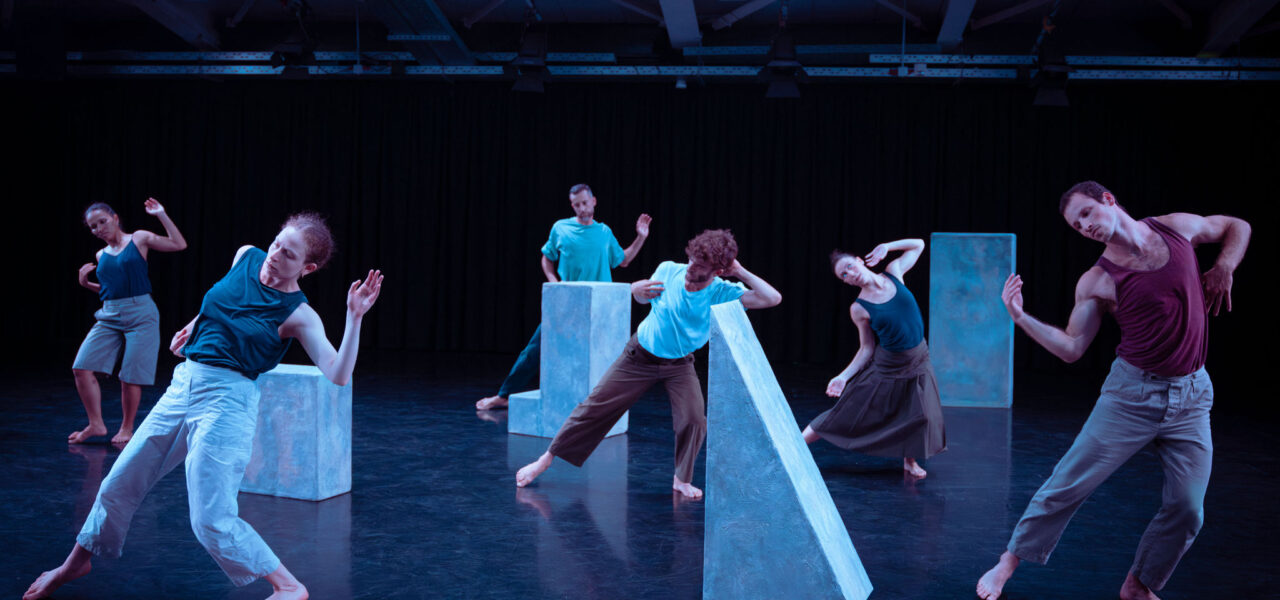
*Photo by Asya Skorik
*עברית בהמשך
“Wonder is as much a mindset as it is a moment.” – Monica Parker
I’ve worked with the Ilan Lev Method (ILM) as a practitioner for over a decade. Through gentle, rhythmic touch and movement, ILM invites the body’s systems into greater curiosity and connection. We often speak of physical or emotional “nachsoids”; blocks that settle in the body and interrupt the flow of movement, nourishment, and information. Rather than forcing change, the work invites the body to soften, reconnect, and discover new possibilities through playful movement. Every movement is an invitation; for more wonder, more curiosity.
My experience of Gil Kerer’s delightful premiere of Wonder at the Suzanne Dellal Children’s Dance Festival felt remarkably similar to receiving an Ilan Lev Method treatment. With an audience ranging from the newly walking to seasoned movers, we settled into our seats in the Zehava and Jack Dellal Studio. At the center of the stage stood a colossal structure composed of blocks of different shapes and sizes, reminiscent of children’s building blocks enlarged to monumental proportions.
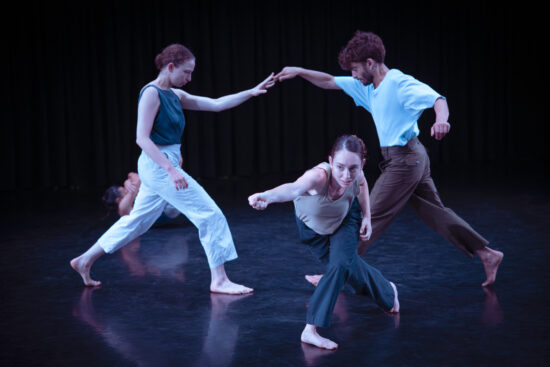
Photo by Asya Skorik
A female dancer entered, luring us in with spellbinding movement. Gradually, the other dancers joined her, each introducing their own movement motifs as playful signatures or quiet hellos. Then, with one sudden gesture, a dancer knocked the towering structure to the ground. The jarring crash marked not an ending but a beginning.
What unfolded over the next forty minutes was a meditation on wonder through play. Seamless transitions carried us from chasing games to hide-and-seek, lava jumping to block pushing, each world unfolding naturally into the next. Kerer’s choreography trusts simple physical actions to generate endless imaginative possibilities. Rather than illustrating childhood, it inhabits its logic, allowing games to evolve, transform, and surprise. My two little ones (ages seven and four-and-a-half) watched with complete absorption, traveling effortlessly through these imagined landscapes.
There is medicine in watching others play. A bit of whimsy awakens, smiles arrive more easily, and the body itself seems to lighten. The dancers climbed, crawled, balanced, leaped, and tumbled across the oversized blocks, employing primal movements that continuously generated the next action. The blocks themselves transformed from obstacles into invitations, visual expressions of how curiosity can reshape what first appears immovable.
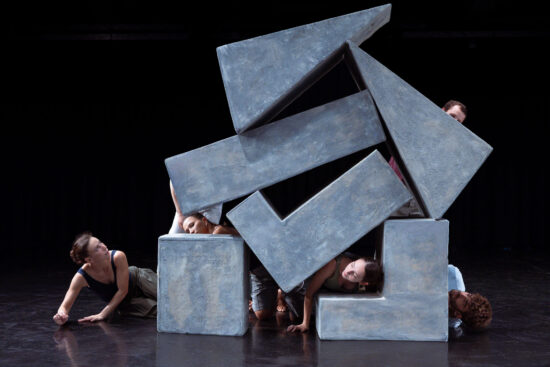
Photo by Asya Skorik
One particularly memorable moment found all seven dancers crowded together on a single small block, as though it were a lifeboat adrift in a sea of lava. Their bodies swayed in unison as they balanced within the limited space. For me, this became a microcosm of humanity: seven people sharing a tiny world, laughing as they searched for equilibrium, nearly falling but continually catching one another through attentiveness and play.
Another striking sequence saw the dancers create an ever-shifting circle of elbows, arms, and hands. Ascending and descending together as the circle rotated through space, they formed a living, breathing image of interconnectedness. Kerer masterfully moves between moments of exuberant physicality and subtle encounters where joints, limbs, and spirits briefly meet before separating again. Again and again, connection emerges not as a fixed state but as a continual act of becoming.
In an increasingly AI-driven world, our capacity for wonder through physical play may become an increasingly precious resource. The more we keep our creative channels open, the more wonder can move through fascia, flesh, and the countless folds of our being.
Monica Parker writes that cultivating wonder begins with simple practices: watch, wander, whittle, wow, and whoa. Kerer’s Wonder gently invites us into exactly this mindset. What initially appears to block our path can become an opening for curiosity, imagination, and connection, if we are willing to keep playing.
Gil Kerer presented ‘Wonder’ on July 17 as part of the Suzanne Dellal Centre’s Kids Summer Festival.
מחשבותיה של הת’ר דיאטלי על פלא מאת גיל קרר
“פליאה היא לא רק רגע, אלא גם דרך להתבונן בעולם.” – מוניקה פרקר
כמטפלת בשיטת אילן לב כבר למעלה מעשור, אני פוגשת שוב ושוב את כוחה של התנועה לעורר בגוף סקרנות, הקשבה וחיבור. באמצעות מגע ותנועה עדינים וקצביים, השיטה מזמינה את מערכות הגוף להיפתח מחדש. בשפה של השיטה אנחנו מדברים על “נחסואידים”: חסמים גופניים או רגשיים שמצטברים בגוף ומפריעים לזרימה של תנועה, הזנה ומידע. במקום להילחם בהם, אנחנו מזמינים את הגוף להתרכך, להתחבר מחדש ולגלות אפשרויות חדשות דרך תנועה משחקית. כל תנועה היא הזמנה לעוד קצת פליאה, עוד קצת סקרנות.
כך בדיוק הרגשתי כשצפיתי בבכורה של פלא מאת גיל קרר במסגרת פסטיבל מחול הילדים של מרכז סוזן דלל. החוויה הזכירה לי טיפול בשיטת אילן לב. בקהל ישבו פעוטות שזה עתה למדו ללכת לצד צופים ותיקים יותר, וכולנו התמקמנו באולם זהבה וג’ק דלל מול מבנה עצום ממדים שהורכב מקוביות בגדלים ובצורות שונות, כמו קוביות משחק של ילדים, רק בקנה מידה של ענקים.
Photo by Asya Skorik
רקדנית אחת נכנסה אל הבמה ומשכה אותנו פנימה בתנועה מהפנטת. אחריה הצטרפו בהדרגה שאר הרקדנים, וכל אחד מהם הציג שפת תנועה משלו, כמו חתימה אישית או ברכת שלום קטנה. ואז, ברגע אחד חד ופתאומי, אחד הרקדנים הפיל את המבנה כולו. קול ההתרסקות סימן לא סוף, אלא דווקא התחלה.
במשך כארבעים דקות נפרשה בפנינו מדיטציה על פליאה דרך משחק. משחקי תופסת הפכו למחבואים, קפיצה מעל לבה הפכה לדחיפת קוביות, וכל עולם הוליד את העולם הבא אחריו. הכוריאוגרפיה של קרר בוטחת בפעולות גופניות פשוטות וביכולת שלהן להצמיח אינספור אפשרויות דמיוניות. במקום לייצג ילדות, היא מאמצת את ההיגיון הפנימי שלה, ומאפשרת למשחקים להשתנות, להתפתח ולהפתיע. שתי הילדות שלי, בנות שבע וארבע וחצי, נשאבו אל תוך המסע הזה בהתמסרות מלאה.
יש משהו מרפא בעצם הצפייה באנשים משחקים. משהו קליל מתעורר בגוף, החיוך מגיע בקלות רבה יותר, ואיתו גם תחושת קלות. הרקדנים טיפסו, זחלו, קפצו, התאזנו והתגלגלו על גבי הקוביות העצומות, כשהם משתמשים בכל דפוסי התנועה הראשוניים שלנו כדי להצמיח את הפעולה הבאה. גם הקוביות עצמן השתנו לנגד עינינו, ממכשולים להזמנות, מביטוי של חסימה להזדמנות לתנועה חדשה.
Photo by Asya Skorik
אחד הרגעים שנחרתו בי במיוחד היה כאשר כל שבעת הרקדנים הצטופפו יחד על גבי קובייה קטנה אחת, כאילו הייתה סירת הצלה בלב ים של לבה. גופם נע יחד בניסיון למצוא שיווי משקל בתוך המרחב המצומצם. עבורי, זה היה דימוי קטן של האנושות כולה: שבעה אנשים החולקים מרחב זעיר, צוחקים כשהם מחפשים את הקצב המשותף שלהם, כמעט נופלים, אך שוב ושוב תופסים זה את זה, לא מתוך מאמץ הירואי, אלא מתוך נוכחות ומשחק.
ברגע אחר יצרו הרקדנים מעגל משתנה של מרפקים, זרועות וכפות ידיים. המעגל עלה וירד, הסתובב והתעצב מחדש, והפך לדימוי חי ונושם של הקשרים המחברים בינינו. קרר נע במיומנות בין רגעים של התפרצות אנרגטית לבין מפגשים עדינים, שבהם מפרקים, גפיים ורוחות נפגשים לרגע ואז נפרדים שוב. פעם אחר פעם מתברר שחיבור אינו מצב קבוע, אלא פעולה מתמשכת.
בעולם שהופך יותר ויותר מונע בידי בינה מלאכותית, היכולת שלנו לחוות פליאה דרך משחק גופני עשויה להפוך למשאב יקר במיוחד. ככל שנשמור על ערוצי היצירתיות שלנו פתוחים, כך תוכל הפליאה להמשיך לנוע בגוף, ברקמות, ובקפלים העדינים של מי שאנחנו.
מוניקה פרקר כותבת שטיפוח הפליאה מתחיל בפעולות פשוטות: להתבונן, לשוטט, ללטש, להתפעל ולעצור לרגע של השתאות. נדמה ש-פלא של גיל קרר מזמין אותנו בדיוק לכך. מה שנראה תחילה כמכשול עשוי להפוך לפתח של סקרנות, דמיון וחיבור, אם רק נסכים להמשיך לשחק.
גיל קרר הציג את ׳פלא׳ ב17.7.2026 כחלק מפסטיבל קיץ לילדים של מרכז סוזן דלל.
Heather DeAtley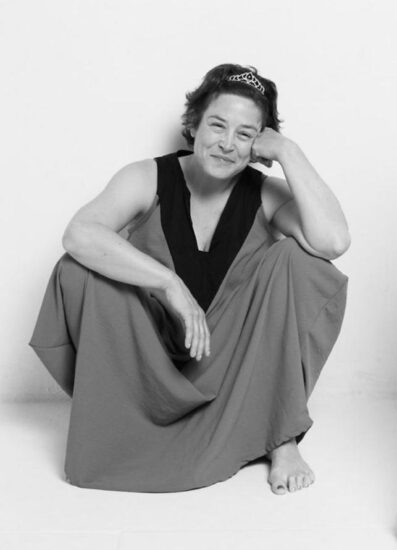
Born in the United States, Heather arrived to Israel in 2011 to dive into the rich movement and dance culture here. Suzanne Dellal became her sanctuary as she immersed herself in the rich worlds of Gaga and the Ilan Lev Method. As a former Division I collegiate gymnast and dancer, movement was always at the center of her life but everything shifted dramatically following a herniated disc that required surgery at the tender age of 19 her sophomore year at the University of Iowa. Her journey into the healing powers of movement had thus begun.
Heather pulls from her long history of movement practice to create synesthetic experiences through her words, event production, poetry, tipulim and intuitive movement journeys. Creatrix of Wombyn in the Water and Wombmynt, alongside Body Poetry (Ilan Lev Method tipulim), Heather blends her fascination with somatics, neuroscience, embodiment practices, pregnancy, birth, embryology, and so much more into all she does. A love of all things dance has always underscored these other passions.
Prior to becoming an ima nearly 6 years ago, Heather had helped in coordinating Suzanne Dellal’s International Exposure festival, graduating to positions of international development and promotion with individual choreographers: Galit Liss, Sally Anne Friedland, and Adva Yermiyahu. These experiences served as the inspiration behind creating/curating the Salon Series in which she hosts female choreographers in her living room of Sde Yitzhak (including fellow Creative Writing contributors Yulia Frydin and Ella Greenbaum!). Movement and poetry are at the core of all she does.
Heather looks forward to launching her body-sourced “Poetry of” workshops later this year.