Reflections on the Exhibition ‘And Love, What Will Become of It?’ by David and Adina Nipo
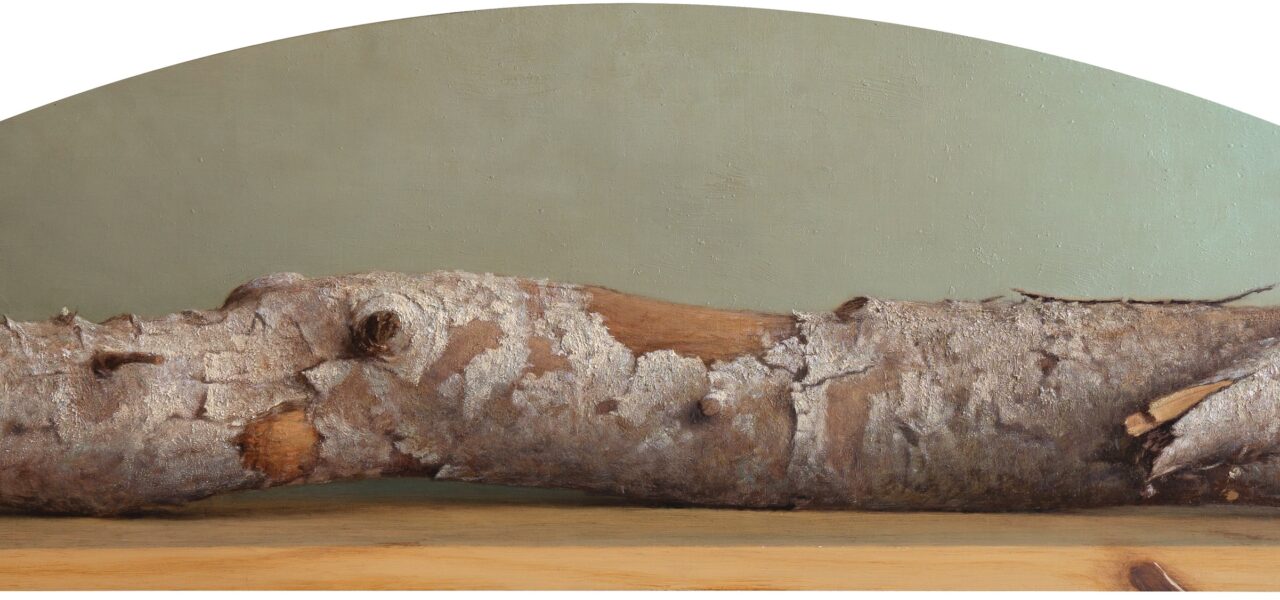
*In Photo: Composition with dry tree trunk on wooden shelf, 23.3×82.6, oil on board. David Nipo, 2025. Photo Elisha Nipo
*עברית בהמשך
A Thin Curtain Drawn Aside
Reflections on the exhibition And Love, What Will Become of It? by David and Adina Nipo
Curated by David Nipo. Installation by Inbar Cohen, David Nipo, and Adina Nipo

Photo Jenny Birger
David Nipo’s words echo in my mind as I write these lines: the white canvas is whole and complete. It needs nothing. It is the first bold brushstroke that introduces a flaw, and in doing so justifies every mark that follows. Laying one material after another onto the canvas is nothing more than an attempt to heal that first wound and to answer the riddle the painting creates with every passing moment.
My own words spread across the page, which is no longer entirely white and therefore a little less intimidating. Each word raises a question about what should come next. It closes one possibility and opens another, until the sentence comes to rest, if only for a moment, in a period. My mind is still unsettled after visiting And Love, What Will Become of It?, the exhibition by David Nipo (painting) and Adina Nipo (poetry) at Rothschild Gallery. I want to feed my words from Alice’s magical cake in Alice in Wonderland, so they might grow larger, stronger, echoing into the distance. Yet, in their own stubborn way, words seem to have chosen the magic potion instead. They have shrunk, becoming small and insufficient, no more than the shadow of the experience itself. Still, I decide to continue writing, encouraged by the thought that in painting, shadow is no less important than light.
*
Last Saturday of June, 2026. Noon.
The white plastic chairs at Rothschild Gallery quickly gather around an improvised stage made up of two red chairs and a small table. People realize it is faster to take a chair from the stack in the back than to wait, and I find myself thinking that none of this can be taken for granted.
An exhibition of realist painting and poetry by two artists from the Gaza border region, or as they describe it, “the border of the border region,” in Israel of 2026. Between one war and the next, it has become difficult to keep count, or even to remember the poetic names given to each military campaign. Yet people keep arriving, and that in itself feels deeply moving. I only hope there are enough chairs for everyone. Otherwise, I will have to stand, and today, more than usual, I really need to sit.
Realist painting, or painting from observation, belongs to a long tradition. The painter studies the world before them and translates its visible appearance into material placed on a surface. Here, oil paint on canvas or on paper mounted on wood. Painting captures a moment from reality and gives it a frame. From a distance we experience the illusion of reality. But as we move closer, we discover how little is needed to sustain that illusion. A single curved stroke of white paint is enough for the viewer to recognize the glass vase holding a bouquet of upright anemones. Another curved white stroke, thicker this time, becomes the glimmer in the eye of a young woman gazing toward a blue sky. The longer I look, the more I discover the abstract beneath the visible. I find that deeply moving.
Many of the paintings in the exhibition are relatively small. Yet they raise goosebumps, hold the gaze, and make it difficult to look away. Their subjects are mostly still lifes: bouquets standing proudly or already fading, fruit, pieces of tree trunk gathered almost by accident years ago, pumpkins almost touching, and a human skull. The formats vary, and each painting feels exactly the right size. Some are arched. Others are long rectangles, like a frame from a film. Others are circular, like mirrors.
David Nipo explains that while painting, the painter tries to descend into the materiality of the world without naming what is there. He is not painting “a pumpkin,” but the particular relationship between a dark mass and a light one at this specific moment in time. Only afterward do we look at the finished work, point to it, and quietly say, “There’s a pumpkin.” The painter himself becomes the first viewer of the work once it is complete. Looking at it anew, he gives it a title. Sometimes descriptive, like Composition with Dry Tree Trunk on Wooden Shelf. Sometimes more poetic, opening the imagination toward other associations, like And Love, What Will Become of It?

And Love, What Will Become Of It, 57×50, oil on linen mounted on board, David Nipo 2026, Photo Elisha Nipo
Have you ever noticed the movement of your own eyes while looking at art?
Mine first meet the paintings from a distance, in a broad, almost hazy way. For a moment I resist the urge to understand. I delay the instinct to draw conclusions and simply remain with what is there. I let my eyes be drawn toward a detail, or a particular area of the painting, sometimes because of its colors, sometimes because of a rhythm or an inner logic I cannot quite explain. I feel as though I am wandering through a gentle labyrinth with no desire to find the way out. My eyes move freely, narrowing and widening, discovering each time another detail they had overlooked before. This is how I notice the round hole in the table of the two pumpkins, the still life stand hidden behind the bouquet of anemones, the small cat sculpture I almost missed among the fading flowers, and the eye of the bowl concealed among the eyes of the anemones.
I become aware of my gaze moving from one painting to the next, from near to far, and with the same movement, inward, toward myself. An emotion rises out of an almost accidental encounter with a body of color standing before me. Its force surprises me so completely that I have to look away for a moment, simply to gather myself before looking again.

Levitation, 32×24, oil on paper mounted on board, David Nipo, 2025. Photo Elisha Nipo
At a rhythm that feels both surprising and perfectly measured, poems appear among the colorful paintings hanging on the gallery walls. Their monochrome presence immediately stands apart. These small and intricate signs interrupt the familiar landscape of a painting exhibition and quietly ask the viewer to look differently.
Four original poems by Adina Nipo in Hebrew, together with one poem by Molly Drake in English, alter the choreography of the eyes. My gaze needs a few moments to adjust. Then it begins to move in the familiar rhythm of reading, from right to left, a rhythm I adopted years ago as a new immigrant trying to make sense of a strange world that seemed to write backwards. Now my eyes recognize, connect, understand. Their movement is linear and simple, but the real dance takes place in the imagination. Colors become textures. Textures become figures. Figures become stories. Just as the painter looks down upon the bouquet of anemones in Levitation, the words carry me through time and space. The rhythm of the sentences determines my pace, while the spirit within me dances the dances Isadora Duncan imagined, free from the discipline of any fixed style.
Imagine
Stepping out of the shell
that is this body,
carrying only a pair of eyes,
standing before yourself
face to face.
Over the years I sank in
until settled
as though I had been there, here
always, ever.
Shell became skin.
Skin became mine.
Today, a captive of the dream,
far from the place from which I came,
only the fear of the place to which I will return,
the closeness from the other side —
they are what keep me
awake.
(Originally written in Hebrew. English translation: Adina Nipo)
I cannot remember ever seeing poems hanging on the walls of a gallery alongside an exhibition of realist painting. Not one that seeks to undermine painting’s conventions or cleverly subvert them, but one that embraces and celebrates them. Placed side by side, the two mediums begin to move one another. The poems shape the paintings, and the paintings quietly transform the way I read the poems. There is no single way to travel through this space, and no destination we are all expected to reach. Each visitor composes a different path.
Two pumpkins leaning gently toward one another become charged with quiet sorrow when placed beside a poem that hints at the possibility of parting. Human skulls resonate differently when encountered alongside the words of a mother learning to release her growing son into his own life. “Shadows will brighten, panic will settle” enters into conversation with two paintings of Lisianthus flowers at different stages of their lives.
These unexpected connections add another layer of meaning, imagination, and feeling. They leave me wanting to return to the exhibition again and again, not in order to understand it, but to discover yet more hidden movements between the paintings, the poems, and the space that opens between them.
*
More often than I would like, I feel there is a curtain between me and life. It is a thin curtain, almost transparent. I can see the world through it, yet it still keeps me at a distance, separating me from direct contact. Its folds reveal its presence. I search for its edge, trying to understand how it works, looking for small openings through which I might glimpse what lies beyond. But the curtain remains. At times, dramatic events tear it open all at once, offering a rare glimpse of the reality on the other side. Yet that reality can be too painful to face for long, and before long the soul begins to long for a new curtain.
For me, encountering art like this remarkable exhibition gently draws that curtain aside. It invites the eyes to look without fear at whatever appears beyond it. At what is painful and what is beautiful. At what is in bloom and what is fading. With compassion for all the forms and conditions we call life. In those moments, I experience a rare sense of clarity. Alongside it comes relief, born from the feeling that I can meet whatever stands before me at eye level.
With only
Time and breath
Eyes will adjust to the dark
Edges will drift toward light
Shadows will brighten
Panic will settle
(Originally written in Hebrew. English translation: Adina Nipo)
* Thanks to Ethel Gutmann for helping with the painting terminology
And Love, What Will Become of It? is showing in The Rothschild Fine Art Gallery through 11.7.26.
וילון דק מוסט לרגע
רשמים מתערוכת ציור ושירה “והאהבה, מה יהיה עליה?” של דויד ועדינה ניפו (אוצרות: דויד ניפו, הצבה: ענבר כהן, דויד ועדינה ניפו)
Photo by Jenny Birger
מילותיו של דויד ניפו מהדהדות בי תוך כדי כתיבת המשפט שאתם קוראים כעת: הקנווס הלבן הוא שלם ומושלם, ואינו זקוק לדבר; זוהי משיכת המכחול הראשונה, הנועזת, שיוצרת בו פגם ובכך מצדיקה את כל פעולות הציור שיבואו אחריה. הנחת החומרים השונים על הקנווס אינה אלא ניסיון לרפא את המום הראשוני ולמצוא פתרון לחידה שהציור מייצר בכל רגע.
וכך המילים שלי נפרסות על הדף, שכבר אינו לבן לגמרי, פחות מאיים. כל מילה מייצרת חידה לגבי ההמשך. היא סוגרת אפשרות אחת ופותחת אחרות, עד שהמשפט מוצא לרגע מנוחה בנקודה. התודעה שלי עדיין גועשת לאחר ביקור בתערוכה הזוגית “והאהבה, מה יהיה עליה?” של דויד (ציור) ועדינה ניפו (שירה) בגלריית רוטשילד. אני רוצה לתת למילים שלי לאכול מעוגת הקסמים של עליסה בארץ הפלאות ולגדול, להתעצם ולהדהד למרחקים. אך נדמה שבאופן מרדני וכה אופייני למילים, הן בחרו לשתות משיקוי הקסם והפכו לקטנות וחסרות; הצל של החוויה. אני מחליטה להמשיך בדרך הכתיבה, מחוזקת מהתובנה שבציור, הצל משמעותי לא פחות מן האור.
*
יום שבת האחרון של יוני 2026. שתים עשרה בצהריים.
כיסאות הכתר הלבנים בגלריית רוטשילד מתקבצים במהירות סביב במה מאולתרת בדמות שני כיסאות אדומים ושולחן קטן. אנשים מבינים שיהיה מהיר יותר לקחת לעצמם כיסא מן הערימה מאחור מאשר להמתין, ואני מרגישה שכל מה שמתרחש מול עיניי רחוק מלהיות מובן מאליו. תערוכת ציור ריאליסטי ושירה של שני יוצרים מהעוטף, או כפי שהם כינו זאת, “העוטף של העוטף”, בישראל של 2026. בין מלחמה אחת לאחרת, כבר קשה לעקוב אחר הספירה או אחר השמות הפואטיים שניתנים לכל מערכה. ובכל זאת, אנשים ממשיכים להגיע, וזה מרגש. אני רק מקווה שיש מספיק כיסאות לכולם, אחרת אאלץ לעמוד, דווקא היום כשכל כך מתחשק לי לשבת.
ציור ריאליסטי, או ציור מהתבוננות, הוא מסורת רבת שנים. הצייר מתבונן במציאות שמולו ומתרגם את מראית העין לחומר המונח על מצע; בתערוכה הנוכחית, צבעי שמן על בד או נייר מוצמדים לעץ. אפשר לומר שהציור לוכד רגע מן המציאות ומעניק לו מסגרת. מרחוק, אנו מצויים באשלייה של מציאות – אך ככל שמתקרבים, מגלים כמה מעט צריך בשביל האשליה. די במשיכת מכחול קשתית אחת של צבע לבן כדי שהמתבונן יזהה את הזכוכית ממנו עשוי האגרטל עם הכלניות הזקופות. משיכת מכחול אחרת, לבנה אף היא ועבה יותר, מאפשרת לזהות את הבוהק של עין הנערה המתבוננת אל השמים הכחולים. ככל שאני מעמיקה את ההתבוננות, אני מגלה את המופשט מאחורי הגלוי והנראה לעין. זה מרגש אותי.
בתערוכה הנוכחית רוב הציורים קטנים יחסית, אך השערות מצטמרות, המבט משתהה וקשה להסיט מהם את העיניים. הנושאים הם לרוב טבע דומם: זרי פרחים זקורים וגם קמולים, פירות, בולי עץ שנאספו במקרה לפני שנים, דלעות נוגעות-לא-נוגעות, וגם גולגולת אדם. הפורמטים מגוונים, וכל ציור מרגיש בדיוק בגודל הנכון. בין אם הוא קשתי ובין אם מלבני וארוך כמו פריים מסרט קולנוע, או עגול כמו מראה. דויד ניפו מספר שבזמן פעולת הציור, הצייר מבקש לצלול אל החומריות של העולם מבלי לקרוא לדברים בשמם. וכך איננו מצייר “דלעת” אלא את היחסים הספציפיים בין מסה כהה ומסה בהירה באותו הרגע בזמן. לאחר מכן, נוכל להתבונן על הציור, להצביע וללחוש בשקט “הנה דלעת”. גם הצייר עצמו, ההופך לקהל של יצירתו ברגע שהיא מסתיימת להצטייר, מתבונן בה מחדש ומעניק לה את שמה, לעיתים תיאורי (Composition with dry tree trunk on wooden shelf) ולעיתים יותר פואטי המזין את הדמיון בהקשרים נוספים (And Love, what will become of it?).
And Love, What Will Become Of It, 57×50, oil on linen mounted on board, David Nipo 2026, Photo Elisha Nipo
האם אי פעם התבוננתם בתנועת עיניכם בזמן שאתם מתבוננים באמנות?
המבט שלי פוגש את הציורים תחילה באופן רחב, אפשר לומר מצועף. לרגע אני מתעקשת לא להבין, להשהות את תהליך הסקת המסקנות ורק לשהות. נותנת לעיניים להימשך אל פרט מתוך או אזור בתוך הציור, לפעמים בגלל צבעוניות, לפעמים בגלל מקצב או היגיון פנימי שקשה להסביר. אני מרגישה כמשוטטת בתוך מבוך נעים, שאין שום דחף לחפש את פתח המילוט. העיניים נעות בתנועה חופשית, מצטמצמות ומתרחבות, מגלות בכל פעם פרט נוסף שלא הבחינו בו קודם. כך אני מגלה את החור העגול שעל שולחן הדלעות, את מעמד הטבע הדומם שמאחורי זר הכלניות, את פסל החתול שכמעט החמצתי בין הפרחים הקמולים ואת עינה של הקערה המתחבאת בין עיני הכלניות.
אני מרגישה את המבט שלי נע בין ציור לציור, בין קרוב לרחוק, ובאותה תנועה גם פנימה, אל עצמי. רגש עולה מתוך מפגש כמעט מקרי עם גוף צבעוני שניצב מולי, ועוצמתו מפתיעה אותי עד שאני נאלצת להסיט את העיניים לרגע, רק כדי לאסוף כוחות ולהביט שוב.
Levitation, 32×24, oil on paper mounted on board, David Nipo, 2025. Photo Elisha Nipo
בקצב מפתיע ומדויק, בין הציורים הצבעוניים התלויים על קירות הגלריה משובצים גם שירים. גופם המונוכרומטי בולט בשונותו. סימנים קטנים ומורכבים שוברים את המראה המוכר של תערוכת ציור ומבקשים מן הצופה להביט אחרת. ארבעה שירים מקוריים של עדינה ניפו בעברית, לצד שיר אחד של מולי דרייק באנגלית, משנים את מחול העיניים.
המבט שלי זקוק לכמה רגעים להסתגל, ואז מתחיל לנוע בקצב המוכר של קריאה, מימין לשמאל, קצר מהיר למדי שסיגלתי לעצמי בתור עולה חדשה שחייבת להבין את העולם המוזר מסביבה שכותב הפוך. העיניים מזהות, משייכות, מבינות. תנועתן לינארית ופשוטה, אך המחול האמיתי מתרחש בדמיון. צבעים וטקסטורות, דמויות וסיפורים נוצרים ברגעים ספורים. קצת כמו הצייר שמתבונן בזר הכלניות ממעל בציור Levitation, כך המילים לוקחות אותי למסע בזמן ובמרחב. מקצב המשפטים מכתיב את צעדיי, והרוח שבתוכי רוקדת ריקודים שדמיינה איזדורה דאנקן – חופשיים מסגנון נוקשה כזה או אחר.
דמייני
אֶפְשָׁרוּת לָצֵאת מִתּוֹךְ הַקְּלִפָּה
שֶׁהִיא הַגּוּף הַזֶּה
לָקַחַת רַק זוּג עֵינַיִם
לַעֲמֹד נִצָּב אֶל מוּל עַצְמֵךְ
לְהַבִּיט בָּךְ מִלְּפָנִים.
עִם הַשָּׁנִים שָׁקַעְתִּי פְּנִימָה
עַד שֶׁהִתְמַקַּמְתִּי
כְּמוֹ הָיִיתִי שָׁם, כָּאן,
מֵאָז וּמִתָּמִיד.
קְלִפָּה הָפְכָה עוֹר.
עוֹר הָפַךְ שֶׁלִּי.
הַיּוֹם, שְׁבוּיָה שֶׁל הַחֲלוֹם
רְחוֹקָה מֵהַמָּקוֹם מִמֶּנּוּ בָּאתִי,
רַק הַפַּחַד מֵהַמָּקוֹם אֵלָיו אָשׁוּב,
הַקִּרְבָה מִן הָעֵבֶר הַשֵּׁנִי –
הֵם שֶׁמַּחְזִיקִים אוֹתִי –
עֵרָה
אני לא זוכרת שאי פעם ראיתי שירים תלויים על קירות גלריה לצד תערוכת ציור ריאליסטי. לא כזו שמנסה להתחכם או לשבור את מוסכמות הציור, אלא דווקא כזו שחוגגת אותן. הסמיכות בין שתי המדיות יוצרת תנועה עדינה של השפעה הדדית. המילים פועלות על הציורים, והציורים משנים את האופן שבו אני קוראת את המילים. אין דרך אחת לקרוא את המרחב הזה, ואין יעד ברור שאליו כולנו אמורים להגיע. כל צופה מייצר לעצמו מסלול אחר.
שתי דלעות רכונות זו לעבר זו נטענות ברגש נוגה כשלצידן, נוגע-לא-נוגע, שיר המעלה את אפשרות הפרידה. גולגולות אדם מהדהדות אחרת כשהן פוגשות את מילותיה של אם הנדרשת לשחרר את בנה המתבגר לדרכו העצמאית. “צלליות תתבהרנה, תשקט הבהלה” מדברות עם שני ציורים של פרחי הליזיאנטוס בשלבים שונים של חייהם. ההקשרים שנוצרים מוסיפים שכבה נוספת של משמעות, דמיון ורגש, וגורמים לי לרצות לחזור אל התערוכה שוב ושוב. לא כדי להבין אותה, אלא כדי לגלות עוד תנועות נסתרות בין הציורים, המילים ומה שנוצר ביניהם.
*
לעיתים רבות (מדי) אני מרגישה שיש וילון ביני לבין החיים. וילון דק, כמעט שקוף, שמאפשר לראות את העולם מבעדו, אבל עדיין מפריד ביני לבין המגע הישיר איתו. הקפלים מסגירים את קיומו, ואני מחפשת את הקצה ומנסה לפענח את מנגנון הפעולה, תרה אחרי חרכים, אבל הוילון נותר במקומו. אירועים דרמטיים קורעים אותו בבת אחת ומאפשרים הצצה נדירה אל המציאות שמעבר. אך המציאות כואבת מדי והנפש כמהה לוילון חדש.
עבורי, התבוננות באמנות כמו התערוכה המצוינת הזו מצליחה להסיט את הוילון בעדינות, ומזמינה את העיניים להביט ללא חשש בכל המשתקף מעבר. בכואב, במלבב, בפורח ובקומל. בחמלה לכלל התופעות באשר הן שאנו מכנים חיים. ברגעים אלו אני חווה בהירות גדולה וגם הקלה מתוך תחושת עוצמה פנימית בכוחותיי להביט בגובה העיניים בכל מה שנקרה בדרכי.
נִדְרָשִׁים אַךְ
זְמַן וּנְשִׁימָה
וְהָעֵינַיִם תִּסְתַּגֵּלְנָה לַחֹשֶׁךְ
שׁוּלַיִם יַחְתְּרוּ אֶל אוֹר
צְלָלִיּוֹת תִּתְבַּהֵרְנָה
וְתִשְׁקֹט הַבֶּהָלָה
* תודה גדולה לאתל גוטמן על העזרה בכתיבה על ציור
התערוכה מוצגת בגלריית רוטשילד עד ה11.7.26
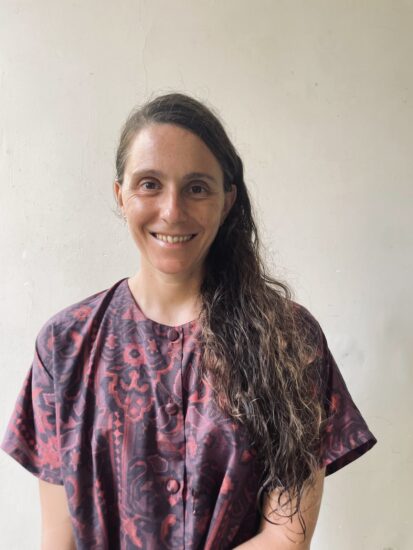 ג’ני בירגר
נולדה ב-1984 בקייב, אוקראינה, כיום חיה ופועלת בתל אביב.
יוצרת וחוקרת גוף רב-תחומית, פרפורמרית ומורה. יצירות הוידיאו-דאנס שלה הוקרנו במבחר פסטיבלים בארץ ובעולם (ביניהם Cinedans, Cyprus Film Festival, Burgundy Video Dance Festival, בית הנסן). בעלת קשת רחבה של הכשרה פיזית ואקדמית, ומחפשת ליצור חיבורים וקשרים חדשים בין גופי ידע שמדברים מטבעם בשפות שונות. בשנים האחרונות חוקרת את הממשק בין תנועה ומילים; דרכים ליצור חומר כוריאוגרפי בזמן אמת; תנועה בתוך מים ומחולות ממערב אפריקה. מלמדת שנים רבות בפרויקט “קהילה בתנועה” המקיימת שיעורי מחול עבור א.נשים החיים עם מחלת הפרקינסון (סטודיו יסמין גודר), כמו גם יוגה ופילאטיס באופן פרטי.
Jenny Birger
Born in 1984 in Kyiv, Ukraine, currently lives and works in Tel Aviv.
A multidisciplinary artist and researcher, performer, and teacher. Her video-dance works have been screened at selected festivals in Israel and abroad (including Cinedans, Cyprus Film Festival, Burgundy Video Dance Festival, Hansen House). She holds a wide range of physical and academic training and seeks to create new connections and links between bodies of knowledge that naturally speak different languages.
In recent years, she has been researching the interface between movement and words; ways of creating choreographic material in real time; movement in water; and dances from West Africa. She has been teaching for many years in the project Movement Communities, which holds dance classes for people living with Parkinson’s disease (Yasmeen Godder Studio), as well as teaching yoga and Pilates privately.