
מפגש בין-גופי | שירה שודרון
*English follows
כשאנחנו פוגשים באדם אחר, אנחנו פוגשים באיזושהי נוכחות. נוכחות כזאת שאנחנו בעצם בנויים לזהות אותה גם בתוך עצמנו בחוויות הגופניות שלנו. במפגש הזה, אנחנו חווים חוויה בין-גופית, בין שני אנשים, שבה הגוף שבו אנחנו מביטים הופך לסוג של כלי שבו אנחנו נעזרים להבין את האחר, מעבר לשפה ודיבור.
הגוף והתנועה, מאז שאני זוכרת את עצמי, היו כמו המצפן שלי, והמרכיב הכי חזק באינטואיציה שלי. בעשר השנים האחרונות האינטואיציה הזאת גרמה לי לשאול שאלות על המוח שלנו, על המנגנונים השונים שעובדים בו ועל איך אנחנו תופסים את המציאות סביבנו בעזרת הגוף. בלטו בפניי שני מנגנונים קיימים במוח, שעזרו לי להבין הרבה דברים שכביכול תמיד ידעתי אבל לא היו לי המילים להסביר.
מנגנון ראשון הוא ההומונקולוס. במוח יש לנו אזורים שלמים שמייצגים את הגוף של עצמנו, ואחראים בין השאר על הפעילות המוטורית של כל חלקי הגוף, גם המיקום היחסי שלהם במרחב וגם כל התחושות החושיות שאנחנו חווים. מנגנון שני הוא מנגנון נוירוני (עצבי) המראה. זהו מנגנון הקיים בכמה מקומות במוח, והוא נקרא כך בעקבות הפעילות הייחודית שקורית בנוירונים האלה. אלה נוירונים אשר מופעלים גם כאשר אנחנו מבצעים תנועה מסוימת בעצמנו, וגם כאשר אנחנו רק צופים בתנועה הנעשית על ידי בן אדם אחר שנמצא מולנו, תהליך אשר יכול להסביר חיבור ישיר בין החוויות הגופניות שלנו לבין החוויה הגופנית של האחר שמולנו.
שני המנגנונים האלה מציעים דרך שבה אנחנו יכולים להבין את האחר בעצם דרך החוויה הגופנית שלנו.
הפילוסוף עמנואל לוינס מזמין אותנו במשנתו, בהקשר של אתיקה ואחריותנו כלפי האחר, לשקול את המפגש של פנים-מול-פנים עם הבן אדם שמולנו. בשביל לוינס, האחר הוא לא רק בן אדם נוסף שדומה לנו ונמצא מולנו. במפגש מול האדם האחר, ישנו עולם חדש לחקור, מפגש אשר מאתגר אותנו לראות מעבר לפרספקטיבה וחוויות החיים האישיות שלנו, מעבר להשטחה האוטומטית שקל לנו לעשות לאחר. זוהי ההזדמנות לבוא בסקרנות. כאשר אנחנו באים בגישה הזאת, אנחנו גם מבינים את האחריות שיש לנו במפגש עם האחר, דבר שיכול לעורר את המודעות לצורך להבין את מי שמולנו בלי הסבר או בלי לתייג אותו.
התחברתי לגישה של עמנואל לוינס, בהזמנה שלו להסתכל פנים-מול-פנים, והתחלתי לחשוב על הגוף, על כל חלקיו, ועל האופן שבו התנועה מוסיפה ממד חדש למפגש הזה. הגוף שלנו הוא אחד הכלים המשמעותיים שיש לרשותנו כדי לתפוס ולזהות אדם אחר. החיבור הבין-גופי שנוצר במוח, בין השאר בעקבות פעילותם של נוירוני המראה, יכול אולי אפילו למוטט את התחושה שמי שמולנו הוא זר ולא מוכר, ולעורר תחושה ראשונית של אמפתיה. מנגנונים אלה של זיהוי גוף ותנועה עשויים לאפשר לנו לזהות משהו משותף בינינו לבין האחר, עוד לפני שאנחנו מבחינים בהבדלים של גזע, מוצא או זהות. ובמפגש של גוף-מול-גוף שני דברים משמעותיים קורים בו-זמנית: ההבנה שהאחר נמצא מולנו, ובו בזמן קבלת האחרות שלו והבחירה להתעלות מעל תחושת הזרות שהיא גם מעוררת.
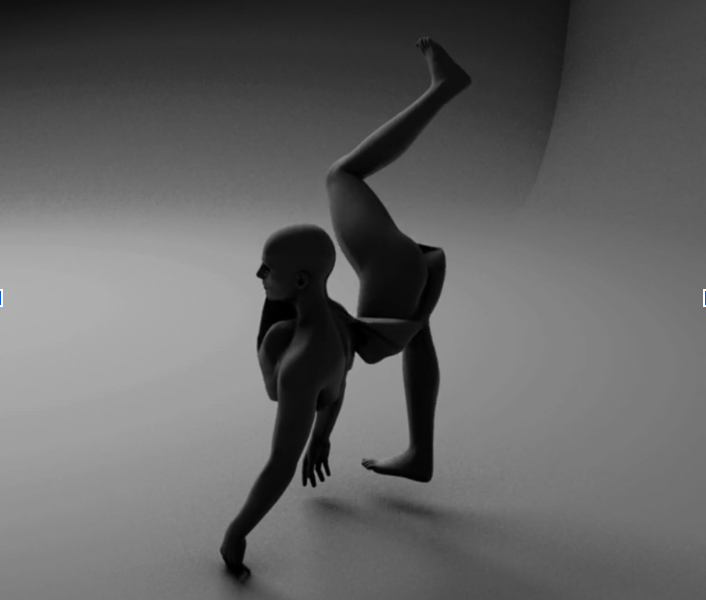
בעבודה Transan-dance אני מזמינה את הצופה להסתכל גוף-מול-גוף (כמו ההזמנה של עמנואל לוינס – של פנים-מול-פנים). הצופה נפגש עם דמות שנראית אנושית, שעוברת דיספיגורציה, ובעקבות זאת התנועה שלה גם נראית לא טבעית. התנועה של הדמות היא בעצם תוצר של הקלטת תנועה שעשיתי עם הרקדן ארז גזאיי בזמן שהוא הוריד את החליפה מלאת החיישנים שהקליטה את התנועה שלו.
למרות כל ההפרעות, לדמות עדיין יש איזשהן שאריות של נוכחות אנושית. אני מתעניינת ברעיון או בשאלה האם, כאשר הדמות זזה בצורה שנראית לא טבעית, אנחנו עדיין מצליחים לזהות את הגוף שלה כגוף האדם. אז בעצם באיזו נקודה המוח שלנו, שבנוי בצורה כל כך יעילה לזיהוי מהיר של גוף האדם, גם אם הוא מתעקם בכל זווית קיצונית אפשרית, לא יצליח לזהות אותו? עד כמה אפשר למתוח את הגבול שבו הגוף כבר לא בר-זיהוי והאחר כבר באמת הופך להיות אחר?
Transan-dance
Motion capture, design and animation by Shira Shvadron
Dancer: Erez Gazay
Music by Sukitoa o Namau
Intercorporeal Encounter | Shira Shvadron
When we encounter another person, we encounter a certain presence. A presence that we are, in fact, built to recognize within ourselves, through our own bodily experiences. In this encounter, we experience something intercorporeal, between two people, in which the body we are looking at becomes a kind of tool that helps us understand the Other, beyond language and speech.
For as long as I can remember, the body and movement have been like my compass, the strongest component of my intuition. Over the past ten years, this intuition has led me to ask questions about our brains, the different mechanisms at work within them, and how we perceive the reality around us through the body. Two mechanisms in the brain stood out to me, helping me understand many things I had seemingly always known but had never had the words to explain.
The first mechanism is the homunculus. In our brains, there are entire regions that represent our own bodies and are responsible, among other things, for the motor activity of every part of the body, their relative positions in space, and all the sensory experiences we undergo. The second mechanism is the mirror neuron system. This mechanism exists in several areas of the brain and is named for the unique activity of these neurons. These neurons are activated both when we perform a particular movement ourselves and when we simply observe a movement performed by another person in front of us. This process may explain a direct connection between our own bodily experiences and the bodily experience of the Other before us.
These two mechanisms suggest a way in which we can understand the Other through our own bodily experience.
In his philosophy, particularly in relation to ethics and our responsibility toward the Other, the philosopher Emmanuel Levinas invites us to consider the face-to-face encounter with the person before us. For Levinas, the Other is not simply another person who resembles us and stands before us. In encountering another person, there is an entirely new world to explore, an encounter that challenges us to see beyond our own perspectives and personal life experiences, beyond the automatic reduction of the Other that comes so easily to us. This is an opportunity to approach with curiosity. When we adopt this attitude, we also become aware of the responsibility we have in encountering the Other, which can awaken an awareness of the need to understand the person before us without explaining or labeling them.
I connected with Emmanuel Levinas’s approach, with his invitation to look face-to-face, and began thinking about the body, all its parts, and the way movement adds a new dimension to this encounter. Our bodies are among the most significant tools available to us for perceiving and recognizing another person. The intercorporeal connection formed in the brain, partly through the activity of mirror neurons, may even dissolve the feeling that the person before us is a stranger, someone unfamiliar, and awaken an initial sense of empathy. These mechanisms of body and movement recognition may allow us to identify something shared between ourselves and the Other, even before we notice differences of race, origin, or identity. And in a body-to-body encounter, two significant things happen simultaneously: the recognition that the Other is before us, and, at the same time, the acceptance of their otherness and the choice to rise above the sense of unfamiliarity it also evokes.
In Transan-dance, I invite the viewer to look body-to-body (much like Emmanuel Levinas’s invitation to encounter the Other face-to-face). The viewer encounters a figure that appears human but undergoes disfiguration, causing its movement to appear unnatural as well. The figure’s movement is actually the result of a motion capture recording I made with dancer Erez Gazay while he was removing the sensor-covered suit that recorded his movements.
Despite all these disruptions, the figure still retains certain traces of human presence. I am interested in the idea, or the question, of whether we can still recognize the figure’s body as a human body when it moves in ways that appear unnatural. At what point, then, will our brains, which are so efficiently designed to recognize the human body quickly, even when it is contorted into every possible extreme angle, no longer be able to recognize it? How far can we stretch the boundary at which the body becomes unrecognizable and the Other truly becomes other?
Transan-dance
Motion capture, design and animation by Shira Shvadron
Dancer: Erez Gazay
Music by Sukitoa o Namau
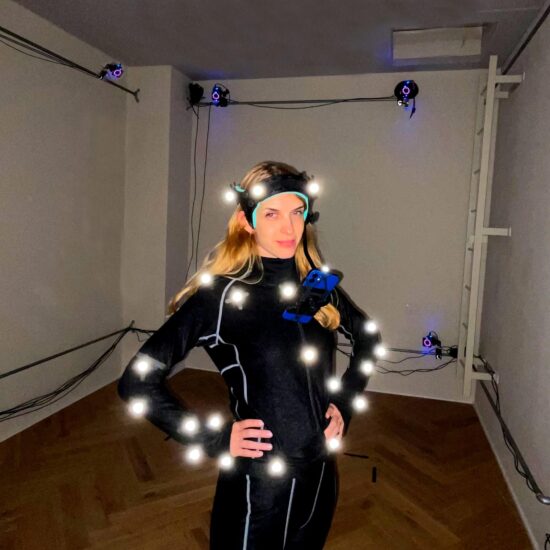 שירה שודרון היא אמנית/ מעצבת אינטרקציה, אוצרת מוזיקה וחוקרת שעובדת במפגש שבין גוף, טכנולוגיה ותפיסה. היא מתמחה בטכנולוגיות Motion Capture ובשימוש בתנועה כחומר גלם ליצירה, לאחר שנים של עבודה עם מערכות ללכידת תנועה ומחקר של האופן שבו הגוף מיוצג ומתווך דרך טכנולוגיה. במקביל, היא אספנית וחוקרת עצמאית של מוזיקה מאפריקה ומהדיאספורה, ופעילה במשך 10+ שנים כ-DJ תחת השם SHIWABIWA. כיום היא לומדת לתואר שני במדעי המוח באוניברסיטת תל אביב, ומתמחה בחיבורים שבין תנועה, קוגניציה ואינטראקציה.
Shira Shvadron is an artist, interaction designer, music curator, and researcher working at the intersection of the body, technology, and perception. She specializes in motion capture technologies and the use of movement as raw material for artistic creation, drawing on years of experience working with motion capture systems and researching how the body is represented and mediated through technology. Alongside her artistic practice, she is an independent collector and researcher of music from Africa and the African diaspora and has been active as a DJ under the name SHIWABIWA for over a decade. She is currently pursuing a master’s degree in neuroscience at Tel Aviv University, focusing on the connections between movement, cognition, and interaction.